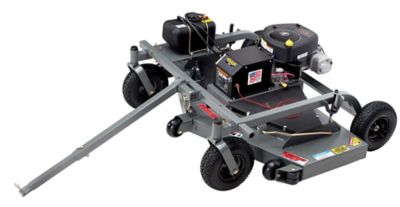
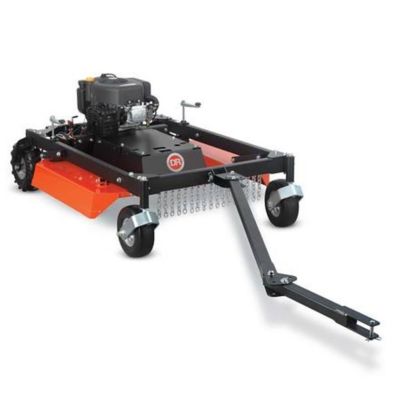
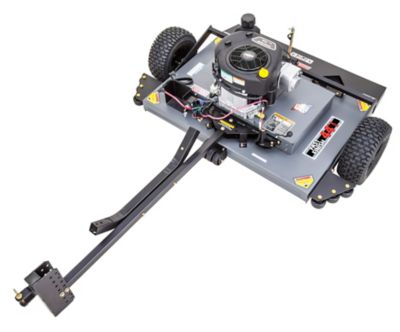
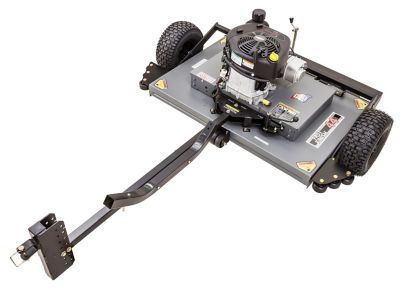
Tow behind lawn mowers help tackle the stretches of grass that make a regular mowing job feel like an all-day chore. Around a country home, that might mean the open ground beyond the backyard, a long grassy lane, or the space between an outbuilding and a fence line. These mowers pull behind a compatible vehicle, putting a separate cutting deck to work while the tow vehicle handles the travel. Many have their own engine, while other pull-type mowing equipment depends on a tractor’s power take-off, so the power source matters just as much as the hitch connection. The biggest distinction is between finish mowing and rough cutting. A finish mower is meant for maintained grass where an even, tidy appearance matters, such as a broad lawn or the grounds around a farmhouse. A rough-cut mower is built for heavier vegetation within its stated cutting limits, making it a different tool for a different job. Tall grass, coarse weeds, and woody growth do not all call for the same blade setup or deck design. Matching the mower to the ground keeps expectations realistic and helps protect the equipment. Acreage owners, caretakers, and folks maintaining recreational property can all benefit from the extra cutting width, especially where there is room to make long, steady passes. For an ATV setup, the
tow behind mower for ATV category centers on that towing arrangement, though every mower still needs to match the vehicle’s hitch requirements, towing limits, and operating restrictions. A wide deck can cover open ground with fewer passes, but the widest choice is not always the most practical. Gates, narrow lanes, trees, and tight corners around sheds all affect how easily the mower moves through a property. Enough room to turn at the end of a pass can matter more than another few inches of cutting width. Thinking through the whole route, from the storage spot to the far fence, gives a better picture of what will fit the work.
Fit involves more than whether a hitch pin drops into place. The tow vehicle needs sufficient capacity for the mower’s weight and the load placed on the hitch, along with the braking and handling ability the equipment manufacturer calls for. Hitch style, connection height, and any required safety attachments should agree with both machines’ instructions. Some configurations allow the mower to trail directly behind the vehicle or run offset to one side. An offset deck can help reach alongside a fence or overlap the path of a compatible riding mower, but it also changes the clearance needed around posts, trunks, and corners. Wheels and deck supports affect how the mower follows the ground. Uneven stretches, shallow dips, and raised spots can cause scalping when cutting height, speed, or deck setup does not suit the terrain. A broad, fairly level lawn places different demands on a mower than a bumpy field edge, and slope limits belong near the top of any compatibility check. Cutting width, adjustable height range, and the vegetation the mower is rated to handle tell more about its intended work than engine size alone. Construction details deserve a close look, too. Steel decks and frames are common, with deck thickness, reinforcement, welds, and protective finishes contributing to how well the assembly stands up to repeated mowing. The underside takes the brunt of contact with grass and loose debris, while wheel bearings, blade spindles, and hitch components carry loads throughout each pass. Tires should suit the ground and carry the specified load, with pressure maintained as directed when pneumatic tires are fitted. Discharge openings, guards, and shields are working parts of the design, not extras to remove for convenience. Their condition matters anywhere clippings and debris could travel toward a road, building, animal enclosure, or neighboring property. Engine controls, cutting-height adjustments, and service points also influence everyday convenience. Being able to reach a grease fitting or check an oil level without a wrestling match makes routine upkeep easier to stay on top of.
Tow behind mowing works best when the property and the equipment are both ready for the job. A walk over unfamiliar ground can uncover wire, fallen limbs, rocks, and other objects hidden beneath the grass. Around older fence lines, even a short length of loose wire can create a serious problem if it reaches the blades. Children, pets, livestock, and bystanders need to stay clear of the mowing area, with the separation distance specified by the manufacturer. Travel speed should match the vegetation, terrain, and mower instructions rather than whatever pace the tow vehicle can manage. Thick grass may call for a slower pass, and cutting-height choices should stay within the mower’s operating range. A tow behind mower is not a substitute for equipment rated to handle brush, steep banks, or unknown obstacles. Once the work is done, a little attention helps the deck, engine, and running gear keep doing their jobs. Before clearing buildup, inspecting blades, or reaching near moving components, shut down and disable the equipment as directed, allow all movement to stop, and support any raised parts with approved supports. Clippings packed under a deck can interfere with discharge and hold moisture against metal. Cleaning methods should follow the manual, especially around bearings, belts, and electrical parts. Blades need regular inspection for wear and damage, along with sharpening or replacement according to the manufacturer’s specifications. Proper balance, the right replacement hardware, and correct fastener torque all matter when blade service is needed. Belt condition, tire wear, lubrication points, and engine maintenance deserve the same attention. Covered storage helps protect the machine between jobs, and the tongue, deck, and wheels need enough room to park without blocking a walkway or work area. For a homestead with broad lawns or a rural property with long mowing runs, the right tow behind setup brings cutting capacity to ground that suits it. Matching that capacity with sensible fit, safe operation, and steady care makes the mower a practical part of keeping the place in shape.