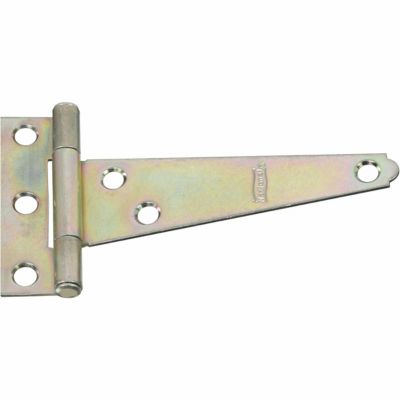
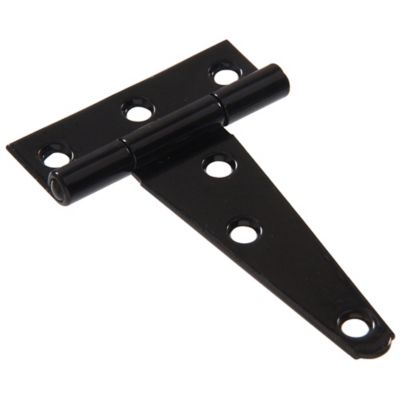
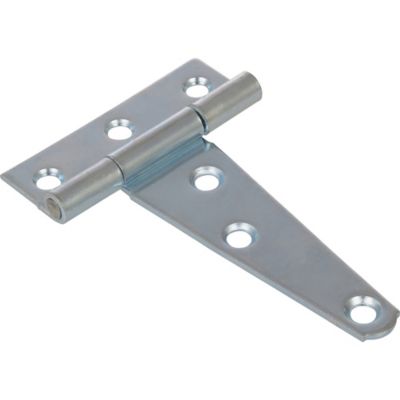
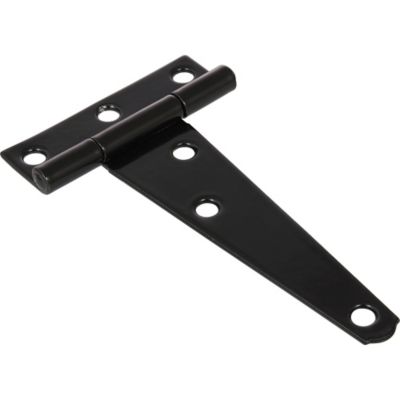
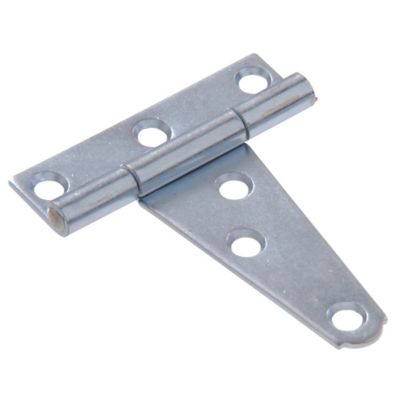
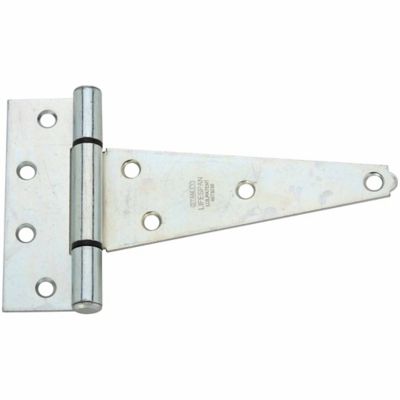
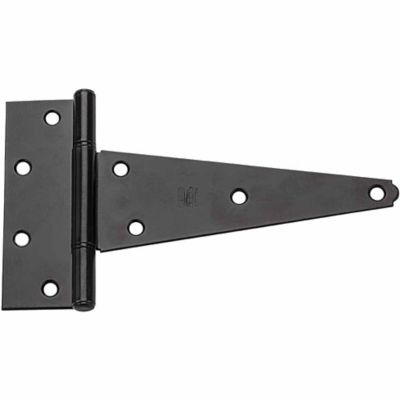
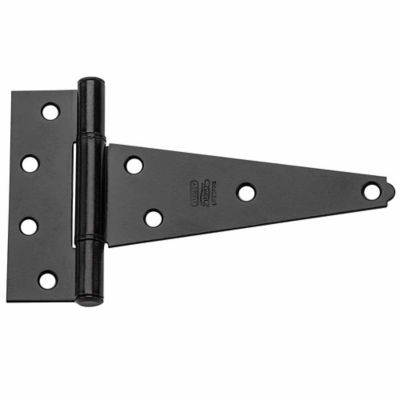
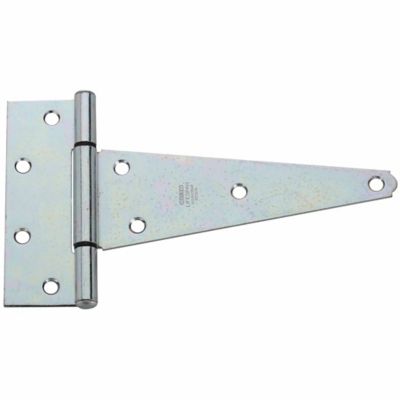
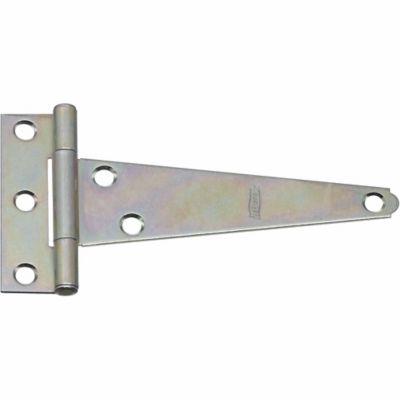
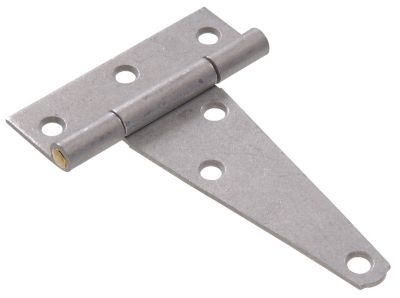
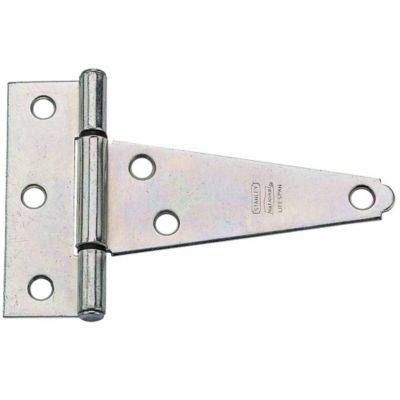
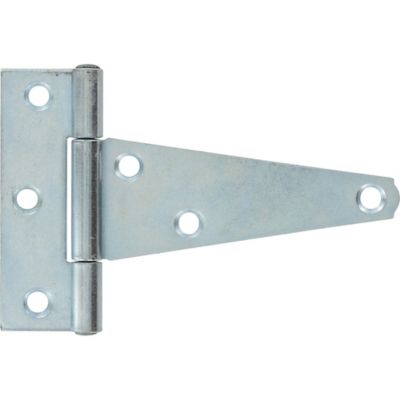
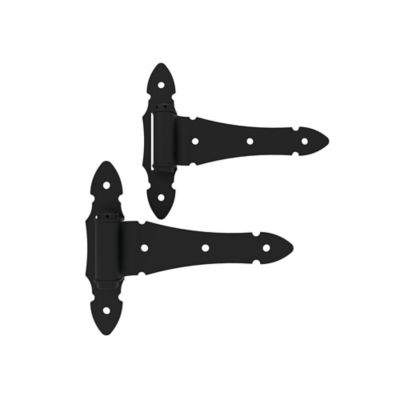
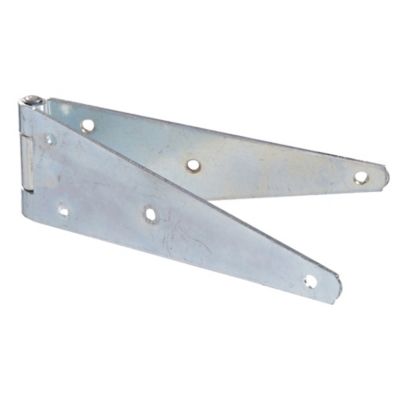
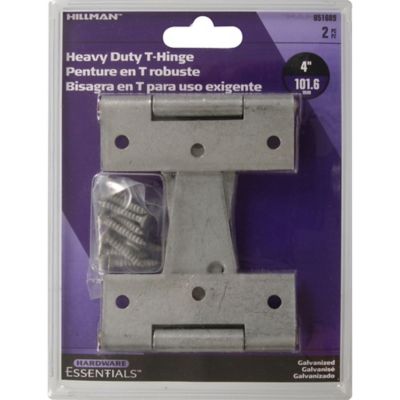
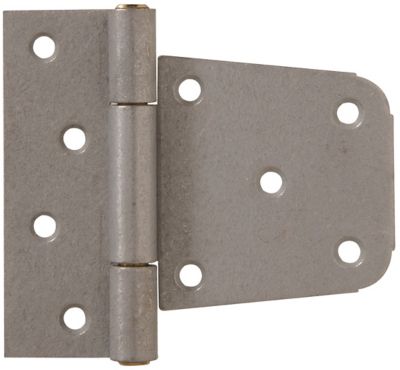
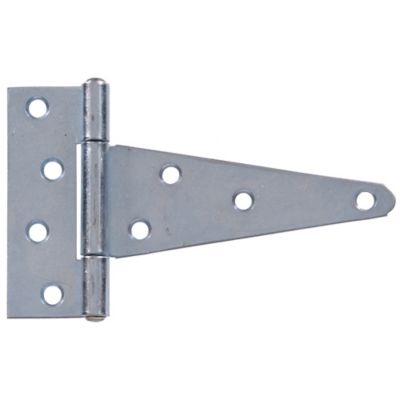
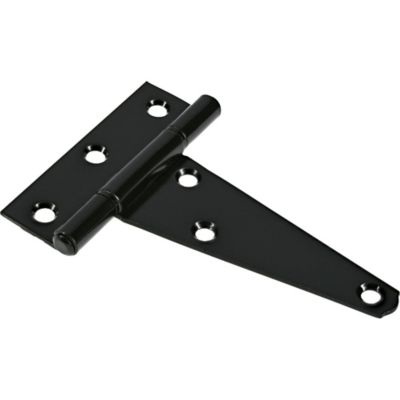
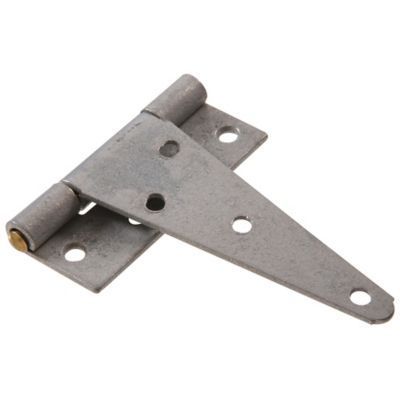
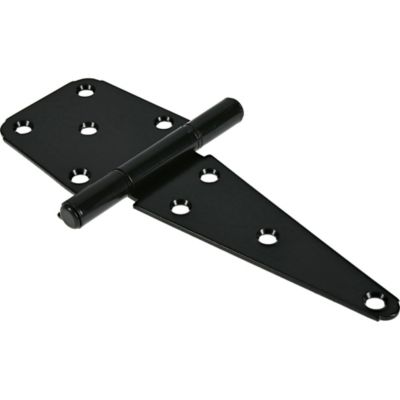
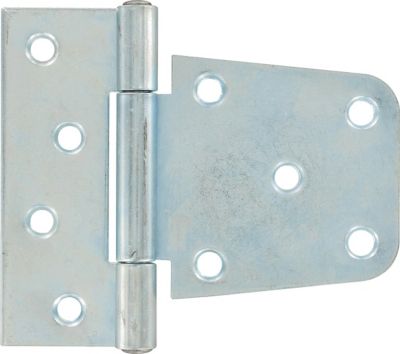
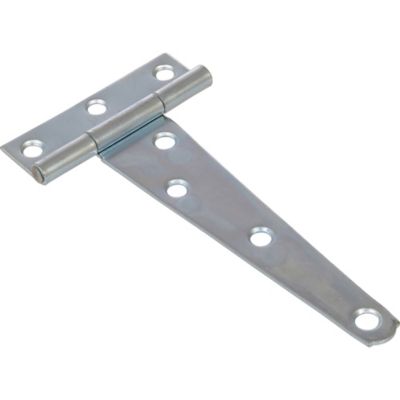
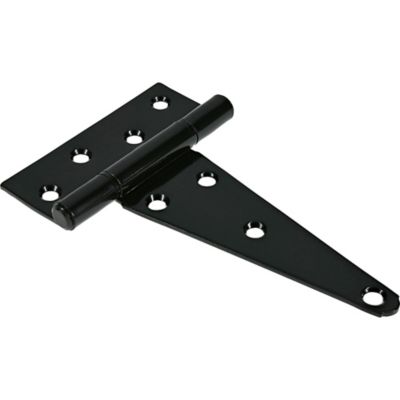
T hinges, also called tee hinges, are surface-mounted hinges with a long strap on one side of the pivot and a shorter mounting plate on the other, forming the shape of the letter T. The strap typically attaches across the face of a gate or door, while the shorter plate fastens to the post, jamb, or frame. That extended strap spreads the attachment points across more of the panel, making this hinge style a familiar choice for wooden garden gates, shed doors, barn doors, and storage lids. Around a working property, T hinges might support the gate beside a vegetable patch, the door on a feed shed, or a small access panel on an animal shelter. Smaller applications call for different hardware than a broad plank door that catches the wind, so the T shape alone does not establish how much weight a hinge can carry. Metal thickness, hinge construction, fastener placement, and the strength of the mounting surface all play a part. Strap length matters, too, but a longer hinge is not automatically rated for a heavier load. The manufacturer's load rating and installation requirements give a better picture of suitability than appearance alone. Ratings may apply to an individual hinge or a specified set, which makes that distinction worth checking. For homeowners, gardeners, and folks maintaining outbuildings, the appeal is straightforward: exposed hardware that suits practical wood construction and puts the attachment points where they are easy to inspect. On a well-built gate, a properly matched hinge helps the panel swing without dragging a corner through gravel or scraping the threshold. For a chest or storage box, the same basic shape can suit a hinged lid, although a T hinge by itself does not hold that lid open or control its fall. Applications involving children need appropriate lid-support and safety hardware rather than relying on the hinge alone.
Materials and finishes make a difference when T hinges spend their days outside. Steel offers strength for many gate and door applications, while its protection against rust depends on the finish and the conditions around it. Zinc-plated steel has a protective zinc layer, though that layer can wear or deteriorate with exposure. Galvanized finishes also provide zinc protection, but coating methods and thicknesses vary, so the stated suitability for outdoor service matters more than the finish name by itself. Black powder-coated steel gives exposed hardware a dark, even appearance and a barrier against moisture while the coating remains intact. Scratches, chipped edges, and wear around moving parts can leave the underlying steel vulnerable. Stainless steel offers corrosion resistance without depending on a painted surface, but its grade still matters, especially near salt air or other demanding conditions. A hinge under a shed overhang faces a different job than one on a gate that stays wet after every rain. Damp bedding, fertilizer, and animal waste can also create tougher conditions for metal hardware around farm buildings. Compatible exterior-rated screws or bolts deserve the same attention as the hinge finish; a weather-resistant hinge cannot make up for fasteners that corrode or lose their grip. Appearance is another practical consideration, particularly where gates and doors sit close to the house. Black finishes stand out against pale lumber and can blend with dark latches, while silver-toned finishes give a more understated metal look. Matching the hinge, latch, and other exposed hardware can keep a project looking settled without making looks the deciding factor. Through the cooler months, wet leaves against a low gate, repeated rain, and snow piled near a doorway can keep moisture close to the hardware. Good drainage and room around the moving parts help limit that exposure. Occasional cleaning, a check for coating damage, and lubrication where the manufacturer recommends it can help keep the pivot moving freely without attracting unnecessary grit.
Fit starts with the whole assembly, not just the door's weight. A wide wooden gate puts more leverage on its hinges and post than a narrow panel of similar weight, and an unbraced frame can sag even with substantial hardware attached. Solid posts, sound framing, and suitable gate bracing give T hinges a proper foundation. On board-and-batten shed doors, the strap needs attachment points backed by enough solid wood to hold the specified fasteners; thin siding alone may not provide the support the job requires. Hinge dimensions deserve a close look because a listed size may refer to strap length rather than the complete width of the open hinge. Mounting-plate width, hole spacing, barrel position, and clearance around trim affect whether the hardware sits where it needs to. Some designs have staggered screw holes that distribute attachment points across the wood grain, but those holes do not eliminate the need for appropriate pilot holes and adequate distance from board edges. For replacement work, existing holes may be enlarged, softened by moisture, or too close to the new pattern. Fresh, sound attachment points matter more than simply covering the marks left by the old hardware. Swing direction and opening clearance count as well, especially when a gate must fold back near a fence or a shed door opens beside a raised walkway. The hinge's stated opening range and mounting arrangement determine what is possible. Where a project calls for hardware that extends around an edge rather than relying on a flat surface-mounted layout,
Wrap Hinges offer another style to compare against the door and frame construction. For everyday T hinge applications, the best match balances intended use, dimensions, load requirements, and exposure. A garden gate opened with an armful of tools needs a smooth swing and clearance over the path; a broad storage door needs support suited to its weight and leverage. Hardware matched to those everyday demands helps keep chores moving without a sticking door or dragging gate getting in the way.