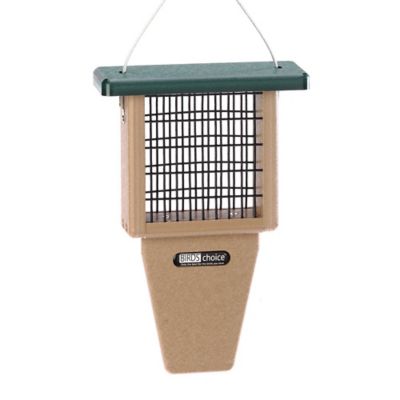
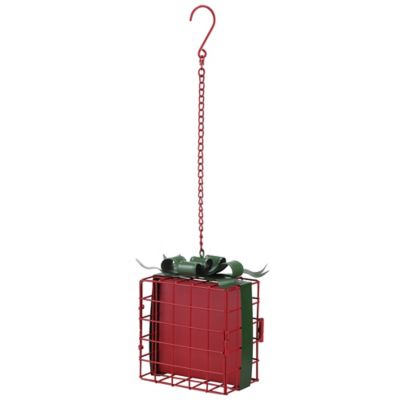
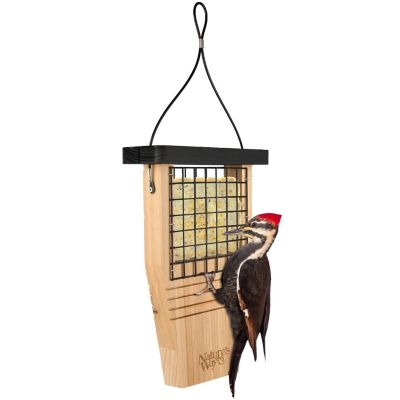
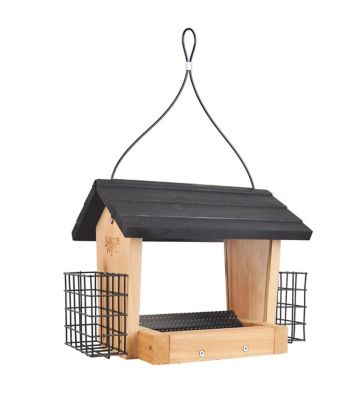
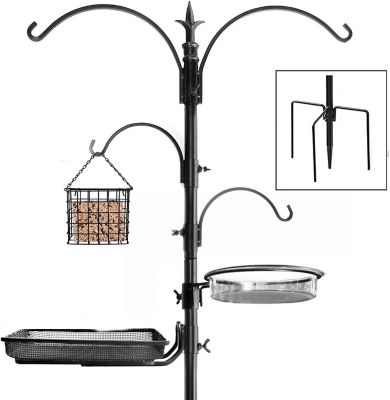
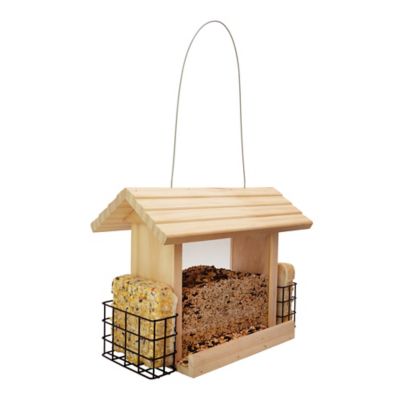
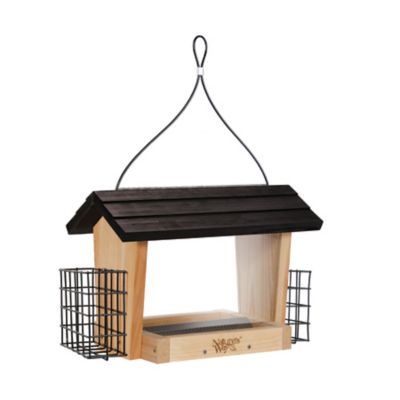
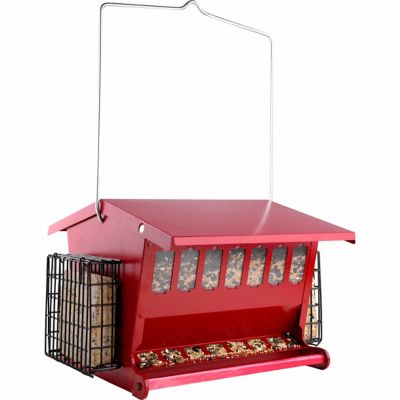
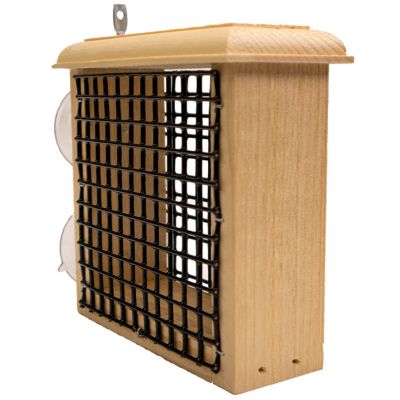
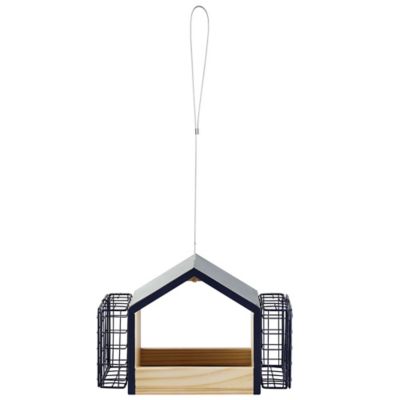
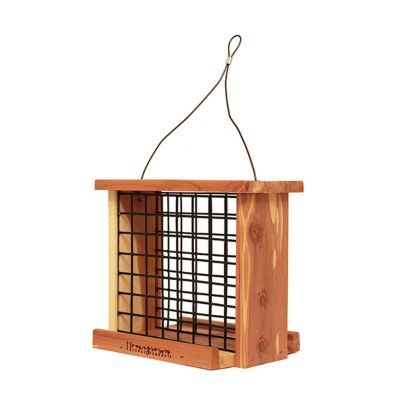
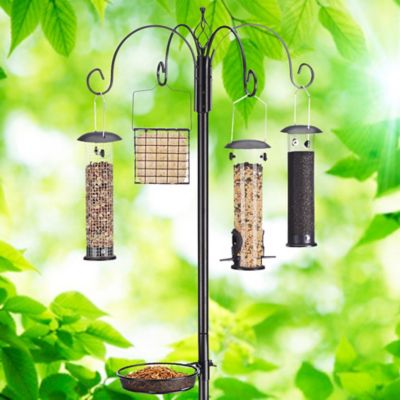
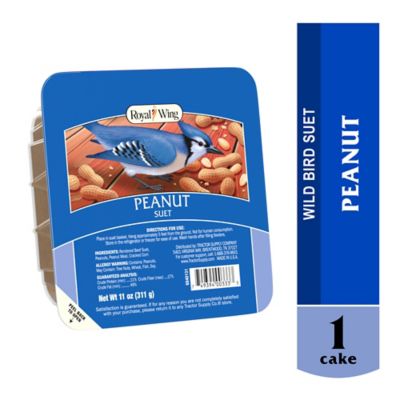
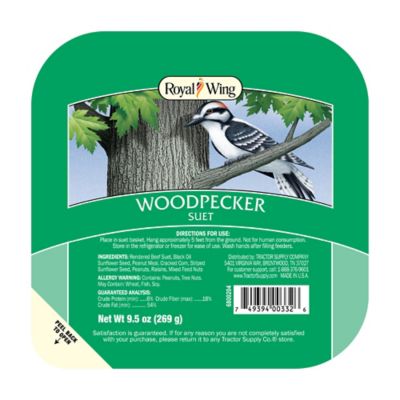
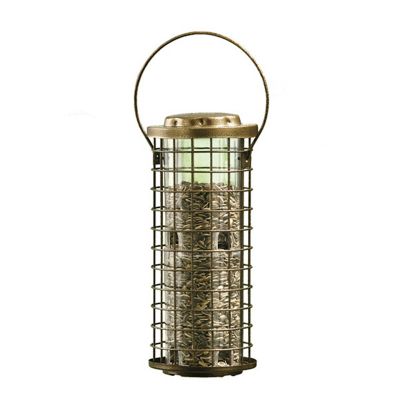
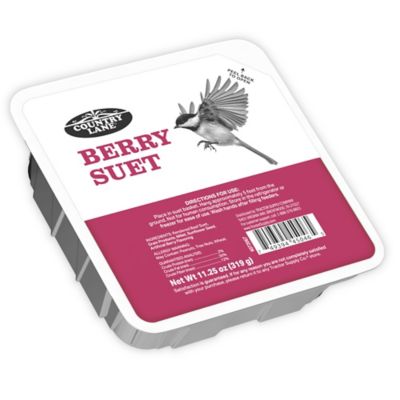
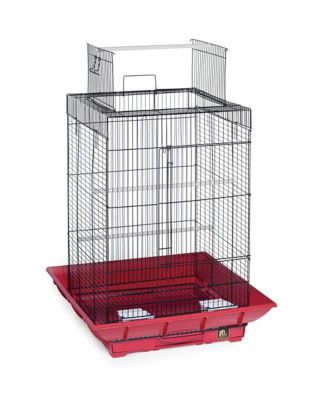
A suet cage is a wire-mesh bird feeder that holds a suet cake or block while giving birds a place to grip and feed. The open basket lets birds reach the food through the wire instead of standing in a tray, making it especially well suited to birds that naturally cling to bark and branches. Woodpeckers, chickadees, nuthatches, and titmice are familiar visitors, though the birds that show up will depend on the habitat around your place. Suet is a concentrated source of energy, traditionally made with beef fat, and prepared cakes may contain ingredients such as seeds, nuts, or dried fruit. A cage keeps that food contained and gives backyard bird feeding a different setup from a seed-filled tube or hopper. Around a farmhouse, a small-town yard, or a garden bordering the woods, it can bring feeding activity close enough to watch from a comfortable spot without crowding the birds. Some birds land sideways, others work their way around the mesh, and a woodpecker may brace its tail while pulling off a bite. That feeding behavior helps explain the range of cage shapes and layouts. A compact basket holds a single cake, while larger arrangements can hold more than one block or provide separate feeding surfaces. A broad face offers room for birds to move around, and a cage with a tail-prop extension gives woodpeckers extra support below the food. Upside-down designs put feeding access underneath, favoring birds comfortable hanging beneath the cage; they may discourage some other visitors, but they do not make the feeder exclusive to one species. The best fit comes down to the birds nearby, the space around the feeding station, and the amount of food being offered. A modest setup beside an established seed feeder can add another feeding option without turning the whole yard into a feeding station.
The details of a suet cage matter because birds grip the feeder itself, and the basket gets handled each time it is refilled. Metal wire provides the basic framework, with coated steel and other corrosion-resistant constructions offering different finishes and levels of upkeep. A smooth finish, neatly joined corners, and wire ends that do not stick out are worth attention wherever birds may land or fingers may reach. Wire thickness and mesh spacing affect how well the basket holds its shape and how easily birds can reach the suet. Openings need to expose the food while keeping the block contained, rather than letting large pieces tumble out. Cake dimensions matter just as much as the outside measurements of the feeder. A basket that looks roomy may have a smaller usable interior once the door and latch are closed, so matching the food’s dimensions to the cage helps prevent awkward loading or a door that will not shut. A firm latch helps keep the access panel closed during feeding, although a basic wire cage should not be mistaken for a squirrel-proof feeder. Protective outer cages and baffles serve different purposes, and their effectiveness depends on their design and placement. Hanging hardware deserves the same attention as the basket. A chain or loop needs a sound attachment point on a feeding pole, bracket, or suitable branch, with enough clearance for birds to approach and leave freely. Hanging cages can sway as birds land; mounted styles offer a steadier feeding surface when attached according to their directions. A spot near natural shelter gives birds somewhere to retreat, while open space around the feeder makes it harder for a cat to wait unseen beneath it. Near a porch or fence line, room for refilling and cleaning matters, too. A feeder that is easy to reach from the ground is less of a chore to keep up with than one hanging over a tangled flower bed.
Food choice and everyday care round out the setup. Cakes made for cage feeders are easier to match to the basket than loose food, and ingredient blends can appeal to different birds. Browsing
suet for birds alongside feeder dimensions helps keep the food and holder working together, especially when comparing cake thickness, block shape, and feeding access. The amount offered should suit the activity at the feeder: a smaller portion makes sense where only a few birds visit, while a busier station may call for more feeding space. Suet is a supplement to the foods birds find across their habitat, not a complete diet, and a cage is not a catchall for kitchen scraps. Salty leftovers, spoiled food, and sticky mixtures do not belong in it. A door that opens wide makes refilling less messy and leaves fewer tight corners where old food can collect. Removable parts can help with cleaning, provided they go back together securely. Greasy buildup, droppings, and food lodged around hinges all need attention, even when the cage still looks fairly tidy from the kitchen window. Regular cleaning according to the feeder’s care directions, followed by thorough rinsing and complete drying before refilling, helps keep the feeding area sanitary. Cracked wire, peeling finishes, loose hanging loops, and bent latches are reasons to repair or replace a feeder rather than leave a snag or weak connection in place. Fallen food beneath the cage also needs attention so it does not build up around the post or draw unwanted visitors. For someone who already enjoys watching birds, a suet cage can be a thoughtful gift that adds another kind of activity to an established feeding spot. It also suits a household starting with a simple backyard setup, especially where there is a clear view from the porch or a favorite chair indoors. The appeal is straightforward: a practical holder, food that fits, and a close look at birds going about their day.