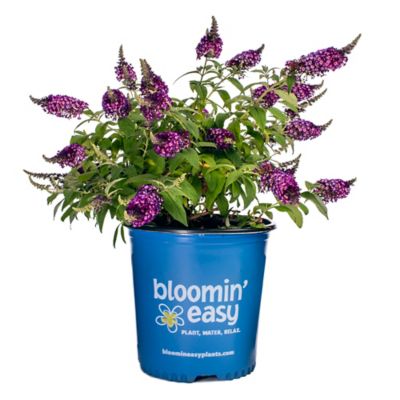
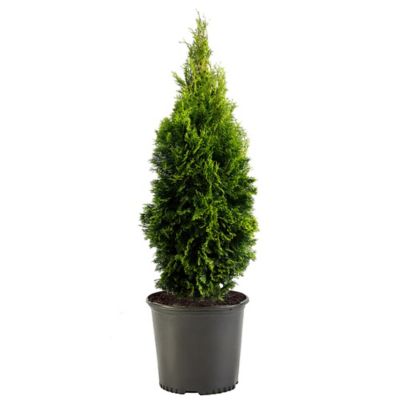
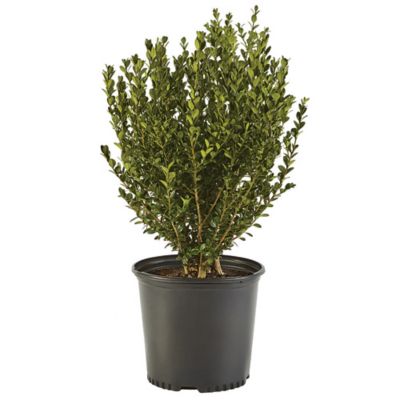
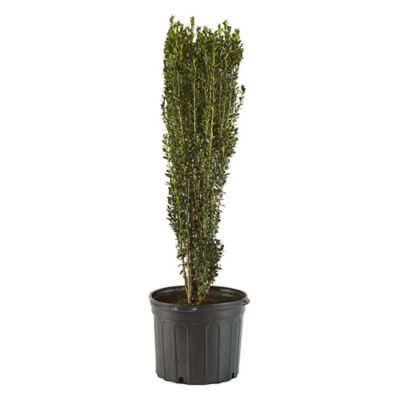
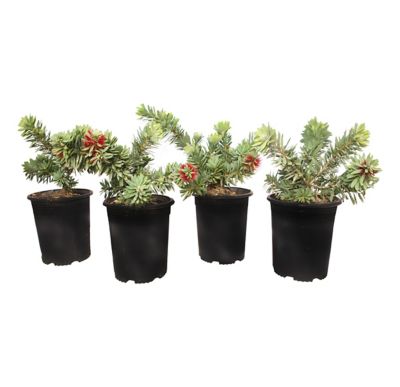
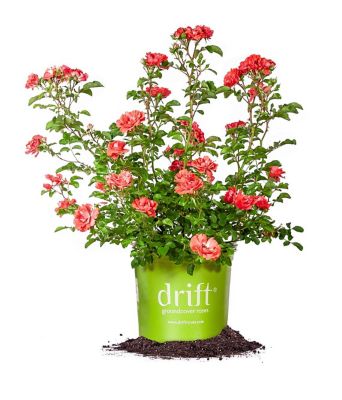
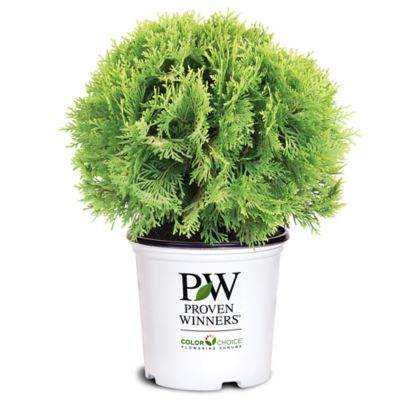
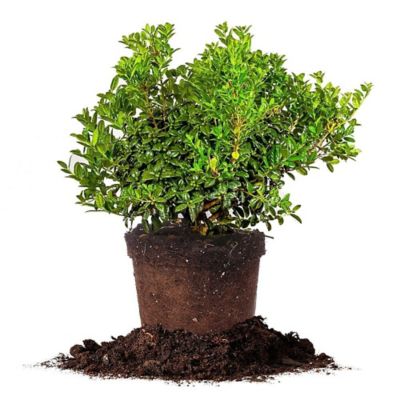
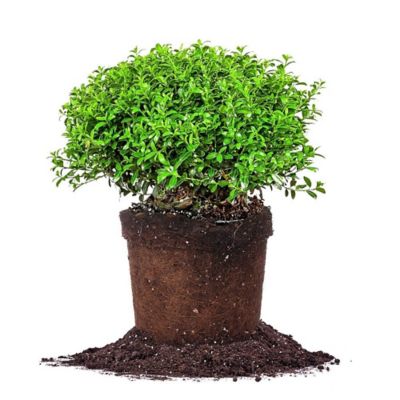
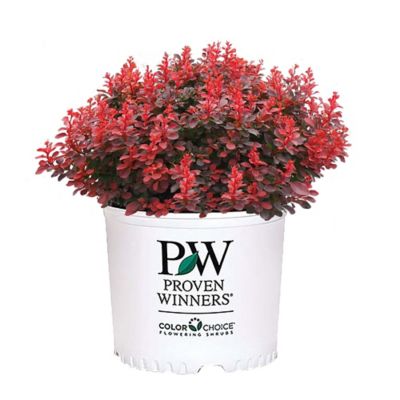
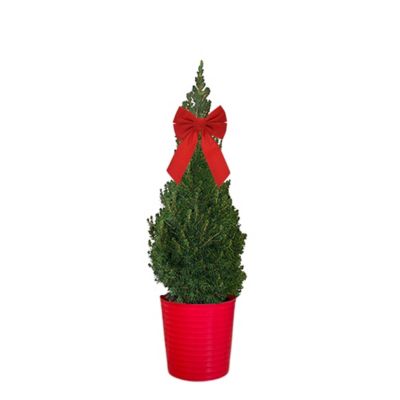
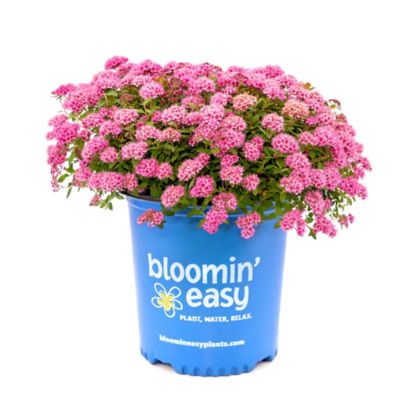
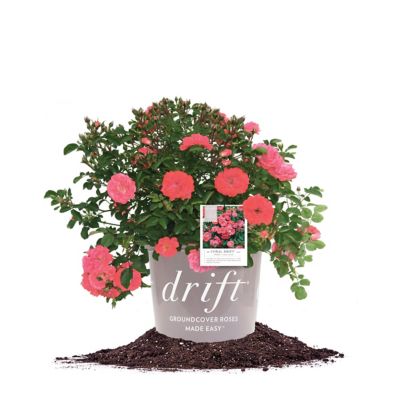
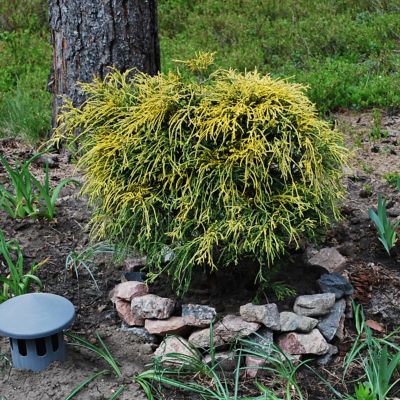
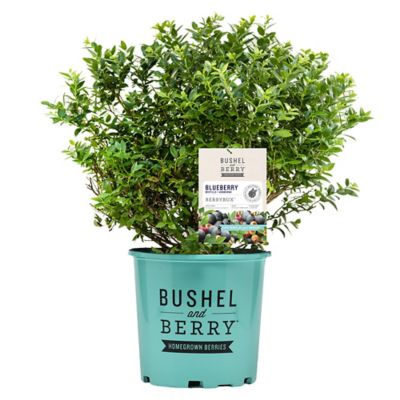
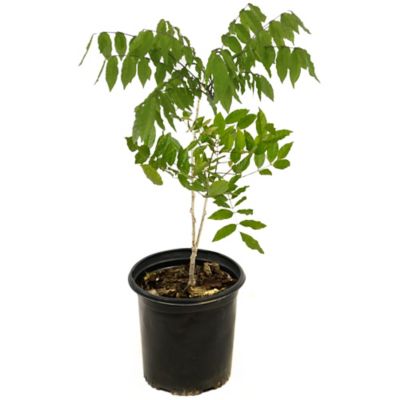
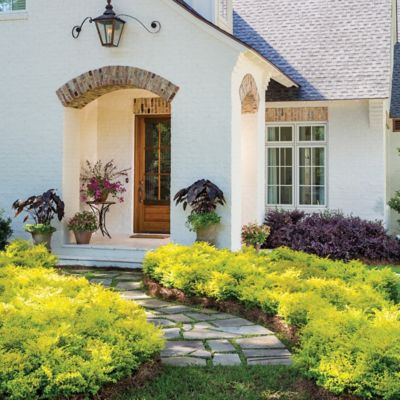
Small bushes are compact woody shrubs, often about 1 to 5 feet tall at maturity, that bring shape, foliage, and sometimes flowers to spaces where a larger shrub would crowd the yard. Dwarf and naturally compact growth habits make them a practical fit for foundation plantings, low borders, entryways, and beds beside a porch or patio. Their smaller scale can frame a front walk without hiding the house, soften the edge of a gravel drive, or fill the space beneath a window while leaving the view open. Mature height and width matter more than the size of the nursery pot. Some small shrubs grow upright and narrow, while others spread wider than they grow tall, so two plants with the same height can need very different amounts of room. A compact label describes a growth habit, not a promise that a bush will stay the size it is at planting. Evergreen shrubs hold foliage year-round, giving beds a steady backdrop, while deciduous shrubs offer a different outline with their leaves on and off. Flowering bushes add another layer of interest, though leaf color, branching, and overall shape can carry just as much weight in a small planting. Fine leaves create a softer look beside stone or brick; larger leaves give a bed a bolder presence. Rounded forms work well near straight walks and square porch posts, while upright forms can mark an entrance without spreading far into the path. For a farmhouse yard, a modest front lot, or a planting bed beside the back steps, small bushes help keep the landscape in proportion. A few repeated shapes often look more settled than a crowded mix of competing forms. Room between the planting and the building also leaves access for washing siding, checking the foundation, and getting to an outdoor faucet. That breathing room makes the planting easier to live with, not just pleasant to look at from the road.
The right fit starts with the space below the leaves as well as the room above them. Small bushes need soil, light, and moisture conditions that match their growing requirements, even when their mature size looks just right for the spot. Full sun generally means at least six hours of direct sunlight a day, and a bed tucked under deep eaves may receive much less light than an open patch only a few feet away. Soil drainage matters just as much: roots need moisture, but soil that stays saturated can limit the air around them. A plant tag’s guidance on sunlight, soil, and watering helps separate shrubs suited to an open border from those better matched to a sheltered corner. Soil pH is another consideration, especially for shrubs with a preference for acidic ground. A soil test gives a clearer starting point than adding amendments by guesswork. For container-grown shrubs, the nursery pot is a growing vessel rather than a measure of the plant’s final size. The root ball needs room in the planting hole or a larger container, with its upper surface positioned according to the plant’s directions rather than buried beneath a thick layer of soil. Containers can be handy beside steps, along a patio, or in a yard with limited planting space, but a compact shrub still needs enough soil volume for its roots. Clay, resin, and wood planters differ in weight, appearance, and how quickly their soil loses moisture. Drainage holes are essential, and potting mix intended for containers provides a different root environment than dense garden soil. A filled planter can be heavy, so its placement deserves thought before planting. In the ground, mulch can help hold soil moisture and limit competing weeds when it sits around the root area without being piled against the stems. These details support steady growth and make routine care more manageable, whether the planting fills one small bed or runs along the front of the house.
Ongoing care is another part of choosing small shrubs that suit everyday life. Naturally compact plants generally need less size-control pruning than larger-growing bushes squeezed into a narrow bed, though even a small shrub may need attention to damaged branches or uneven growth. Slow growth can mean fewer trims, but it also means a new planting takes longer to fill its allotted space. Faster growth may close gaps sooner while calling for more frequent shaping. Flowering shrubs have different pruning needs, and trimming at the wrong point in their growth cycle can remove buds before they bloom. Plant-specific care directions matter more than treating every bush like a clipped hedge. Leaving enough space for the expected mature spread can reduce the temptation to shear everything into a tight shape. It also keeps foliage from pressing against a wall or spilling across a walkway. Watering needs change as roots establish, and shrubs in containers often need closer checks than those planted in the ground. A small bush is not automatically drought tolerant or suited to a spot beyond the reach of a hose. Where several shrubs share a bed, similar light and moisture needs make care simpler. Low-growing forms can define a sitting area or trace the edge of a garden, while denser, upright forms can create a modest boundary without a tall screen. For a longer boundary or a more continuous planting,
Plants for Hedges can help narrow the focus to that purpose. Near gates, mailboxes, and walkways, mature width should leave room for people, equipment, and routine chores. Around children or animals, plant characteristics such as thorns and potentially harmful leaves or fruit deserve attention before placement. With the right proportions and growing requirements, small bushes can give a yard a finished, welcoming feel without overwhelming the space or turning every weekend into a pruning job.