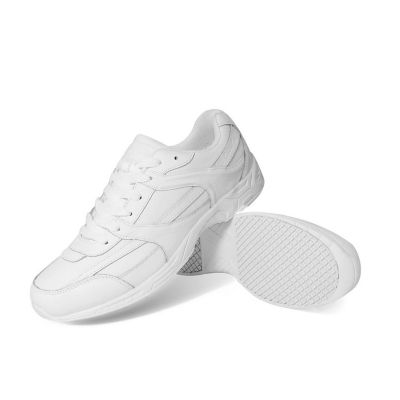
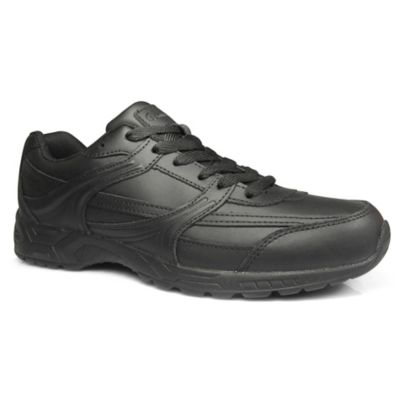
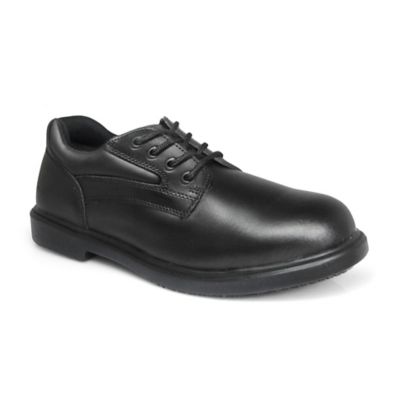
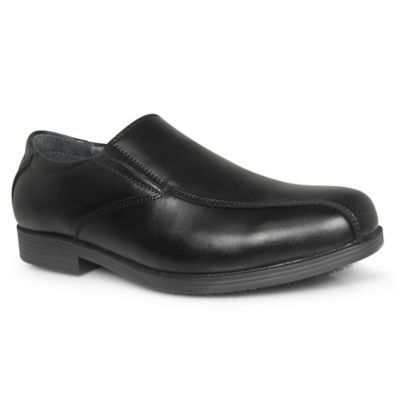
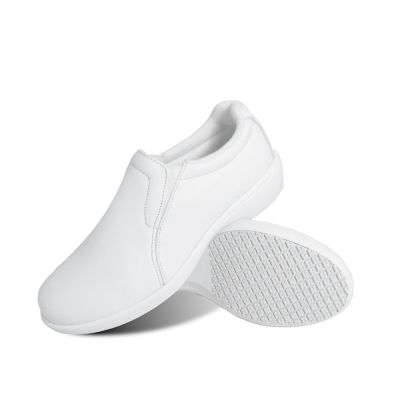
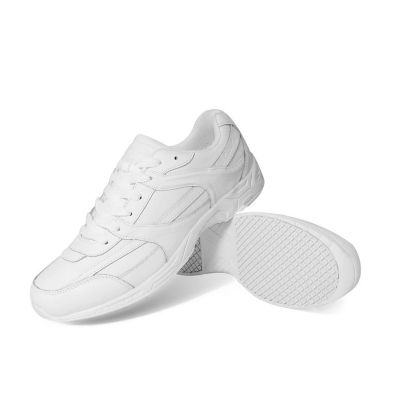
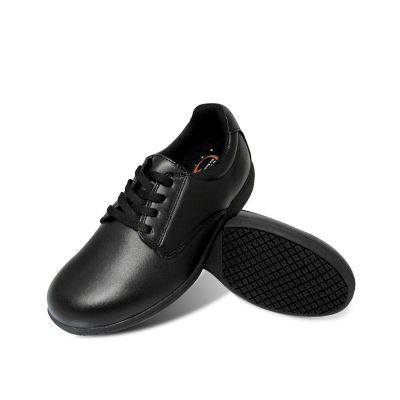
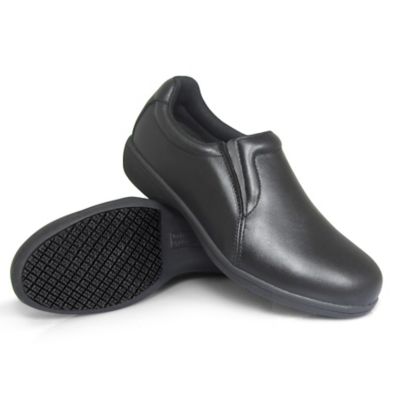
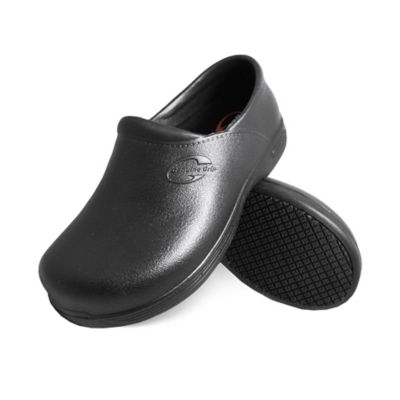
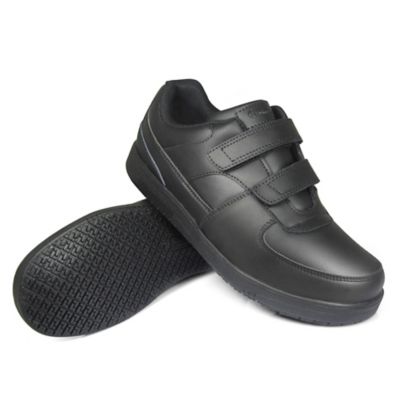
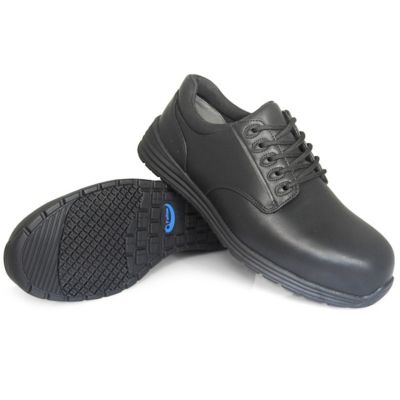
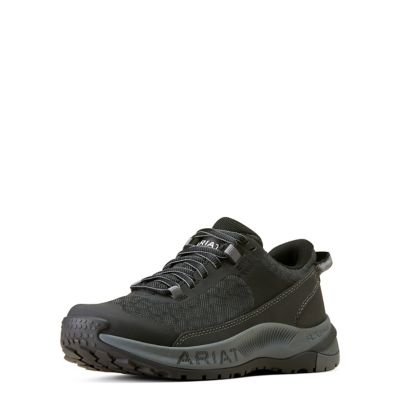
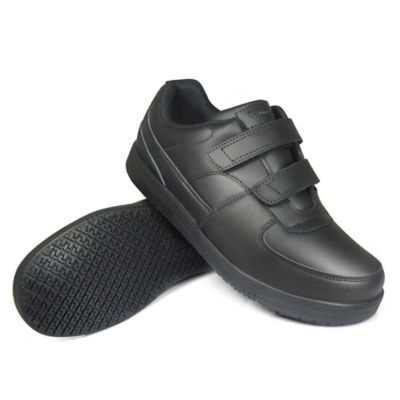
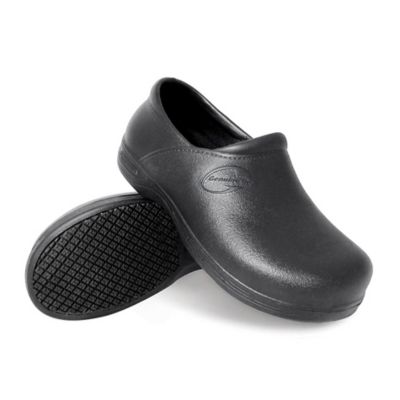
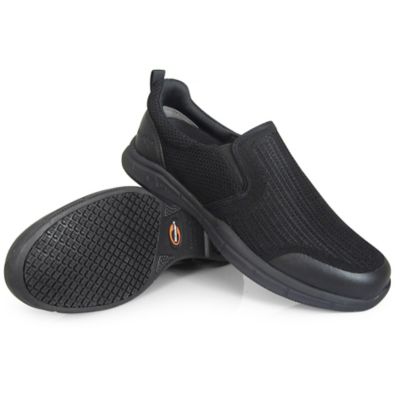
Shoes for kitchen work bring together slip-resistant outsoles, closed-toe coverage, a secure fit, and cushioning suited to long hours on hard floors. Those features matter whether the day starts with chopping vegetables in a country diner, serving lunches in a school cafeteria, or washing pans after a busy supper rush. Kitchen floors can collect water, grease, flour, and food scraps, sometimes all within a few steps of the same workstation. An outsole designed and tested for slip resistance can help provide traction, but no shoe makes every surface slip-proof. Spills still need prompt cleanup, and even a good tread needs clear contact with the floor. A slip-resistant rating and an oil-resistant sole describe different things: one concerns traction under specified test conditions, while the other concerns how the sole material stands up to oil exposure. Neither claim automatically means the shoe is waterproof. Product descriptions that identify testing methods and the conditions tested give shoppers more useful information than broad promises about grip. Tread layout matters, too, since grooves and channels can help move liquid away from the contact surface, while packed-in debris can interfere with that function. Beyond traction, closed toes help shield feet from ordinary bumps and splashes, though a standard work shoe does not provide the same protection as footwear rated for specific impact or liquid hazards. A low, stable heel and a sole that rests firmly on the floor can make repeated turns between the prep counter, sink, and service line feel more controlled. Cooks, bakers, dishwashers, food-service workers, and folks helping in a community kitchen may spend their shifts moving differently, so the right balance of grip, coverage, and flexibility depends on the job. Workplace footwear rules belong in that decision from the start, especially where enclosed heels, particular sole types, or safety toes are required. Kitchen shoes work best as one part of a safe setup, alongside clean floors, sensible walking habits, and a clear path through the work area.
Comfort in kitchen work shoes comes from more than a soft feeling underfoot. Cushioning helps soften repeated steps, while a supportive footbed and stable base help keep feet from sliding around inside the shoe. Standing at a cutting board for an hour puts different demands on footwear than carrying trays through a dining room, and a shoe that feels pleasant for a quick try-on may feel different after a full shift. Enough toe room lets the front of the foot spread naturally without rubbing against the upper, while a snug heel helps limit slipping with each step. Snug should not mean squeezed: pressure across the top of the foot, pinched toes, or a heel collar that digs in can become a bigger nuisance as the hours add up. Trying shoes with the socks normally worn on the job gives a better sense of the working fit, and checking both feet matters because they may not measure exactly alike. Feet can also swell over the course of a shift, making a little breathing room important without leaving the shoe loose. The same fit priorities apply when browsing
Men's Non Slip Kitchen Shoes, especially when comparing widths, closures, and room for an orthotic. Removable footbeds can make room for an insert, but the added thickness should not crowd the toes or lift the heel out of place. Laces allow tension adjustments across the foot and need to stay tied and tucked away from moving equipment. Slip-on designs can simplify getting ready for work, provided the heel stays secure through turns, steps, and crouching to reach a lower shelf. Clog-style footwear also varies in heel coverage and retention, so its suitability depends on the design and the workplace rules. A flexible forefoot can help with kneeling or reaching, while a steadier midsole may feel better during long stretches at a station. The goal is a fit that stays settled through the actual movements of the job, not simply the softest first impression.
Upper materials influence how kitchen footwear handles splashes, cleaning, and daily wear. Smooth leather and synthetic uppers can offer surfaces that wipe clean more readily than open fabric, though seams, closures, and construction affect how much liquid gets through. Water-resistant footwear can help with minor splashes, but that label does not mean feet will stay dry during prolonged exposure or when water enters around the collar. Mesh panels may allow more airflow, yet they can also leave more openings for spills to reach socks. In a work area with frequent splashing, coverage may take priority over ventilation. Shoe weight is another practical consideration: a lighter build can feel less tiring during steady walking, while a more substantial upper or sole may provide structure that some workers prefer. Neither weight nor thickness alone tells the whole story about how well a shoe will hold up. Reinforced seams, well-attached outsoles, and uppers that tolerate regular cleaning all contribute to everyday wear resistance. Care starts with the manufacturer's directions because leather, coated fabric, and molded materials do not all respond to the same cleaners. Wiping away food residue after a shift and clearing debris from the tread helps keep buildup from becoming a bigger chore. Excess water, strong chemicals, or machine washing can harm some constructions, so those methods belong only where the care instructions allow them. Shoes should dry fully between shifts, with removable footbeds taken out when appropriate, and without direct heat that could affect adhesives or materials. Routine checks can reveal smooth patches on the outsole, separating edges, cracked uppers, or cushioning that no longer feels supportive. Replacement needs depend on wear and working conditions rather than a fixed calendar. For someone who spends hours tending a grill, scrubbing mixing bowls, or carrying meals from kitchen to table, well-matched footwear is a practical piece of work gear. The strongest choice brings together the traction the floor calls for, the coverage the job requires, and a fit that remains comfortable from the first prep task through the last round of cleanup.