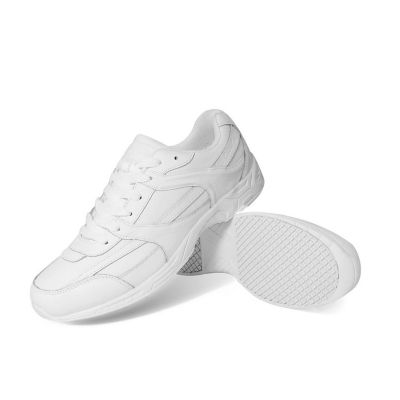
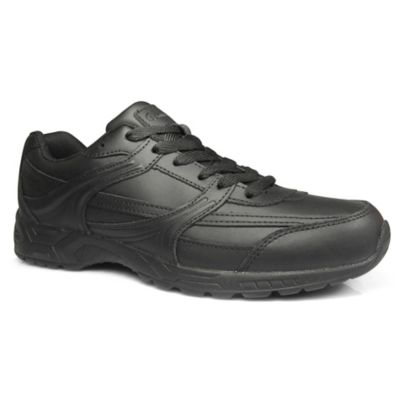
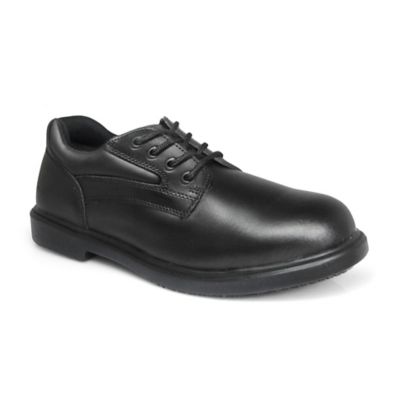
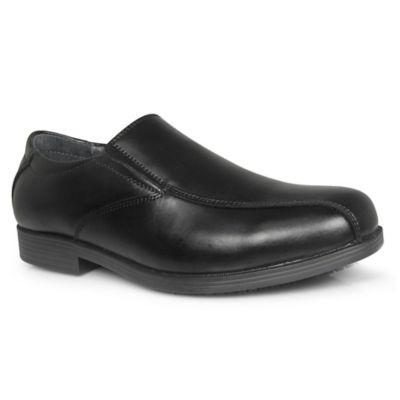
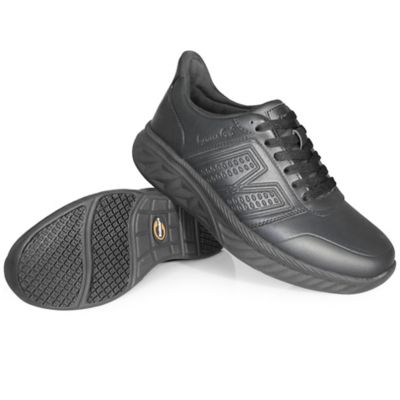
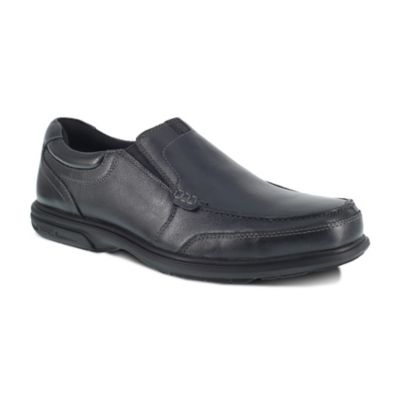
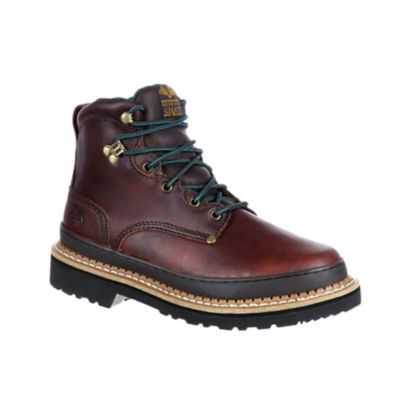
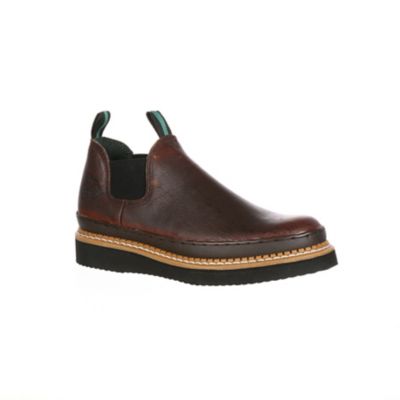
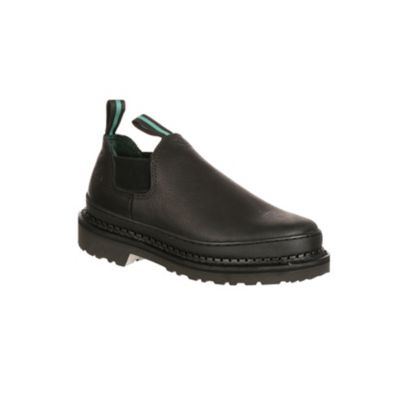
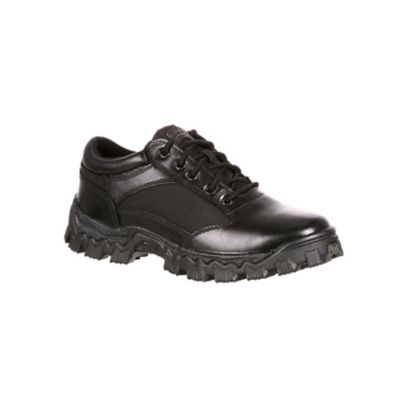
Men's non slip kitchen shoes are built around a straightforward need: keeping a steady footing while getting through a busy shift on hard floors. A cook moving between the prep table and range, a dishwasher working beside a splash-prone sink, and a server carrying a loaded tray all put different demands on their shoes. Kitchen work footwear brings traction, support, and easy cleanup together without making every step feel like extra work. Slip-resistant outsoles are an important part of that setup, especially where water, cooking oil, or food residue can collect underfoot. Rubber outsoles often feature closely spaced tread patterns and channels designed to help move liquid away from the contact surface. Tread depth alone does not tell the whole story; the outsole material, pattern, floor surface, and type of spill all affect grip. Published slip-resistance testing information can make comparisons more meaningful than judging a shoe by its appearance. Even then, no shoe prevents every slip, and spills still need prompt cleanup. Oil resistance and slip resistance also describe different things: an outsole that resists damage from oil exposure does not automatically provide traction on an oily floor. For restaurant kitchens, school cafeterias, community dining halls, and small-town cafés, the right footwear starts with the workplace's requirements and the surfaces underfoot. Closed toes and enclosed uppers provide coverage, while a secure heel helps keep the shoe in place during quick turns or trips between workstations. A closed toe is not the same as a protective safety toe, though, and ordinary kitchen footwear should not be treated as protection against falling equipment or every kind of spill. Men's slip-resistant kitchen shoes work best as one part of a sensible routine that includes clear walkways, well-kept floor mats, and attention to wet areas. Their purpose is practical: helping the person wearing them stay focused on the next order, the next rack of dishes, or the last round of cleanup.
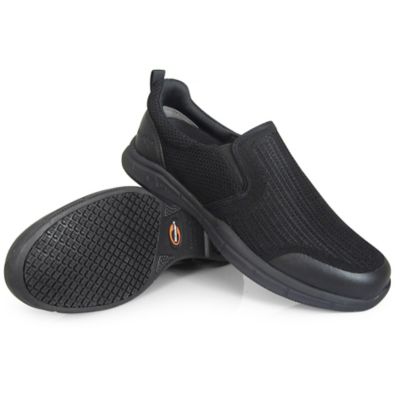
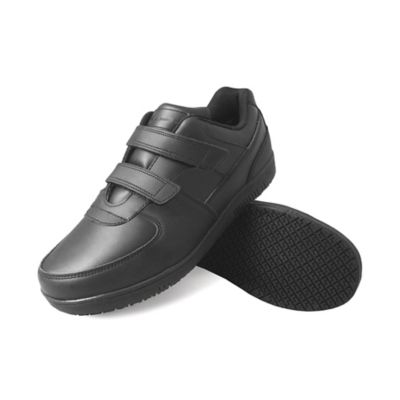
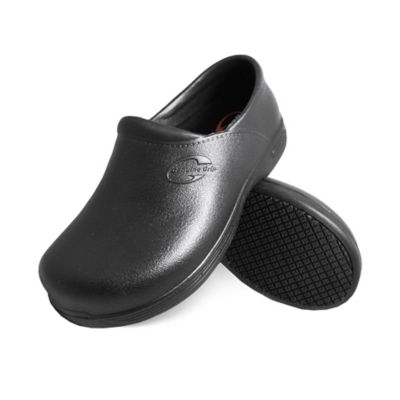
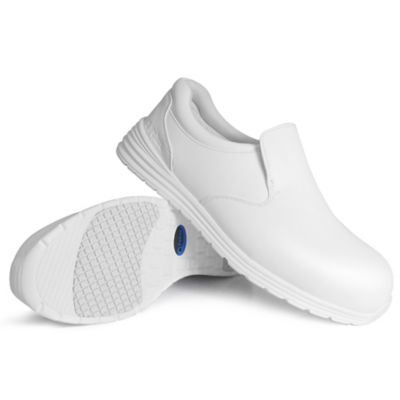
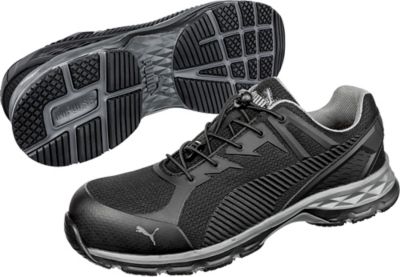
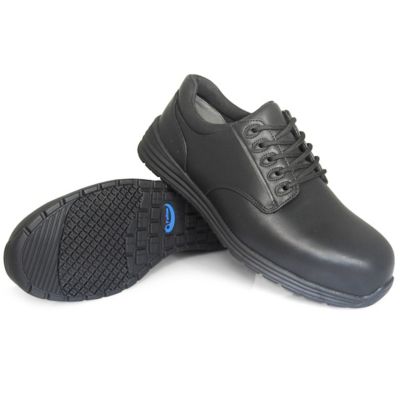
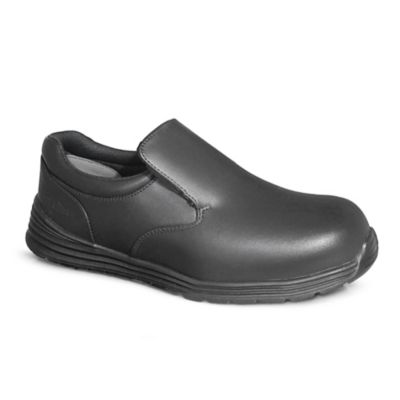
Kitchen work footwear takes several forms, from molded clogs and simple slip-ons to lace-up shoes with an athletic shape. Each handles the pace of kitchen work a little differently. A clog can offer a roomy forefoot and a smooth surface that wipes down easily, while a lace-up design allows more adjustment across the top of the foot. Slip-ons keep the upper simple, but the fit still needs enough hold at the heel to prevent the foot from sliding around inside. Backless or vented designs may not meet an employer's footwear rules, particularly where full coverage is required. Materials matter just as much as shape. Smooth leather can provide substantial coverage and a structured feel, although it needs cleaning and care appropriate to its finish. Synthetic uppers often have wipe-clean surfaces, while molded materials reduce the number of seams where residue can collect. Breathable textile panels may feel lighter on the foot, but exposed fabric can take more effort to clean and may let liquids through unless the shoe has a separate protective layer. Water resistance is not the same as waterproof construction, and neither label alone establishes protection from kitchen spills. Underfoot, cushioning helps soften repeated steps across tile or concrete, while a stable midsole and shaped footbed can support a long stretch at the prep counter. More softness is not always better; a footbed that compresses too far may feel less steady when carrying a full pan. Fit brings all those features together. Toes need room to spread without pressing against the front, the heel should stay reasonably secure, and the shoe should not squeeze across the widest part of the foot. Work socks and any intended insoles affect that fit, so they belong in the picture from the start. Wide-width sizing, removable footbeds, and adjustable closures can make a meaningful difference for someone who spends most of the day standing rather than sitting.
A pair of kitchen shoes also needs to hold up to the less noticeable parts of the job: crouching beside a lower shelf, bracing at a dish station, and walking back across the dining room after closing. Strong attachment between the upper and sole, reinforcement at high-wear areas, and an outsole that keeps its shape all contribute to service life. The same practical considerations apply to
men's non slip work shoes for other settings, though footwear should always match the hazards and rules of the particular job. Kitchen shoes are not automatically suitable for construction work, chemical handling, or tasks requiring electrical-hazard or safety-toe protection. For food-service work, regular cleaning helps preserve both the shoe and its tread. Grease, packed-in crumbs, and sticky residue can fill outsole channels, so the bottom deserves attention along with the upper. A soft brush can help loosen trapped debris, followed by cleaning according to the manufacturer's directions. Leather, textile, and molded footwear do not all tolerate the same cleaners or washing methods; machine washing is appropriate only when the care instructions allow it. Drying shoes in a ventilated spot away from direct heat helps avoid unnecessary stress on materials and adhesives. Removable insoles can be aired separately when their care instructions permit, and alternating between pairs gives each one more time to dry between shifts. Wear checks are just as important as cleanup. Smoothed tread, cracks in the outsole, separating seams, or cushioning that stays flattened can signal that a pair is no longer doing its job as intended. Replacement timing depends on hours worn, walking distance, floor conditions, and care rather than a single calendar rule. For the line cook, bakery worker, catering helper, or cafeteria crew member, well-fitting kitchen footwear earns its place through everyday details: a steady heel, room at the toes, manageable weight, and a sole suited to the work surface. Those details matter from the first prep task through the final sweep.