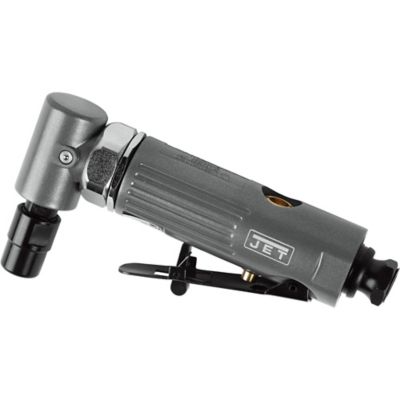
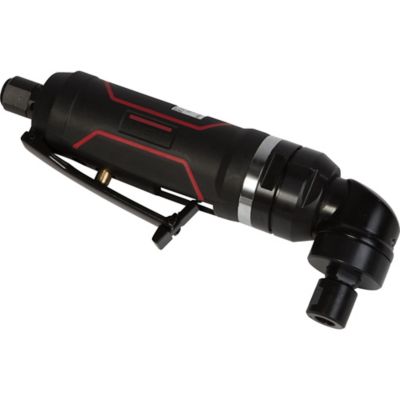
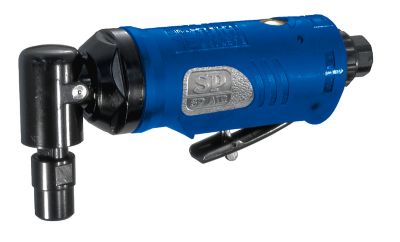
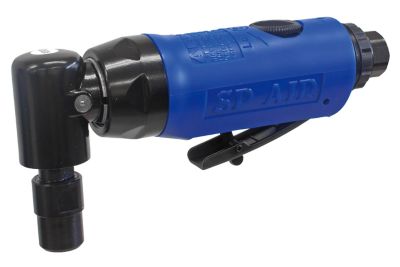
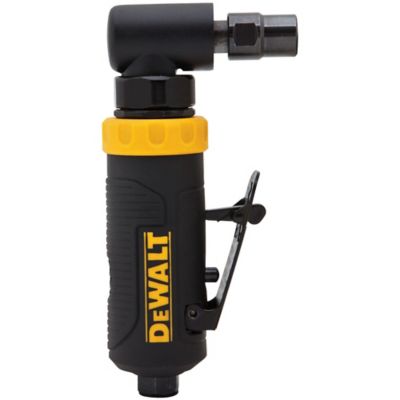
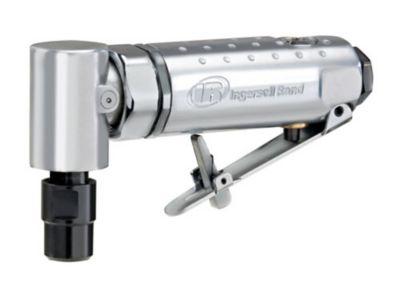
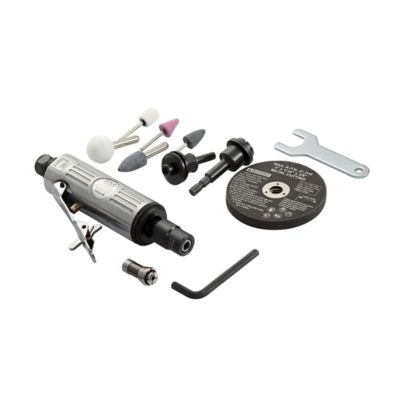
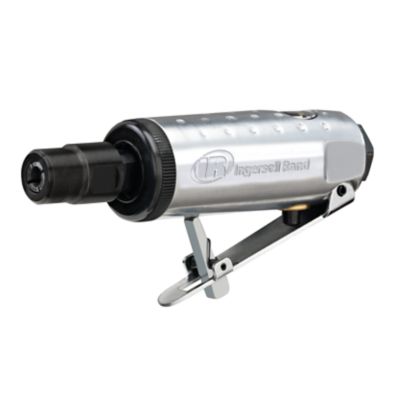
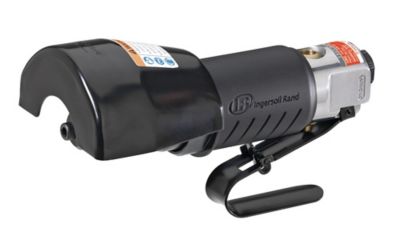
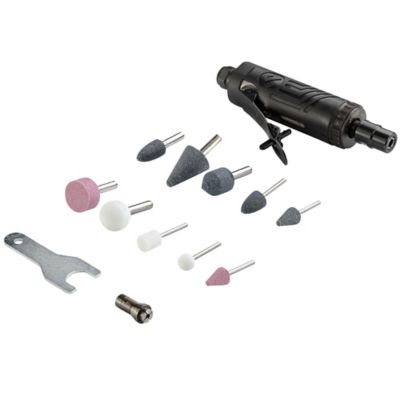
Right angle die grinders are handy, high-speed tools built for jobs where a straight grinder feels too long, awkward or downright impossible to use. With a 90-degree head, the motor sits across the tool instead of extending straight out, giving you better control in cramped spots around a truck frame, farm implement, exhaust pipe, engine bay or welded corner. Most use a 1/4-inch collet that accepts a wide range of compatible accessories, including carbide burrs, mounted stones, sanding rolls, flap wheels, polishing points and small wire brushes. Depending on the tool and accessory, speeds may reach roughly 20,000 to 25,000 RPM, making these grinders well suited for detail work such as deburring freshly cut metal, smoothing sharp edges, blending welds, cleaning rust and paint, removing gasket material, and polishing hard-to-reach surfaces. They can also help shape or clean up metal parts after fabrication, especially when a larger grinder cannot get into the corner without nicking nearby material. The compact head is the real advantage. Picture cleaning up a weld inside a square tube or working around a bracket under a hood: a right angle die grinder lets you keep the tool close to the work while your hand stays in a more natural position. That control matters when you are taking off a little material at a time instead of hogging away a large section.
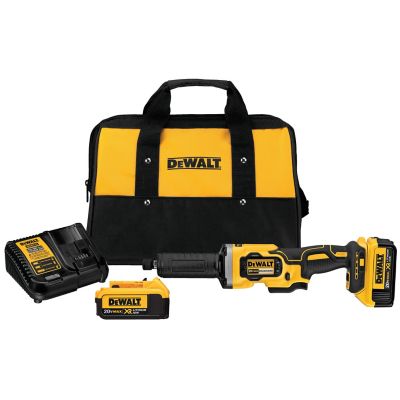
When choosing among right angle die grinders, start with the power source and the kind of work you do most often. Cordless models are a solid fit for mobile repairs, field work, equipment maintenance and any shop where dragging an air hose across the floor gets in the way. They are easy to carry from the barn to the driveway, and a charged battery means you can get started without setting up a compressor. Look for a comfortable grip, a compact body, a secure battery connection and enough runtime for the work at hand. Multiple speed settings or a variable-speed trigger are especially useful when moving between aggressive material removal and more delicate finishing. A slower setting can help when polishing, working near a thin edge or using an accessory that needs a lighter touch, while higher speeds are useful for cleaning welds and removing stubborn buildup. Pneumatic tools remain a dependable choice for busy garages, fabrication areas and production work. They are generally light in the hand and can run steadily as long as the air system can keep up. If you are comparing air-powered options, check the required CFM and operating pressure against your compressor’s actual output, not just the tank size. A long hose, undersized fittings or a compressor that cycles too often can reduce performance. For a broader look at air-powered options, browse
Pneumatic Die Grinders. Whether you choose cordless or pneumatic, check the collet size, maximum speed, throttle style and accessory compatibility before placing an order. A tool with a locking throttle, paddle control or variable trigger may feel very different in your hand, so think about how long you normally work and whether you will be wearing gloves.
The right accessory makes just as much difference as the grinder itself. Carbide burrs are useful for shaping and removing material from metal, while mounted stones can smooth rough edges and touch up welds. Small sanding drums and flap wheels are practical for blending surfaces, taking down light rust and preparing metal for paint. Wire brushes help clean scale, dirt and corrosion, but they can throw bristles, so use the correct guard and keep bystanders clear. Always match the accessory’s rated RPM to the grinder’s speed, seat it fully in the collet and tighten it securely without over-tightening. Eye protection is a must, and hearing protection, gloves suited to the work and a dust mask or respirator may be appropriate depending on the material and finish. Let the tool do the cutting instead of forcing it; too much pressure can bog down the motor, wear out an abrasive quickly or make the accessory catch. Right angle die grinders make thoughtful additions to a home workshop, repair truck or fabrication bench, and they can be a practical gift for someone who enjoys restoring old equipment, maintaining vehicles or building gates and other metal projects. During the warmer working season and into the cooler months, they are useful for everything from cleaning up a mower deck to preparing a trailer repair, as long as the work area is well lit, the material is secured and the tool is handled with steady, deliberate movements.