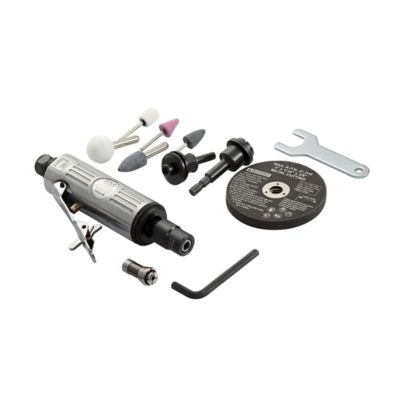
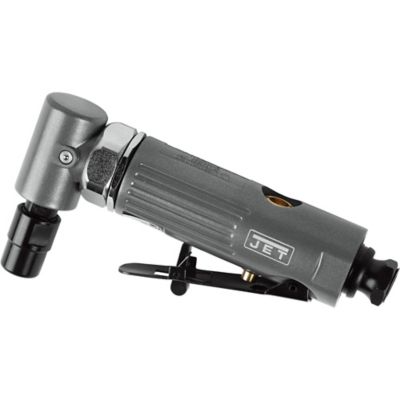
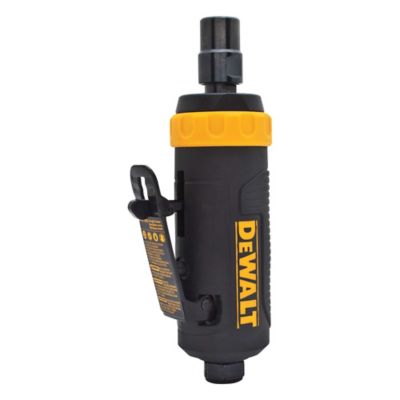
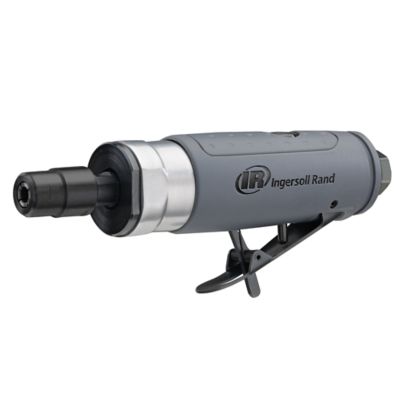
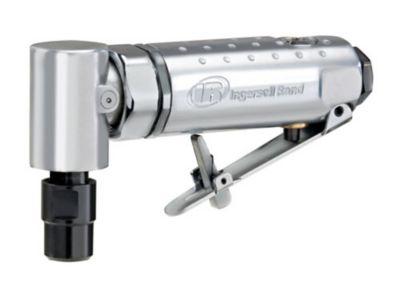
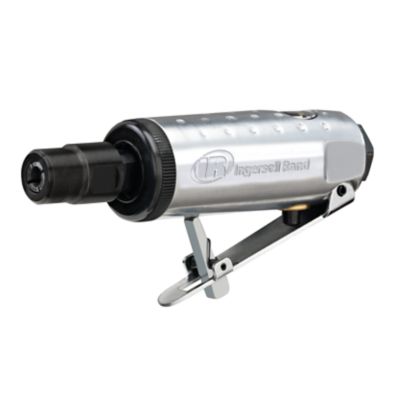
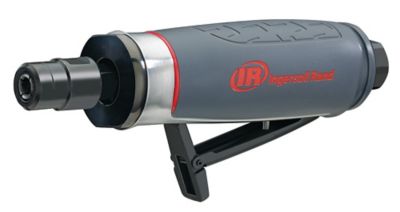
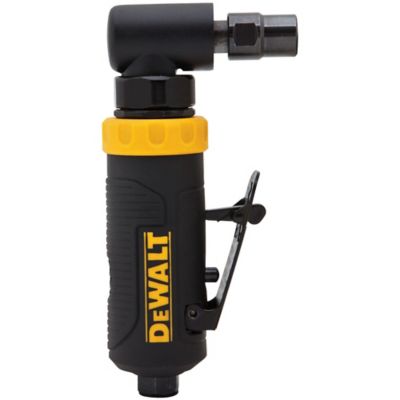
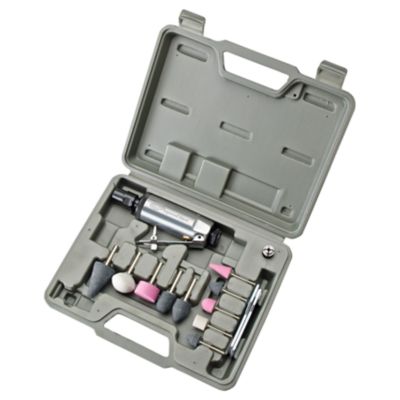
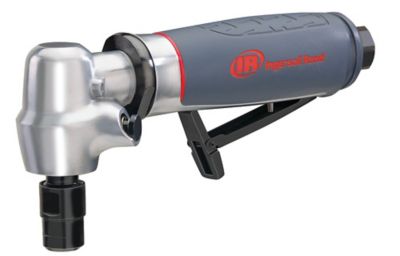
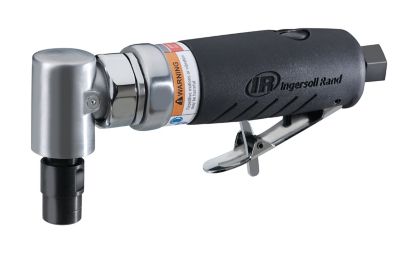
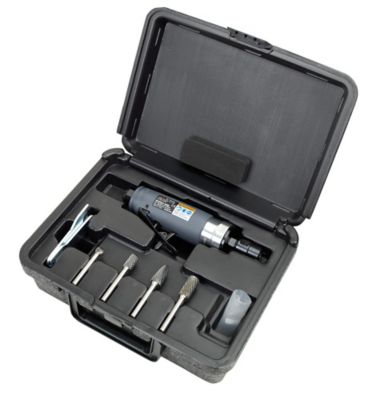
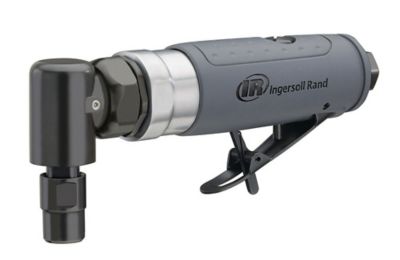
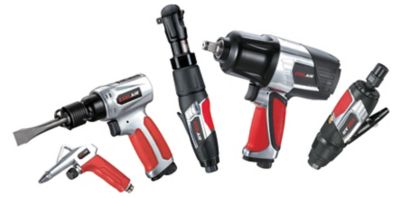
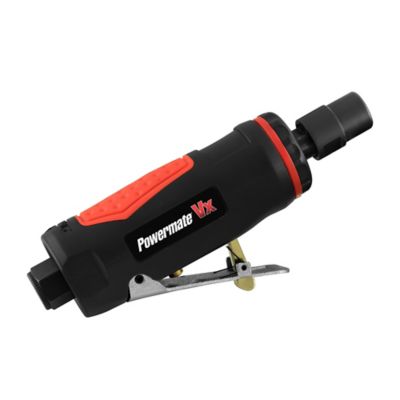
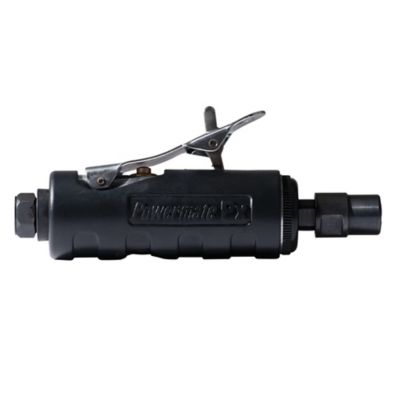
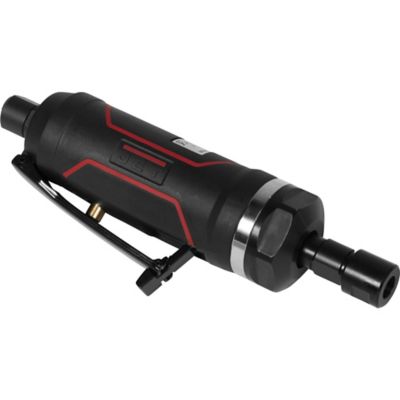
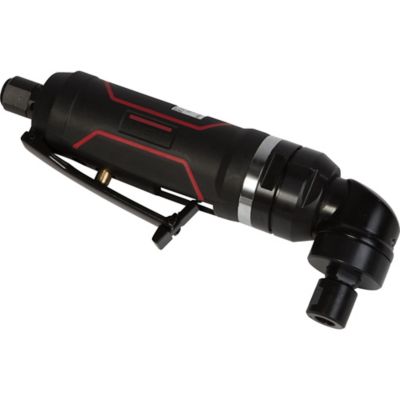
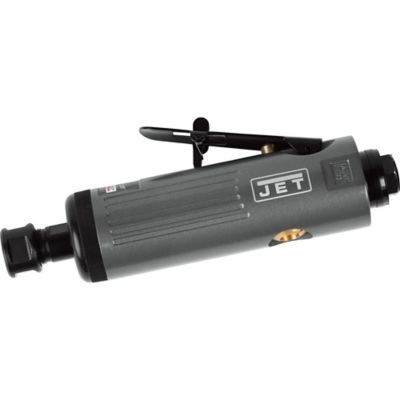
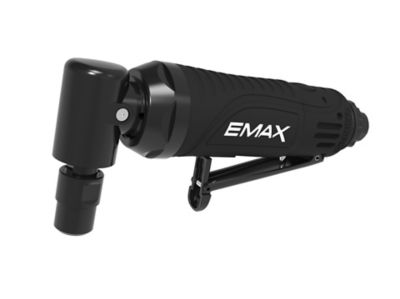
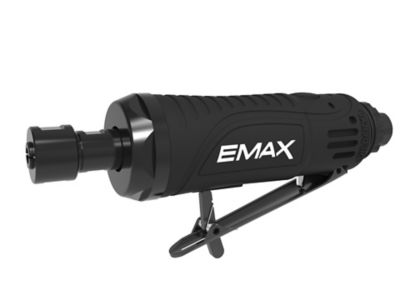
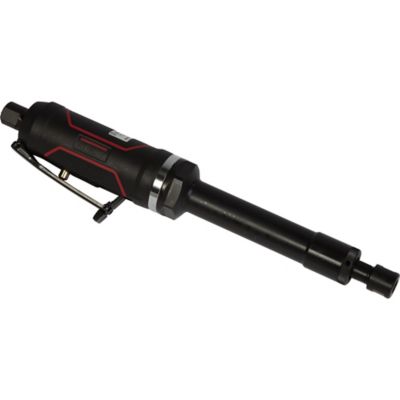
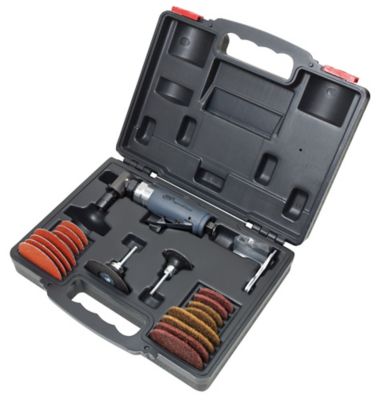
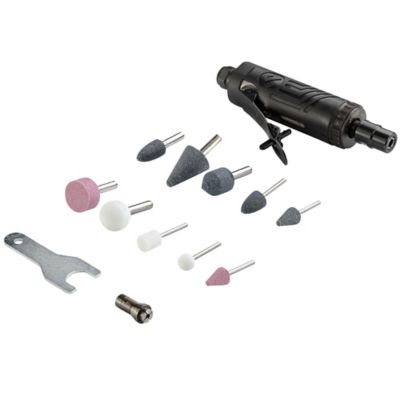
Pneumatic die grinders are compact, high-speed air tools built for the detail work that larger grinders and sanders cannot easily handle. Instead of using a built-in electric motor or battery, a pneumatic die grinder connects to an air compressor and turns an accessory at a very high speed, often around 20,000 to 25,000 RPM. That speed makes these tools useful for cleaning up welds, smoothing sharp edges, removing burrs, blending rough spots, porting and polishing metal, and working in tight spaces around machinery or automotive parts. A straight die grinder keeps the collet and grinding head in line with the tool body, giving you a familiar shape for general grinding, shaping, and finishing. A right-angle model places the head at a 90-degree or similar angle, which can make it easier to reach inside a frame, along a flat panel, around a pipe, or into a cramped corner. For another way to narrow down the available styles, take a look at
Right Angle Die Grinders. These tools are at home in a farm shop, home garage, welding area, fabrication bay, or equipment maintenance shed. Someone repairing gates may use one to smooth a fresh weld before paint, while a mechanic may reach for it to clean corrosion from a bracket or remove casting flash from a hard-to-reach part. Metalworkers use die grinders with carbide burrs for shaping and porting, grinding stones for smoothing, and sanding or polishing accessories for finishing work. They can also be handy for cleaning up cut edges on brackets, modifying a small part for a better fit, or removing old material from a repair area. Woodworkers and makers may use the right attachment for light shaping and detail work, but these are primarily high-speed metalworking tools, so the accessory and material must always be matched carefully. Because a die grinder removes material quickly, it offers a good balance of control and power for small jobs, but it is not a substitute for a bench grinder, angle grinder, or cutoff tool when a larger wheel or deeper cut is needed. The best choice depends on the work in front of you, the space available, and the kind of finish you want to leave behind.
When comparing pneumatic die grinders, start with the air requirements and make sure your compressor can keep up. Many models are designed to operate at about 90 PSI and may use roughly 3 CFM during continuous operation, though exact requirements vary by tool and the amount of pressure applied. Check the tool specifications along with your compressor's delivered CFM, not just the tank size or advertised peak output. A larger tank can help with short jobs, but steady grinding will eventually depend on the compressor's ability to supply air. A clean hose, properly sized fittings, and a moisture separator can also help an air tool run more consistently, especially in a busy shop or during cooler weather when condensation can build up in the line. Collet size is another important detail. A 1/4-inch collet is common for many grinding, sanding, and burr accessories, while a 1/8-inch collet can accept smaller bits for fine detail work when the tool or an approved collet is designed for them. Look for a comfortable grip, a throttle that is easy to control, and an exhaust direction that keeps air and shop debris away from your hands and work surface. A straight body may offer better reach on open surfaces, while an angled head can be more natural around corners and confined areas. Weight matters as well; a lighter tool is easier to hold during cleanup and finishing, while a sturdy housing may be welcome for regular shop use. Before each use, inspect the tool, hose, fittings, collet, and accessory for damage, and add a few drops of air tool oil into the air inlet as recommended by the manufacturer. Regular lubrication helps reduce internal wear and the chance of rust inside the air motor. Secure the workpiece, install the accessory fully, tighten the collet, and allow the grinder to reach operating speed before contacting the material. Eye protection is essential, and hearing protection, gloves suited to the task, long sleeves, and a face shield may be appropriate when sparks or fragments are possible. Keep loose clothing, hair, and fingers away from the spinning bit, disconnect the air supply before changing accessories, and never exceed the accessory's rated speed. Pneumatic die grinders can make a thoughtful gift for a new homeowner with a growing workshop, a hands-on hobbyist, a farm owner who handles equipment repairs, or a professional who needs a dependable detail tool close at hand. They are especially useful for people who already own an air compressor and enjoy keeping their own trailers, implements, vehicles, gates, and shop projects in good working order. During the warmer part of the year and into the cooler months, a well-maintained die grinder can earn its place on the workbench for everything from touch-up fabrication to last-minute equipment repairs before a busy stretch of chores.