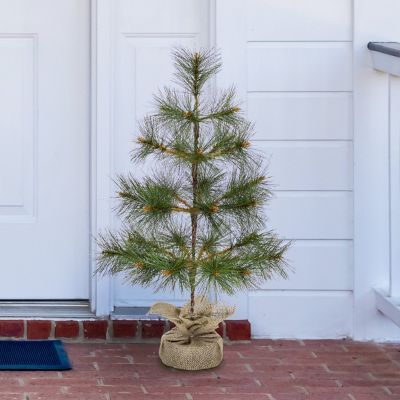
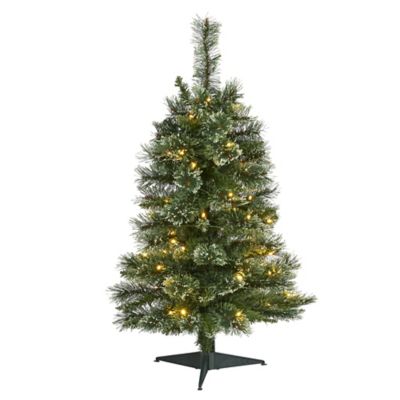
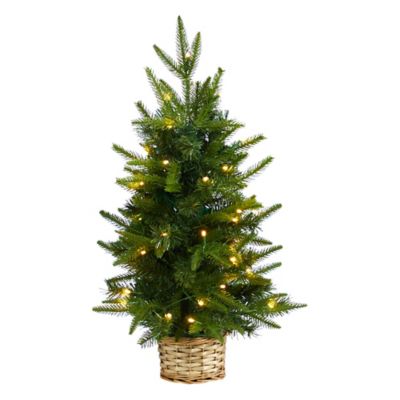
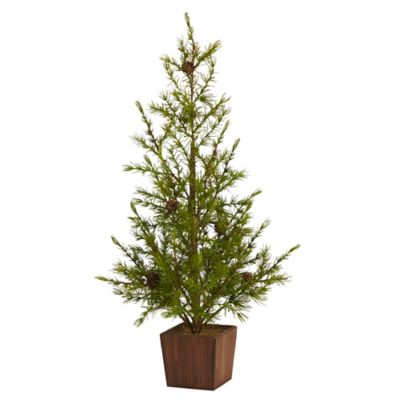
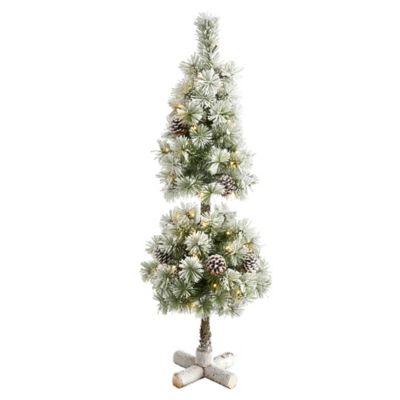
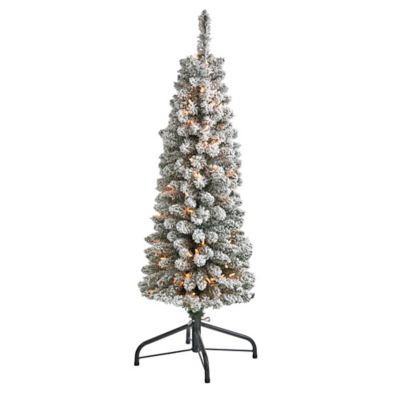
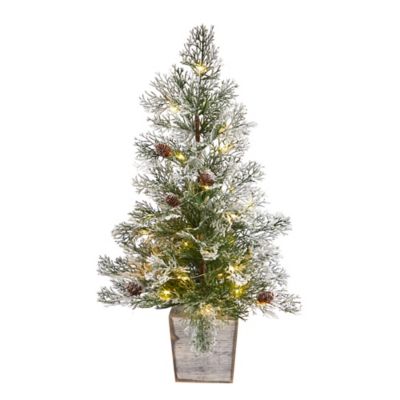
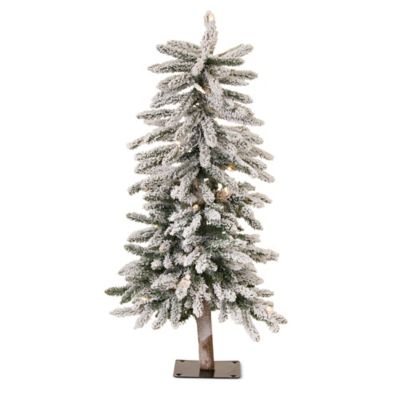
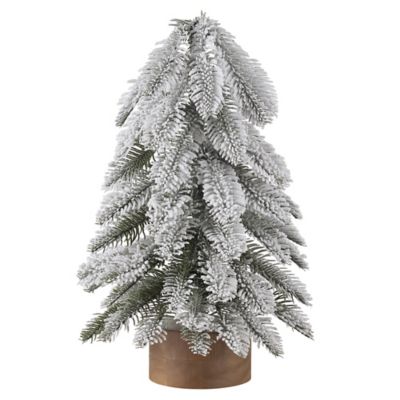
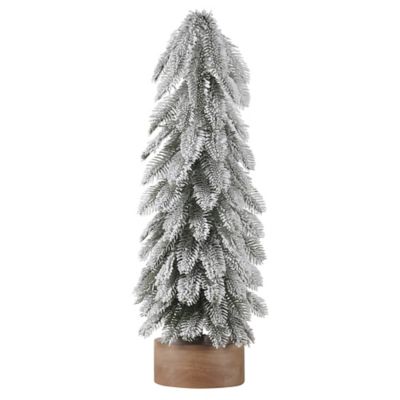
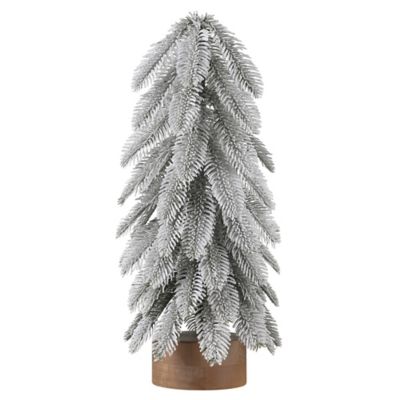
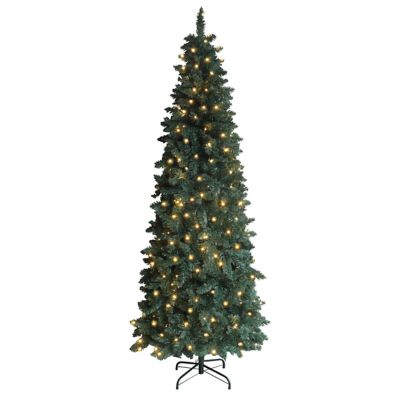
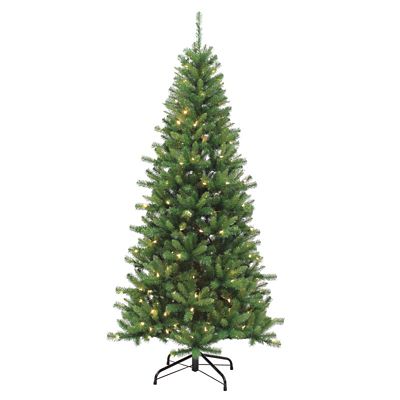
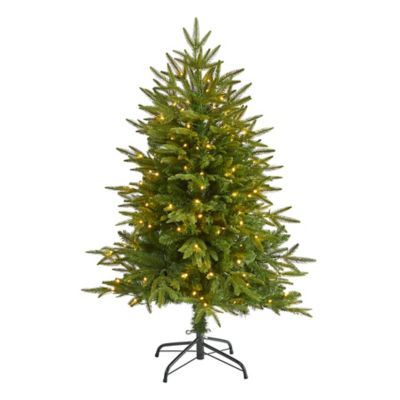
Realistic tabletop Christmas trees bring the look of evergreen branches to places where a full-size tree would crowd the room. A small tree on a kitchen sideboard, an entryway bench or a desk can carry plenty of Christmas spirit without taking over the floor. Many tabletop styles stand about 2 to 4 feet tall, though smaller versions suit shelves and other tight spots. Their appeal comes from more than height: lifelike needle shapes, layered branches and subtle shifts in green help a little tree look like something brought in from the back pasture. Fir-inspired shapes tend to have a tidy, tapered outline, while pine-inspired styles may have longer needles and a more open, airy appearance. Spruce-inspired branches can give a tree a fuller silhouette with short, pointed-looking needles. Artificial foliage often combines molded polyethylene, or PE, branch tips with polyvinyl chloride, or PVC, needles. Molded PE can capture the three-dimensional shape and texture of evergreen growth, while PVC foliage can fill out the interior and help conceal the center pole. A mix of both materials can balance a natural-looking outer profile with fullness deeper in the branches. The number of tips tells only part of the story; their placement, shape and spacing matter just as much to the finished look. Little gaps between boughs can feel true to a living tree and leave room for ornaments, while dense foliage makes a stronger green backdrop for lights. Some styles include brown stems, pinecones or lightly varied needle colors that echo woodland evergreens. Others have flocking for a snowy appearance, which creates a different effect from a plain green tree and may shed a little during handling. On a farmhouse buffet beside a crock of candy canes or on a cabin dresser near a stack of quilts, a realistic miniature Christmas tree adds a familiar holiday touch without needing water or dropping fresh needles as it dries.
The best fit depends on the whole tree, including its base, spread and any topper—not just the height listed in its name. A two-foot tree with broad lower branches can take up more table space than a taller, narrower shape. Overall dimensions help show whether there is still room for serving dishes on a dining table, mail on a hall console or a lamp on a bedside stand. On a table where folks gather for supper, a low profile keeps faces in view and leaves elbow room. A taller tabletop tree makes more sense on a sideboard or in a corner away from the main conversation. Branches also need breathing room below overhead cabinets and open shelves. When the goal is a floor-standing tree with a smaller footprint rather than a tree that sits on furniture,
Realistic Slim Christmas Trees offer a related shape for narrow spaces. For tabletop arrangements, the base plays a big part in both appearance and steadiness. Burlap wrapping gives a simple country look, while pots and metal containers can echo the finishes already in a room. The outer covering does not always tell what supports the tree underneath, so base construction and weight are worth checking. A steady foundation matters on a narrow shelf or in a busy household, although no small tree should be treated as tip-proof around children or pets. A furniture-safe pad beneath a rough container can help protect a wood surface, provided it does not make the base wobble. Lightweight ornaments suit many small artificial branches, and a few felt shapes, little wooden stars or ribbon bows can bring out the tree’s outline without pulling the tips down. Trees with open branch spacing leave more room for hanging keepsakes; fuller shapes can look finished with lights alone. For anyone setting up a holiday corner in a smaller home, guest room or home office, that flexibility makes the scale especially practical.
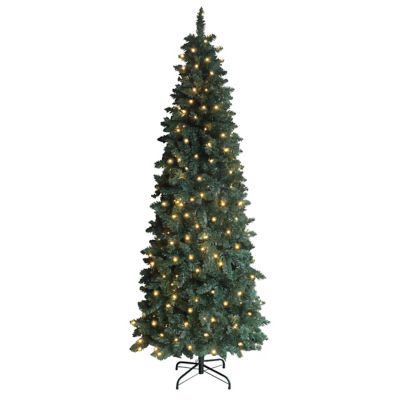
Lighting changes the mood of a tabletop Christmas tree as much as the branch shape does. Warm white lights give a soft glow that sits comfortably alongside wood furniture and simple country Christmas accents, while multicolor lights bring a more playful look to a family room or children’s holiday display. Pre-lit trees have lights arranged through the foliage, which can make setup simpler; unlit trees leave the light color, spacing and strand style up to the household. Battery-powered designs can keep an arrangement free of a cord running across the table, but battery life depends on the lights, settings and length of operation. A timer, when included, can limit daily run time, and an accessible battery compartment makes changes easier after the branches are shaped. Plug-in lighting needs an outlet within reach and a cord route that stays clear of walkways, chair legs and serving areas. LED lights generally draw less electricity and give off less heat than incandescent lights, but the tree and lighting still need to stay away from candles, fireplaces and other heat sources. Indoor placement is the right choice unless the entire tree, including its lights and power components, is rated for the intended outdoor setting. A covered porch alone does not establish that protection. For a natural appearance after unpacking, gentle branch shaping helps separate flattened tips and restore the layered outline; repeated sharp bending can stress branch wires and attachments. Care is usually straightforward, with light dusting and storage that protects the foliage from crushing. Manufacturer care directions matter, especially for flocking and built-in electrical parts, which should not be soaked. A cool, dry storage spot and a box with room around the branches can help preserve the shape between Christmas seasons. For seasonal storage, removable batteries should come out according to the product directions. These small artificial trees can also make thoughtful gifts for someone settling into a first apartment, a relative who prefers a simpler holiday setup or a friend who enjoys adding a little Christmas glow to the kitchen. Their manageable size leaves room for everyday life while still giving treasured ornaments and familiar holiday traditions a place to land.