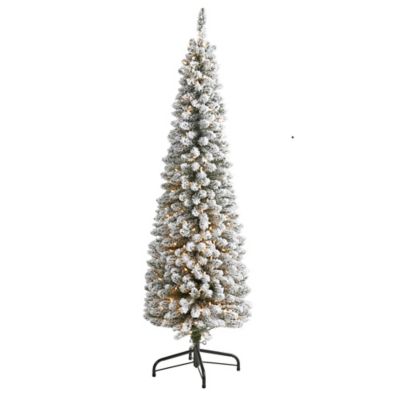
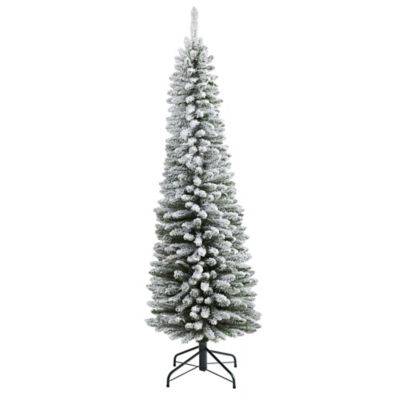
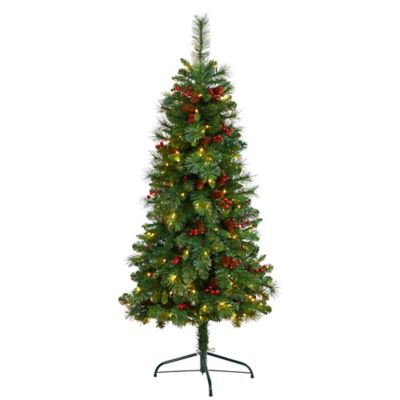
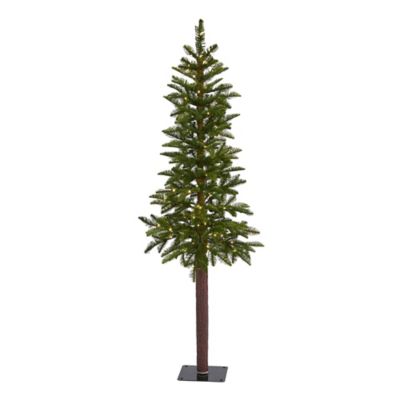
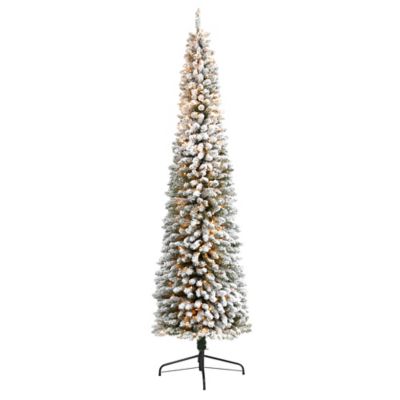
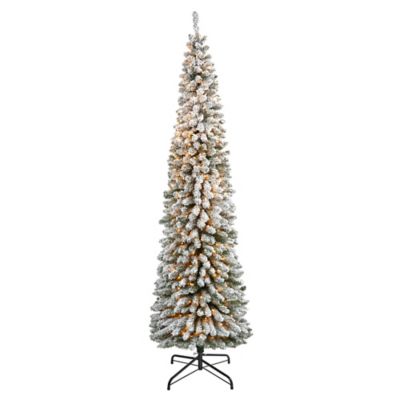
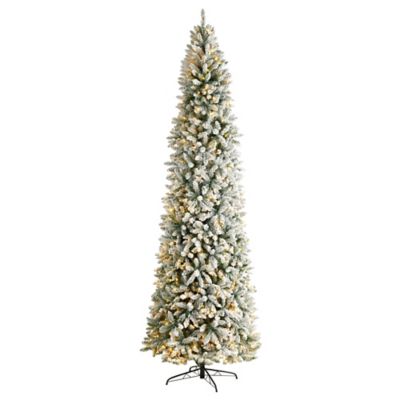
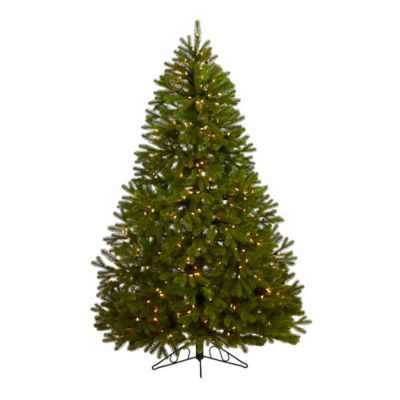
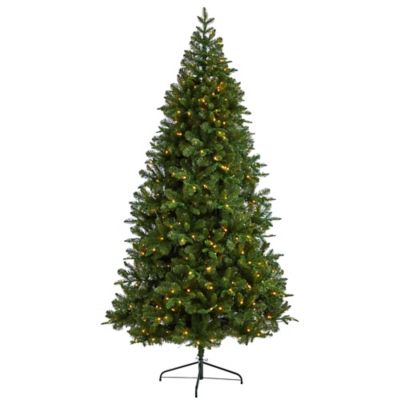
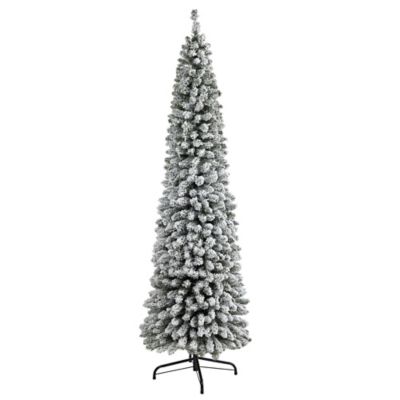
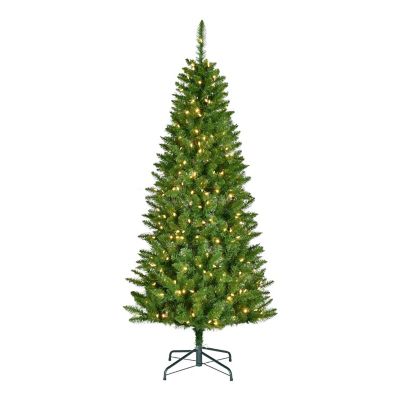
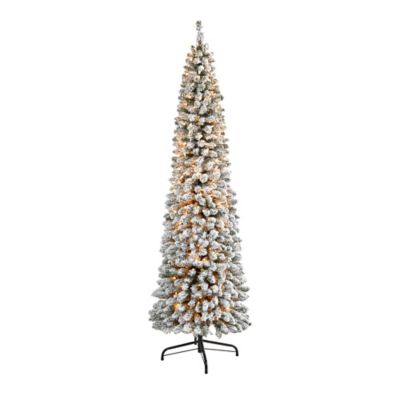
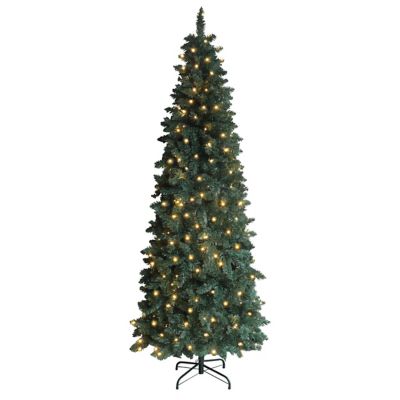
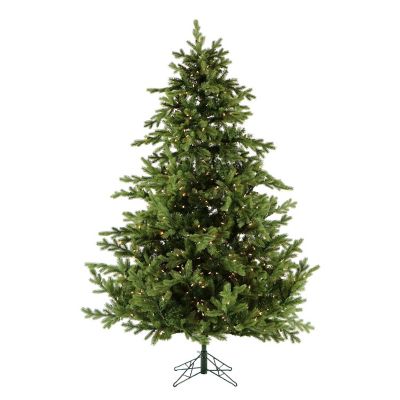
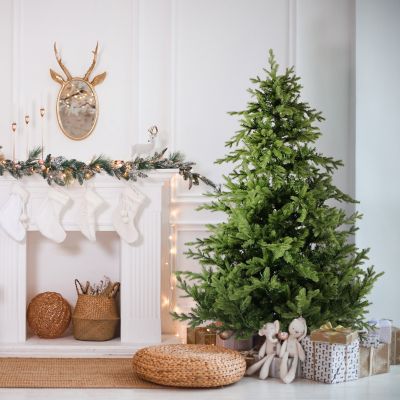
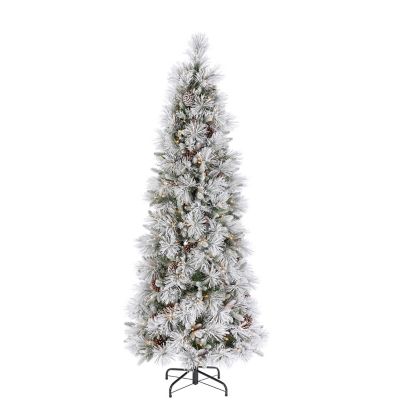
Space-saving artificial Christmas trees bring the familiar shape and greenery of a Christmas tree into rooms where a wide base would crowd the furniture or block a walkway. Their smaller footprint makes them a good fit for apartments, farmhouse sitting rooms, cabins, bedrooms, and entryways, while still leaving room for ornaments and lights. Slim trees have a narrower profile than traditional full-shaped trees, and pencil trees take that shape further with a tall, slender outline. Half trees have a flatter back that sits near a wall, while corner designs tuck into places where a round tree might stick out too far. Those shapes serve different purposes: a pencil tree can stand beside a bookcase, while a half tree can bring Christmas cheer to a dining area without pushing the table into the next room. Height alone does not tell the whole story, though. The widest branch spread and the stand’s footprint both matter, especially beside a recliner, behind a door, or along the path from the kitchen to the living room. A tree that clears the ceiling still needs room for its topper, and branches should stay clear of ceiling fans, door swings, and everyday foot traffic. In a home where muddy boots, feed buckets, and grocery bags pass through the same entry, keeping that route open makes a difference. A narrow tree can also leave more floor space for wrapped presents, a rocking chair, or visiting family without making the room feel stripped down for the holiday. The best proportions depend on the spot: a tall, narrow tree draws the eye upward, while a shorter, fuller shape can feel more balanced beneath a low ceiling. Leaving a little breathing room around the branches helps the tree look settled into the room rather than squeezed into the last open patch of floor. A slim shape can also work as a second tree in a bedroom or breakfast nook while the main gathering space keeps its familiar holiday setup.
Materials, branch construction, and lighting all affect how a space-saving artificial Christmas tree looks once it is standing. Molded polyethylene tips can show the shape and texture of individual needles, while cut PVC needles give branches a softer, fuller appearance; some trees combine both materials. The mix of outer tips and inner foliage influences how much of the center pole shows through, particularly on a narrow tree viewed from several sides. Branch shaping matters, too. Spreading smaller tips in different directions helps fill gaps and gives ornaments places to hang without bunching everything along the outside edge. Hinged branches generally fold toward the center pole for storage, while hook-in construction has separate branches that attach to the trunk. Secure section connections, sound branch attachments, and a stand suited to the tree’s height all contribute to steady support through repeated setup and packing. Natural green foliage gives family ornaments a familiar backdrop, while flocked branches add the look of snow without needing a broad tree silhouette. Flocking can shed during handling, so a little clearance from upholstered furniture makes setup and cleanup easier. Pre-lit trees simplify the finished arrangement by placing lights throughout the branches, while unlit trees leave the light color and spacing up to the household. Warm white lights can give a quiet glow beside a reading chair, and multicolor lights can suit a room filled with children’s ornaments and well-loved holiday keepsakes. LED lighting generally draws less electricity and gives off less heat than comparable incandescent lighting, but electrical connections still need to follow the manufacturer’s directions. A nearby outlet helps keep cords out of walkways, and cords should never run beneath rugs. On a slender tree, smaller ornaments, narrow ribbon, and a topper that suits the branch strength help keep the outline balanced. Heavier ornaments sit better closer to sturdy branch connections rather than at the ends of flexible tips.
Small-space Christmas displays are not limited to floor-standing trees. For a kitchen counter, sideboard, desk, or sheltered indoor windowsill,
artificial tabletop Christmas trees bring the same holiday feeling to an even smaller footprint. The supporting surface needs enough room for the base and should keep the tree away from cooking heat, splashing water, and the edge where a passing elbow could catch it. A compact tree can make a thoughtful gift for someone settling into a first apartment, a relative who prefers a lighter holiday setup, or a family member who wants a little Christmas greenery in a bedroom. Its value comes from fitting the recipient’s space and routine, not simply from being small. A lightweight tree may be easier to carry between a closet and the living room, while manageable sections can make setup less of a chore in a house with steep stairs or limited storage. After the holiday, gentle handling helps protect branch wires, flocking, and light strands for the next Christmas. Dust can usually be lifted with a soft, dry cloth or a gentle duster, following the tree’s care directions; electrical parts should stay dry. Ornaments and separate light strings belong off the branches before packing, and hinged sections should fold without forcing or crushing the tips. A storage bag or properly sized box helps shield the tree from dust and keeps loose parts together. A dry indoor storage spot is preferable to a damp shed or an area exposed to excessive heat. During display, even a narrow tree needs separation from woodstoves, fireplaces, radiators, and other heat sources. Flame-resistant labeling does not make a tree fireproof, and an indoor tree belongs indoors unless its labeling states otherwise. With room for safe placement and sensible storage afterward, a space-saving tree can become a familiar part of Christmas without taking over the house.