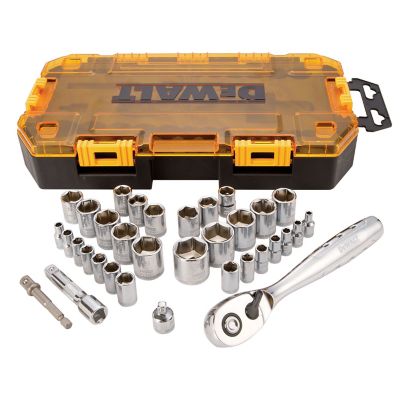
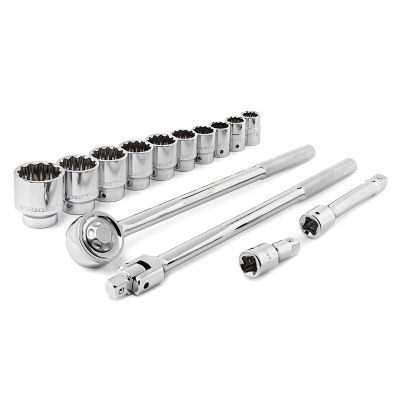
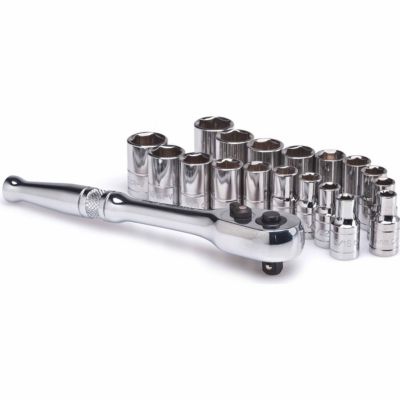
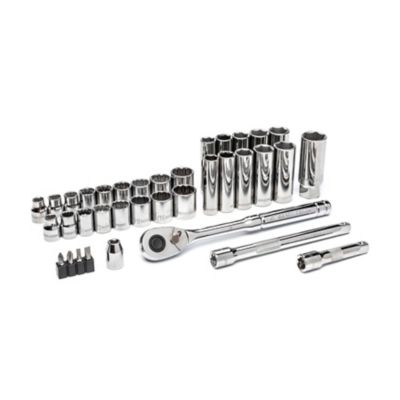
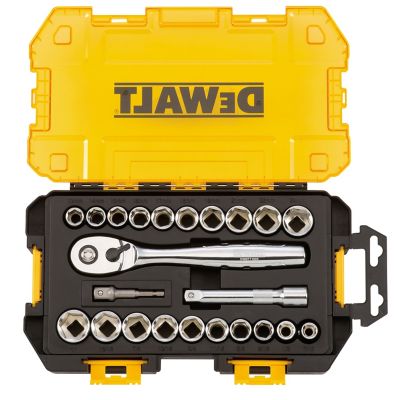
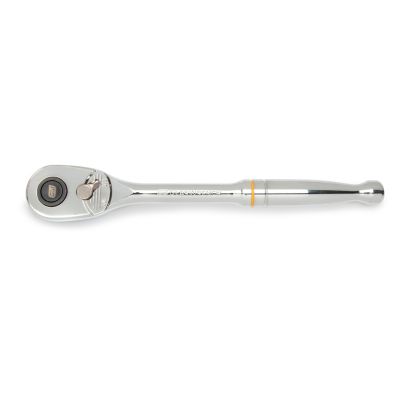
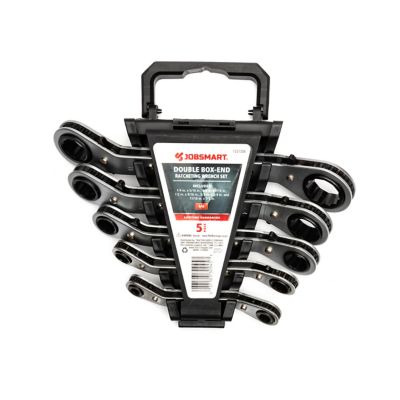
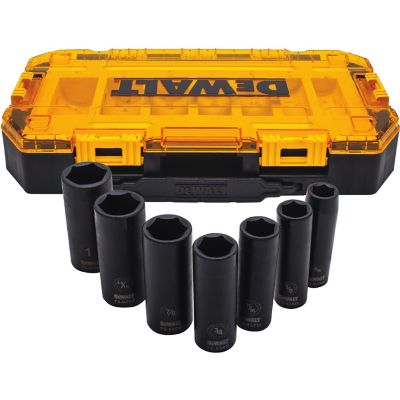
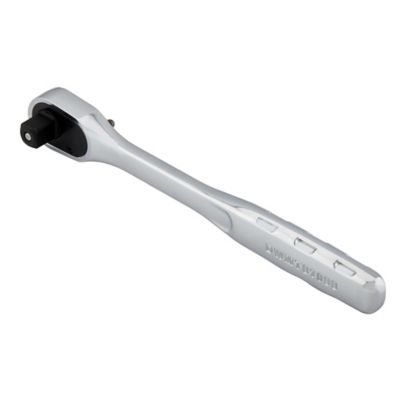
Ratchet sockets help turn everyday fastening jobs into steady, manageable work, whether that means tightening a mower bracket, repairing a trailer, or working on equipment back at the shop. A socket fits over a nut or bolt head and connects to the square drive on a ratchet handle. The ratchet’s reversible gear mechanism turns the fastener in one direction while allowing the handle to swing back without lifting the socket off the fastener. That back-and-forth motion is especially handy around engine compartments, frame rails, and other places where a wrench cannot make a full turn. Two measurements matter when matching these tools: the square drive size that connects the socket to the handle and the opening size that fits the fastener. Common ratchet drive sizes include 1/4 inch, 3/8 inch, and 1/2 inch. A 1/4-inch drive suits many smaller fasteners and cramped spaces, a 3/8-inch drive covers a broad range of general repair jobs, and a 1/2-inch drive often serves larger fasteners and work that calls for more turning force, within the tool’s rating. The fastener opening is a separate measurement, so a 3/8-inch-drive socket does not necessarily fit a 3/8-inch bolt head. SAE sockets have openings measured in inches, while metric sockets have openings measured in millimeters. Equipment can have either system, and a close-looking substitute can leave enough play to damage a nut or bolt head. Socket point count matters, too. Six-point sockets fit hexagonal fasteners and generally spread force along their sides, helping limit rounding under load. Twelve-point sockets offer more positions for lining up with a hexagonal fastener, which can help when access is awkward; they also fit matching 12-point fasteners. For a stubborn hex bolt on a hitch bracket or equipment mount, snug engagement matters more than simply reaching for a longer handle. Matching the drive, opening size, and point pattern gives the whole setup a better starting point.
Socket depth and outside dimensions make a difference once the work moves beyond an open bench. Shallow sockets keep the overall tool height down, making them practical where a nearby panel or frame member leaves little room behind the ratchet. Deep sockets provide clearance for threads extending beyond a nut and can reach some fasteners positioned farther down inside an assembly. Semi-deep sockets fall between those profiles, offering another way to balance clearance and reach. A deep socket is not automatically the best fit for every recessed fastener, though; the surrounding opening still needs enough room for the socket body. Think of a nut tucked beside a trailer frame compared with one sitting on a long threaded stud: one job may favor a compact setup, while the other needs more internal clearance. Extensions move the handle away from an obstruction, and swivel accessories allow an angled approach when a straight line is blocked. Those connections can introduce movement, so a straight, fully seated setup is preferable whenever the job allows it. The handle matters as much as the socket, and matching sockets with
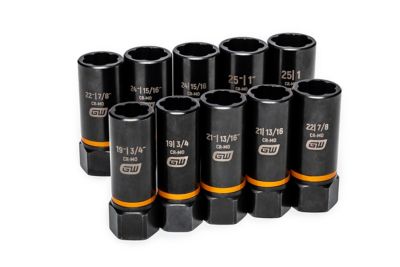
Ratchet Wrenches involves checking drive size, head clearance, handle length, and the room needed for each return stroke. A finer-tooth ratchet generally needs a smaller swing angle to engage, which can make a difference between hoses or beneath a crowded engine compartment. Socket construction also deserves attention. Many hand sockets feature heat-treated alloy steel, often chrome vanadium, with a plated finish that helps resist corrosion and makes grease easier to wipe away. Impact sockets have construction suited to the repeated blows of an impact tool and often feature chrome molybdenum steel with a dark finish. Steel type or color alone does not establish impact suitability; the manufacturer’s impact rating is what matters. Chrome-plated hand sockets are not a substitute for impact-rated sockets. Wall thickness, heat treatment, and the shape of the fastener opening all influence how a socket handles load and repeated shop work.
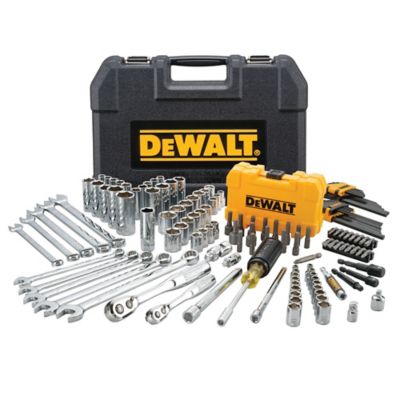
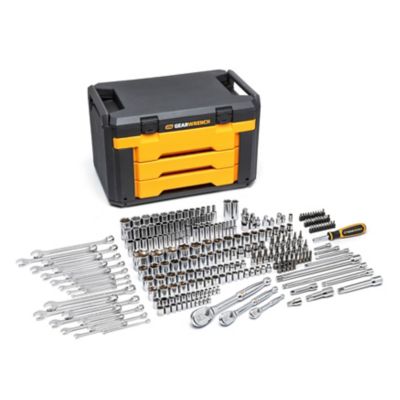
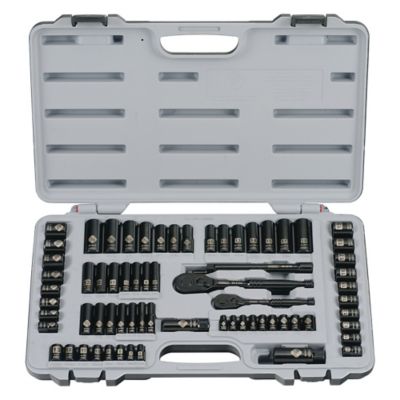
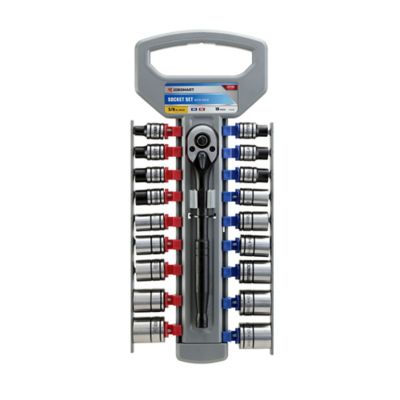
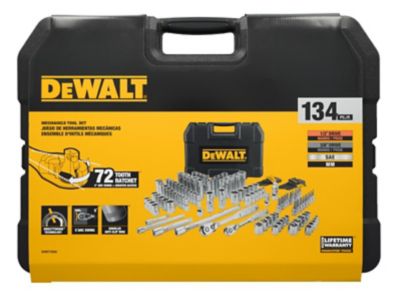
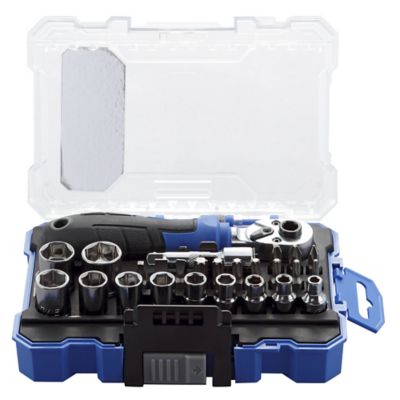
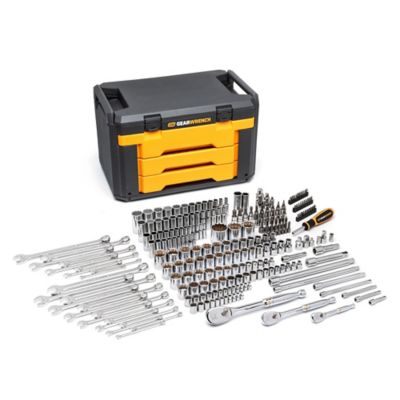
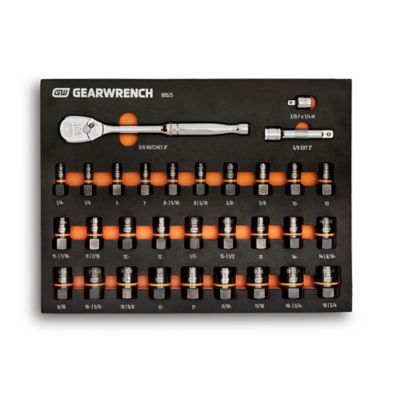
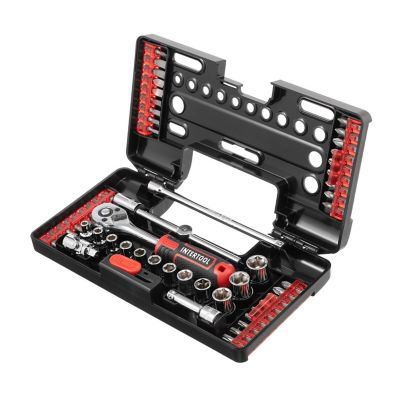
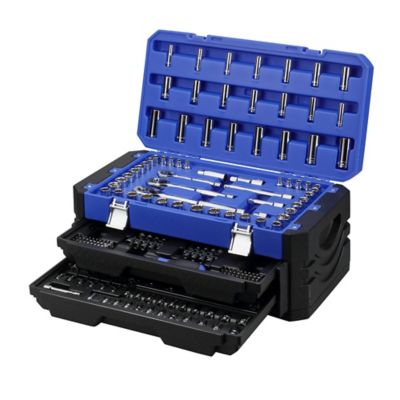
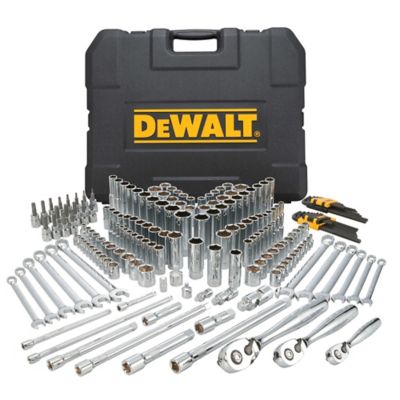
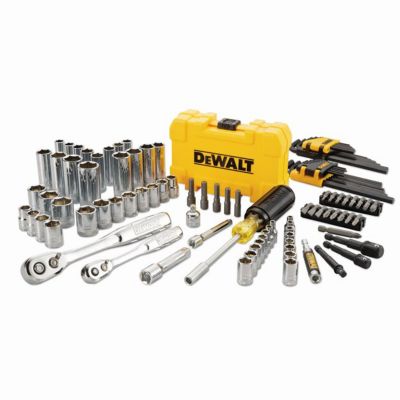
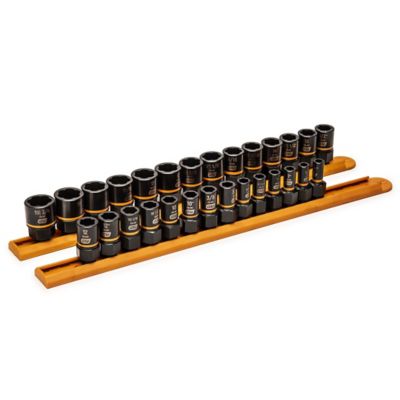
A useful socket assortment reflects the equipment that gets attention most often, rather than simply having the greatest number of pieces. Someone maintaining small engines may reach for compact drives and smaller metric or SAE sizes, while a farm equipment mechanic may need larger drives, deeper profiles, and extensions for hard-to-reach mounting hardware. Homeowners, ranchers, automotive enthusiasts, and folks who keep utility trailers rolling all benefit from sockets that match their regular tasks. Clear size markings and organized storage save time when there is a half-finished repair on the bench and a handful of similar-looking sockets nearby. Socket rails, fitted trays, and cases help keep drive sizes and measurement systems separated, while making missing pieces easier to spot. For someone building a first tool collection or rounding out a shop setup, sockets can also make a practical gift, especially when the drive size and sizing system match tools they already own. Long service life depends on both construction and care. Dust, metal grit, and packed grease can interfere with seating, while moisture left on steel can lead to corrosion. Clean, dry sockets are easier to inspect for cracks, chipped edges, distorted drive openings, or wear inside the fastener opening. A socket that rocks noticeably on the correct-size fastener deserves a closer look before more force is applied. The same goes for a ratchet that slips or fails to hold under pressure. Stuck fasteners may call for a properly rated breaker bar rather than extra force through a ratchet, and final tightening on torque-sensitive assemblies calls for a torque wrench and the equipment manufacturer’s specifications. Eye protection, stable footing, and properly supported equipment belong alongside the tools, particularly when working beneath machinery or around heavy components. With the right fit and sensible care, ratchet sockets earn their place close to the workbench, ready for routine adjustments, equipment repairs, and the fastening jobs that keep a property running.