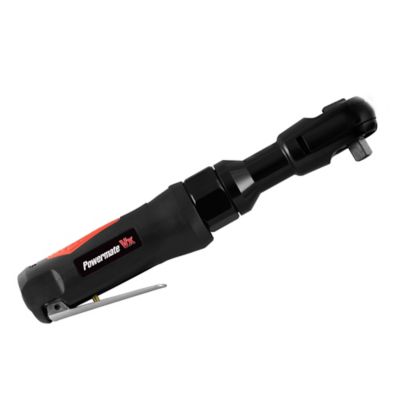
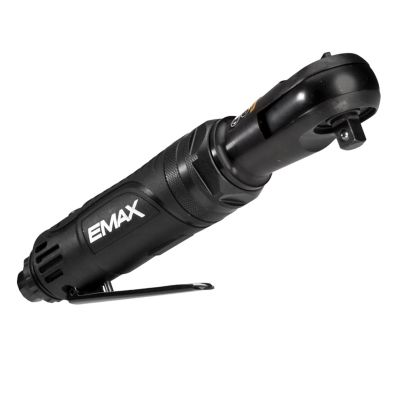
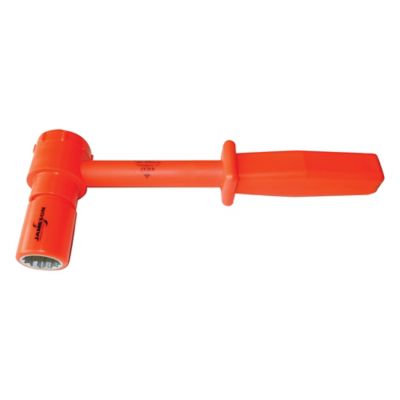
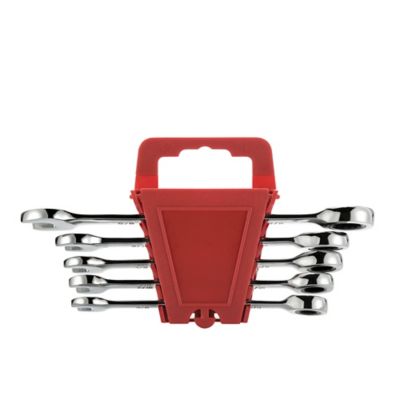
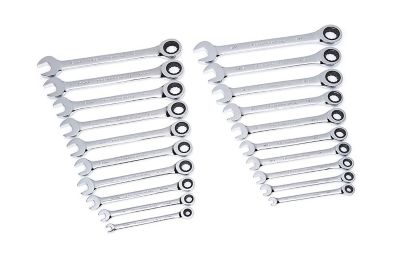
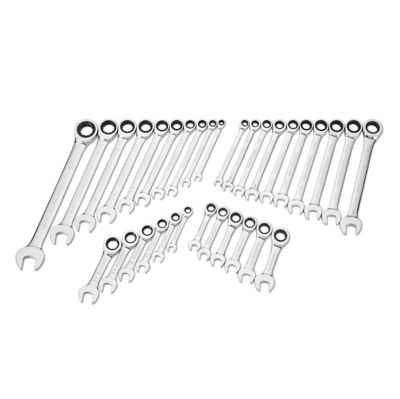
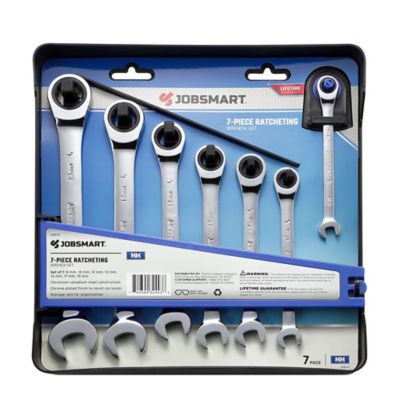
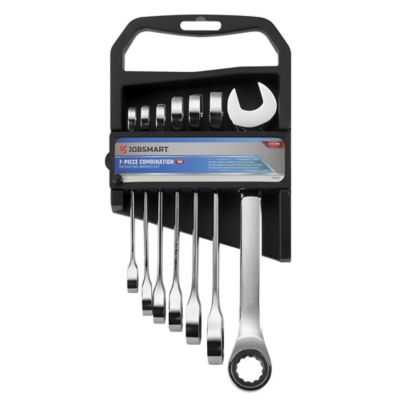
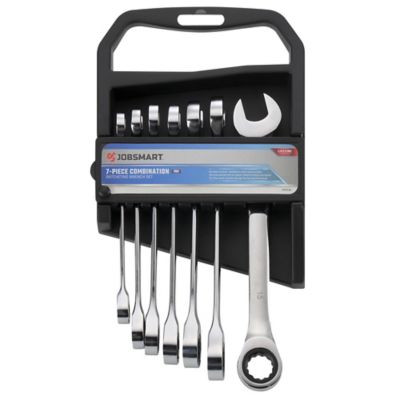
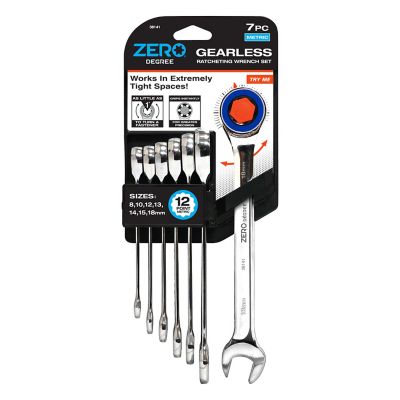
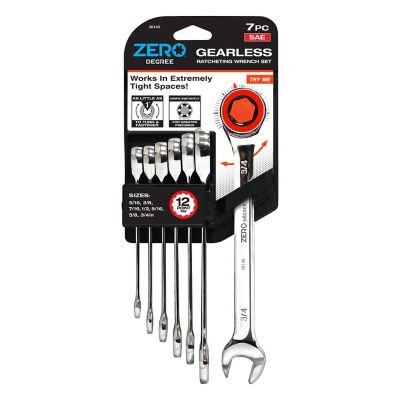
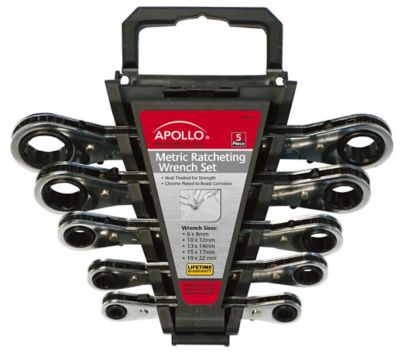
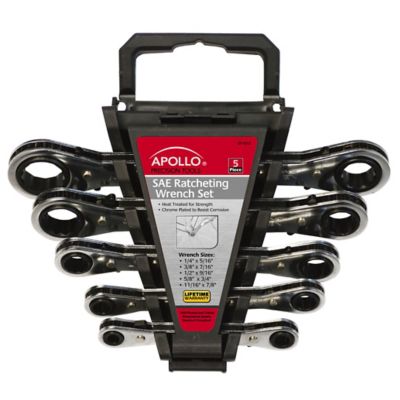
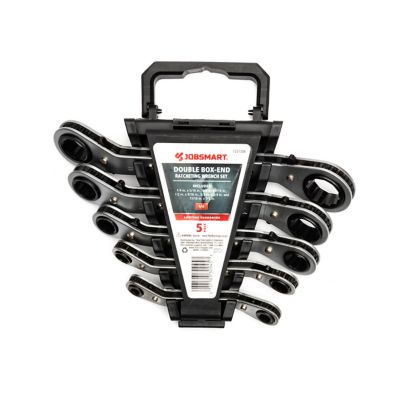
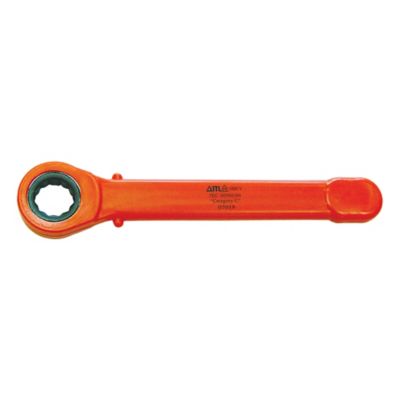
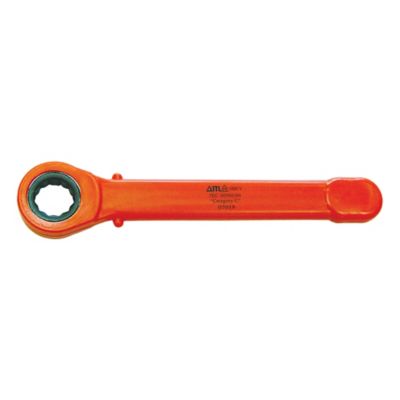
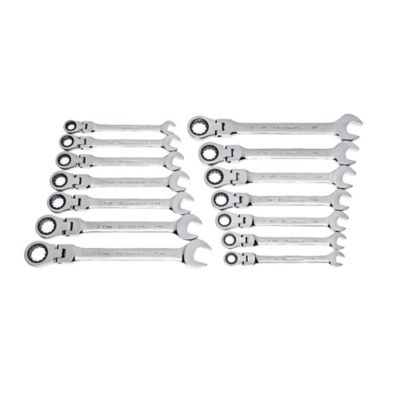
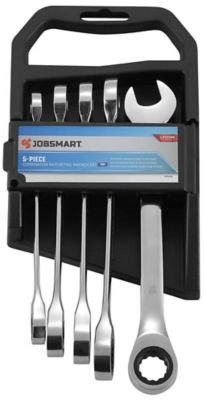
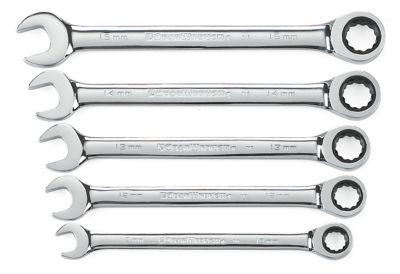
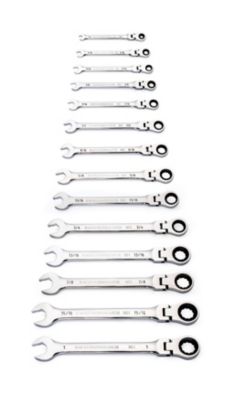
Ratchet wrenches are handy combination tools made for tightening and loosening nuts and bolts when space is too tight for a regular wrench or a socket and ratchet. Most have an open end on one side and a ratcheting box end on the other, giving you two useful ways to handle fasteners with one tool. The open end slides over the side of a nut, while the box end grips the fastener more securely and lets you work without lifting the wrench after every turn. That small difference can save a lot of time when working on equipment, vehicles, trailers, implements, furniture, or household repairs. Instead of swinging a wrench through a wide arc, you can make short back-and-forth movements in narrow spaces, such as between engine components, beneath a mower deck, behind a plumbing fixture, or along a piece of farm equipment. Ratchet wrench sets are useful for anyone who likes to keep tools close at hand, from seasoned mechanics and maintenance crews to homeowners handling everyday repairs. They also make a practical gift for a new driver, a do-it-yourselfer, a farmer, a rancher, or anyone putting together a first tool collection. A set with several sizes can cover common fasteners and help keep a repair moving when stopping to search for another tool would mean tracking grease across the shop or walking back to the house.
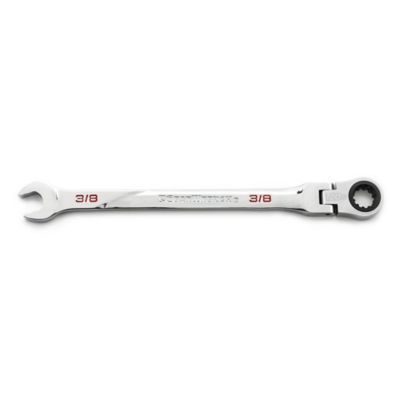
When choosing ratchet wrenches, start with the fastener sizes and measurements you use most often. SAE sizes are measured in fractions of an inch and are common on many older vehicles, tractors, trailers, and equipment, while metric sizes are measured in millimeters and are found on many newer vehicles, machinery, and imported hardware. A set that includes both SAE and metric sizes gives you more flexibility, especially if your work ranges from repairing a utility trailer to maintaining a compact tractor or assembling outdoor equipment. Look at the size range, too. Smaller wrenches are useful for light repairs and cramped areas, while larger sizes provide more reach and leverage for bigger fasteners. Tooth count is another detail worth checking. A higher tooth count generally allows the ratcheting end to work with a smaller swing arc, which is helpful when a bolt is tucked behind a bracket or surrounded by hoses and wiring. A lower swing requirement can make a noticeable difference in an engine bay or under a vehicle where your hand has only a few inches to move. Reversible models include a switch or lever that changes the direction of the ratcheting action, so you do not have to remove the wrench and turn it around. Flex-head styles have a swiveling box end that can bend around obstacles and approach a fastener from a more comfortable angle. Stubby ratchet wrenches have shorter handles for especially cramped areas, such as small engine compartments, mower assemblies, and crowded equipment frames. Standard-length designs typically offer more leverage and reach. Some users keep both styles in the toolbox: a longer wrench for stubborn fasteners and a stubby wrench for the spots where a regular handle simply will not fit. A storage case, rail, or organized tray can also be valuable, since it keeps sizes together and makes it easier to notice when a wrench has been left on a workbench or in the bed of a truck.
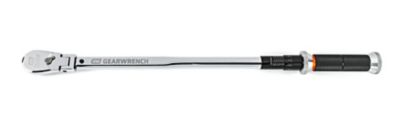
The right ratchet wrench is built for controlled hand use, not for striking with a hammer or adding a length of pipe for extra force. Choose a wrench that feels solid in your hand, with clear size markings that are easy to read through dust, shop grime, or low light. A smooth mechanism helps the tool move cleanly, while a firm fit around the fastener helps reduce slipping and rounded corners. Use the correct size whenever possible; forcing a metric wrench onto an SAE fastener, or the other way around, can damage both the hardware and the tool. For stubborn bolts, apply penetrating oil and allow it time to work, then use steady pressure and keep the wrench seated squarely. Ratchet wrenches are not a substitute for a calibrated torque tool when a manufacturer specifies an exact tightening value. For jobs where proper bolt tension matters, such as wheel, suspension, engine, or structural work, finish with
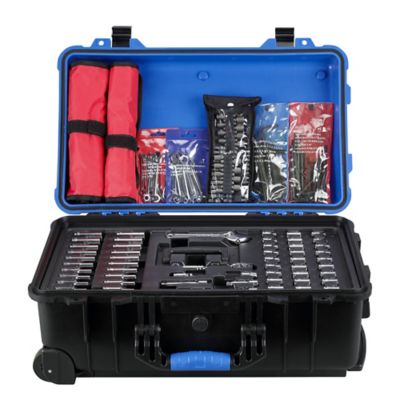
Torque Ratchets as appropriate for the required setting. After a muddy outdoor repair or a dusty project in the barn, wipe the wrenches clean and store them somewhere dry to help protect the mechanism and markings. During the cooler months, a dependable set is especially useful for preparing equipment for storage, checking trailer hardware, servicing snow equipment, repairing gates, or keeping a vehicle ready for early starts. Whether it lives in a rolling shop chest, a pickup toolbox, or a small drawer in the garage, a well-chosen ratchet wrench set gives you a practical way to handle routine maintenance and unexpected fixes with less fuss.