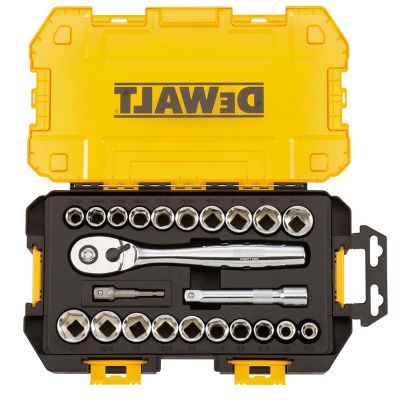
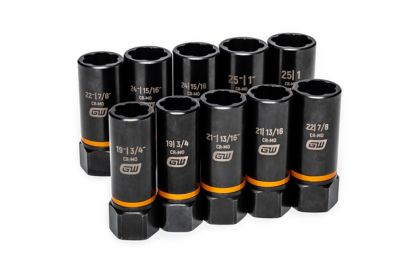
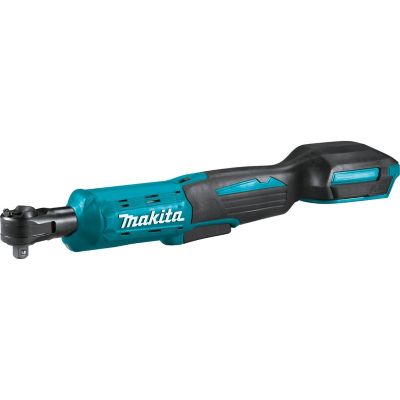
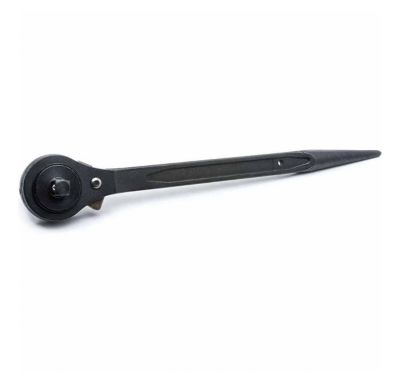
Ratchet sets are handy to keep around for the everyday fixes that come up on a farm, around the house, in the garage, or on the road. A good set gives you a ratchet handle and a selection of sockets that fit nuts and bolts in different sizes, making it easier to handle jobs without digging through a loose pile of tools. They can help with assembling equipment, tightening trailer hardware, working on lawn and garden machines, servicing vehicles, repairing gates, replacing brackets, and taking care of furniture or household projects. For general-purpose use, a set with both 1/4-inch and 3/8-inch drive sizes offers a useful balance of reach and strength. The smaller 1/4-inch drive works well for lighter fasteners and close quarters, while a 3/8-inch drive is a dependable choice for many automotive, equipment, and repair tasks. Larger 1/2-inch drive ratchets and sockets are suited to bigger fasteners and higher-torque work, such as heavy equipment, trailer repairs, suspension components, and other demanding jobs. When comparing ratchet sets, check that the socket sizes are clearly marked and that the set includes both SAE, or standard, and metric measurements if you work on a mix of domestic and imported vehicles or machinery. Deep sockets can reach recessed nuts on longer bolts, while standard sockets are useful for fasteners sitting closer to the surface. A set with a range of extensions, adapters, and universal joints can make a real difference when a bolt is tucked behind a bracket or down inside an engine bay. The right assortment depends on the work you do most, but having a practical spread of sizes helps keep a small repair from turning into a trip back to the store.
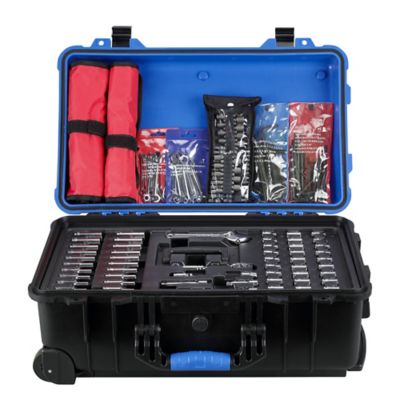
The ratchet itself deserves just as much attention as the sockets. A fine-tooth design, such as a 72-tooth ratchet, generally needs only about a 5-degree swing to engage the next tooth. That tight swing arc is useful when you are working between a frame rail and a body panel, under a dashboard, beside a mower deck, or anywhere there is little room to move your hand. A quick-release button makes it easier to swap sockets, especially when your hands are dusty or greasy, and a clearly marked forward-and-reverse selector helps prevent fumbling in a cramped spot. Flex-head ratchets can provide extra reach and a more comfortable working angle, while a fixed head can feel straightforward and sturdy for routine fastening. Look for handles with a comfortable grip that will not become slick too easily, along with a finish that is easy to wipe clean after a day in the shop. Chrome vanadium steel is common in quality hand tools and offers a useful combination of strength and durability for general repair work. For high-load applications, impact-rated sockets made for use with impact tools are a better choice than standard chrome sockets, which are intended for hand use. It is also worth checking how the set is organized. A fitted case with labeled spaces keeps sockets from rolling beneath a workbench or disappearing into the bottom of a tool chest, and it makes it easier to notice when a piece is missing. Keep ratchets and sockets clean and dry, wipe away oil or grit before storage, and avoid using a cheater bar on a hand ratchet unless the tool is specifically designed for that purpose. For jobs that call for measured tightening rather than simply snugging a fastener, a set paired with
Torque Ratchets can help you follow the recommended specification and protect threads, wheel hardware, engine parts, and other sensitive components.
A ratchet set can be a practical addition to a home workshop, service truck, barn cabinet, or vehicle emergency kit. Homeowners may use one for putting together shelving, tightening loose hardware on outdoor furniture, fixing a gate latch, or handling routine maintenance on a riding mower. Farmers and ranchers often reach for a ratchet set when adjusting machinery, repairing feeders, working on utility trailers, or making a quick fix before the weather turns. Automotive and small-engine hobbyists can use a broader set with multiple drive sizes, deep and standard sockets, extensions, and both SAE and metric measurements to cover more of the fasteners found on trucks, tractors, generators, motorcycles, and recreational equipment. A compact set is convenient for keeping in a pickup or taking along in an ATV, while a larger set may make more sense for a dedicated workbench where a wider range of sizes is always close at hand. Ratchet sets also make thoughtful gifts for a new homeowner, a student learning basic mechanical skills, a do-it-yourselfer setting up a first toolbox, or someone who enjoys maintaining their own vehicle and equipment. During the warmer part of the year, a set may see plenty of use on outdoor projects, trailers, fencing hardware, and lawn equipment; during the cooler months, it can be just as useful for garage repairs, winterizing machinery, and keeping household fixtures in shape. Before choosing, consider the types of fasteners you encounter, the amount of space available for storage, the level of force the tools will need to handle, and whether portability matters. A well-matched ratchet set keeps common repairs moving along, helps reduce downtime, and gives you the confidence to tackle the loose bolt or stubborn nut that always seems to show up when there is already plenty to do.