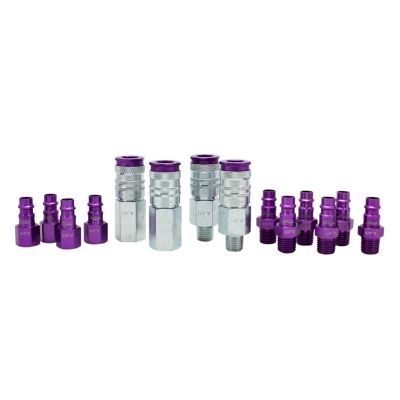
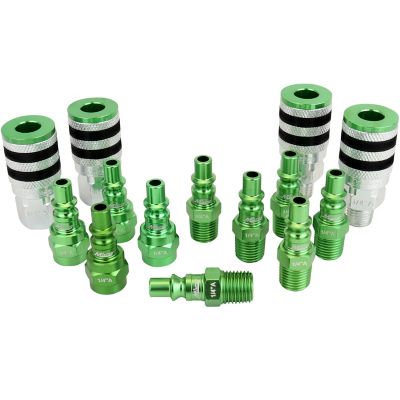
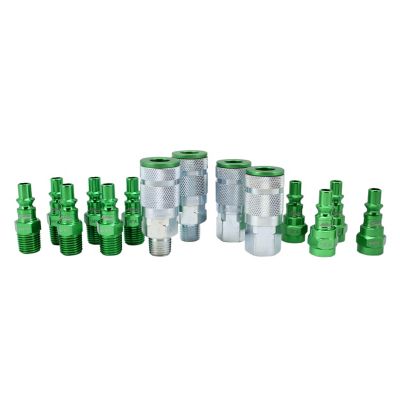
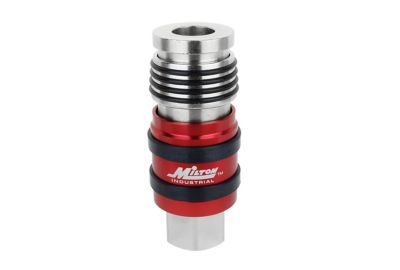
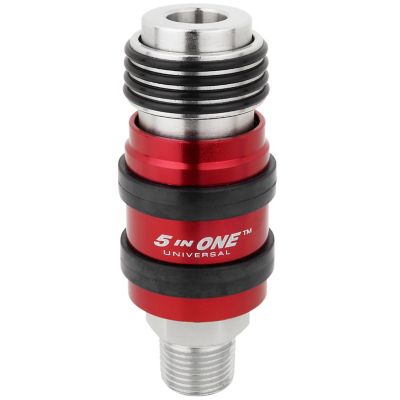
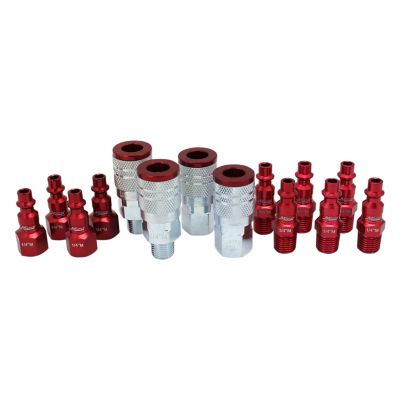
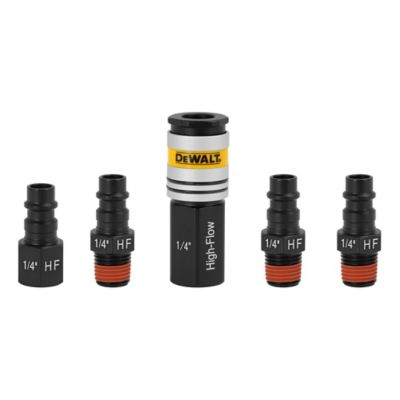
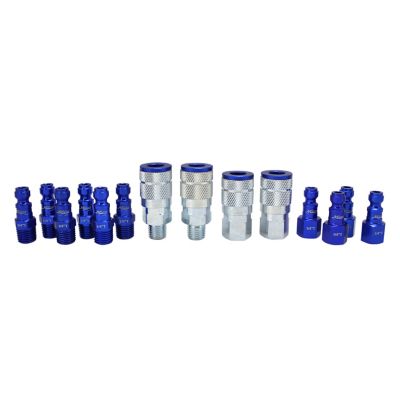
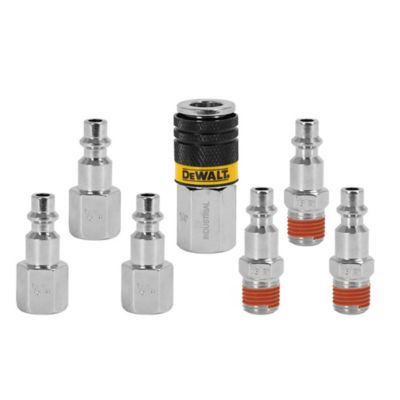
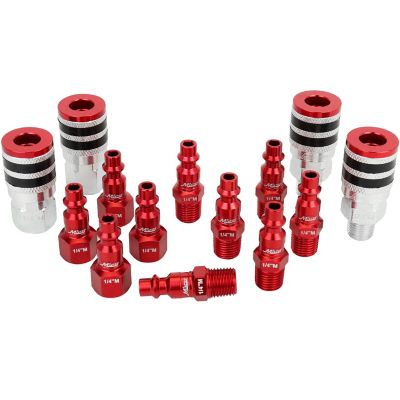
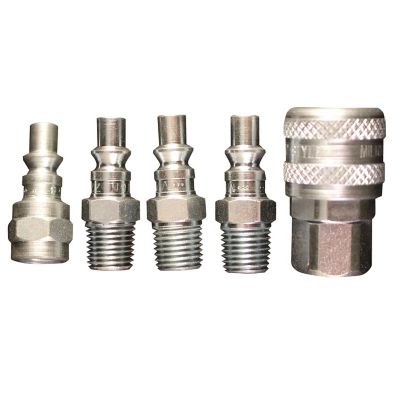
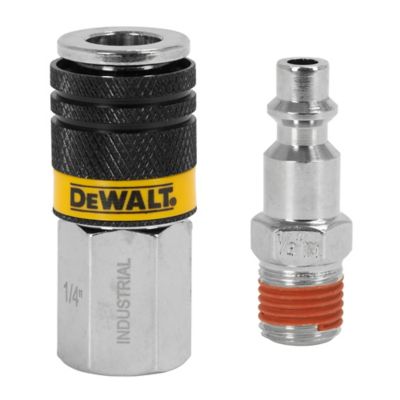
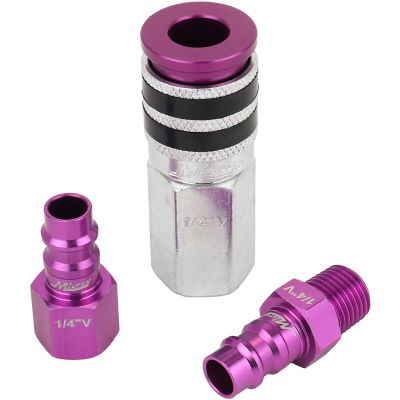
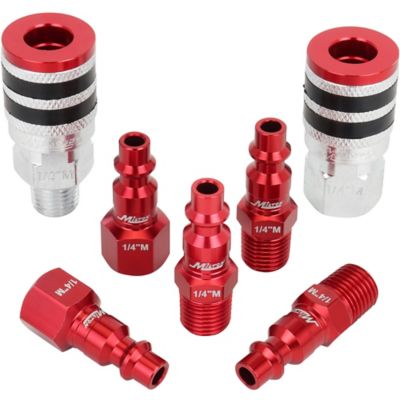
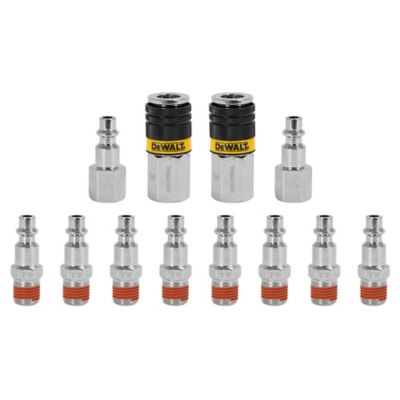
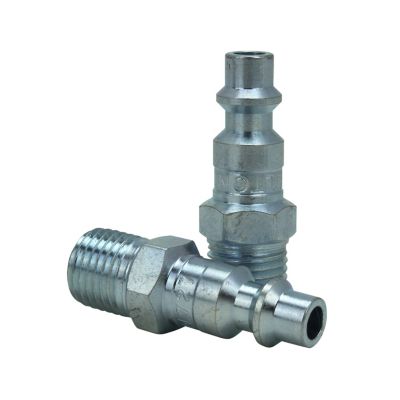
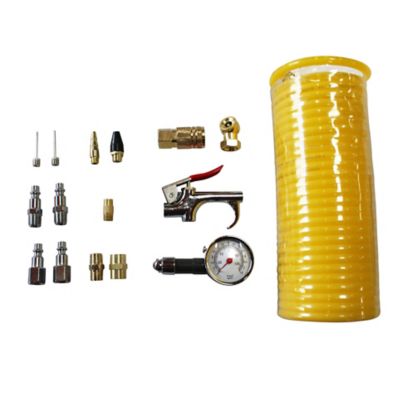
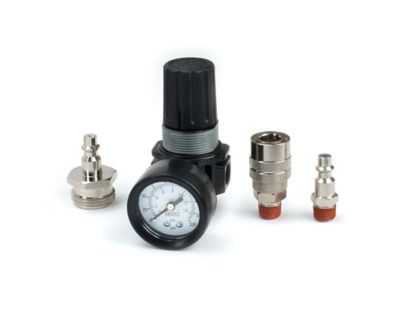
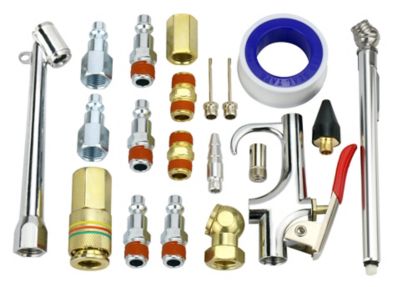
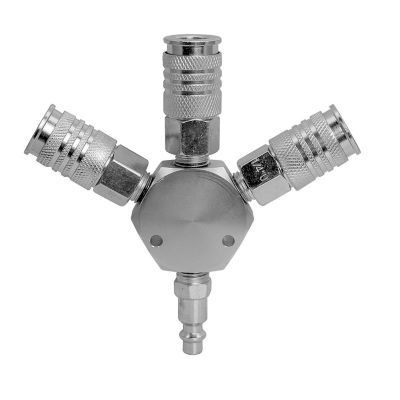
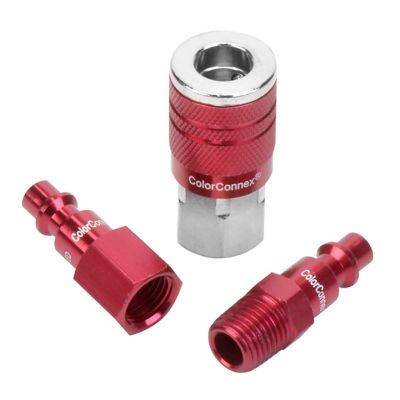
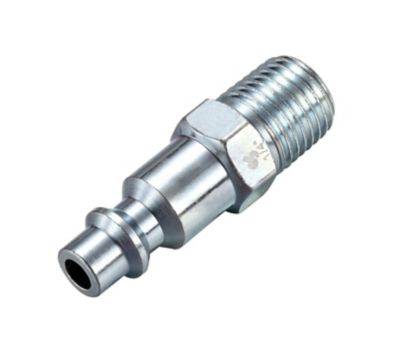
Quick connect air fittings join compressed-air hoses, tools and compressor outlets with a plug-and-coupler connection that makes tool changes faster than threading parts together each time. The plug slides into a matching coupler, where a locking mechanism holds it in place; a release sleeve or similar mechanism allows the connection to come apart. Many couplers also have an internal valve that stops airflow when the plug is removed, though shutoff behavior depends on the fitting design. These small connections do a big job around a farm shop, garage or equipment shed. A single air hose might serve an impact wrench for equipment maintenance, a tire inflator for a utility trailer and a blow gun for clearing debris from a workbench. Matching connections make those changes more convenient without requiring a separate hose for every task. Farmers, ranchers, mechanics, woodworkers and folks maintaining their own equipment all have reasons to keep a consistent air fitting setup. The important distinction is that quick connect describes the connection method, not one universal fit. Industrial, automotive and ARO-style profiles have different mating shapes, and fittings that look close may not lock together or seal properly. A coupler described as universal may accept several profiles, but its stated compatibility still matters. Matching plugs and couplers by their listed interchange style helps keep a shop’s connections straightforward, especially when several people share tools. Male and female descriptions can also refer to the threaded end rather than the quick-connect end, so a coupler can have either male or female threads. That distinction matters when connecting to a compressor outlet, hose end or tool inlet. A fitting needs to match both sides of the job: the quick-connect profile on one end and the correct attachment on the other. Keeping those details consistent helps turn a collection of hoses and tools into a practical compressed-air setup.
Fit involves more than finding two pieces that snap together. Thread size, thread type, hose connection size and airflow capacity all affect how a fitting works in the system. A common source of mix-ups is the difference between pipe-thread size and the size of the quick-connect body or passage. Matching thread markings alone does not establish that a plug and coupler share the same profile or flow capacity. NPT threads are common on compressed-air equipment, but other thread forms are not automatically interchangeable, even when they appear similar. Hose-barb connections have their own sizing requirements, including a match to the hose’s inside diameter and a suitable attachment method. For shoppers connecting an existing hose assembly, the related selection of
Quick Connect Hoses can help round out the connection between the air source and the tool. Airflow deserves attention, too. A fitting with a smaller internal passage can restrict air delivery, particularly with tools that draw a steady volume of air. An impact wrench loosening stubborn equipment fasteners has different demands than an occasional burst from a blow gun, while sanders and grinders can place sustained demands on the whole system. A larger-looking fitting does not automatically solve an airflow problem; the compressor, hose length, hose diameter, regulator and other connections all play a part. Published flow information and tool air requirements provide a better basis for comparison than appearance alone. Working-pressure ratings matter just as much, and every component needs a rating suitable for the system pressure it may encounter. The lowest-rated component limits the assembly. Connection layout also affects day-to-day handling. A fitting extending from a compact tool can interfere with access around a frame rail or mower deck, while a swivel connection may help reduce hose twisting where the tool’s design allows it. A sensible setup balances airflow, clearance and manageable weight instead of simply putting the largest fitting on every connection.
Material choice and everyday handling help determine how well quick connect air fittings hold up in a working shop. Brass is a common option for general compressed-air connections and offers corrosion resistance, though it can still show wear, tarnish or damage from rough handling. Steel fittings provide strength for demanding shop work, with plated finishes helping protect exposed surfaces; scratches and worn plating can leave the underlying metal more vulnerable to rust. Stainless steel may suit applications where moisture exposure makes corrosion resistance a greater concern. The metal is only part of the picture, since internal seals, locking parts and valve construction also affect performance. Seal compatibility matters wherever compressor lubricants or other substances may reach the connection. Around a barn or equipment shed, dust, grit and metal filings can collect on plugs or work their way into an open coupler. Clean mating surfaces, protected storage and keeping hose ends off the floor help reduce contamination. A hose draped over a hanger is easier on its connections than one left where boots, tires or a rolling toolbox can catch it. Air leaks, a sleeve that sticks, visible cracks or a plug that will not stay seated are reasons to take a connection out of service rather than keep forcing it through another job. Inspection and any cleaning, sealing or replacement work belong on an isolated, depressurized section of the system, following the equipment manufacturer’s directions. Disconnecting under pressure can cause a hose to whip or release trapped air suddenly; some safety couplers provide staged pressure release, but their operation still depends on the specific design. Suitable thread sealant can help with threaded joints where the manufacturer calls for it, while excess material can enter the air passage. For a busy shop, clearly identified fitting styles and a consistent connection layout make shared equipment easier to manage. The payoff is practical: less wrestling with mismatched ends and more attention on the repair, tire check or maintenance job at hand.