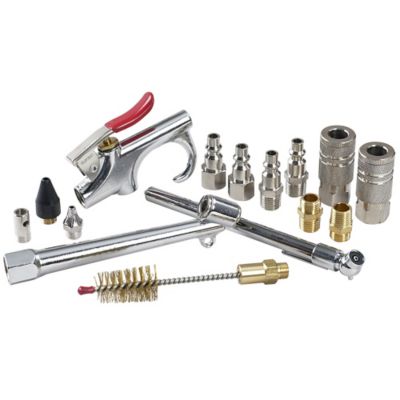
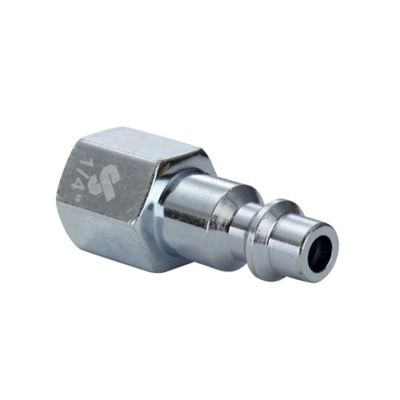
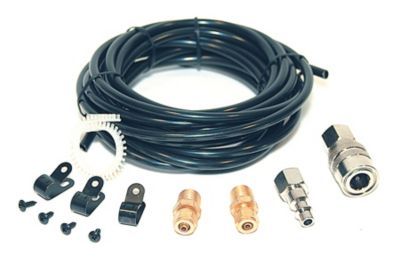
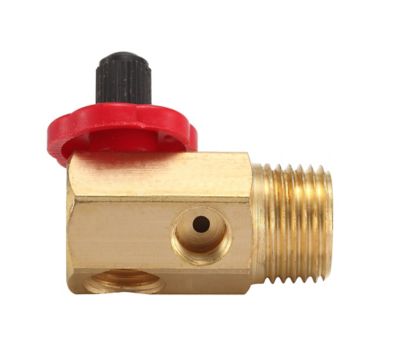
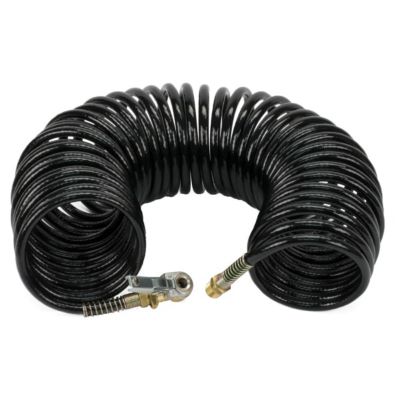
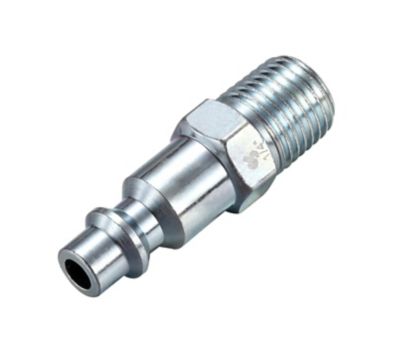
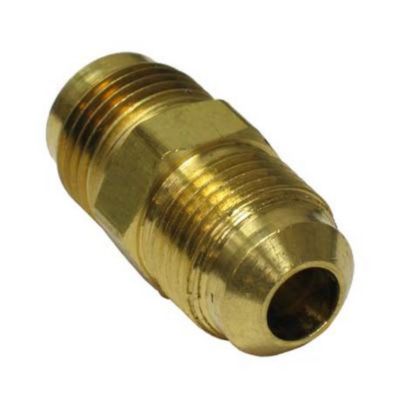
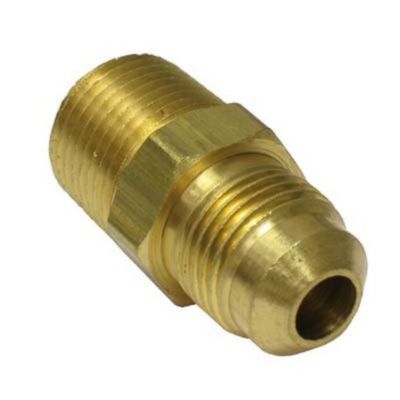
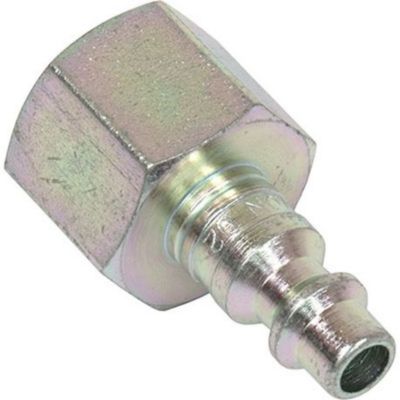
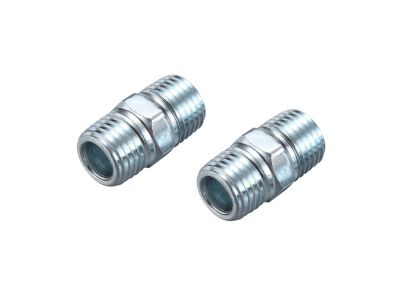
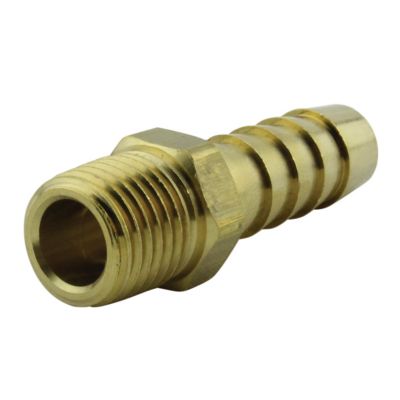
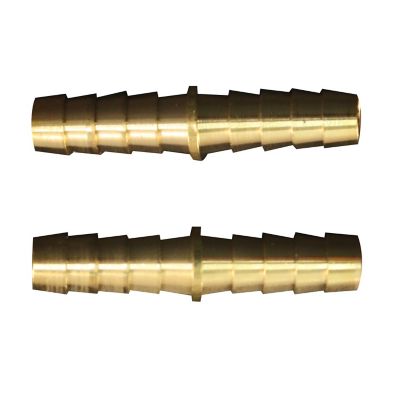
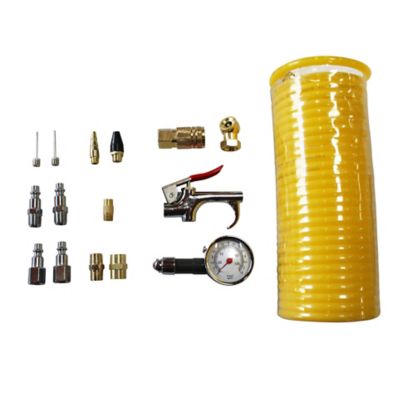
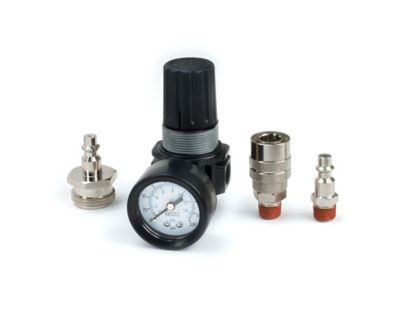
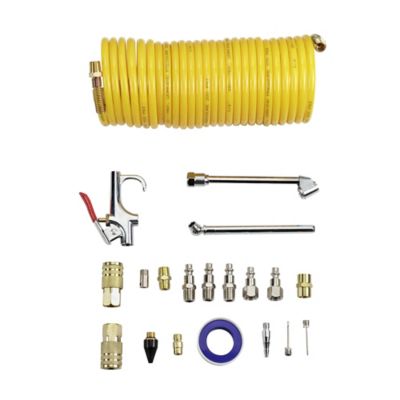
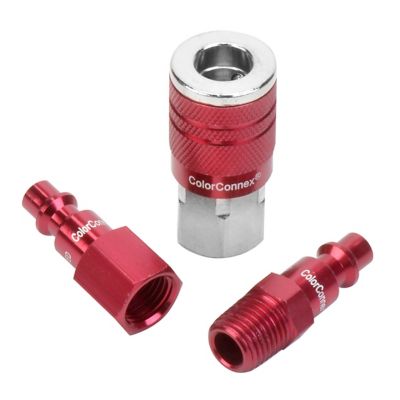
Air compressor connectors join a compressor, air hose, and pneumatic tool into a working air system, keeping connections secure while letting air move where the job needs it. These fittings include quick-connect couplers, mating plugs, threaded connectors, and manifolds that divide an air supply between multiple outlets. Around a farm shop or home garage, they handle the connection between a hose stretched across the floor and the impact wrench, tire inflator, or air-powered nailer at the other end. A quick-connect coupler receives a matching plug and locks it in place, making tool changes easier without repeatedly unscrewing a threaded joint. The plug is the inserting half of that connection, while the coupler is the receiving half; either component can have male or female pipe threads on its attachment end. That distinction matters because plug style, thread size, and thread gender describe different parts of the fit. Common connector profiles include industrial interchange, often marked I/M, and automotive interchange, often marked T, along with ARO and other patterns. Similar-looking plugs do not necessarily fit the same coupler, and markings can differ between manufacturers. The stated interchange profile is a better match point than sleeve stripes, color, or appearance alone. Some couplers accept multiple profiles, but that compatibility should be listed in their specifications. Common NPT thread sizes include 1/4 inch, 3/8 inch, and 1/2 inch. NPT means National Pipe Taper, a tapered pipe thread common on compressed-air equipment in the United States. A connector’s nominal thread size is not its measured outside diameter, and it does not automatically identify the size of the internal air passage. For an existing setup, the connection profile, port threads, hose dimensions, and pressure rating all belong in the same fit check. Getting those details lined up helps prevent the familiar frustration of a fitting that screws into a tool but will not latch into the hose coupling.
Material and construction help determine how air compressor fittings hold up to daily handling, moisture, and the knocks that come with shop work. Brass offers corrosion resistance and is common in threaded fittings and connector bodies. Steel brings strength to plugs and other parts that see repeated connection cycles, while plated finishes help protect exposed surfaces. Stainless steel can suit settings where moisture and corrosion are bigger concerns, depending on the fitting’s intended application. No material removes the need to account for wet air, damaged threads, or worn sealing surfaces. Inside a coupler, seals, springs, and locking parts also influence how the connection feels and performs over time. Seal material needs to match the operating temperature and exposure to compressor oil or other substances in the air supply. Pressure ratings matter across the whole assembly: a fitting should be rated for the maximum pressure it may encounter, and the system must stay within the limits of its lowest-rated component. Airflow deserves just as much attention. A tire inflator draws air differently from a sander running steadily across a panel, and an impact wrench can need a strong burst when breaking loose a stubborn fastener. A narrow connector passage can restrict that supply even when the compressor has enough capacity. Flow ratings, often expressed in standard cubic feet per minute, or SCFM, are most useful when compared under the same test conditions, including inlet pressure and pressure drop. Industrial and automotive profile names describe interchange patterns, not a guaranteed airflow advantage. Likewise, a larger threaded end does not necessarily mean a larger passage through the coupler. Hose length, hose inside diameter, regulators, and other fittings affect performance too. For a busy workbench or equipment bay, a properly matched connector helps keep the air path from becoming an unnecessary bottleneck, though it cannot make up for a compressor that falls short of the tool’s air requirements.
The right connection layout depends on where the hose runs and how the work gets done. A compact fitting can keep an air tool manageable in tight spaces around a mower deck or trailer frame, while a swivel connection can reduce hose twisting as the tool changes position. Extra fittings also add weight, length, and possible leak points, so a simpler arrangement often makes sense at the tool handle. Manifolds provide separate outlets for multiple hoses, handy when different tasks share one compressor, but they do not increase the amount of air the compressor can deliver. Where compatible equipment has different attachment requirements,
Air Hose Adapters can bridge certain thread or connection differences; the thread type, size, and pressure rating still need to match the application. These details matter to mechanics, woodworkers, livestock owners, and anyone keeping tires, trailers, fencing tools, or shop equipment ready for the next chore. In a shared garage, a consistent connector profile can make it easier to move between tools without hunting for another coupling. For someone adding to a family member’s air-tool setup, matching the existing fittings is more helpful than choosing by appearance. Day-to-day care centers on keeping grit out of open connectors, checking plugs for nicks, and watching for loose joints or a persistent hiss. Dust from a gravel drive and filings from a workbench can interfere with sealing and locking surfaces. Threaded connections may require an appropriate pneumatic thread sealant, applied according to the equipment instructions without letting excess material enter the air passage. Overtightening can damage threads or crack a fitting body, particularly where different materials meet. Before fitting changes or service, the air supply needs to be shut off and trapped pressure safely released; a pressurized hose can whip when disconnected. Safety-style couplers that vent downstream pressure before release can help manage that hazard when operated as directed. During cooler weather, moisture in compressed air can also contribute to corrosion or freezing, making compressor drainage and suitable moisture control important companions to sound connections. Clean, well-matched air hose connectors keep everyday shop work moving with fewer leaks, awkward tool changes, and interruptions.