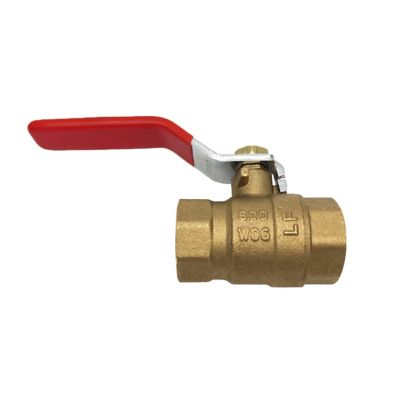
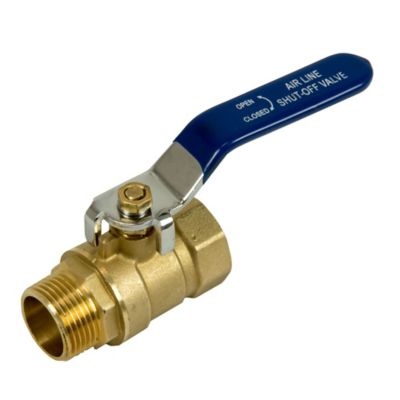
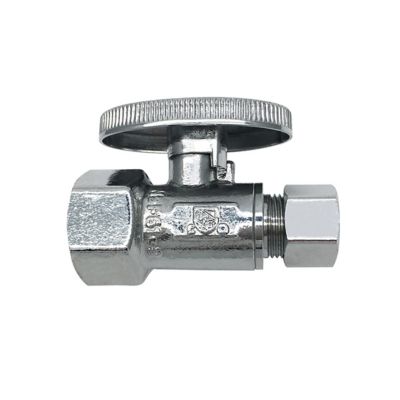
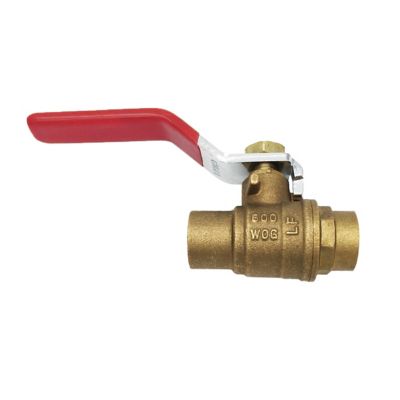
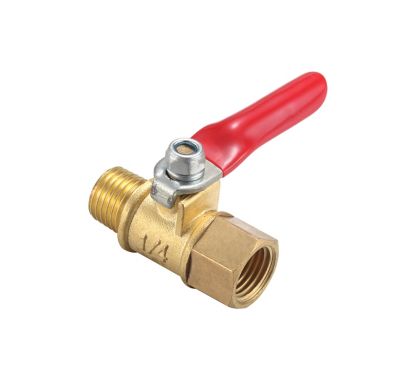
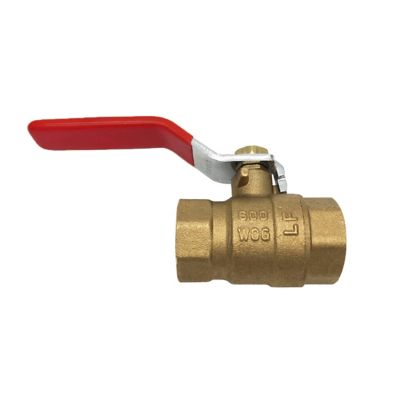
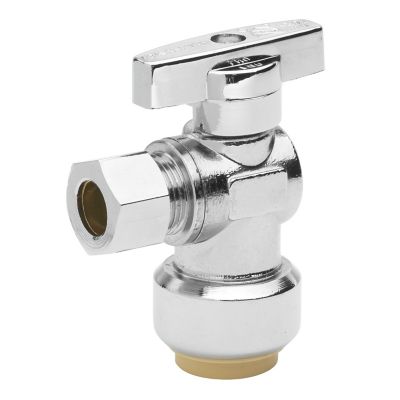
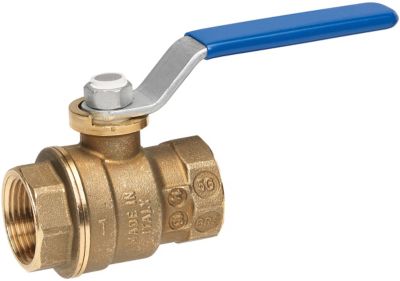
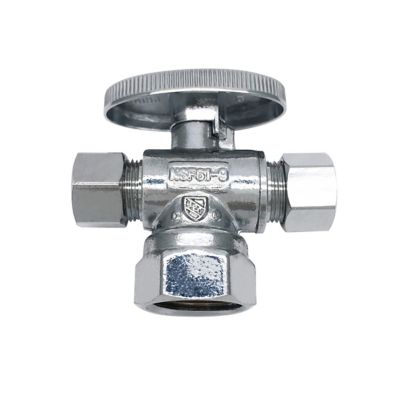
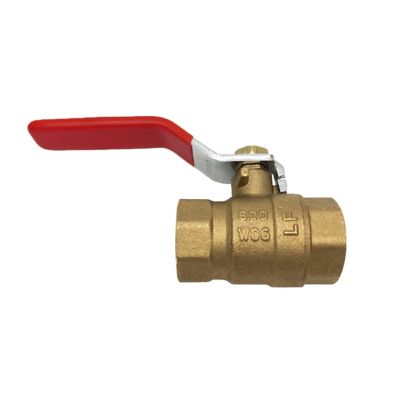
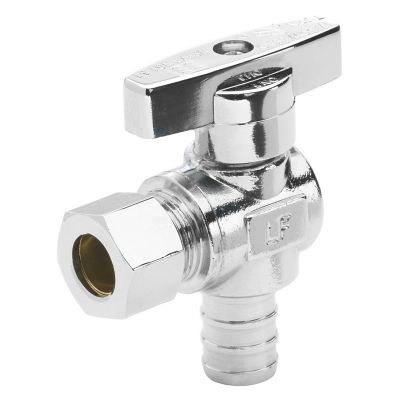
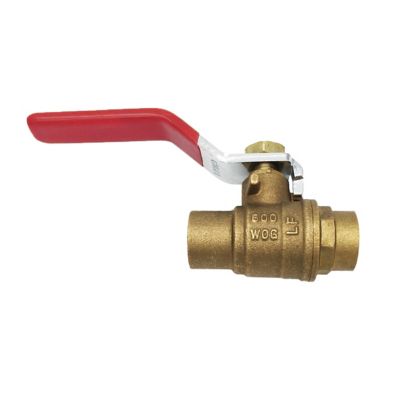
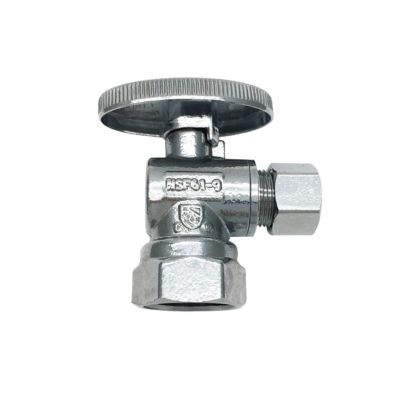
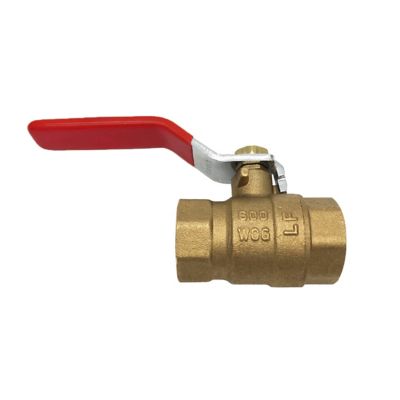
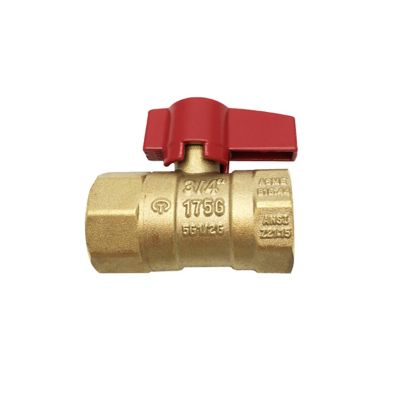
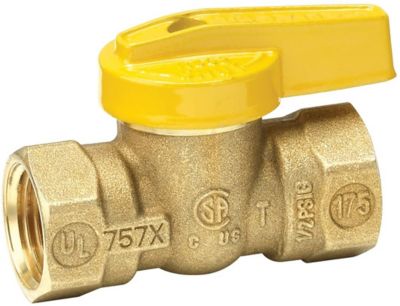
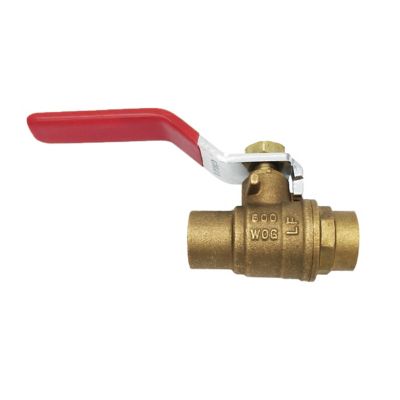
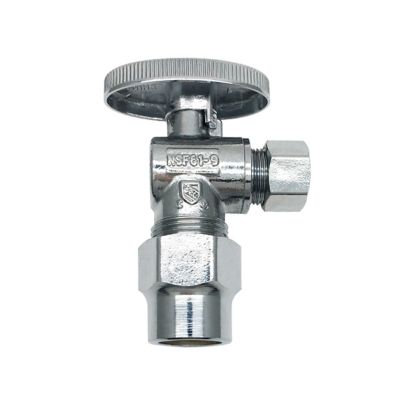
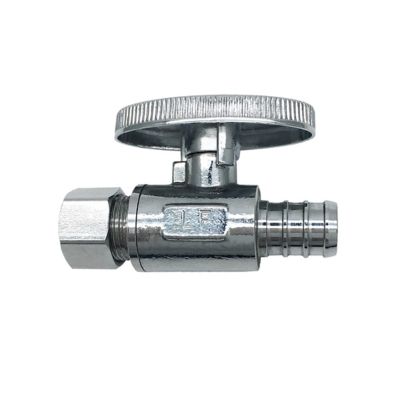
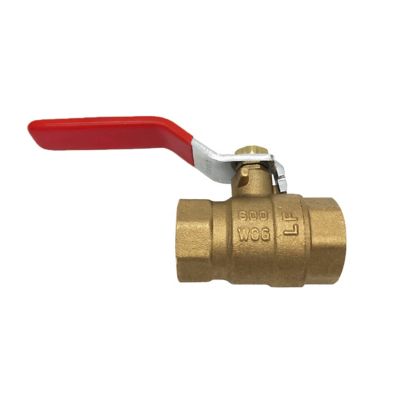
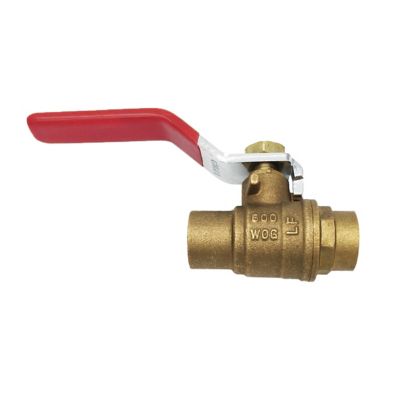
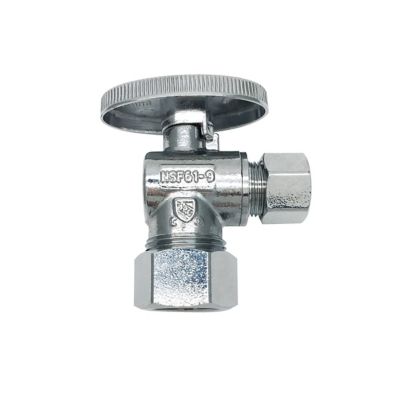
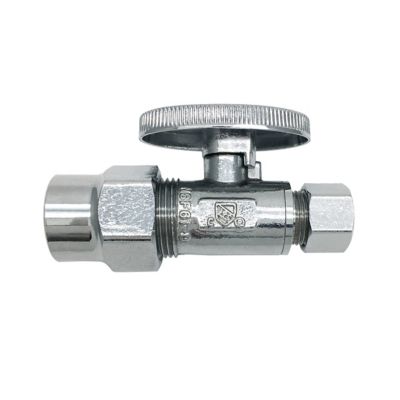
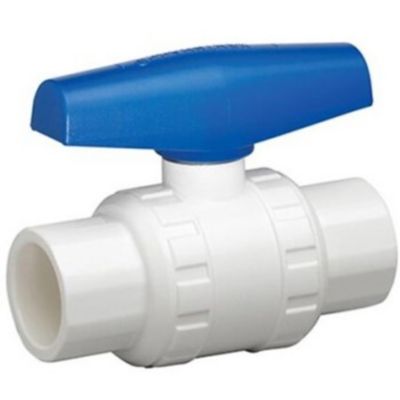
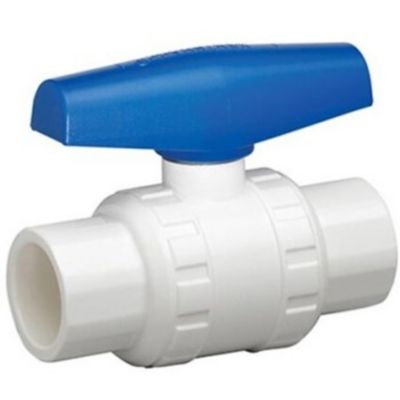
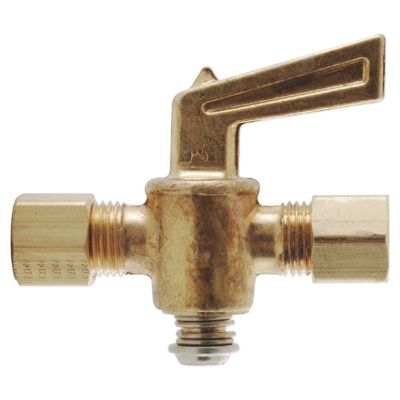
Quarter-turn shut-off valves control water flow to a plumbing fixture or supply line with a simple 90-degree turn of the handle. Many have an internal ball with a hole through its center; turning the handle lines that opening up with the water passage or rotates it across the passage to stop flow. On conventional lever-operated ball valves, a handle parallel to the pipe generally indicates an open valve, while a handle across the pipe generally indicates a closed valve. Other handle designs may have their own markings. That short movement makes these valves practical for places where a quick, clear shutoff matters, including toilet connections, faucet supplies, utility sinks, and properly matched appliance hookups. A fixture-level valve can isolate one connection without shutting down water throughout the whole place, which comes in handy when a faucet needs attention but the laundry still needs doing. In a farmhouse bathroom, a laundry room off the mudroom, or a barn wash area, placement and access matter just as much as the valve itself. The handle needs room to travel through its full turn without hitting a cabinet wall, another pipe, or the supply hose. Straight stops work with connections that continue along the same general path, while angle stops redirect the connection, commonly by 90 degrees. That difference helps determine whether the supply line can sit neatly without a sharp bend or awkward strain. Compact fixture stops and larger inline shutoffs serve different needs, so the right choice depends on the location, pipe size, and amount of water the connection must carry. A small toilet supply stop and a valve serving a larger utility line may share the same quarter-turn action, but they are not interchangeable just because their handles work alike.
Body material, internal seals, and connection type all play a part in how a quarter-turn shut-off valve fits the job. Brass is common in fixture stops and many inline water valves because it offers strength and resistance to corrosion in suitable water conditions. Stainless steel and plastic bodies also appear in water-handling applications, with suitability depending on the system and the valve’s listed ratings. For sink and toilet supply connections,
Brass Shut Off Stop Valves are a familiar option, though the body material alone does not establish compatibility. Drinking-water service calls for valves specifically identified for that purpose, including applicable lead-free requirements; a shiny finish is not proof of approval. Chrome plating can give exposed plumbing a clean appearance, but it does not tell the whole story about the body underneath. Connection details deserve a close look, especially when replacing a valve on an older line. Copper, PEX, CPVC, and PVC each have their own joining requirements, and a fitting that works with one pipe material may not work with another. Compression, threaded, push-to-connect, and PEX-specific ends are not interchangeable connection methods. Push-to-connect fittings need approval for the particular pipe material, while PEX connections must match the intended joining system. Thread type matters, too: tapered pipe threads and straight supply-connection threads seal differently. Inlet and outlet sizes can differ on the same valve, and nominal pipe sizes do not always match a pipe’s measured outside diameter. A common fixture-stop arrangement pairs a nominal half-inch supply-side connection with a three-eighths-inch outside-diameter compression outlet, but that example is not a substitute for checking the actual plumbing. Matching both ends helps avoid a pile of adapters beneath the sink. It also keeps the valve and supply line from being pulled sideways just to make the connection reach. For a tight cabinet or crowded utility corner, the body’s dimensions, outlet direction, and handle shape can make the difference between an accessible shutoff and one that is hard to reach.
The best fit also depends on what happens inside the line, not just what fits around it. Working-pressure ratings, permitted fluids, and manufacturer instructions establish where a valve belongs. A valve intended for household water should not be assumed suitable for fuel gas, compressed air, chemicals, or every agricultural liquid. Likewise, outdoor irrigation, livestock watering equipment, and potable household plumbing can have different requirements even when the pipe connections look similar. Full-port ball valves have an opening sized to reduce restriction through the valve, while reduced-port designs have a smaller internal passage. That distinction can matter on lines feeding equipment that needs steady flow, though the valve is only one part of the system’s overall capacity. Quarter-turn shutoffs are generally intended for isolation rather than ongoing flow adjustment, and they do not take the place of a pressure regulator or backflow protection. For homeowners, plumbers, and folks looking after rental houses or farm buildings, easy access and a clearly identifiable shutoff can make routine maintenance less disruptive. A firm, comfortable handle is helpful when reaching behind a toilet or into the back of a sink cabinet, but a longer handle still needs enough clearance to move. Keeping the area around a valve clear makes it easier to spot moisture, mineral buildup, or corrosion before a small seep becomes a cabinet-floor problem. Occasional checks for smooth operation and leaks can reveal changes that deserve attention. A stiff handle should not be forced, and water appearing around the stem or connections warrants a closer look rather than a harder twist. Installation details matter as well: sealing materials belong only where the connection design calls for them, and compression connections generally do not seal at their threads. When the existing pipe is damaged, the fitting type is uncertain, or a shutoff will not fully stop the water, a qualified plumber can assess the connection. A properly matched quarter-turn shut-off valve keeps everyday water control straightforward, whether the job is isolating a bathroom faucet or managing a utility supply line.