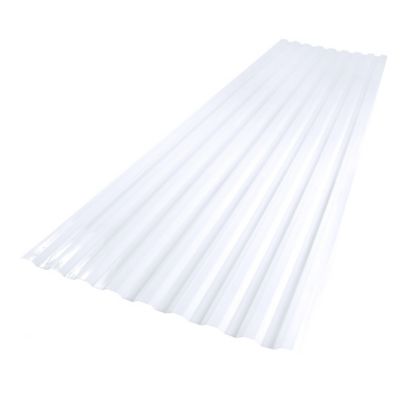
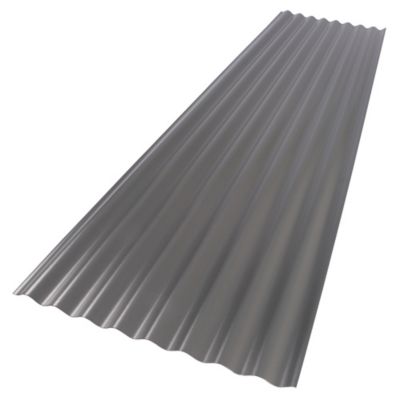
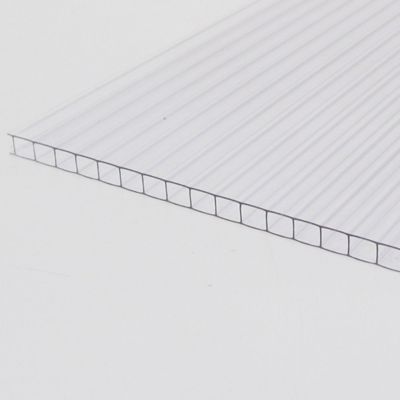
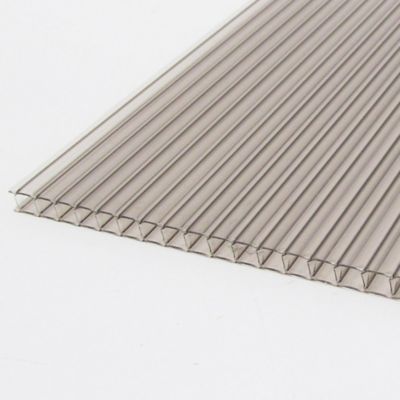
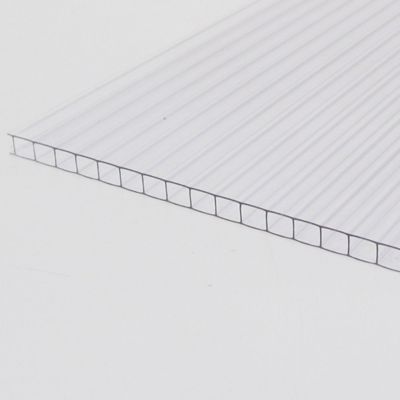
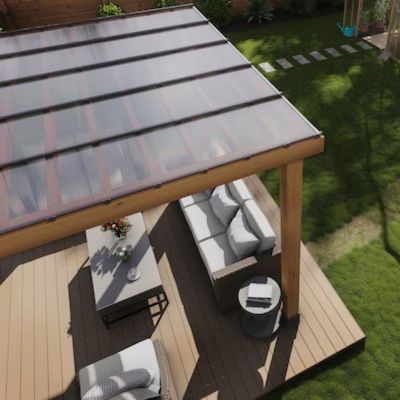
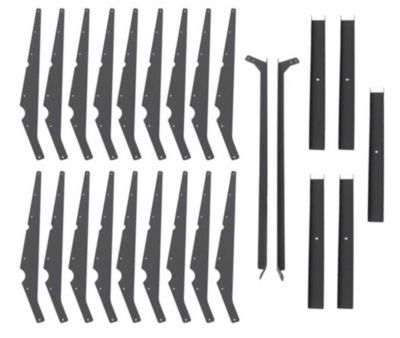
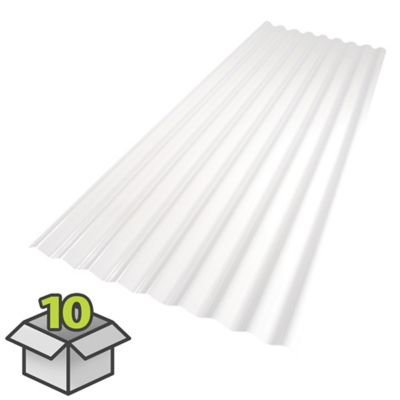
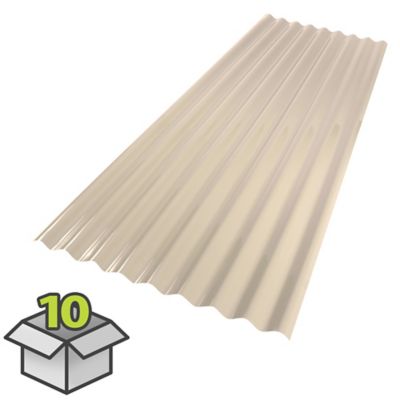
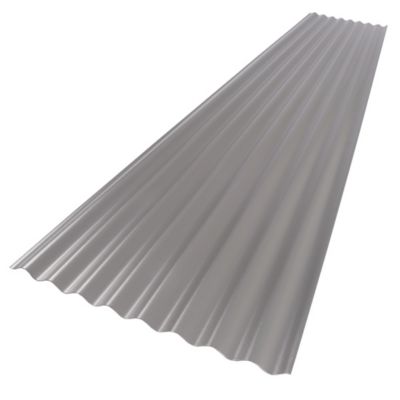
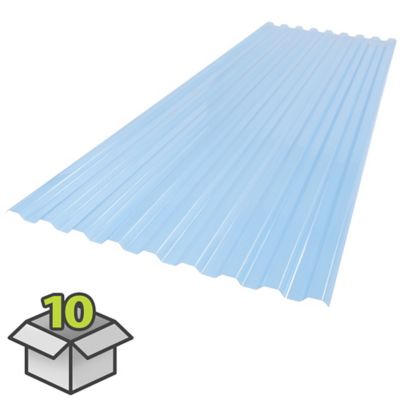
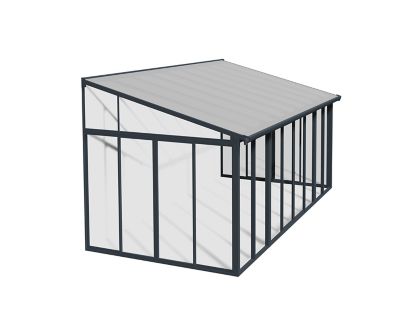
Corrugated polycarbonate roofing sheets are lightweight, impact-resistant plastic panels that provide overhead cover while allowing natural light into a space. Their repeating ridges add stiffness, making them a practical roofing material for greenhouses, patio covers, pergolas, carports and certain farm outbuildings. Around a property, that can mean a brighter potting area beside the garden, a covered spot for sorting tools or a sheltered walkway between buildings without the darker feel of an opaque roof. Polycarbonate is a different material from fiberglass or PVC, even when the panels look similar from a distance, so material specifications matter when comparing roofing options. Clear sheets generally admit more light, while translucent or tinted finishes can soften brightness or provide shade, depending on their stated light-transmission ratings. A greenhouse owner may put light transmission near the top of the list, while someone covering a porch may care more about reducing glare over a table and chairs. Neither clarity nor tint alone tells the whole story: ultraviolet protection, heat transmission and the panel’s intended application also deserve a look. Some sheets have a protective surface layer that helps resist damage from sunlight, and the manufacturer’s information should identify any required outward-facing side. Claims about blocking UV rays should come from the specifications for the particular panel rather than an assumption about all polycarbonate roofing. The material’s relatively low weight can make handling and transport more manageable than heavier glazing, though long sheets still need careful support to prevent bending or damage along their edges. Impact resistance is another reason these panels suit busy properties, but it does not make them unbreakable or safe to walk on. For growers, homeowners and folks maintaining sheds or covered work areas, the appeal is straightforward: overhead protection with daylight still coming through. The best match depends on how that space functions, how much light belongs there and what the supporting structure can carry.
Fit starts with more than the length and width printed on a roofing sheet. Corrugation shape, ridge spacing and panel depth all affect how sheets overlap and whether they line up with adjoining roofing, closure strips and flashing. Panels with a rounded wave profile do not necessarily fit those with a squared profile, and similar-looking sheets may have different dimensions. That matters when replacing one damaged section on a greenhouse or adding a daylight strip to an existing roof. Nominal sheet width also differs from installed coverage because side overlaps take up part of each panel. On a long lean-to beside a barn, those small differences add up across the roof. Sheet length, end overlaps and roof slope influence the layout as well, with the manufacturer’s installation requirements setting the limits rather than a general rule for every corrugated panel. Supporting lumber or metal framing needs spacing appropriate to the sheet’s thickness, profile and rated loads. A thicker panel is not a substitute for sound framing, and a lightweight roof still has to meet applicable structural and building-code requirements. Wind uplift, rain runoff and snow loads belong in that assessment wherever they apply. Polycarbonate also expands and contracts, so the fastening system needs to accommodate movement without leaving the roof loose. Compatible screws, sealing washers, closures and flashing help the assembly work together; overly tight fasteners can distort a sheet or stress the area around a hole. Manufacturer-approved installation details are especially important where roofing meets a wall or another roof surface, since those junctions need a clear path for water to drain away. For a roof design centered on a defined daylight opening,
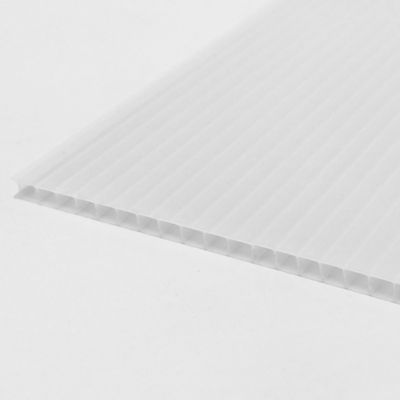
Polycarbonate Skylight Panels offer another category to consider alongside the surrounding roofing system. Whether the project is a small garden shelter or a larger equipment cover, matching the panel profile and support requirements helps avoid awkward joints, unnecessary trimming and gaps that defeat the purpose of putting a roof overhead.
Everyday performance depends on the whole roof assembly, not just the sheet material. Single-skin corrugated polycarbonate provides a light-transmitting cover, but it should not be mistaken for an insulated roof system. An enclosed greenhouse still needs ventilation and a plan for managing heat and moisture, while an animal shelter needs airflow suited to the animals and the building. Condensation can form on the underside of roofing under certain conditions, so drainage, ventilation and any stated condensation-control features matter where dripping could affect feed, bedding or a workbench. Surface care also plays a part in keeping the roof bright and serviceable. Dust from a gravel drive, leaves from a nearby tree and ordinary buildup can reduce light transmission or interfere with drainage. Cleaning methods should follow the sheet manufacturer’s recommendations, which commonly call for water, mild soap and soft cleaning tools rather than abrasive pads or harsh chemicals. Compatibility matters for sealants, cleaners and coatings because some substances can damage polycarbonate or its protective surface. Pressure washing and scraping are not automatically suitable just because the panels resist impacts. Safe access matters, too: cleaning and inspections should not involve standing directly on the sheets. Periodic checks of fasteners, washers, overlaps and flashing can reveal trouble before a loose connection or blocked drainage path becomes a bigger repair. Warranty terms are worth comparing alongside impact ratings, UV protection and application limits, since coverage may depend on proper installation and care. For a working property, service life also depends on nearby branches, falling objects, chemical exposure and the condition of the framing underneath. Looking at those details gives a clearer picture than thickness or appearance alone. Corrugated polycarbonate roofing sheets make the most sense where natural light, manageable panel weight and overhead cover all serve a purpose, with the right fit and upkeep helping that roof earn its place around the home, garden or farm.