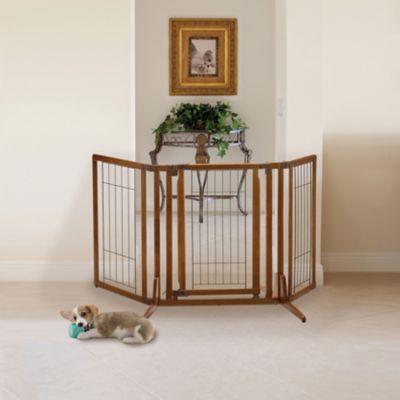
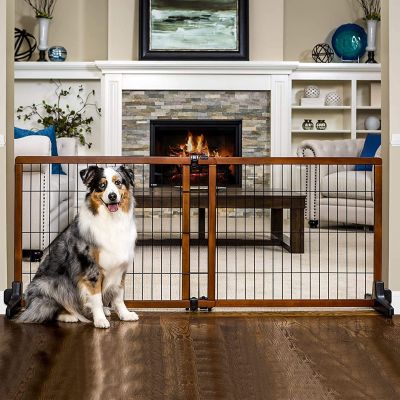
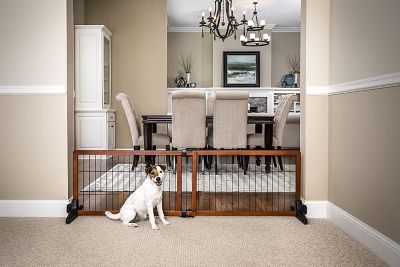
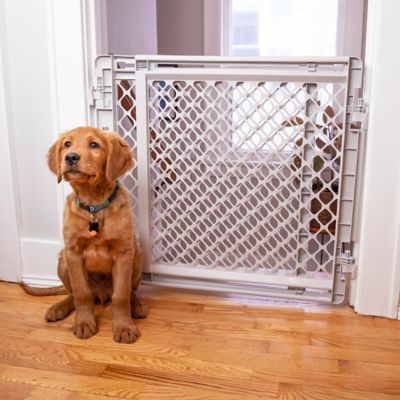
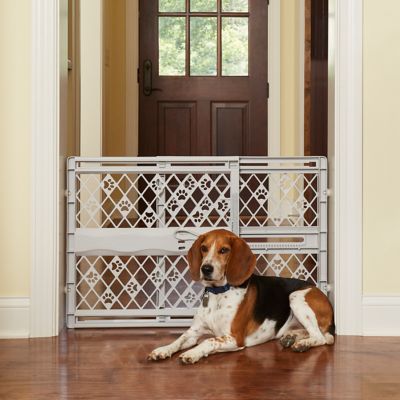
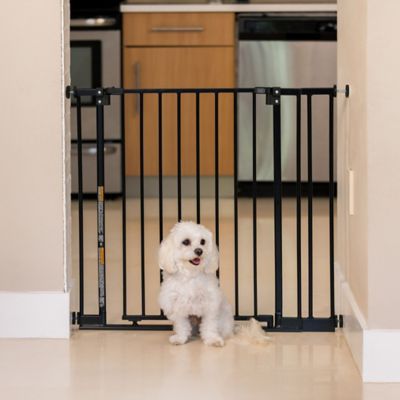
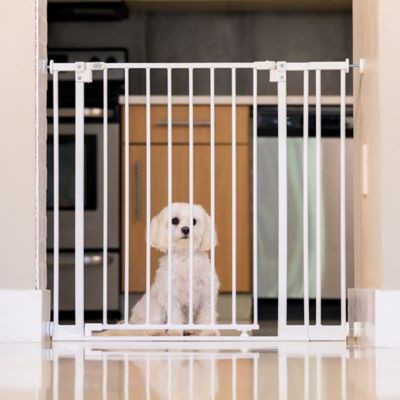
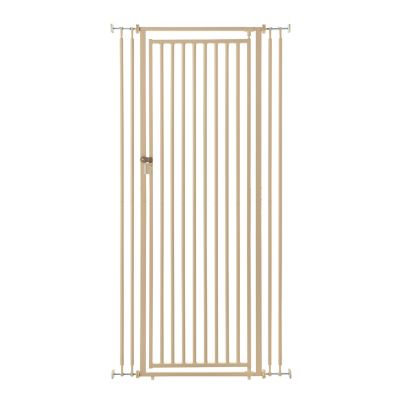
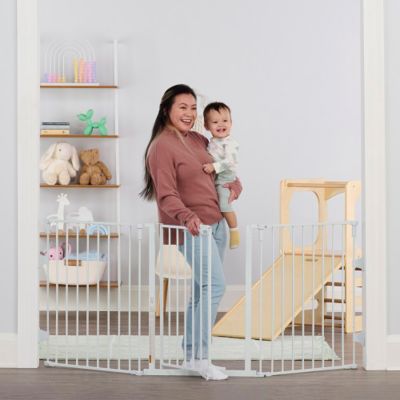
Pet gates for wide doorways help divide open living spaces without shutting pets away behind a solid door. A broad opening between the kitchen and family room, a double doorway off the mudroom or the entrance to a home office can all call for more reach than a standard gate provides. Extra-wide pet gates create a boundary while leaving sightlines open, so a dog can settle on a bed nearby while supper gets made or visitors come through the house. Their usefulness depends on both the opening and the animal: a small dog that respects a boundary has different needs than a tall jumper, a determined chewer or a puppy that squeezes through narrow gaps. Overall width, gate height, bar spacing and the space beneath the bottom rail all matter. The listed fit range should cover the actual opening with any required mounting hardware and approved extensions in place, rather than just matching the width of the gate panel itself. Openings are not always square, especially in an older farmhouse, and baseboards can make the span near the floor narrower than it is farther up the wall. Measurements at the intended upper and lower mounting points help reveal those differences. Wide openings also leave more room for a gate to flex, making the connection points, panel joints and support requirements worth a close look. Extensions must match the gate system, and adding more than the manufacturer allows can weaken the setup. For a narrower passage elsewhere in the house,
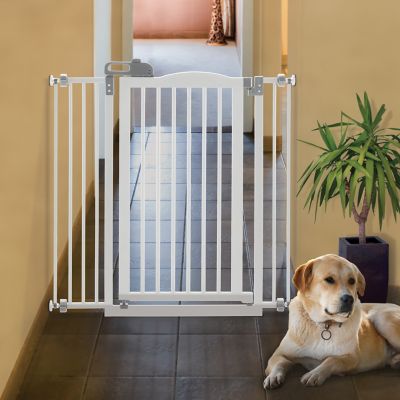
pet gates for hallways address the same need for separation in a different space. Whether the opening connects two busy rooms or marks the edge of a quiet resting spot, a well-fitted gate should suit the pet’s behavior as well as the floor plan. Enough height to discourage a casual hop does not guarantee containment for an animal that climbs or jumps, and some cats will cross a gate with little trouble.
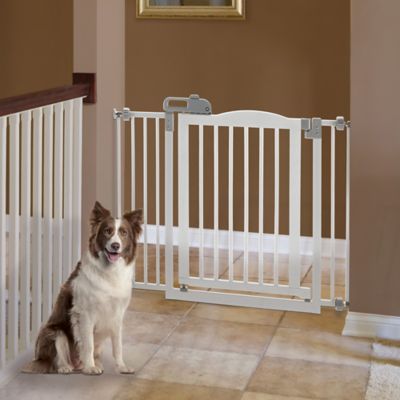
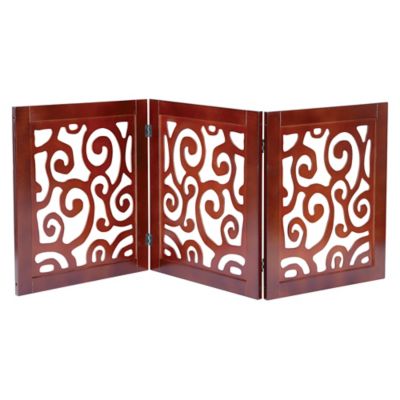
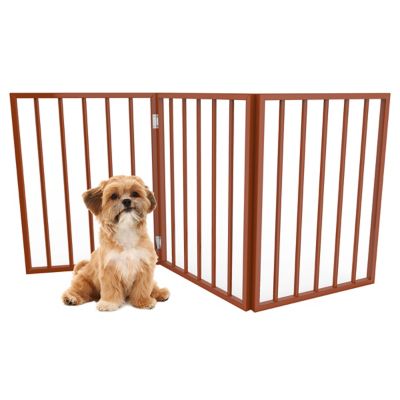
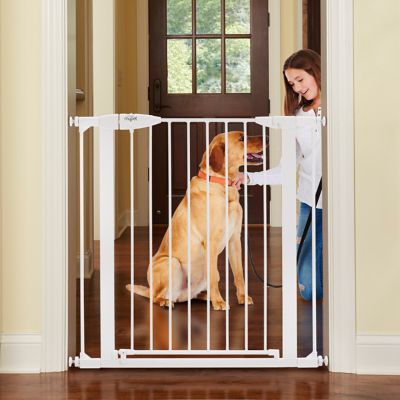
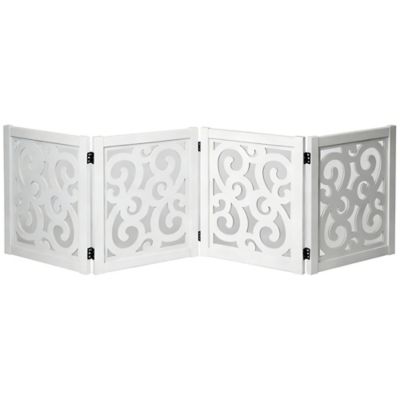
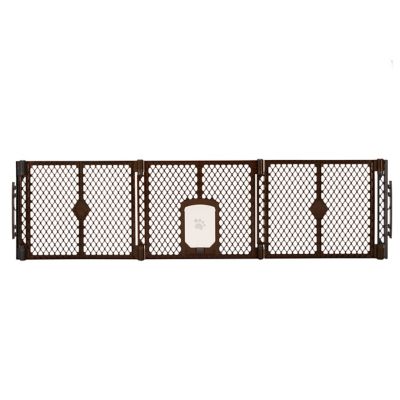
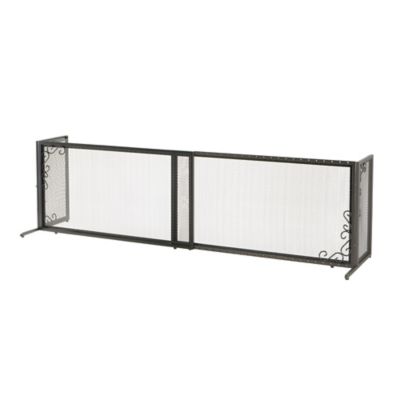
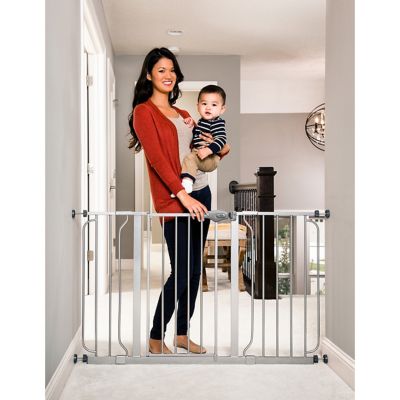
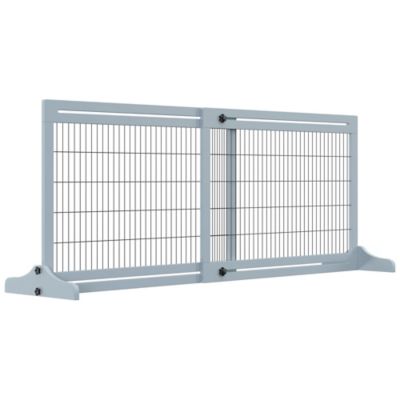
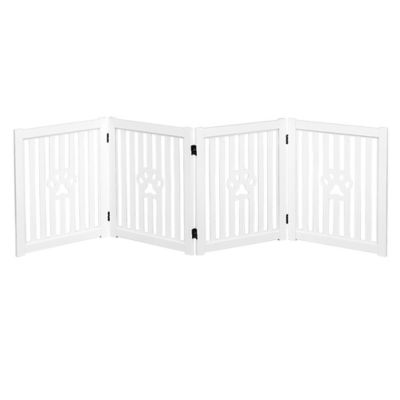
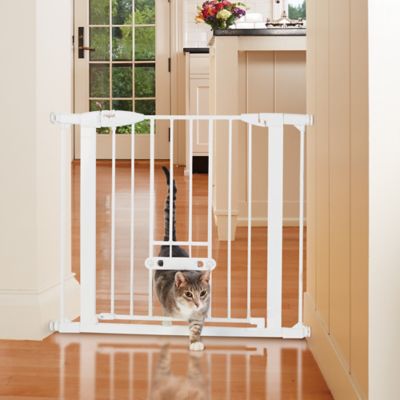
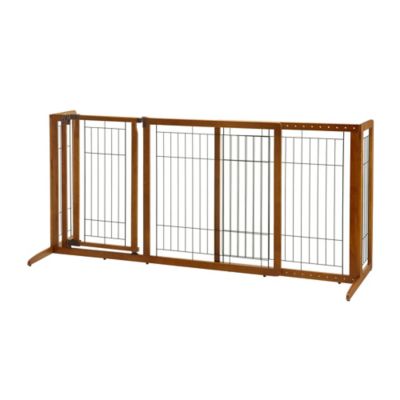
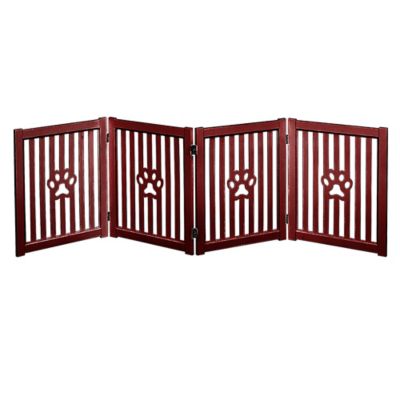
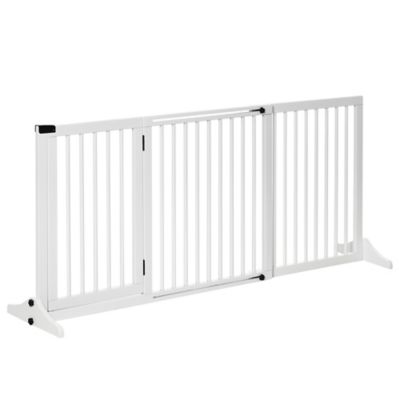
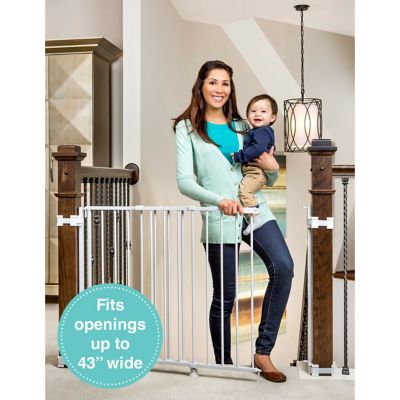
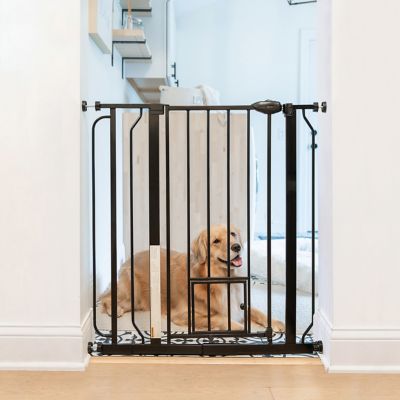
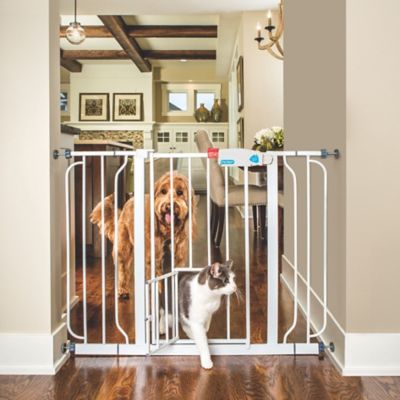
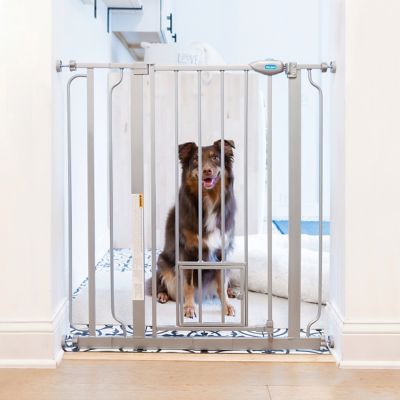
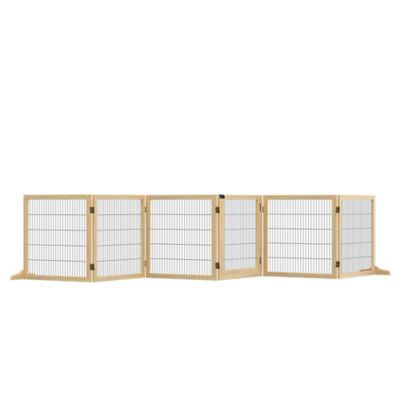
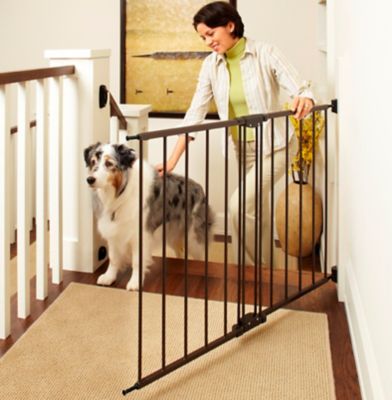
Mounting style makes a big difference in how a wide pet gate fits into everyday household traffic. Hardware-mounted gates fasten to suitable walls, posts or doorframes and can provide a firmer attachment across a broad span when installed as directed. The strength of that attachment depends on the mounting surface and fasteners; drywall alone may not provide the support a particular gate requires. Baseboards, uneven trim and offset walls can also affect bracket placement, with manufacturer-approved spacers or mounting kits needed for some installations. Pressure-mounted gates hold tension between opposing surfaces and can make sense where the opening and the pet’s behavior suit that design. They are not automatically a no-drill choice, since some require wall cups secured with screws. A dog that lunges against a barrier or repeatedly pushes on it may need a different containment setup altogether. Freestanding pet gates offer another way to mark off a room without fastening the panels to the walls. Their feet, panel angles and overall footprint help them stay upright, so the usable span may be shorter than the gate’s fully extended length. These designs tend to make more sense for calm pets that already respect a boundary than for animals likely to knock them over. Walk-through gates are handy along a route traveled with a laundry basket, feed scoop or armful of groceries, since the person passing through can open a door instead of moving the whole barrier. Door width, swing direction and latch placement affect how comfortable that passage feels. Automatic-closing features still need a clear swing path and a latch that engages properly. Bottom rails can create a trip point, especially where people move between rooms carrying something that blocks their view. Freestanding and pressure-mounted pet gates do not belong at the top of stairs, and a pet gate is not a substitute for a gate rated for child safety. A small pet pass-through can let one animal move between rooms, but only when its dimensions keep the larger pet from following.
Materials influence a wide doorway gate’s weight, appearance, cleaning needs and resistance to everyday wear. Metal frames can stand up well to regular household traffic, though finishes still need attention where scratching or chewing exposes the surface underneath. Wood brings a warmer look alongside cabinets and trim, but persistent chewing can leave rough edges or splinters. Mesh and fabric barriers may offer a lighter profile, yet they need careful matching to the animal; claws, teeth and repeated pushing can damage flexible panels. No gate should be treated as chew-proof simply because it has a sturdy frame. Smooth surfaces and accessible corners make it easier to wipe away muddy paw marks, loose hair and the nose prints that collect wherever a dog watches the next room. Cleaning products should match the manufacturer’s directions, with residue removed and surfaces allowed to dry before pets return. Hinges, latches, wall cups and extension joints benefit from regular checks, particularly after a gate has been moved or bumped. Loose hardware, bent bars, torn mesh and sharp edges are reasons to stop access until the problem is addressed. Indoor gates also need to stay within their intended setting; a finish that handles household cleaning is not necessarily meant for a porch, yard or other exposed area. Around the house, these barriers can give a new dog a manageable space to settle, keep a curious puppy away from a busy cooking area or allow pets to rest separately during supervised introductions. In homes with several animals, access to water, bedding and an appropriate bathroom area still matters on each side of the boundary. A gate can support training, but it cannot replace supervision or solve distress when a pet is separated from people. The most practical fit is a gate that spans the doorway properly, stays secure through ordinary comings and goings, and gives the household a workable boundary without making every trip from room to room a chore.