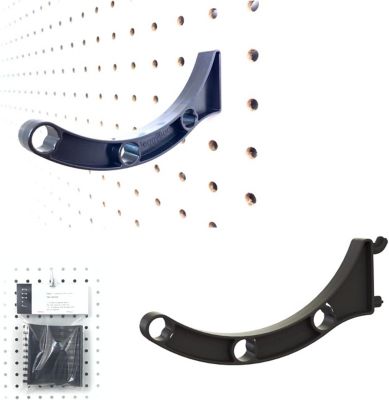
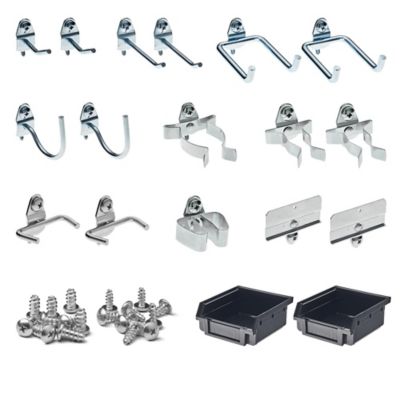
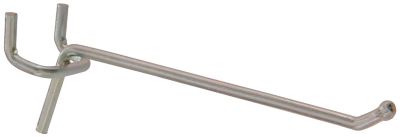
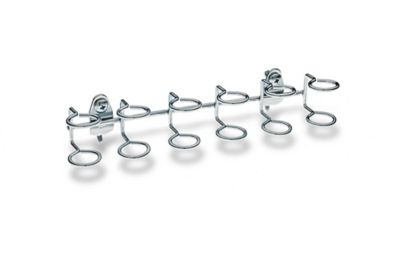
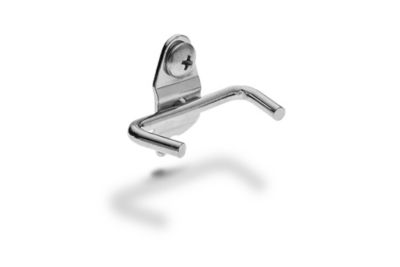
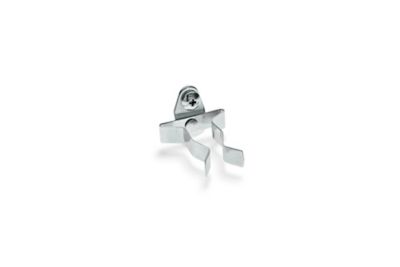
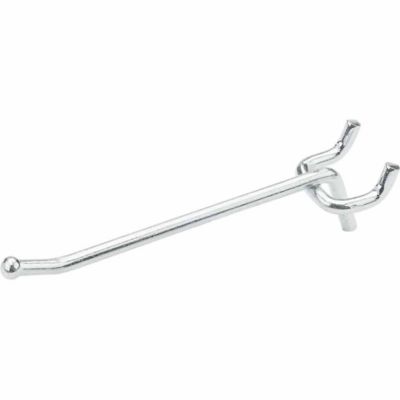
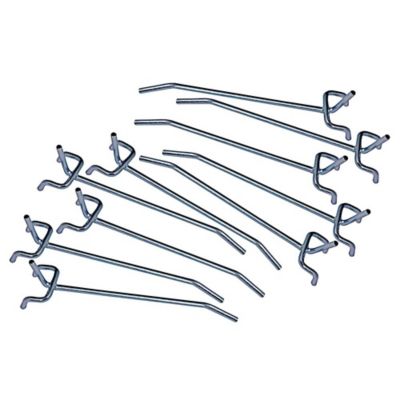
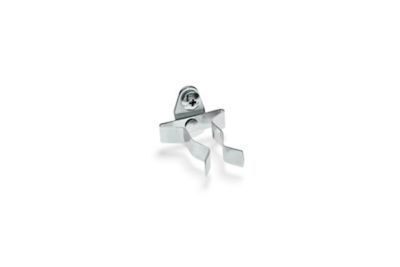
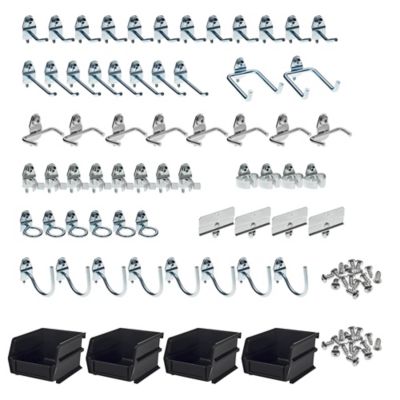
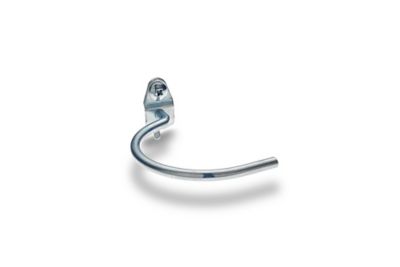
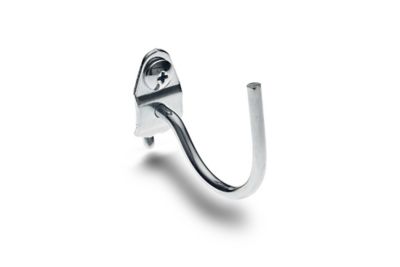
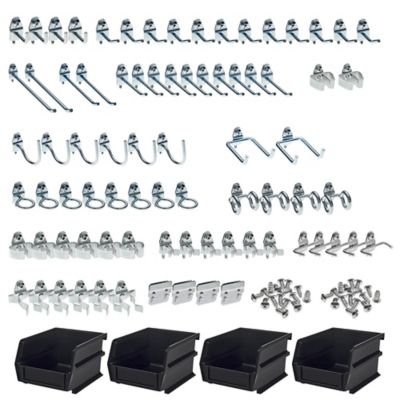
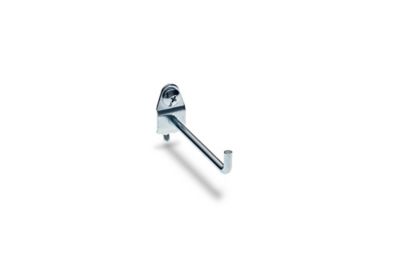
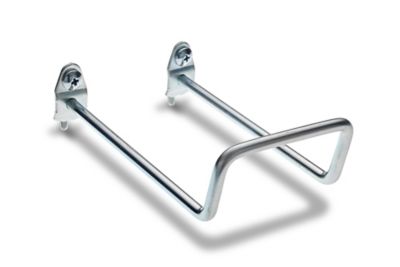
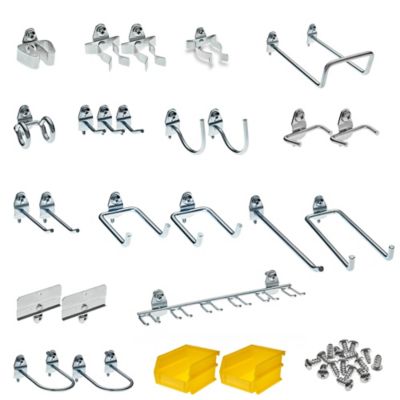
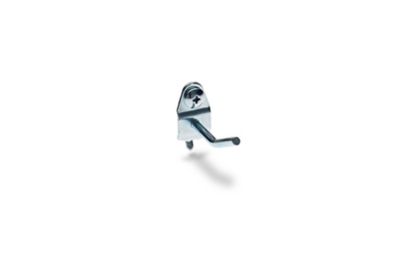
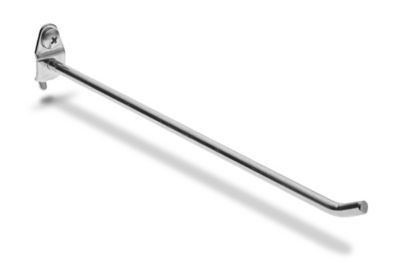
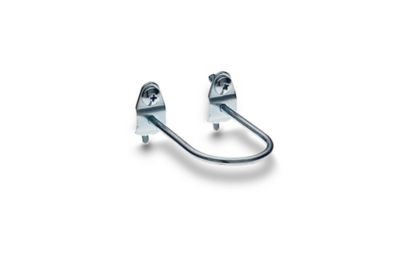
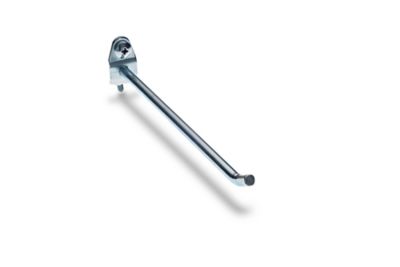
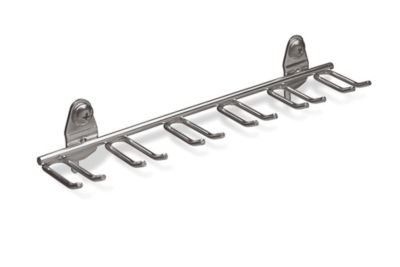
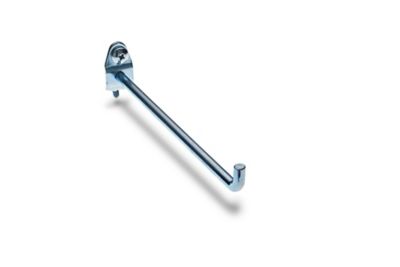
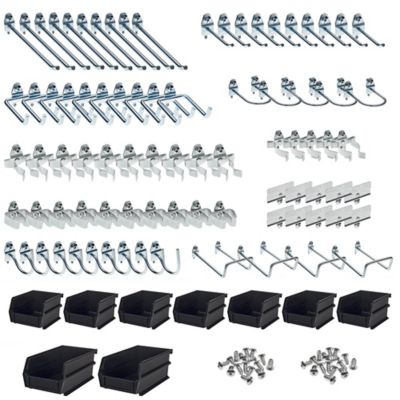
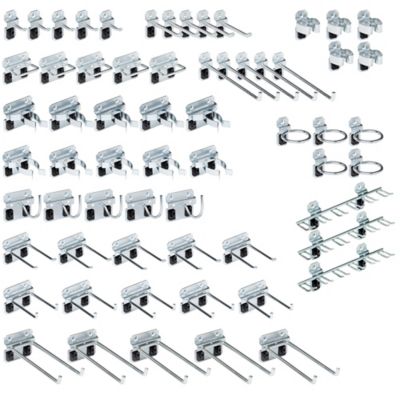
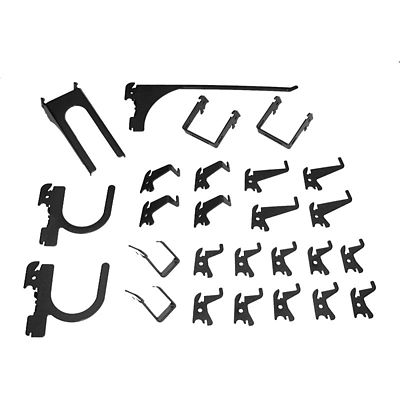
Pegboard hooks are removable hangers that fit into a perforated board to keep tools, cords, and small supplies organized on a wall. They turn open wall space into storage without taking over the workbench, giving everyday gear a place where it is easy to see and reach. In a garage, barn shop, utility room, or repair area, that can mean keeping pliers beside the bench instead of buried beneath rags and loose hardware. Different hook shapes suit different jobs. Straight hooks provide a place for tools with hanging holes, packaged supplies, or other lightweight gear that can slide onto an arm. J-shaped hooks have an upward curve that helps keep hanging loops from slipping forward, while L-shaped hooks offer a straight support with a raised end. Double-arm hooks provide two points of support for wider objects, although their weight capacity still depends on their construction and the board behind them. Ring holders and shaped cradles can support tools such as screwdrivers or pliers when their openings match the tool’s size and shape. Hook length matters, too: a short arm keeps a single tool close to the board, while a longer arm provides more depth for several lightweight hanging pieces. Longer does not automatically mean stronger, and a crowded hook can make it harder to reach what is behind the first tool. A useful arrangement leaves room around handles so a hammer or wrench can come off the wall without knocking its neighbor loose. For folks who move between equipment repairs, fence work, and household upkeep, the appeal is straightforward: less digging through drawers and more elbow room on the bench. Pegboard storage also makes an empty spot easy to notice when a tool has not made it back from a job. Hooks can be rearranged as the tool collection changes, provided the board and mounting style allow it, so the same wall can serve a small repair corner or a larger workspace with several clearly defined tool groups.
Fit is the first thing that separates a steady pegboard hook from one that rocks, twists, or pulls loose whenever a tool comes off the wall. Traditional pegboard hooks commonly have mounting shanks described as 1/8 inch or 1/4 inch, but compatibility also depends on the board’s actual hole diameter, hole spacing, and thickness. A 1/4-inch shank will not fit into a 1/8-inch hole. A thinner shank may enter a larger hole, but that does not guarantee a snug or secure fit. Many traditional boards have holes spaced 1 inch apart on center; slotted panels and other specialty systems can require an entirely different mounting shape. Round-hole hooks should not be assumed to fit every metal, plastic, or hardboard panel. The hook’s mounting prongs also need enough clearance behind the board to enter and seat fully, so a panel mounted flat against a wall may not provide the space the hardware requires. These details matter whether the goal is hanging a few hand tools or filling a broad section above a shop bench. A hook that seats correctly should work with the panel rather than require bending, forcing, or enlarging holes. Compatible retaining clips, locking tabs, or other manufacturer-approved fasteners can help keep hooks attached when tools are lifted away. They are especially handy for frequently reached tools, where the hook might otherwise follow the handle off the wall. Retainers do not increase a hook’s stated load capacity, and neither does adding more weight to neighboring hooks. The hook, board, wall fasteners, and supporting structure all affect how much the setup can safely hold. The lowest applicable load limit governs, including any limits for individual hooks and the panel as a whole. Heavier gear belongs on hardware expressly rated for it, with weight spread as directed by the manufacturer. Deep hooks also place the load farther from the panel, making the stated rating and proper mounting particularly important.
Peg hooks come in different materials and finishes, with steel being a common choice for everyday tool storage. Wire diameter, bends, welds where present, and the design of the mounting points all contribute to how a hook handles its intended load. Zinc-plated finishes help protect steel against corrosion, while painted or powder-coated surfaces provide another protective layer. No finish makes every hook suitable for every setting, and scratches or worn spots can expose the metal underneath. Coated tips or sleeves can soften contact with tool handles and other surfaces, though they do not replace the need for a properly sized holder. Smooth edges matter around power cords, straps, and looped handles, where a rough spot can rub against the same area repeatedly. Care is generally simple: wipe away dust and grime, follow the finish care directions, and check for bent arms, damaged coatings, loose retainers, or enlarged board holes. A damaged hook or weakened section of board deserves attention before another tool goes back on it. The best layout also respects how the space actually works. Frequently reached hand tools belong within comfortable reach, sharp points need sensible clearance, and cords should hang without tight kinks or strain on their plugs. Tools with no suitable hanging point may need a matching cradle or another storage method rather than an improvised balancing act. Household repair supplies, hobby tools, and small maintenance gear each call for a different mix of hook shapes, so a useful setup is not necessarily a wall filled edge to edge. Leaving a little breathing room makes tools easier to grab and return, especially when several people share the workspace. For someone putting together a first garage bench or improving a long-established farm shop, compatible pegboard hardware can also make a practical gift when the board dimensions and tool needs are known. Whether the wall holds a modest row of hand tools or gear for daily repairs, well-matched hooks help keep the work area orderly and the bench ready for the next task.