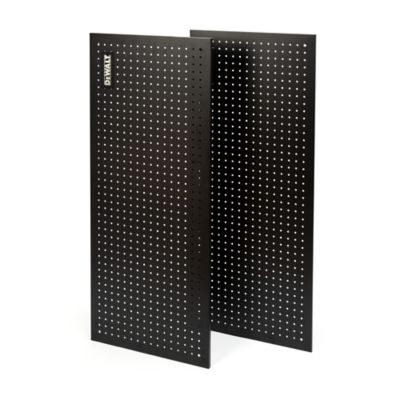
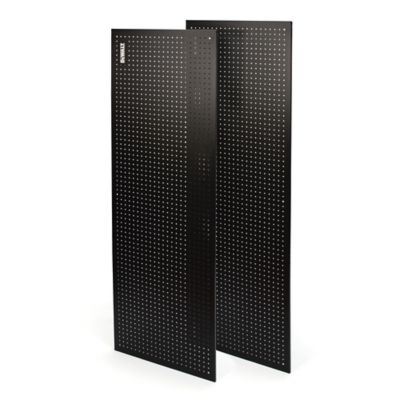
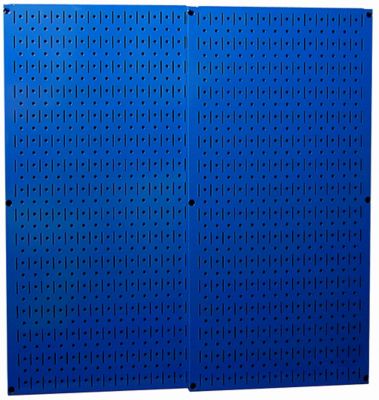
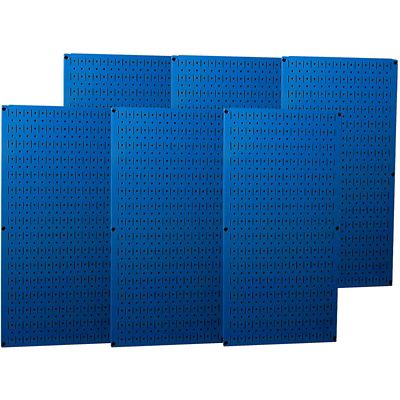
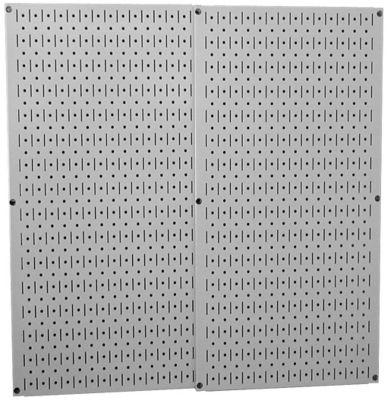
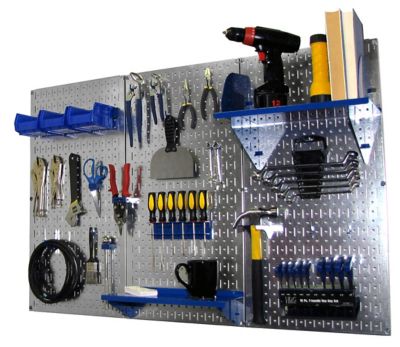
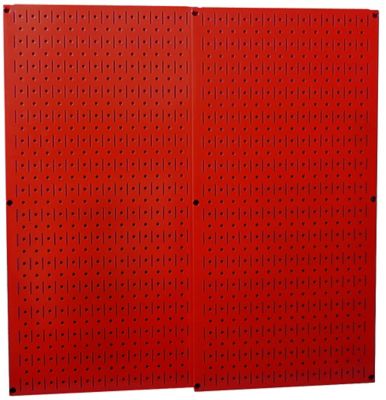
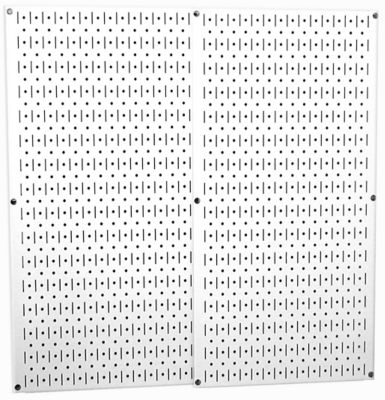
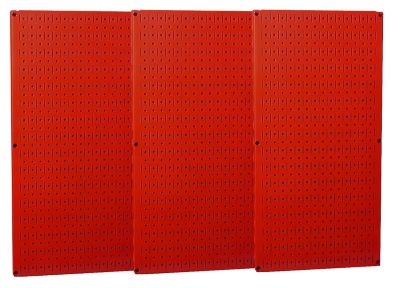
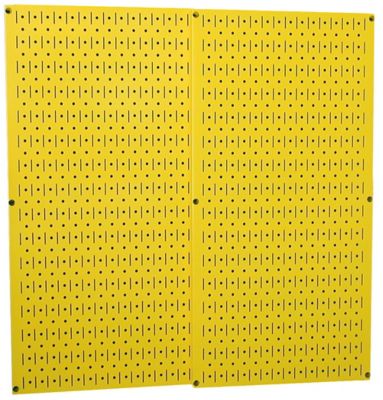
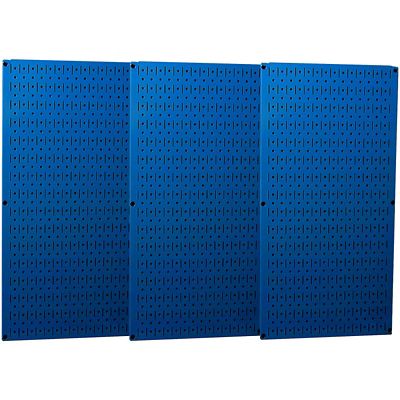
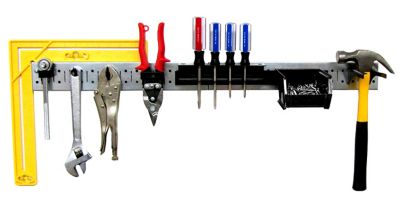
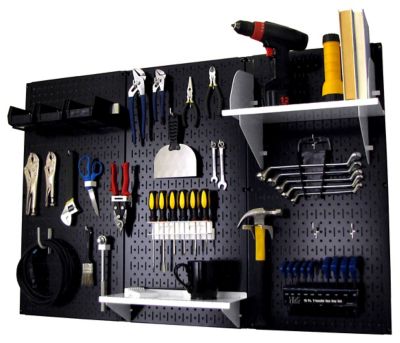
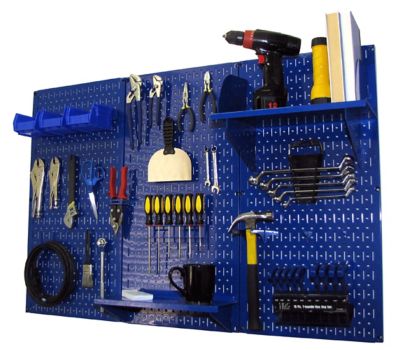
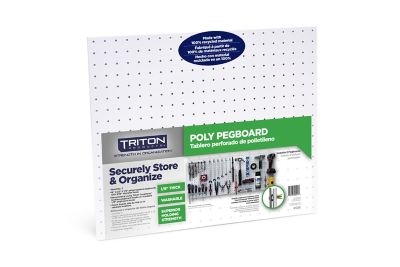
Metal pegboard tool panels turn open wall space into easy-to-reach storage for the tools that keep a farm, garage, or workshop running. Their perforated metal faces accept compatible hooks, brackets, bins, and shelves, bringing hand tools out of crowded drawers and putting them where they’re easy to spot. A wall above a workbench can hold pliers, screwdrivers, and measuring tools, while a larger section near a repair area can keep frequently needed gear close to the job. Compared with fiberboard, metal offers a rigid surface without wood fibers that can fray around the holes. Steel is a common choice for tool storage, with powder-coated and galvanized finishes offering different approaches to protecting the surface from corrosion. Powder coating adds a finished surface that is generally easy to wipe down, while galvanizing provides a protective zinc layer. Aluminum panels offer a lighter alternative, although they do not accept magnets the way many steel panels do. The material alone does not tell the whole story: panel thickness, bends along the edges, mounting design, and the supporting wall all affect how a system handles a load. For steel panels made to the same gauge standard, a lower gauge number generally indicates thicker metal, but the manufacturer’s stated load rating is more useful than thickness alone when comparing storage needs. That rating also needs to be read alongside any limits for individual hooks or shelves. A panel suited to a row of screwdrivers may not be the right setup for several loaded bins or larger power tools. For people maintaining tractors, repairing small engines, tending livestock equipment, or working on projects at home, the appeal is straightforward: less digging through a tool chest and more room on the bench. The open layout also makes a missing wrench easier to notice before the next repair starts.
Fit starts with the wall space, but it includes more than a panel’s width and height. The working footprint includes the tools hanging from the panel, the reach of shelf brackets, and enough clearance to lift each tool off its hook. A long-handled tool can extend well below the bottom edge, and a deep basket can crowd a narrow walkway even when the panel itself sits close to the wall. Above a bench, useful placement leaves room for the work surface, any equipment sitting on it, and comfortable access to the upper rows. Nearby outlets, switches, cabinets, and doors matter, too; a tidy layout still needs to leave them accessible. Modular panels can cover a small repair corner or form a broader storage wall, provided their dimensions and mounting requirements work together. Some metal pegboards have formed edges or built-in flanges that create clearance behind the face for hook insertion. Others require separate spacers or a supporting framework, so the mounting instructions determine how much room is needed behind the panel. Mounting hardware must suit the wall construction and the expected load, whether the location has wood framing, masonry, or another supporting surface. Drywall by itself should not be assumed to carry a loaded tool panel, and the strength of the installation depends on the complete assembly, not just the metal face. Heavier equipment generally belongs lower on the storage layout, within the limits of the panel, accessory, and mounting system. That arrangement keeps awkward lifts closer to bench height and leaves upper sections for lighter gear. In a shared shop, placement also affects how comfortably different people can reach the same tools. A well-planned panel puts everyday essentials within a natural reach instead of turning a simple grab for pliers into a stretch across a crowded bench.
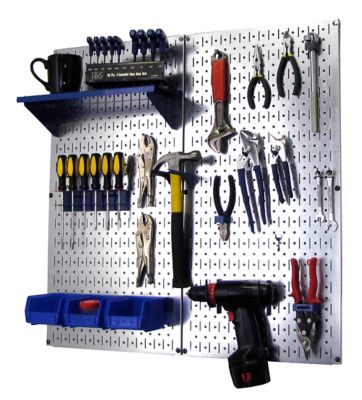
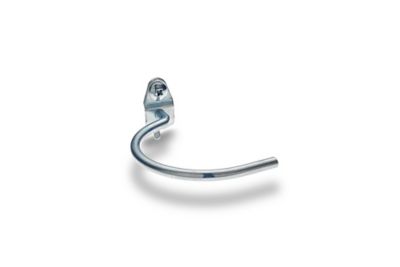
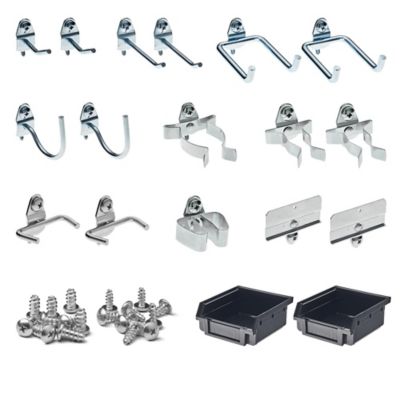
Accessory compatibility is another important difference between metal pegboard tool panels. Some have round holes for conventional pegboard hooks, while others feature slots or a combination of holes and slots. Hole diameter, spacing, panel thickness, and rear clearance all influence fit, and a hook that enters an opening is not necessarily a secure match. Slotted brackets may be designed for a particular panel system, while certain hooks need retaining clips to keep them from lifting out when a tool is removed. Matching the panel with compatible
Pegboard Accessories helps shape the storage around the work rather than forcing every tool onto the same style of hook. Single hooks can suit tools with hanging holes, paired supports can cradle wider shapes, and shelves or bins can hold supplies that do not hang neatly. A mechanic may want socket rails beside wrench holders; someone maintaining fence equipment may prefer a place for pliers, gloves, and small repair parts. Enough space between tools keeps handles from tangling and makes it easier to return each piece to its place. Labels or simple outlines can help in a shop where several people share equipment, especially when a tool needs to head back to the same spot after a job. Keeping the panel in good shape is usually a matter of routine attention rather than elaborate upkeep. Dust, metal filings, and oily residue should be removed with cleaning methods approved for the finish, and harsh abrasives can scratch protective coatings. Scratches, loose fasteners, bent hooks, and corrosion deserve attention before they become larger problems. Wet tools are better dried before hanging, and leaking containers belong somewhere they cannot drip across the panel or the tools below. As equipment changes, movable accessories let the layout change with it, within the system’s limits. For a farmer, home mechanic, woodworker, or someone setting up a first workshop, a compatible panel-and-accessory setup can also make a practical gift—especially when the wall measurements and the recipient’s tool collection are already known.