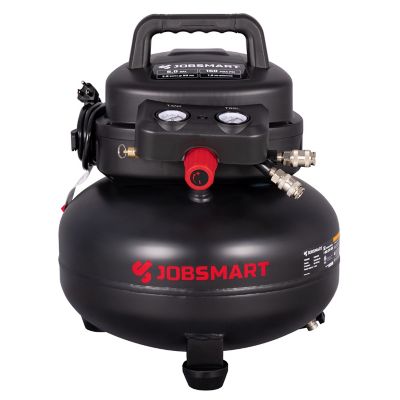
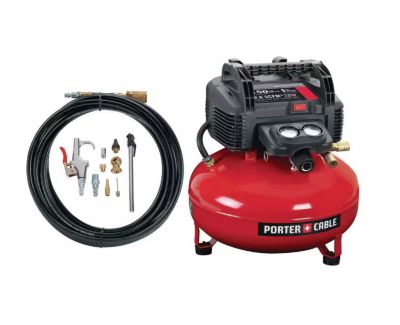
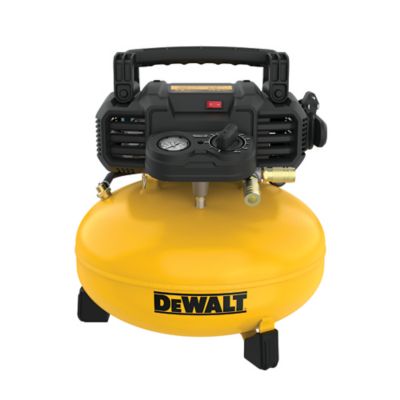
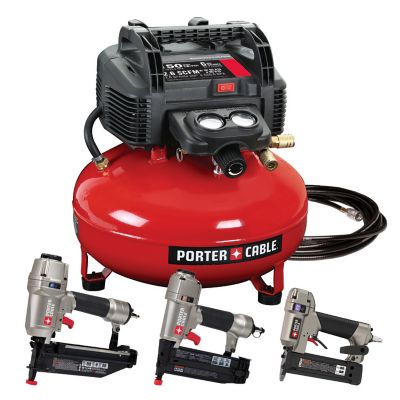
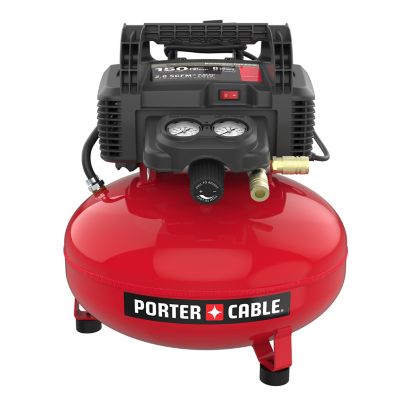
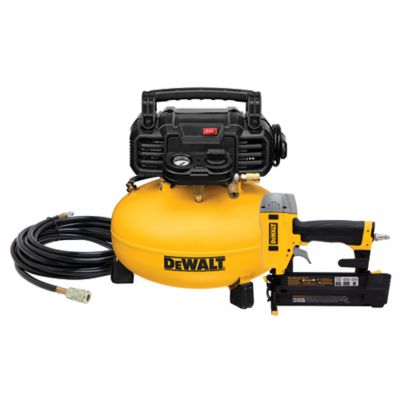
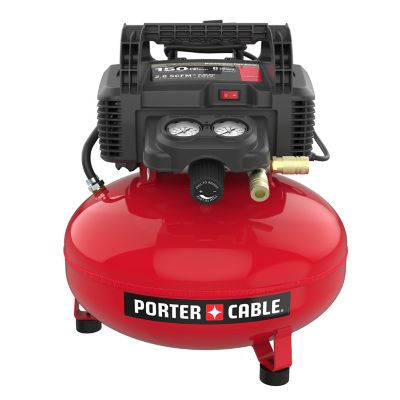
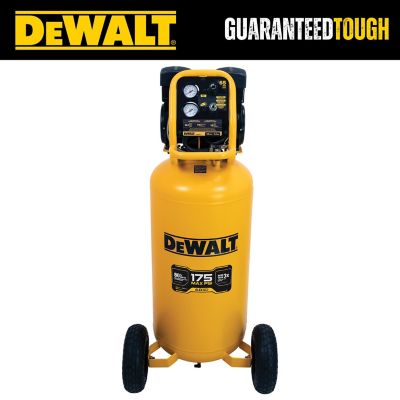
A pancake air compressor brings portable compressed air to the garage, workshop or small repair job without taking up the floor space of a tall shop compressor. Its name comes from the low, round air tank beneath the motor and pump. That wide tank gives the unit a compact footprint and a low center of gravity, while a carry handle makes it easier to move between the workbench and the job. Six-gallon tanks are common, though tank capacity, weight and overall size vary by model. For homeowners, woodworkers and folks handling repairs around a farm or acreage, this style fits tasks that need short bursts of air rather than a steady stream. Think fastening trim around a doorway, attaching narrow wood strips with a brad nailer, stapling upholstery or topping off a utility trailer tire. The compressor stores air in its tank, releases it through a regulated outlet and starts the pump again when tank pressure falls to a set point. That cycle suits intermittent fastening work, where there is usually a pause between shots. A pancake compressor can also make sense as a second air source for someone who already has a larger unit in the shop but wants something easier to carry to a separate work area with suitable electrical service. Portability still has practical limits: a full-size six-gallon model has some heft, and the handle shape, balance and total weight matter when carrying it up steps or across a yard. Its compact size also does not make it the right match for every air-powered tool. Sanders, grinders, many paint sprayers and tools that run continuously often need more airflow than a small pancake compressor can supply. Large agricultural tires can also involve much longer filling times than smaller tires. The best fit is a workload built around brief air demands, manageable hose runs and room for the pump to recover between tasks.
Air delivery matters more than tank pressure alone when comparing pancake air compressors. Many six-gallon models have maximum tank pressures around 150 to 175 pounds per square inch, or PSI, but that number describes stored pressure rather than the amount of air available to keep a tool running. Standard cubic feet per minute, usually listed as SCFM at a stated pressure, is the more useful comparison for tool demand. An output around 2.6 to 2.8 SCFM at 90 PSI is common among compact six-gallon models, although individual ratings vary. A brad nailer that fires a few fasteners at a time places a different demand on that supply than an air sander held against a board for several minutes. Matching the tool’s airflow requirement and operating pressure to the compressor’s ratings helps keep expectations grounded. A larger tank can provide a longer reserve before pressure drops, but it does not increase the pump’s ongoing air production. Recovery time and duty cycle matter, too, especially during repeated fastening or inflation jobs. Many pancake compressors run on standard 120-volt household power, with circuit requirements and starting demands that vary by motor. A suitable outlet near the work area is worth considering alongside the compressor itself; a longer air hose may offer more flexibility than an extension cord, subject to the manufacturer’s operating directions. Hose length, inside diameter and fittings affect airflow at the tool, so connection size and compatibility deserve a look. A regulator allows outlet pressure to match the task, while separate tank and outlet gauges make those readings easier to track. Some units have two couplers for convenient connections, but two outlets do not mean twice the air supply. For tire inflation, a compatible chuck and tire-pressure gauge help round out the setup. For fastening work, the tool, hose and fittings need matching pressure ratings and connections. The
Good Air Compressor collection offers another place to compare compressor styles when the job calls for a different balance of portability, tank capacity and sustained airflow.
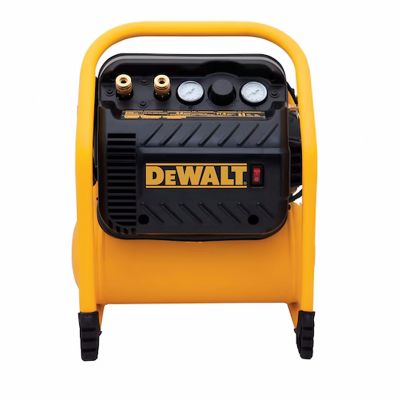
Construction and everyday upkeep make a difference in how a pancake compressor fits into shop life. Steel tanks are common, with exterior coatings that help protect the surface, while molded shrouds can shield parts of the motor and pump from incidental contact. Rubber feet help limit movement and vibration on a firm, level surface. Handle clearance matters when carrying the unit with work gloves, and the placement of gauges, couplers and the drain valve affects how easily those parts can be reached. A recessed control panel may offer some protection when equipment shares a crowded truck bed or work area, though the compressor still needs secure transport and protection from impact. Oil-free pumps are common in this category and eliminate routine pump-oil changes; they do not eliminate maintenance. Moisture collects inside an air tank as compressed air cools, making tank draining according to the manufacturer’s directions an important part of care. An accessible drain is especially handy when the compressor sees frequent short jobs. Clean air intake openings, sound hoses and fittings, and attention to the safety valve all support proper operation. Rust damage, tank alterations and repairs to the pressure vessel are not something to overlook or improvise around. Storage in a dry location and protection for the power cord, gauges and couplers help keep the unit ready for the next task. Noise is another practical consideration, particularly in a small garage where hard walls reflect sound. Published decibel ratings are useful when measured under comparable conditions, and hearing protection may be appropriate during operation. For someone setting up a first home workshop, or a gift recipient who enjoys woodworking and household repairs, a pancake compressor can be a useful addition when it matches the tools already on hand. The strongest match is not necessarily the highest pressure number or the biggest tank in a compact package. It is the combination of manageable weight, sufficient airflow, straightforward controls and upkeep that fits the work, whether that means a few finish nails at the bench or occasional tire care beside the garage.