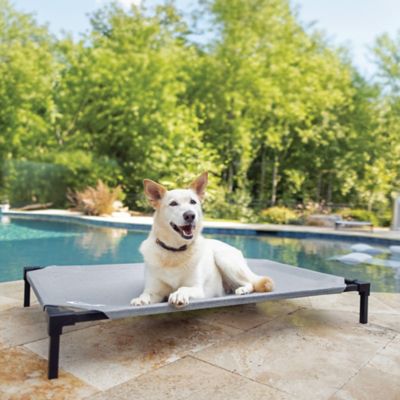
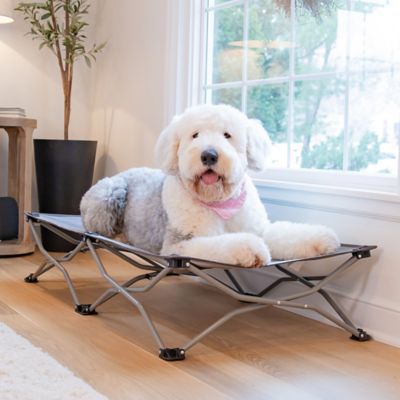
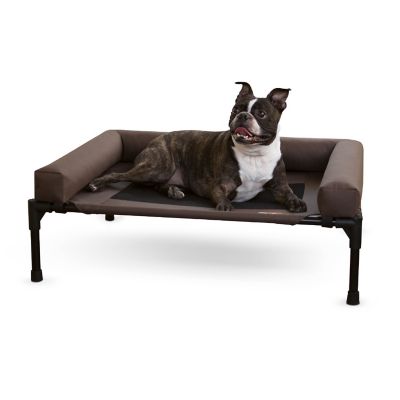
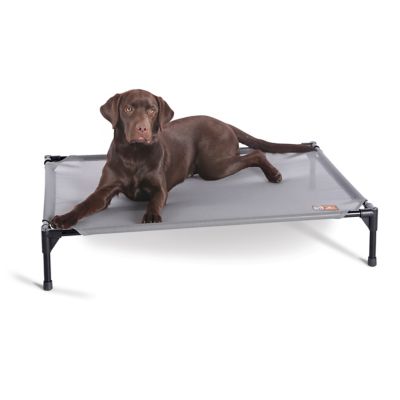
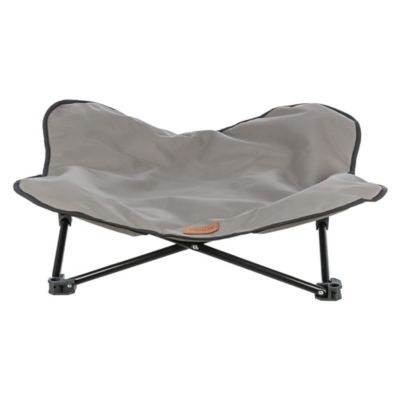
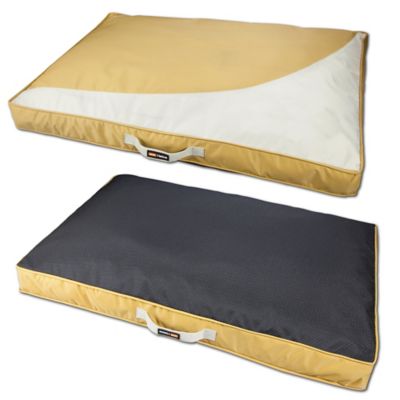
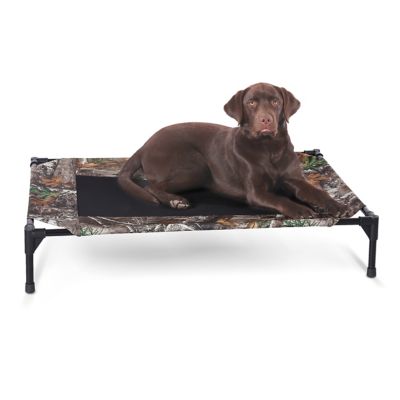
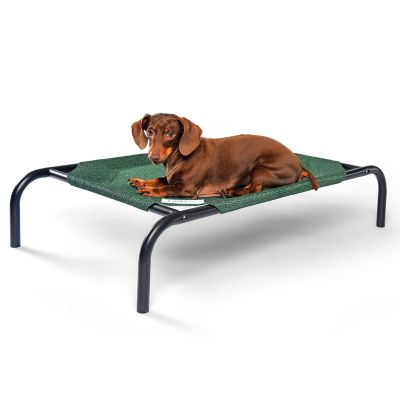
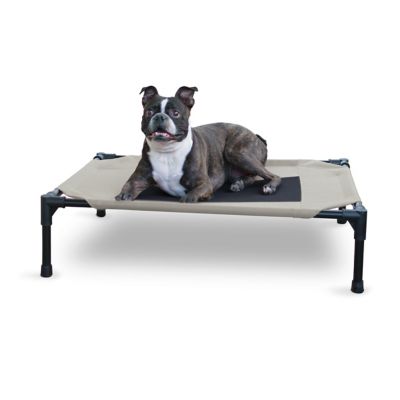
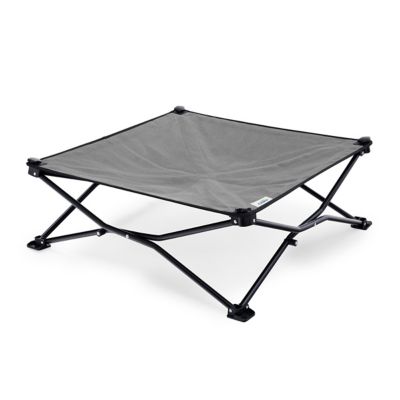
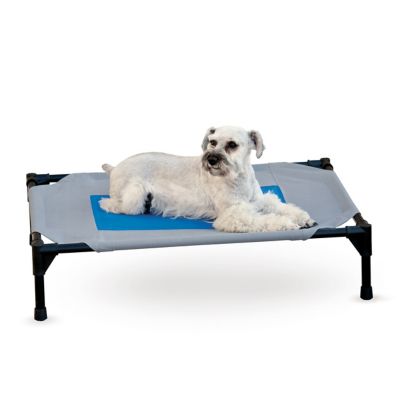
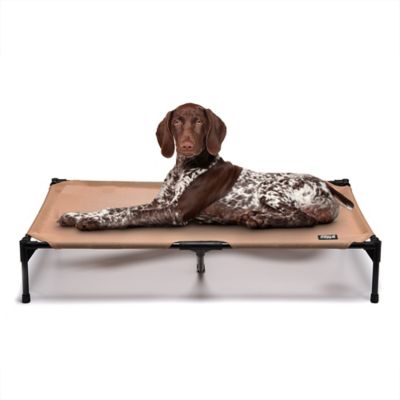
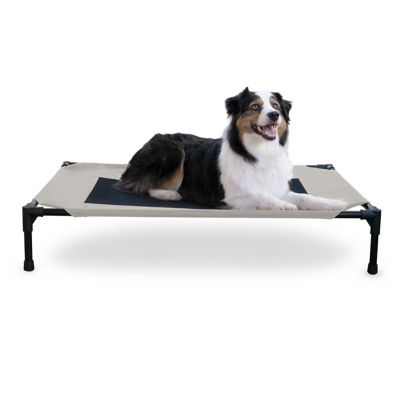
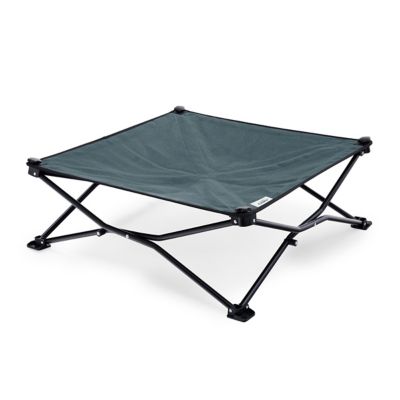
Outdoor raised dog beds give dogs a clean, comfortable place to stretch out while keeping them above damp grass, mud, gravel, packed dirt and cold ground. Most have a cot-style frame that lifts the sleeping surface about 7 to 9 inches, though the height varies by size and design. That space beneath the bed lets air move around your dog’s body, which can make a real difference when the afternoon sun is warm or the air feels still. Breathable mesh or sling-style fabric helps prevent heat from building up underneath, while the raised surface keeps your dog from lying directly in wet grass after a rain. Many dogs take to these beds naturally, especially when they can watch the yard, barn, driveway or pasture from a comfortable spot. An outdoor raised bed can be useful beside a kennel, near a back door, on a covered porch, in a garage, at a campsite or beside a work area where your dog likes to keep an eye on things. It may also help older, larger or less flexible dogs by taking some pressure off the hips, elbows and shoulders compared with a hard ground surface. For dogs that spend long stretches outdoors, a raised bed offers a dedicated resting place instead of a patch of soil or a concrete slab. During the cooler months, place it under a roof or inside a sheltered area, and add a dry blanket or pad made for outdoor use when needed. A raised bed should not take the place of a warm, protected shelter during freezing weather, strong wind or heavy precipitation, but it can give your dog a comfortable spot for daytime naps and time spent outside.
Choosing the right outdoor raised dog bed starts with your dog’s measurements, weight and habits. Measure from the tip of the nose to the base of the tail, then allow enough room for your dog to turn around, stretch out and settle in the position they prefer. A dog that curls tightly may fit a smaller sleeping surface, while a sprawler needs extra length and width. Check the stated weight limit and consider your dog’s build, not just the number on the scale. Broad-chested dogs and dogs that like to share a bed with a companion need more space and support. For very large dogs, take a look at
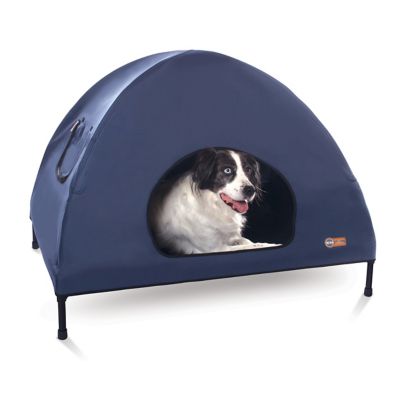
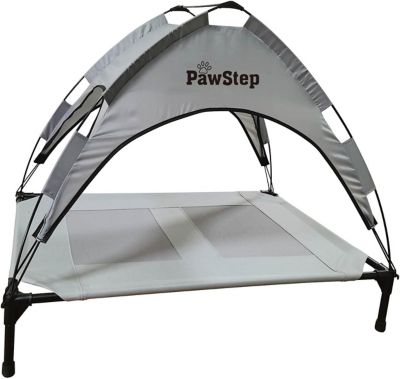
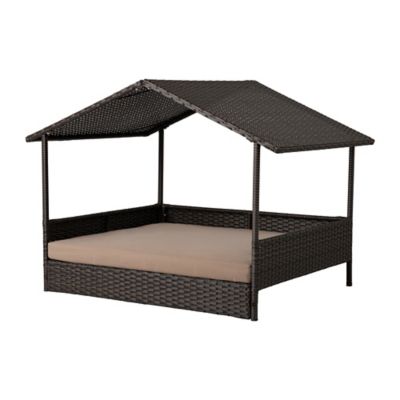
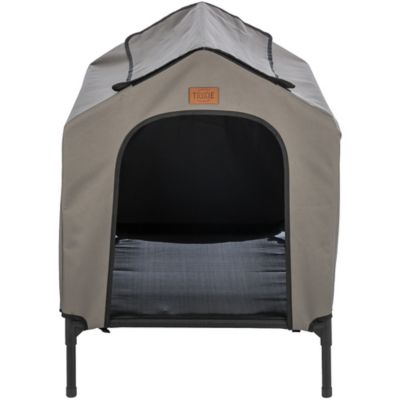
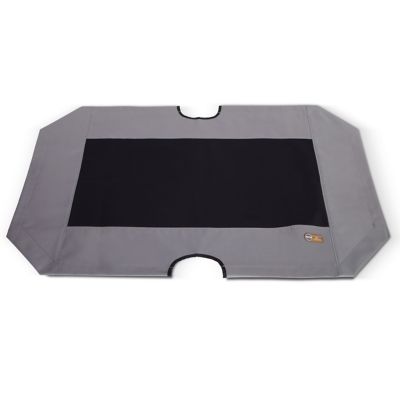
Extra Large Outdoor Dog Beds for additional room. The frame should sit level and remain steady when your dog climbs on, steps off or shifts position. Metal frames are common for outdoor use, while plastic feet or capped ends can help protect flooring and keep the bed from sliding. Pay attention to the fabric attachment, since a loose or sagging sleeping surface may be less comfortable and can collect dirt. If your dog likes to chew, paw or dig at bedding, look for a tightly secured surface and a frame with few exposed edges. No cot is a substitute for supervision with a determined chewer, so inspect the bed from time to time for frayed fabric, bent legs, cracked feet or loose fasteners. A sun canopy may be helpful in an open yard, especially for dogs that rest outside during bright daytime hours, but shade from a porch, tree or shelter is still important. Keep the bed away from standing water, sharp fencing, hot metal surfaces and areas where runoff collects. A little thought about placement can help the bed stay cleaner and give your dog a calmer place to rest.
Care is usually straightforward, which makes these beds a practical choice for busy households, working farms and families that spend a lot of time outdoors. Shake off leaves and loose dirt, then hose down mesh or sling fabric when the bed needs a deeper clean. Let it dry fully before your dog climbs back on, since trapped moisture can lead to musty odors and may make the sleeping surface cold. Wipe the frame, check the feet and look beneath the bed for mud, burrs, sticks or insects. In areas with frequent rain, position the bed where water can drain away rather than pooling underneath. During hot weather, keep fresh water nearby and watch for heavy panting, weakness or other signs that your dog needs to cool down indoors. When the weather turns chilly, a raised bed can help keep a dog above cold ground, but warmth also depends on wind protection, dry bedding and a suitable shelter. These beds can make thoughtful gifts for a new puppy owner, a family with a porch dog, or someone whose older companion needs a softer place to rest outside. They also suit dog owners who travel to campgrounds, visit family with open yards or take their dogs along while tending livestock and property. Pick the sleeping area with your dog’s daily routine in mind, give the bed a few days in a familiar spot, and encourage use with calm praise or a favorite blanket. With the right size, a stable frame, breathable fabric and a sheltered location, an outdoor raised dog bed can become the place your dog heads to after a lively run, a muddy walk or a long day keeping watch.