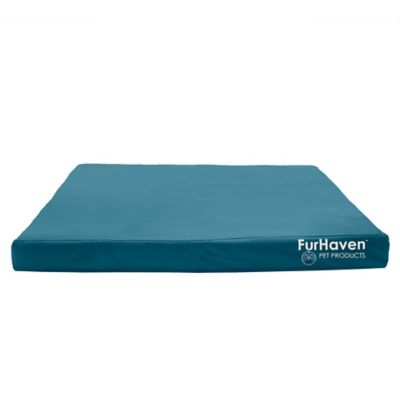
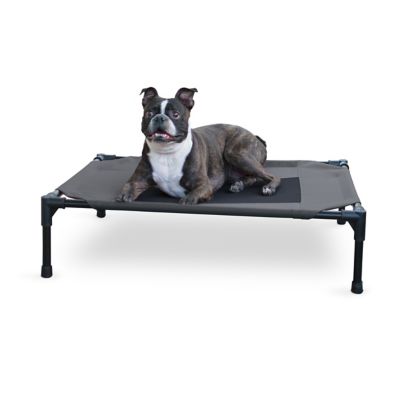
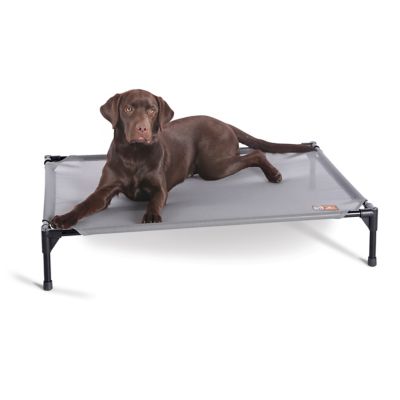
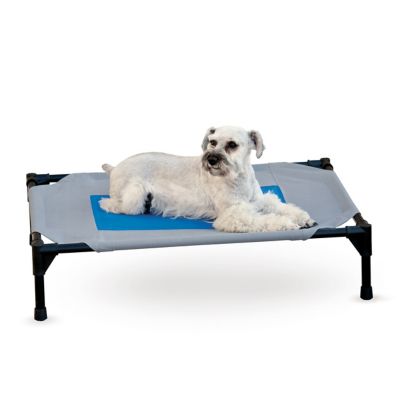
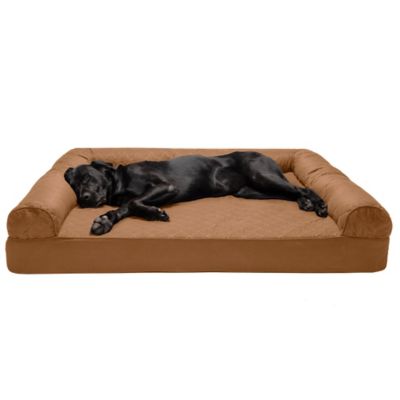
Extra large outdoor dog beds give big dogs room to stretch out while staying close to the day’s activity, whether that means watching chores from a covered porch or settling beside a chair after a walk around the property. An outdoor bed creates a resting spot apart from bare concrete, gravel, or damp grass, with materials and construction suited to time outside. The main styles include elevated cots, flat cushioned mattresses, and beds with raised edges for dogs that like a place to rest their heads. Each serves a different sleeping habit. A long-legged dog that sleeps on its side needs plenty of open surface, while a dog that curls into a tight circle may appreciate a bolster without needing quite as much sprawling room. Extra-large sizing varies between bed designs, so the actual sleeping dimensions matter more than the size label alone. Measuring a dog while it rests in its usual position helps show how much space its shoulders, hips, and outstretched legs take up. A little room beyond that outline keeps paws from hanging off the edge. On a bolstered bed, the interior sleeping area is smaller than the overall footprint, which can make a noticeable difference for broad-chested breeds. For elevated beds, both surface dimensions and the stated weight limit deserve attention; a frame needs to support the dog comfortably without excessive sagging. The bed also needs to fit its spot without blocking a doorway or narrowing a busy porch walkway. Households with more than one dog may need separate resting spaces, particularly when one dog sprawls across every inch of a mattress. From a farm dog taking a break between rounds to an older companion keeping an eye on the backyard, the right fit leaves enough room to settle naturally rather than tuck in awkwardly. A low entry can also make getting on and off easier for dogs that hesitate at a higher step.
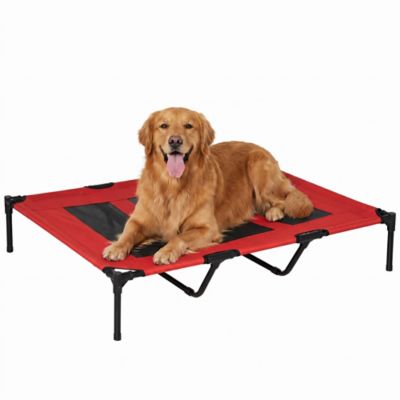
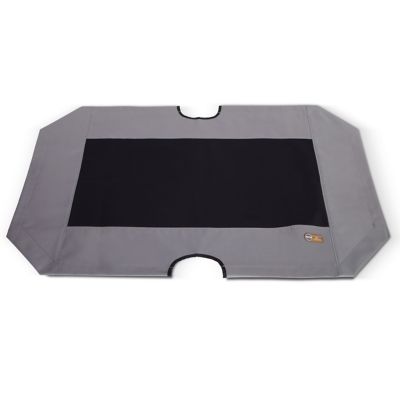
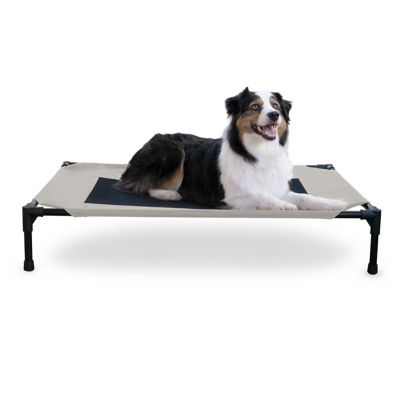
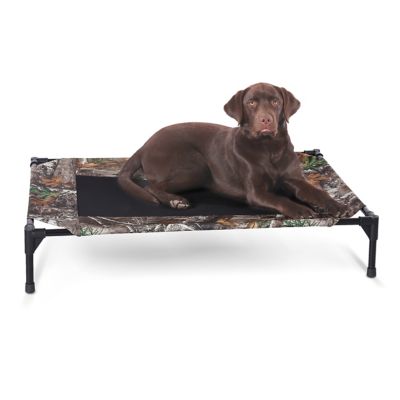
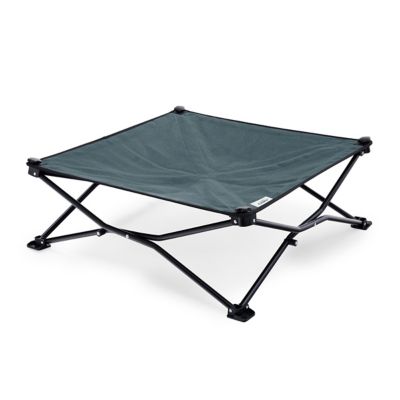
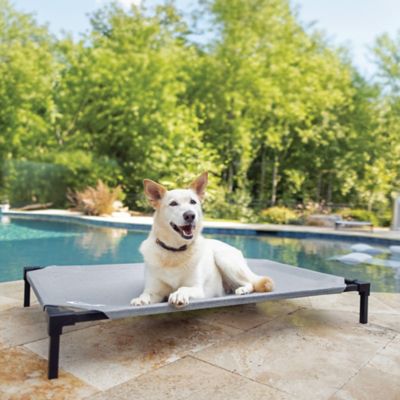
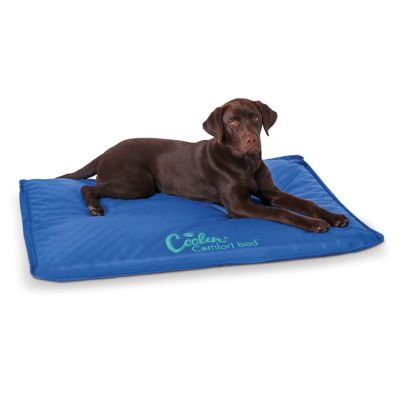
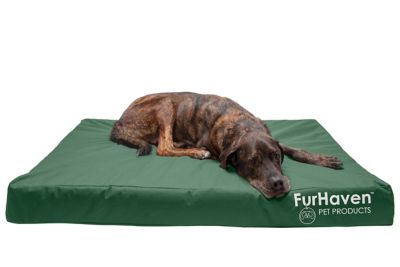
Construction makes a big difference in how an extra large outdoor dog bed handles its surroundings. Elevated outdoor dog beds generally pair a metal or other rigid frame with a tensioned fabric sleeping surface. An open-weave mesh panel allows air to circulate beneath the dog and can let water drain through, making this style practical for shaded patios and sheltered yard spaces. Not every cot has a drain-through surface, though, and its fabric, seams, and frame all affect outdoor performance. Raising the sleeping area separates a dog from the ground, but it does not make a bed insulated against cold air or safe on a sun-baked surface. During cooler weather, an exposed cot can feel drafty underneath, so placement and conditions still matter. Cushioned outdoor beds offer a softer resting surface, often with polyester fill or foam inside a cover intended to handle some outdoor exposure. Polyester and coated fabrics are common cover materials, but their performance depends on the weave, backing, seams, and care requirements. Water-resistant fabric helps shed light moisture; it is not the same as a waterproof barrier. Even a waterproof cover may have openings where water can reach the filling unless the whole construction is designed to keep moisture out. A covered location and dry storage during wet weather help protect cushioning from becoming saturated. For dogs that paw and circle before lying down, reinforced seams, a tightly woven surface, and protected closures are worth considering. Chew-resistant construction may limit easy grab points, but no bed should be treated as beyond the reach of a determined chewer. Exposed filling, loose threads, and damaged fabric call for prompt attention. Rust-resistant frame finishes, secure joints, and stable feet also matter on a porch that sees muddy paws and regular cleaning. On smooth concrete, feet that grip the surface can help limit sliding when a heavy dog climbs aboard. Shade remains important, since both fabric and exposed frame parts can heat up in direct sunlight.
Day-to-day care is often what makes an outdoor resting spot work for a busy household. After a dog comes back from a muddy fence line or flops down with wet paws, an easy-to-clean surface saves a lot of fuss. Some cot fabrics can be rinsed or wiped down, while certain cushioned beds have removable, machine-washable covers. Those features are not interchangeable: a washable cover does not mean the foam or filling can go into the washer, and a hose-friendly surface does not necessarily make the entire bed suitable for soaking. The care label should spell out cleaning methods, detergent restrictions, and drying requirements. Covers and inserts need to dry completely before reassembly so moisture does not stay trapped inside. Clearing away leaves, brushing off loose hair, and checking the underside for dampness help keep a sheltered bed ready for the next nap. Beds that are light enough to move, fold for storage, or have removable covers can be handy when the porch gets swept or changing weather calls for bringing things inside. For large dogs that need more cushioning, foam thickness and support under the shoulders and hips deserve a closer look. A thick-looking mattress can still compress too far under a heavy dog, while a supportive foam base should help keep the body from pressing straight through to the hard surface below. Dogs that prefer a padded resting place may also benefit from comparing
Extra Large Orthopedic Dog Beds, with outdoor suitability checked separately rather than assumed from the orthopedic label. Bedding can add comfort, but ongoing stiffness or trouble lying down warrants a conversation with a veterinarian. Whatever the style, an outdoor dog bed belongs in a safe resting area with access to drinking water and protection from the elements. It is not a substitute for proper shelter or an indoor retreat during harsh conditions. With enough space, suitable support, and manageable care, a bed can become that familiar porch spot where a big dog stretches out while the household carries on nearby.