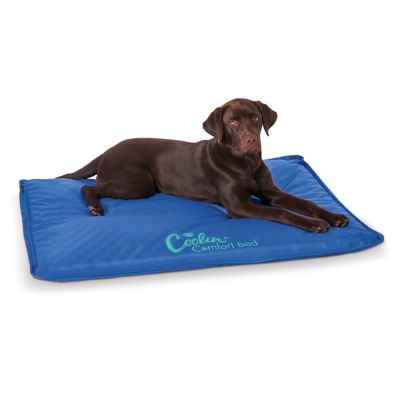
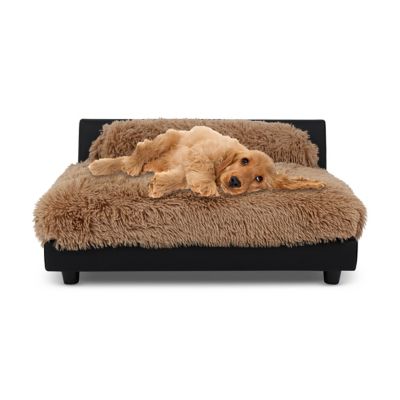
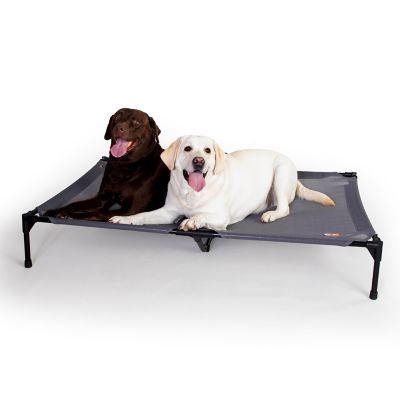
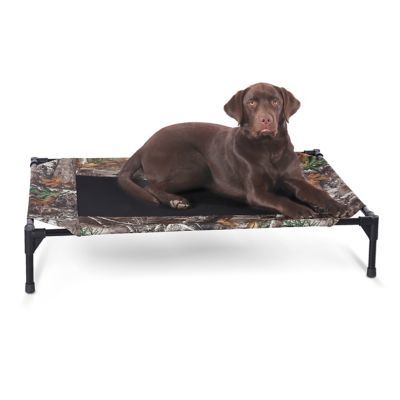
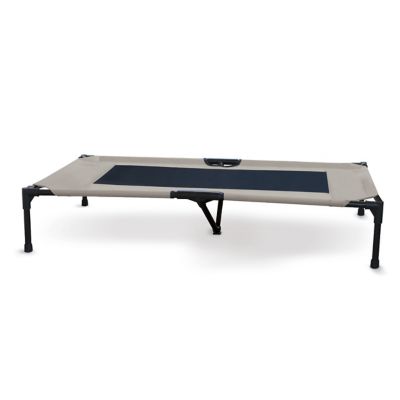
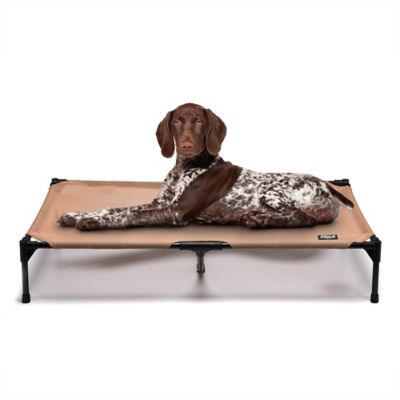
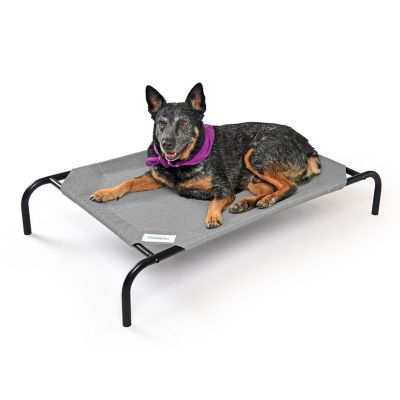
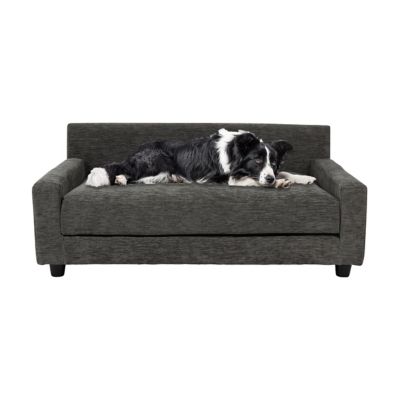
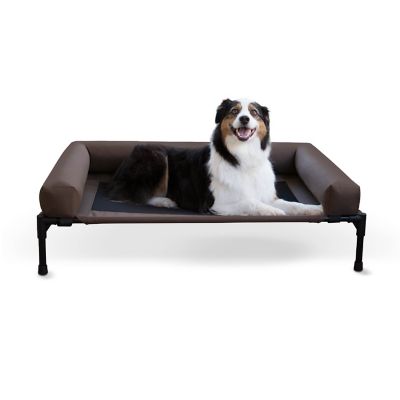
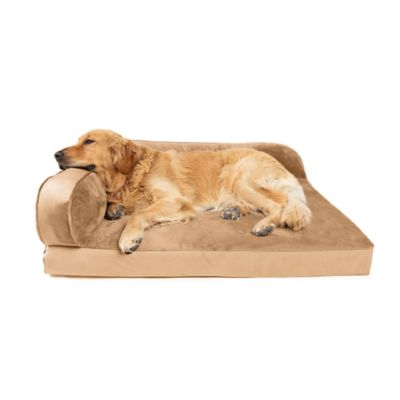
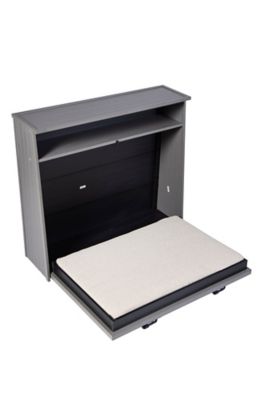
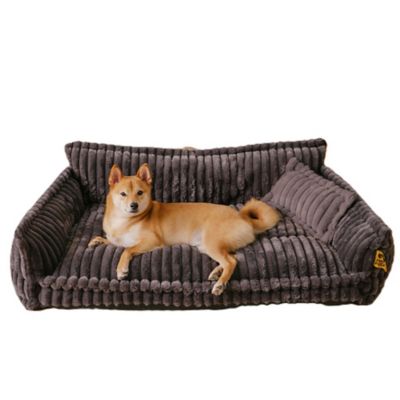
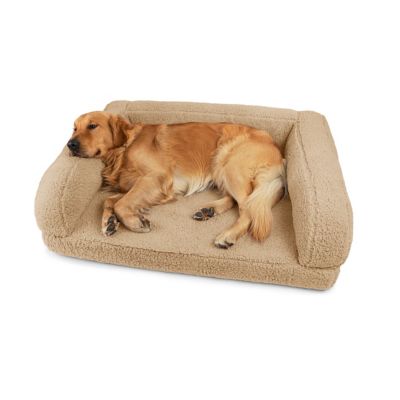
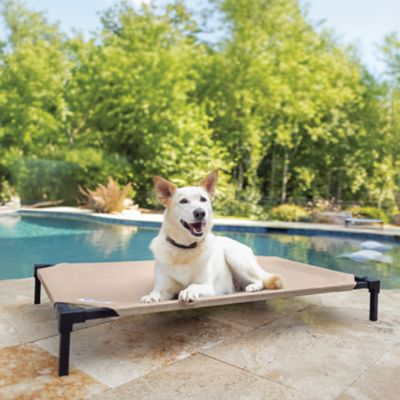
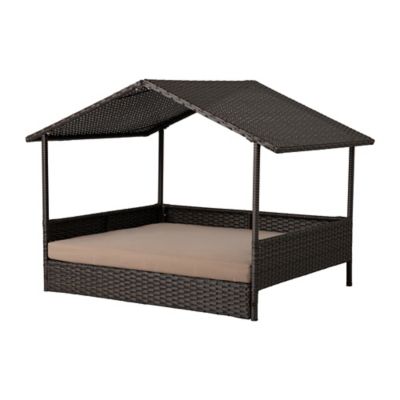
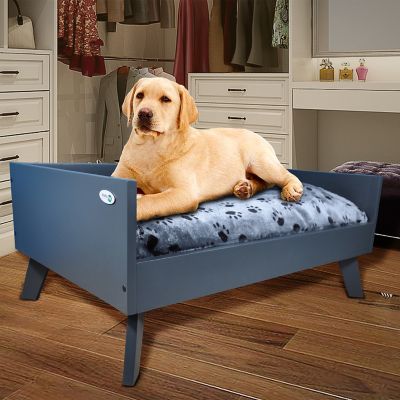
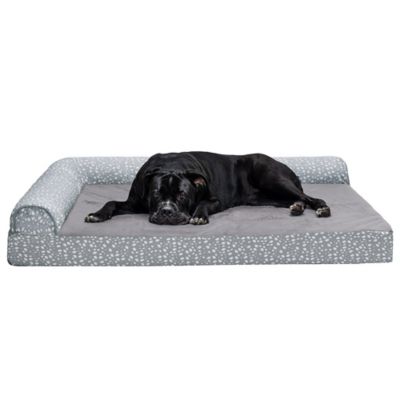
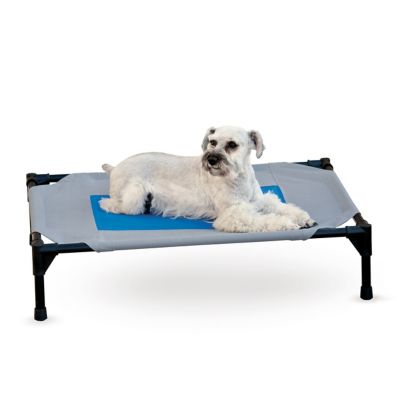
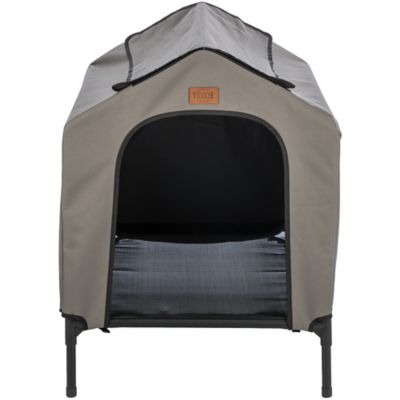
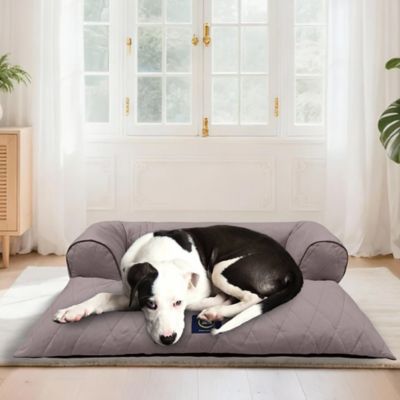
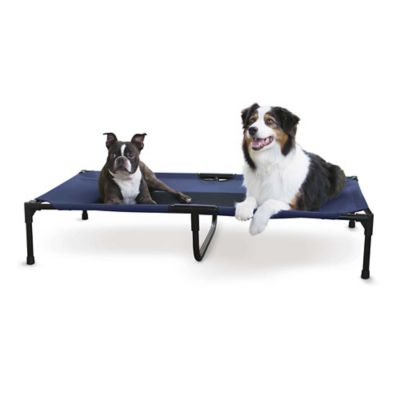
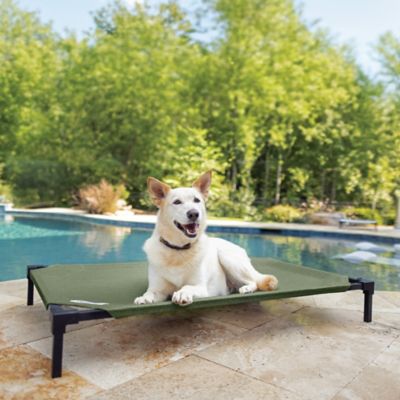
Elevated pet beds for large dogs give bigger companions a resting place that sits above the floor, usually with a fabric sleeping surface stretched across a supporting frame. That raised design leaves open space underneath for airflow and keeps the sleeping surface from resting directly on concrete, tile, or other hard flooring. For a broad-chested dog that likes to stretch out after a walk along the fence line, a roomy cot-style bed offers a defined spot without the deep sides of a traditional cushion bed. Some raised beds have a simple, open platform, while others pair a lifted frame with padding or bolsters for dogs that like a softer surface or a place to rest their head. The right fit depends on more than a large or extra-large label. Sleeping-surface measurements matter because the frame’s outside dimensions may include rails, corners, or legs that do not add usable resting room. A dog that sleeps flat on its side needs enough space for its shoulders, hips, and legs, while a dog that curls up may still appreciate room to change position without bumping a rail. Weight capacity matters just as much as length and width, especially in a household where two dogs sometimes share a resting spot. The stated limit needs to cover the total weight on the bed, not just the largest pet. Bed height also makes a difference: a tall platform may be easy for a long-legged adult dog to step onto but harder for a short-legged companion or a senior with limited mobility. A lower raised bed can provide space underneath while keeping the step manageable. Taut fabric can spread a dog’s weight across the sleeping surface, but an elevated bed is not automatically an orthopedic bed. Dogs with joint pain, balance trouble, or difficulty getting up may need cushioning, a different bed height, or guidance from a veterinarian about the most suitable resting surface.
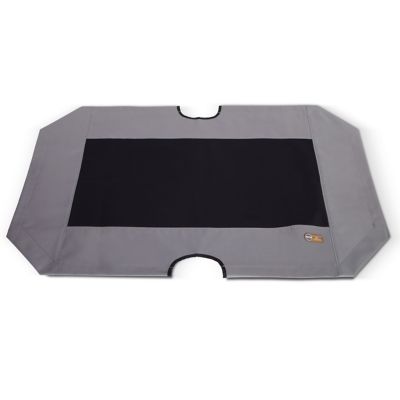
Materials and construction shape how a raised dog bed handles everyday life, from a sprawling shepherd in the living room to a muddy retriever settling down in the mudroom. Steel and aluminum are common frame materials, with differences in weight, finish, and care requirements. Frame connections deserve a close look because a large dog can put plenty of force on the bed when turning around, flopping down, or pushing up to stand. Secure joints, supported corners, and feet that sit evenly help create a steady resting spot. On smooth indoor floors, nonslip feet can help limit sliding, while broad contact points may suit certain outdoor surfaces better than narrow legs. Floor protectors are worth considering where a bed sits on wood or other easily marked flooring. The sleeping surface might be mesh, woven polyester, coated fabric, or a padded cover, and each construction has a different feel under a dog’s paws. Open mesh allows air to pass through and may let loose dirt fall beneath the bed, though the material still needs regular cleaning. A tighter weave or padded surface may appeal to dogs that hesitate on an open cot, provided the bed’s instructions allow any added cushion. Fabric tension matters, too: excessive sagging can leave a heavy dog resting too low, while tears or stretched attachment points can affect support. No fabric bed should be treated as chew-proof unless its construction and stated specifications support that claim, and even then, regular checks matter. Dogs that mouth seams, dig hard before lying down, or gnaw on exposed edges need close supervision. Care requirements vary by model, so a removable cover is not necessarily machine washable, and a frame intended for indoor use does not automatically belong on a porch. Washable components, accessible corners, and replaceable fabric panels can make routine upkeep simpler when those features are part of the bed’s design. After cleaning, the fabric and frame should dry fully before the dog settles back in, and loose hardware or damaged sections need attention before the bed returns to service.
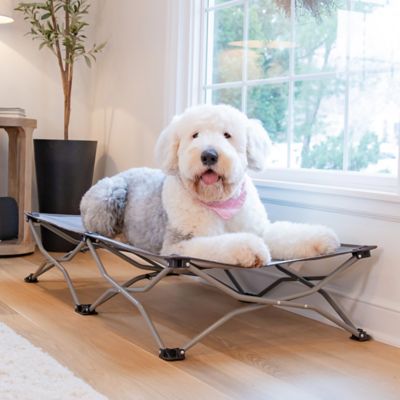
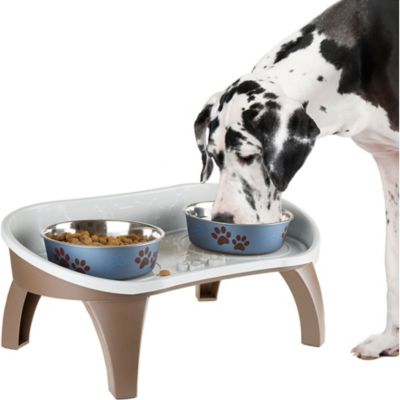
A large raised dog bed works best when its placement fits both the dog’s habits and the household’s daily traffic. Beside a favorite chair, near a home office, or along a quiet mudroom wall, it can give a big companion a place to settle without sprawling across the walkway. Enough open space around the bed lets the dog approach, turn, and step off without squeezing between furniture or catching a leg on the frame. A level surface is especially important; a bed that rocks on uneven ground can make a hesitant dog less willing to climb aboard. For porch or yard use, the bed needs to be intended for that setting, with placement that avoids sharp objects, unstable footing, and areas where equipment passes through. A portable frame may suit trips to a campsite or visits with family, while a bed that stays in one room may place more emphasis on a steady setup and a sleeping surface that suits the dog’s favorite position. Foldable designs can simplify transport, but their joints and locking mechanisms still need to be secured as directed before a large dog steps on. Familiar bedding, when permitted by the bed’s care and safety instructions, may help a dog get comfortable with a new raised surface. Some dogs take to a cot right away; others prefer a gradual introduction with the bed placed near their usual resting spot. A separate feeding corner with
Elevated Dog Bowls for Large Dogs can round out a dedicated pet area, with enough distance between dishes and bedding to keep spills away from the sleeping surface. For someone giving a raised bed to a family member’s big dog, knowing the pet’s weight, sleeping habits, chewing behavior, and available floor space is more helpful than choosing by breed alone. A bed that fits the dog and the room gives that four-legged farmhand or house companion a comfortable place to stretch out and stay close to the family.