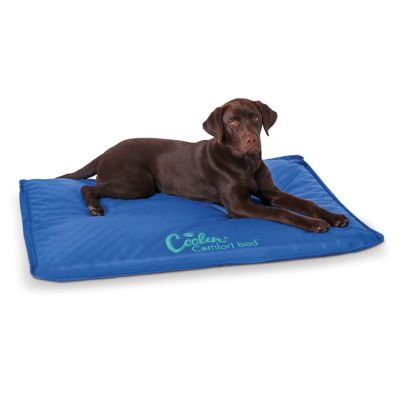
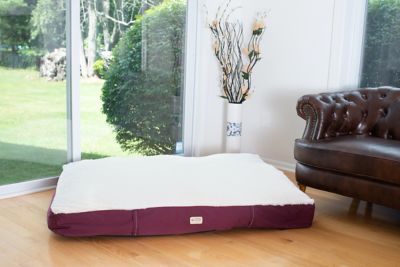
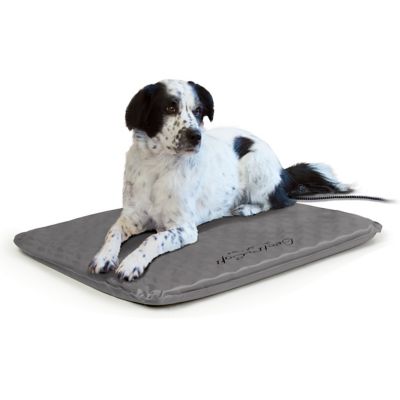
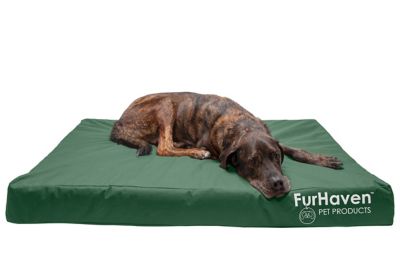
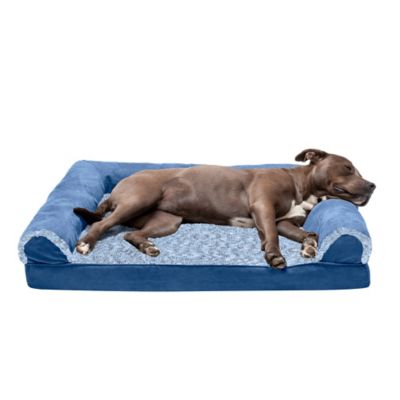
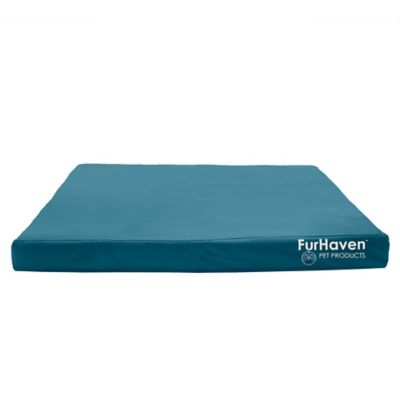
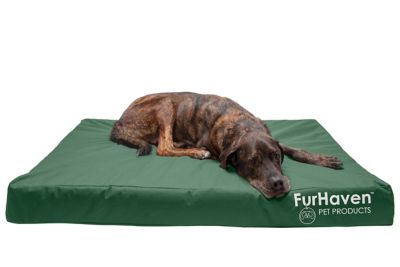
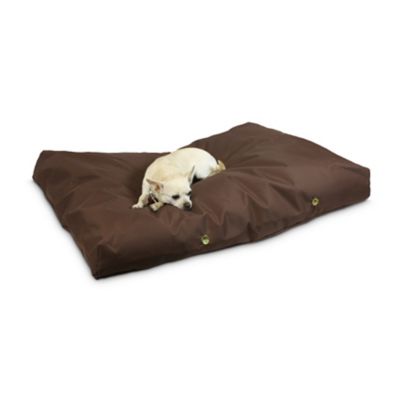
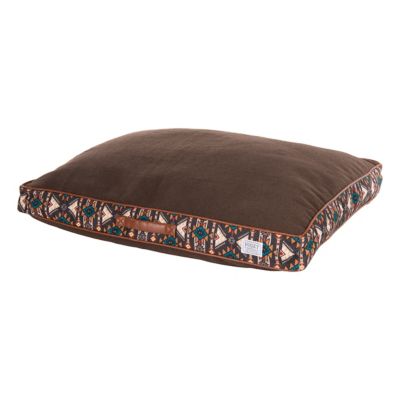
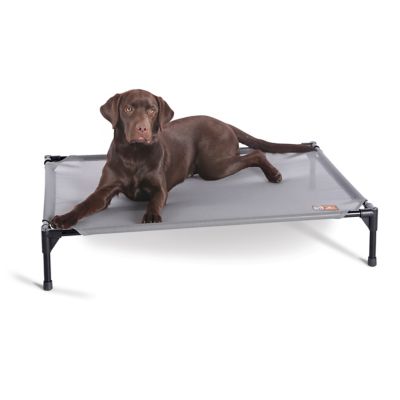
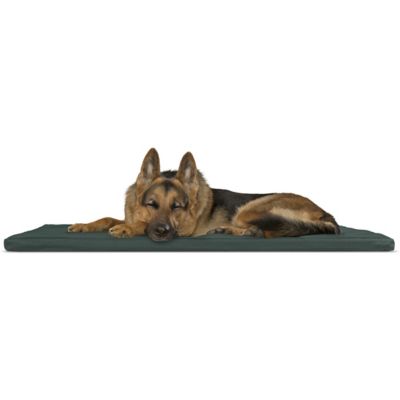
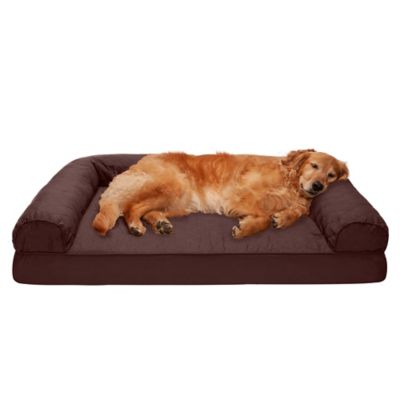
Large outdoor dog beds give big dogs a comfortable place to stretch out while keeping close to the day’s activity, whether that means watching the back gate, resting beside the porch swing or settling down after a walk around the property. The main styles include elevated dog cots, cushioned outdoor mattresses and bolster beds with raised edges for a headrest. Each offers a different kind of resting spot. An elevated cot holds the sleeping surface above the ground, allowing air to move underneath and helping keep a dog off damp grass or gritty concrete. A padded mattress provides cushioning between a heavy body and a hard surface, while a bolster gives dogs that curl up something to lean against. The best fit depends on more than a large-size label: sleeping dimensions, weight capacity, bed height and a dog’s usual resting position all matter. A long-legged dog that sleeps flat on its side needs enough room for shoulders, hips and outstretched paws, not just space for its torso. Thick bolsters take up part of the footprint, so the inside sleeping area matters more than the outside measurements alone. For a cot, the frame’s stated weight limit is a separate consideration from the fabric’s dimensions. A broad, heavy dog needs both adequate space and a frame designed to carry its weight. Low entry heights can make settling down easier for older dogs or those that hesitate at a step, while a steady base helps prevent a bed from shifting during that familiar circle before a nap. These beds suit companion dogs, working dogs on a break and pets that like to keep their people in sight during outdoor chores. A roomy bed can also make a thoughtful gift for someone with a big dog, provided the dog’s measurements and the intended setting are known. On a covered porch or shaded patio, a well-fitting bed gives a dog a regular place to rest without having to claim the doormat.
Outdoor dog bed materials need to match the spot where the bed will sit and the habits of the dog sleeping on it. Breathable mesh is common on elevated beds because its open construction encourages airflow and can let water pass through instead of collecting on the sleeping surface. Tightly woven polyester or nylon covers can offer a practical surface for cushioned beds, especially when muddy paws and loose hair are part of everyday life. Fabric weight, reinforced seams and protected edges all influence how well a bed handles scratching, repeated settling and trips between the house and yard. Metal frames provide structure for cots, with corrosion-resistant finishes worth considering wherever damp air and wet ground are common. No fabric or frame should be assumed to withstand determined chewing, and a dog that pulls at seams needs supervision and regular checks for loose pieces. Water-resistant and waterproof descriptions also mean different things. A water-resistant cover may shed a light splash, while waterproof protection depends on the barrier’s construction and whether seams and openings keep moisture away from the filling. Neither description automatically means a cushioned bed belongs in standing water or out through every storm. Removable covers and protected zippers can make routine cleanup simpler, but the care label determines whether a cover belongs in the washing machine or needs spot cleaning. Inside the bed, fiberfill offers a soft resting surface, while foam can provide a more even layer of cushioning. Memory foam and other supportive foam constructions may suit larger dogs that need extra padding beneath their hips and elbows, though thickness alone does not establish how much support a bed provides. For dogs that need more sleeping room and pressure-relieving cushioning,
Extra Large Orthopedic Dog Beds are another category to consider, with each bed’s outdoor suitability checked separately. Orthopedic construction does not make a bed weatherproof. An outdoor bed’s comfort comes from the full combination of surface, support, fit and placement, not one feature on its own.
The setting around a large outdoor dog bed makes a real difference in how comfortable and practical it is day after day. A level patch of covered porch keeps the bed close to the household while offering more protection than an open corner of the yard. On a wood deck, feet that grip without scraping can help keep a cot steady when a big dog climbs aboard. On grass, a broad stance helps with stability, though soft or uneven ground still needs attention. Shade matters even with an elevated design, since airflow underneath does not prevent a dog from overheating in direct sun. A canopy can add overhead shade, but its coverage changes with the sun’s angle and does not replace a sheltered resting place. During cooler months, that same airflow beneath a cot may feel chilly, especially in a drafty location. A dry, sheltered spot and bedding appropriate for the conditions matter more than leaving the bed in its usual place. Outdoor beds are resting surfaces, not substitutes for proper shelter, fresh drinking water or coming indoors when conditions are unsafe. Everyday care is usually easier when dirt never has much time to settle in. Loose hair, grit and dried mud can work into seams and rub against fabric, while trapped moisture can leave padding damp long after the top feels dry. Depending on the care directions, routine upkeep may include brushing away debris, wiping the frame or washing a removable cover. Any rinsed or washed components need to dry completely before reassembly or storage. Regular checks of cot fasteners, seams, zippers and the underside help catch wear before it becomes a loose part or an uncomfortable sag. For trips to a campsite or afternoons spent between the yard and barn, carrying weight and ease of disassembly can matter as much as cushioning. For a bed that stays by the back door, washable surfaces and a footprint clear of foot traffic may count for more. Matching the bed to those everyday details gives a large dog a comfortable place to settle when the chores slow down.