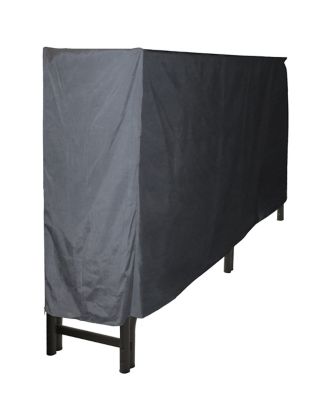
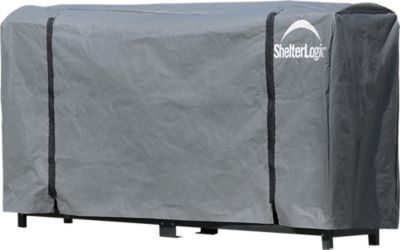
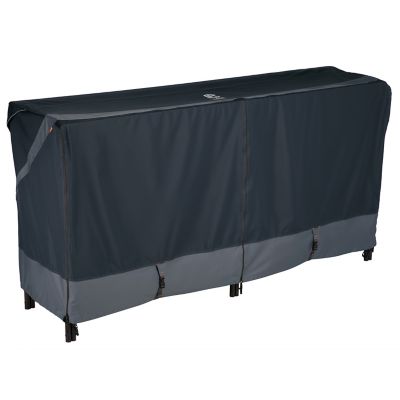
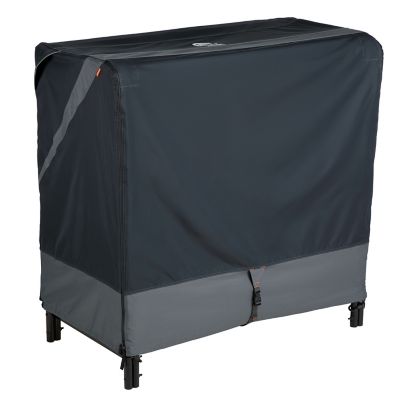
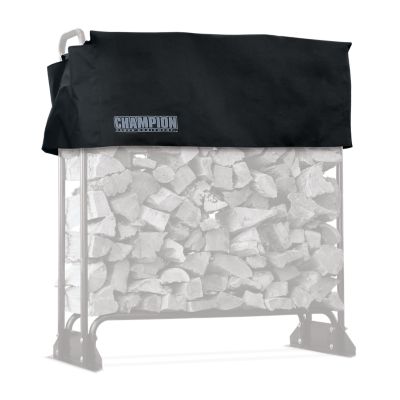
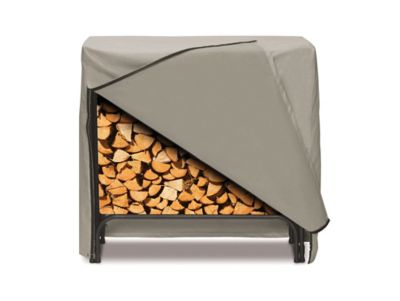
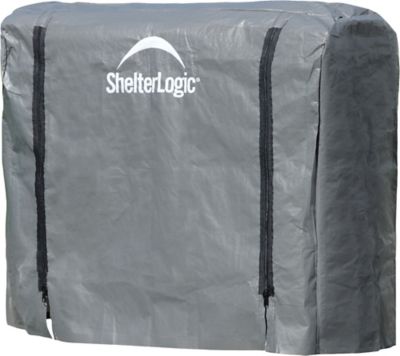
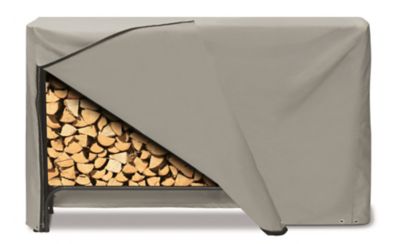
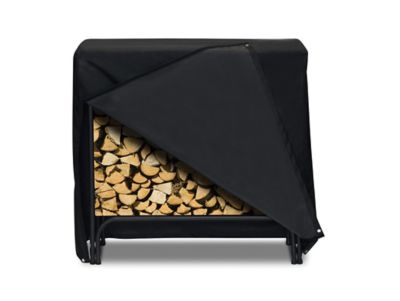
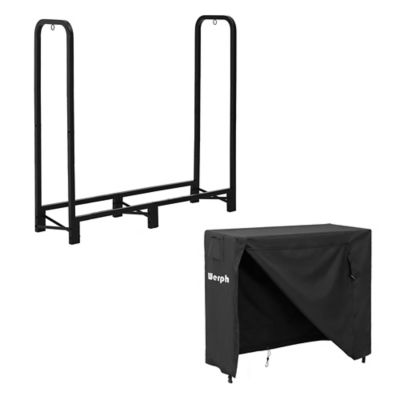
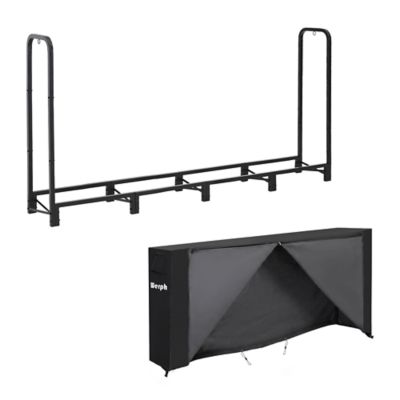
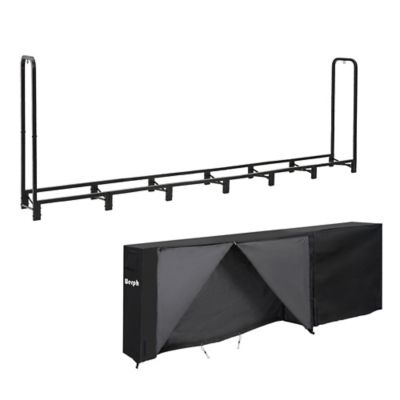
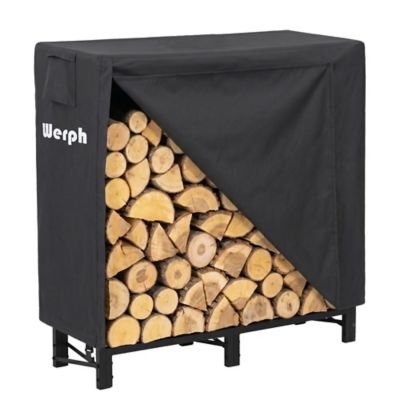
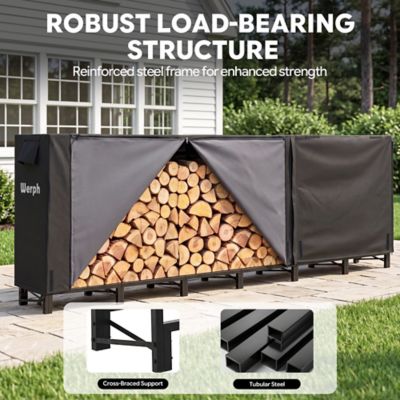
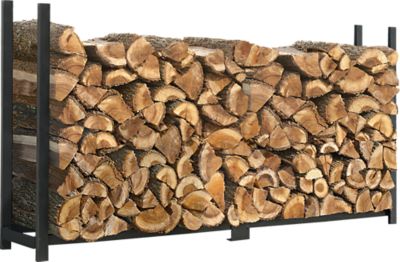
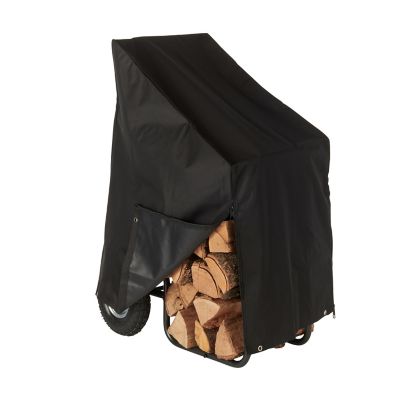
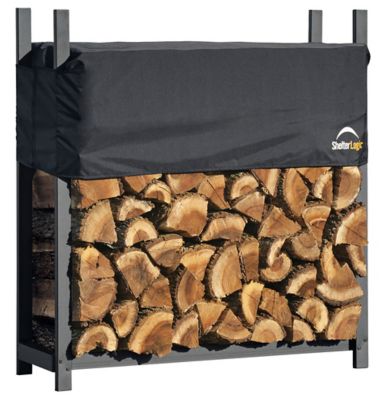
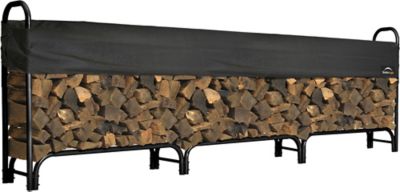
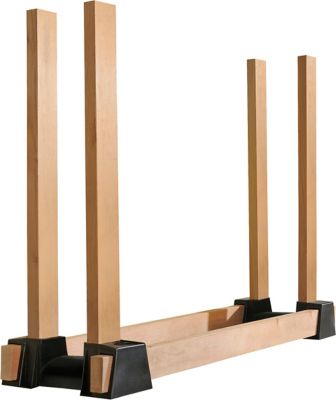
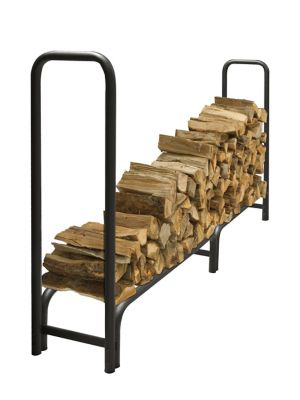
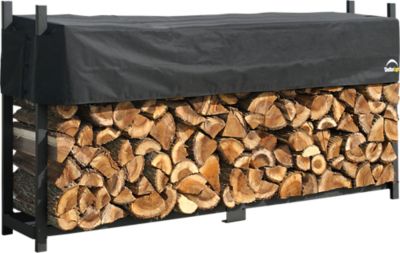
Outdoor firewood rack covers help protect stacked logs from rain, snow, sunlight, and windblown debris. Designs with open sides or built-in vents also let air circulate, helping moisture escape instead of collecting around the wood. That balance matters whether the stack sits beside a barn, along a gravel path, or near a backyard gathering spot. Firewood burns more readily after it has had time to season, and a cover helps limit fresh moisture reaching the stack; it does not turn freshly cut or damp wood into seasoned fuel. An elevated rack keeps logs away from wet ground, while a properly fitted cover shields the top and, depending on its design, some or all of the sides. Together, they make a more practical storage setup than a pile resting in the grass beneath a loose sheet. For households that heat with wood, a covered rack can keep the next armload easier to reach without digging through snow or brushing off wet leaves. Around a fire pit, it gives split logs a designated place between gatherings. Materials vary, with options such as woven polyethylene, polyester, and coated fabrics offering different combinations of weight, flexibility, and water resistance. Water-repellent fabric encourages moisture to bead and roll away, while waterproof construction depends on the fabric, seams, and closures working together. A waterproof label alone does not mean every opening keeps out blowing rain. Reinforced seams, protected stitching, and fabric treatments intended to resist sunlight are worth considering for a rack that stays outside. Heavier material may offer more resistance to abrasion, though fabric weight alone does not tell the whole story. Where a sharp split end presses against a cover, even substantial fabric can wear. A stack with fewer protruding corners gives the cover a smoother surface to rest against and makes everyday handling less of a wrestling match.
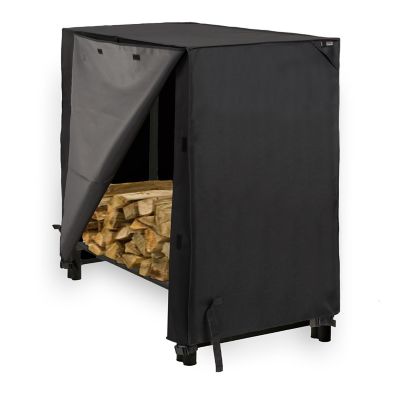
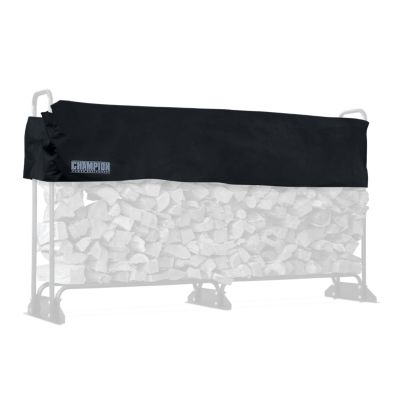
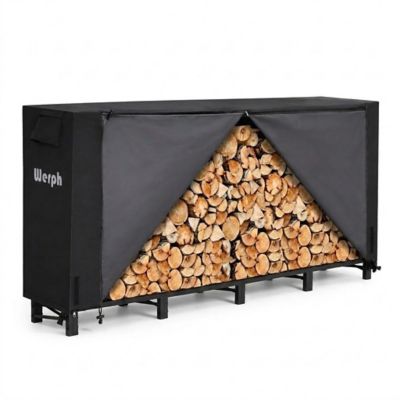
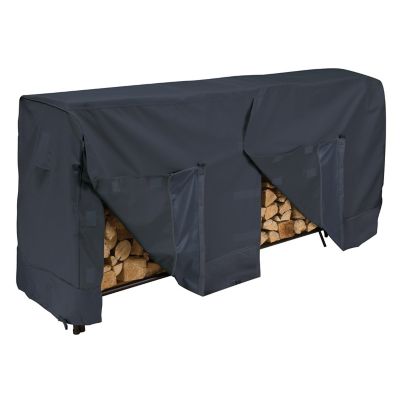
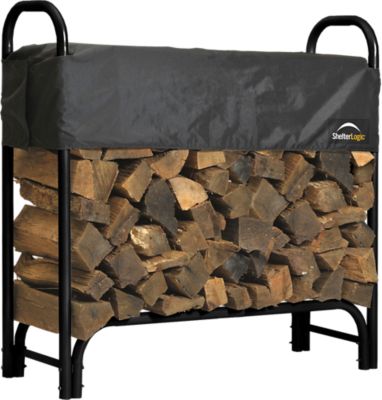
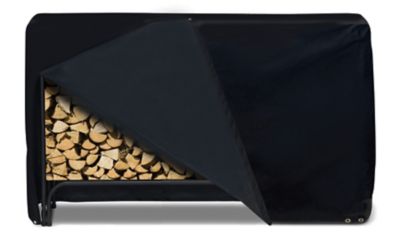
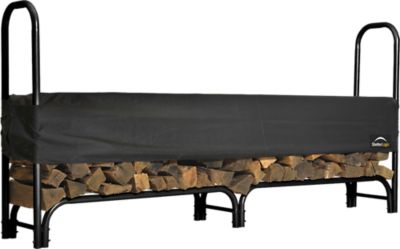
Fit starts with the rack’s outside length, depth, and height, along with any logs extending beyond the frame. A cover sized only to the metal rack may pull tight across an overfilled stack, putting strain on seams and making closures harder to fasten. On the other hand, too much loose fabric can flap against the frame, catch the wind, or gather water in low spots. The best match leaves room for the intended stack without hanging in puddles or dragging through mud. Full-length outdoor firewood rack covers offer more coverage along the sides, which can be helpful where rain blows across an open yard. Shorter, top-cover designs leave more of the wood exposed to moving air and can suit stacks that still need substantial seasoning. Neither approach replaces a sound storage location: low ground, poor drainage, and heavy runoff can keep the area damp no matter how well the top is covered. Beneath a roof overhang, account for water or snow sliding down from above rather than assuming the rack is sheltered. Access also makes a difference when a covered stack is part of the daily routine. A front panel that opens without removing the entire cover lets someone pull a few logs for the stove while leaving most of the pile protected. Zippers, hook-and-loop panels, buckles, and drawcords each handle access and fastening differently, so their placement matters as much as their presence. With gloves on and an armful of kindling waiting nearby, an easy-to-reach closure is a welcome detail. Handles can make a large cover easier to lift, while straps that fasten around the rack help limit shifting in gusty conditions. Fasteners should hold the cover without crushing vents shut or stretching fabric over sharp edges. A sloped top or taut upper surface also helps water run off rather than settle into a sagging pocket. For exposed locations, the combination of secure attachment, reinforced stress points, and room for ventilation matters more than a snug appearance alone.
Routine care helps outdoor firewood rack covers stay ready for repeated lifting, fastening, and exposure. Leaves, twigs, and dirt should not sit in folds where they can hold moisture or rub against the fabric. Many covers can be cleaned with a soft brush or cloth and mild soap, but the care directions determine which cleaners and washing methods suit the material. Harsh scrubbing, bleach, and high-pressure washing can damage some coatings or stitching. Letting the cover dry before folding it away helps keep trapped dampness from becoming a problem during storage. Small tears, loose stitching, and worn attachment points are easier to address before wind works them into larger openings. After snow or heavy rain, clearing buildup gently helps relieve weight on both the cover and the rack; sharp tools can puncture the fabric underneath. Covers also belong well away from flames, hot stove surfaces, and drifting embers, even when they carry a water-resistant or weather-resistant description. A firewood stack near a fire pit still needs enough separation to keep sparks from reaching the covering or the logs. For wood-burning households, outdoor storage and indoor storage serve different jobs. The covered outdoor rack holds the larger supply, while
Indoor Firewood Racks provide a spot for a smaller amount brought inside for upcoming fires. Bringing in manageable loads also limits the bark, dirt, and insects carried into the house at one time. Outside, leaving a clear path to the rack makes hauling those loads easier, whether the trip starts at a back porch or a workshop door. Homeowners tending a wood stove, families gathering around a backyard fire, and folks keeping a cabin supplied all benefit from a cover matched to the way they store and handle firewood. The right combination of coverage, airflow, fit, and straightforward access helps keep that stack protected without turning every armload into a chore.