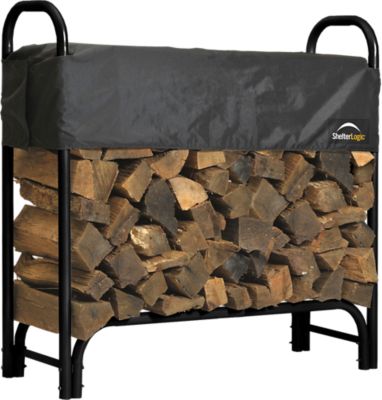
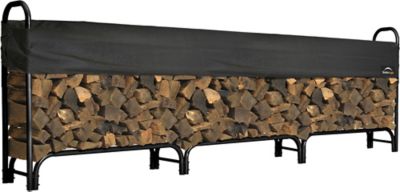
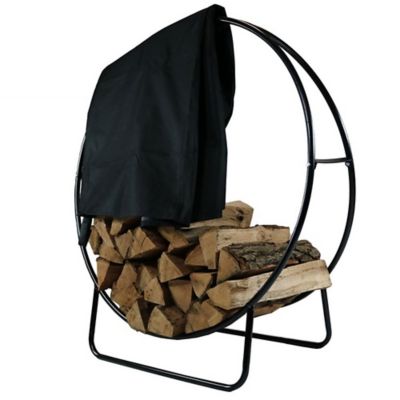
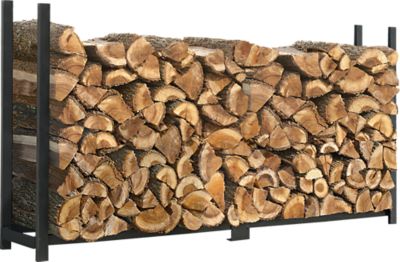
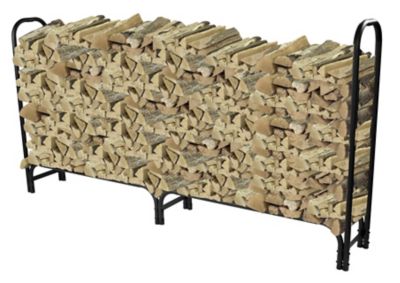
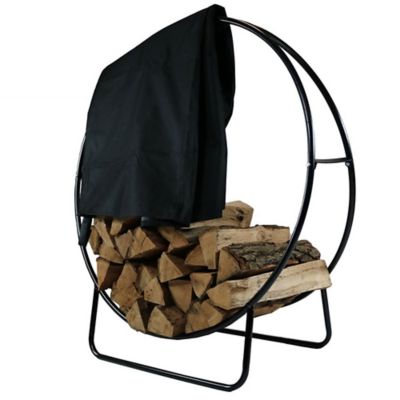
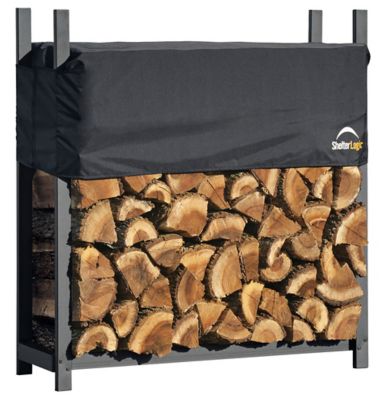
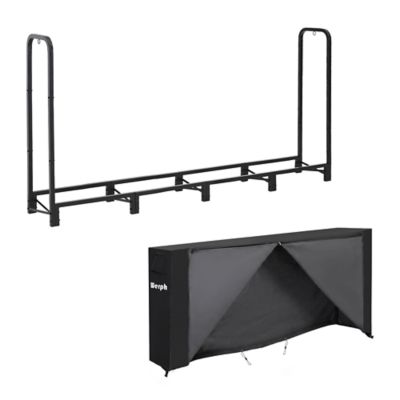
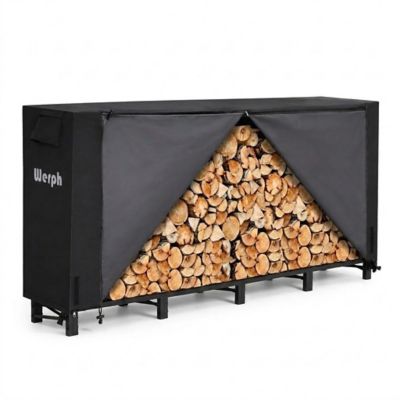
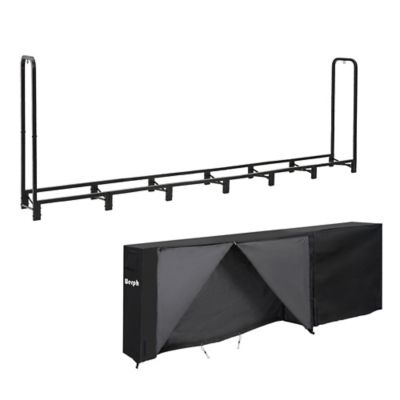
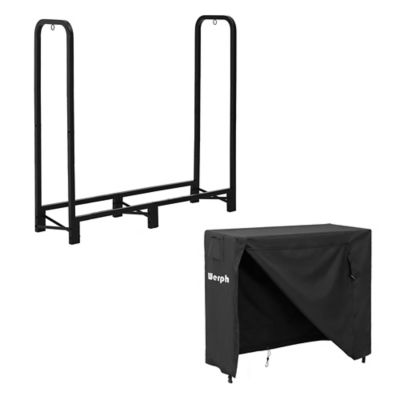
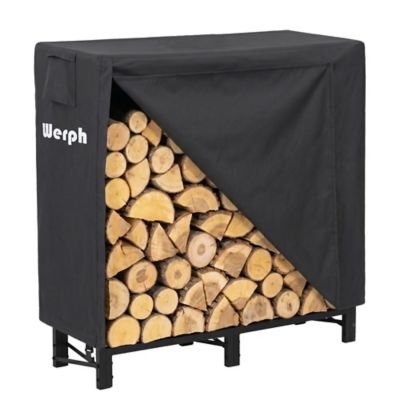
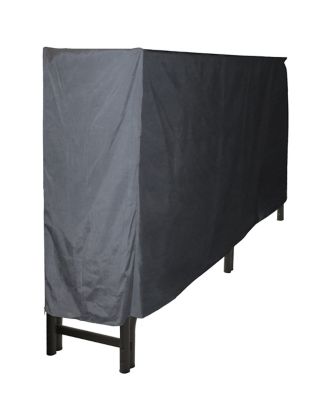
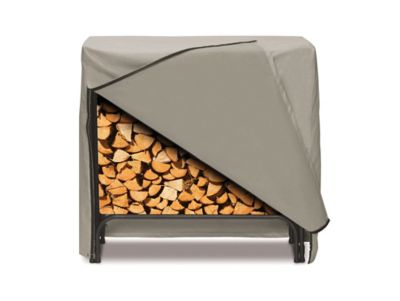
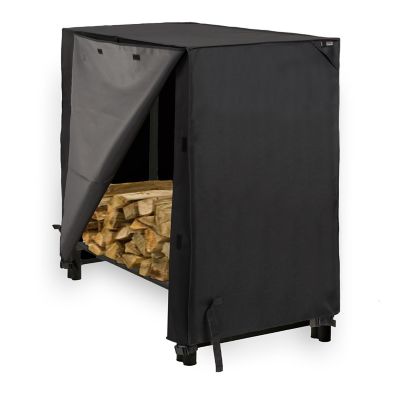
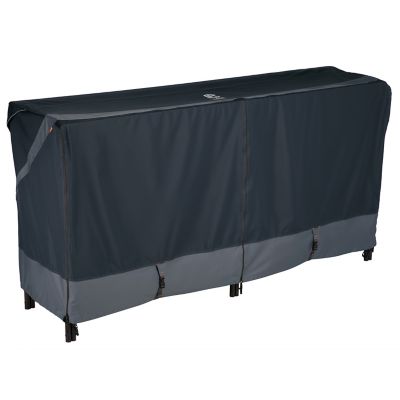
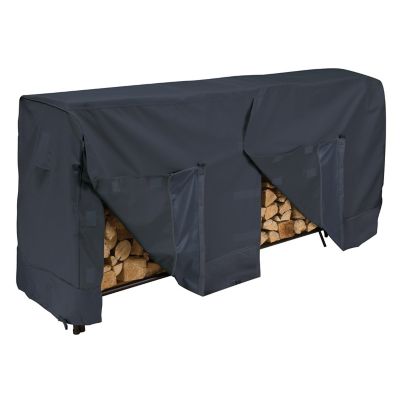
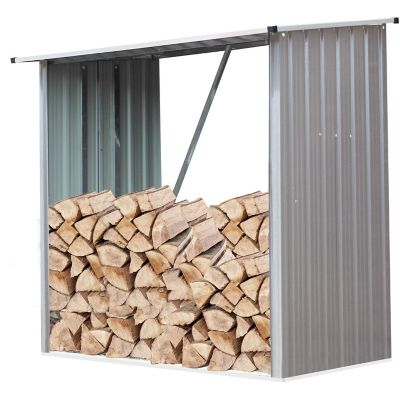
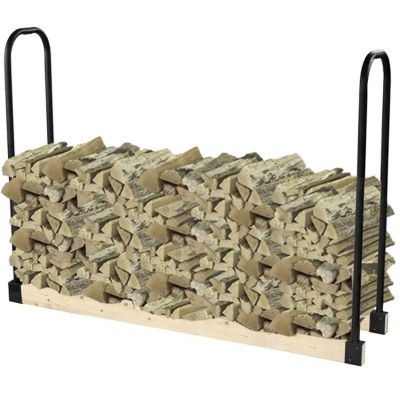
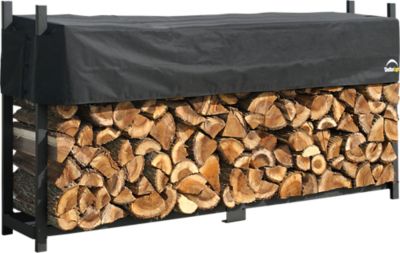
Firewood racks with covers keep logs off the ground, help shield the stack from rain and snow, and allow air to circulate when the cover leaves room around the wood. The raised frame separates firewood from damp soil, while the cover limits moisture coming down from above. That combination helps keep seasoned wood ready for the stove, fireplace or outdoor fire pit without leaving a loose pile beside the house. A covered rack also gives split logs a defined place to sit, making it easier to see how much wood remains and pull out a few pieces without digging through a sprawling heap. For a home heated partly with wood, that organization can make the daily trip from the woodpile to the hearth a little simpler. At a cabin or beside a backyard gathering area, a smaller setup can keep a manageable supply close to where it will burn. Size matters in more than one direction: the rack needs enough length for the intended supply, enough depth to support the logs, and a height that makes stacking and carrying comfortable. Shorter splits need support beneath both ends, while longer pieces should not stick so far beyond the frame that they interfere with the cover or a walking path. Capacity descriptions are most helpful alongside the rack’s actual dimensions, since the amount it holds depends on log length, split size and how tightly the wood is stacked. A broad footprint may suit a larger supply along an outbuilding, while a shorter frame may fit a sheltered porch without crowding the door. Space around the rack matters, too. Room to approach with a loaded log carrier, set down an armful and reach the cover fasteners makes a difference when hauling wood is part of the everyday routine. The right fit leaves the stack accessible without turning a walkway or work area into overflow storage.
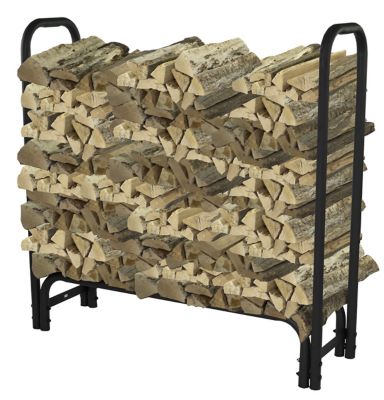
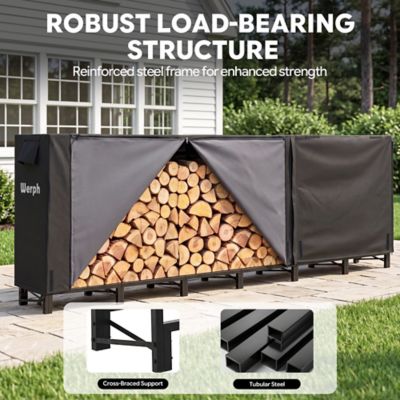
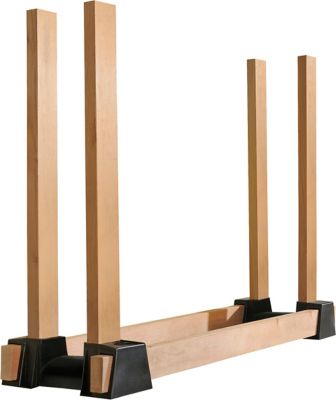
Frame construction affects how a covered firewood rack handles the weight of a full stack and the demands of outdoor storage. Steel is a common choice, with tubular or squared framing providing support beneath the logs and upright ends helping contain the pile. Powder-coated and painted finishes help protect metal surfaces, though scratches, exposed fasteners and areas where water collects still deserve attention over time. Frame thickness, bracing, joint design and the stated weight limit tell more about the intended workload than appearance alone. A rack holding a few armloads has a different job from one supporting a long row of dense hardwood. Crossbars and raised rails should support the stack without leaving smaller splits prone to slipping through, and the space beneath the wood should remain clear enough for air movement and routine cleanup. Foot design deserves a look as well. Narrow feet can settle into soft soil, while a firm, level base helps distribute the load and keep the frame from leaning. Concrete, suitable pavers or another stable surface can provide a more consistent footing than bare ground, provided the entire rack is supported. On a porch or deck, the combined weight of the rack and firewood needs to suit the structure beneath it. An orderly stack also helps the rack do its job: logs resting evenly between the uprights put less uneven pressure on the frame than a pile leaning heavily to one side. The cover should not serve as a strap to hold unstable wood in place. Placement around the home calls for the same practical thinking. Doors need room to swing, paths need to stay clear, and wood storage should follow local fire-safety guidance. Any rack near a stove, fireplace or fire pit must remain outside the heating equipment’s required clearance area, even when the cover is closed and the stack looks neatly contained.
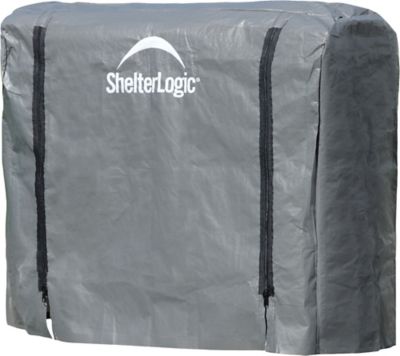
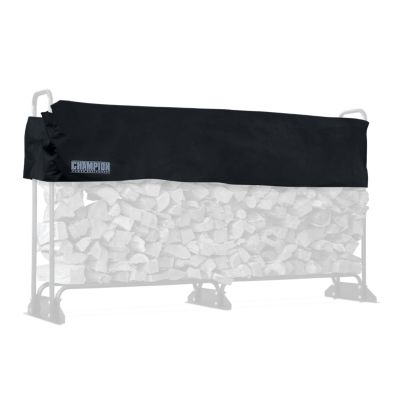
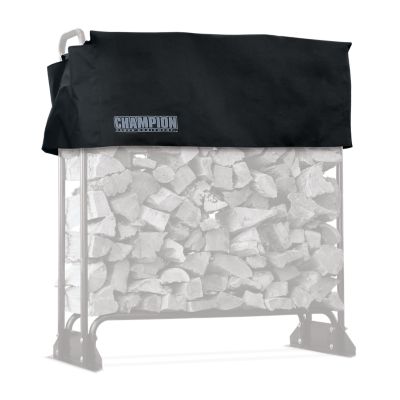
The cover is what sets this category apart, and its fit matters just as much as its fabric. Covers may feature woven synthetic fabric, coated material or reinforced panels, with seams, corners and fastening points taking much of the strain from handling and wind. Water resistance and waterproof construction are not the same thing; fabric specifications and seam details help explain how much protection a cover is intended to provide. A well-fitting cover extends over the top of the stack without pulling tightly against sharp log ends or dragging across the ground. Straps, buckles, ties or hook-and-loop closures can help hold it in place, while an opening panel can make access easier without removing the whole covering. Rack measurements alone do not tell the entire story, since a full stack may extend beyond the frame. Cover dimensions need to account for that loaded shape. Coverage style also affects airflow. A top cover sheds precipitation while leaving the sides exposed to moving air, which is helpful while wood continues drying. A full-length cover offers more protection from wind-driven rain and snow, but needs ventilation and thoughtful use so moisture does not stay trapped inside. Freshly split wood still needs time and airflow to season; putting a cover over it does not make it ready to burn. For wood that is already seasoned, keeping the top protected and avoiding ground contact helps limit rewetting. Routine care is straightforward: clear leaves from beneath the frame, inspect joints and fasteners, and address damaged finishes as the manufacturer recommends. Covers benefit from gentle cleaning, drying before storage and attention to small tears before they spread. A rack-and-cover setup can also make a practical gift for someone settling into a home with a wood stove or spending weekends at a cabin, especially when the footprint and log length are known. For a broader look at ways to organize a woodpile, explore
Firewood Storage Racks and compare layouts that fit the space and the amount of wood kept on hand.