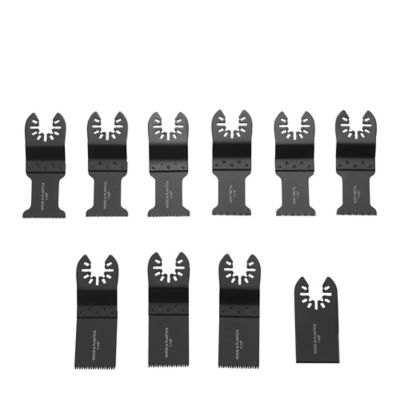
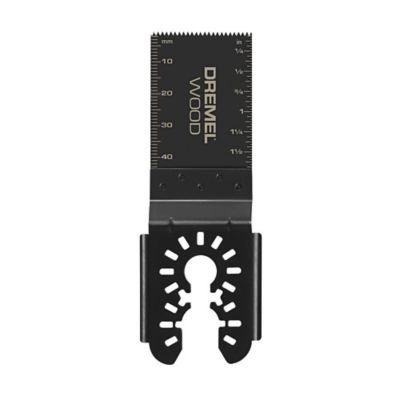
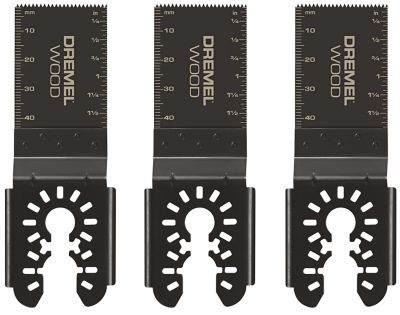
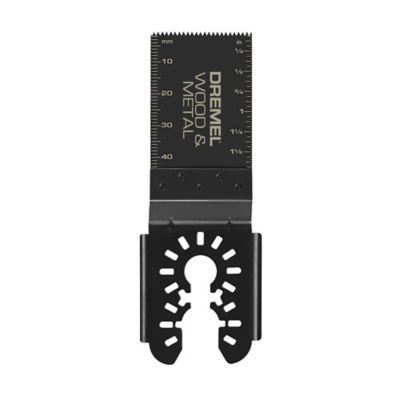
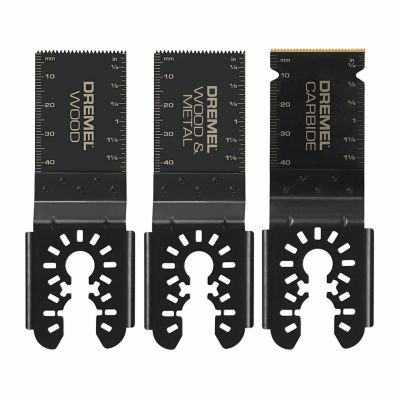
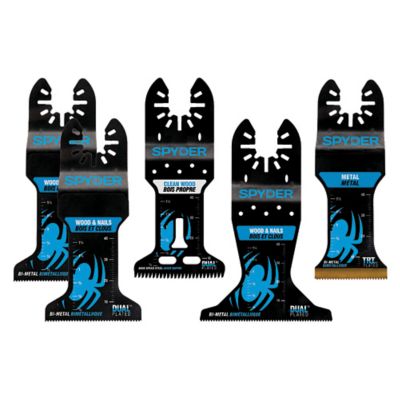
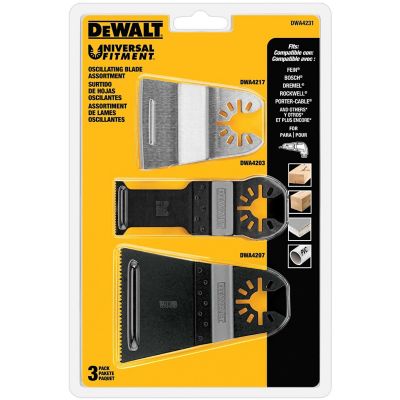
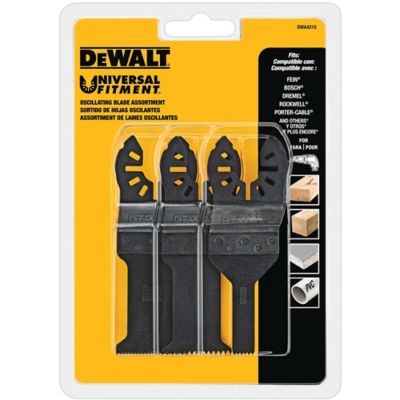
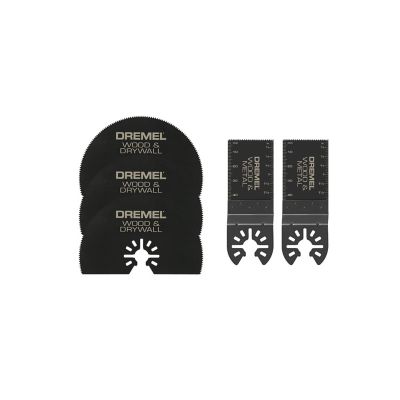
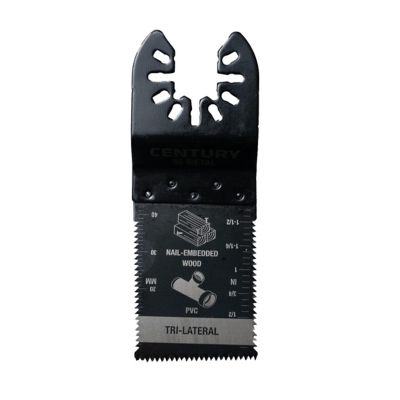
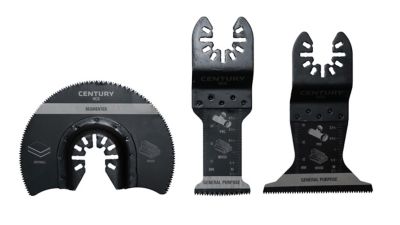
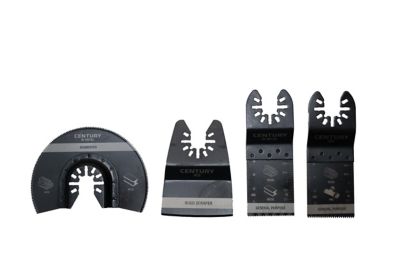
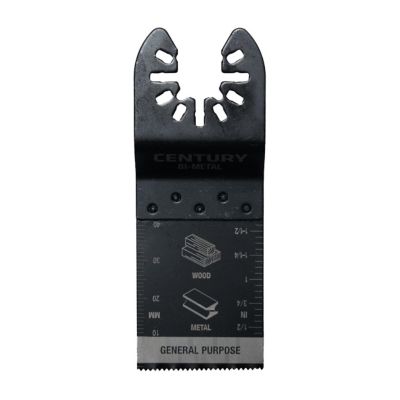
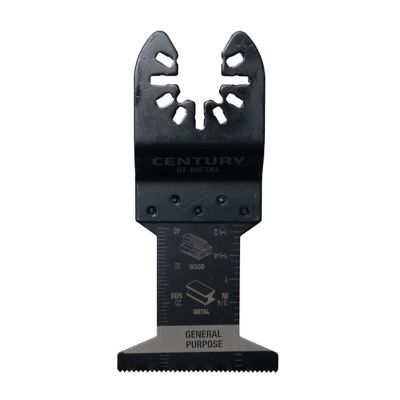
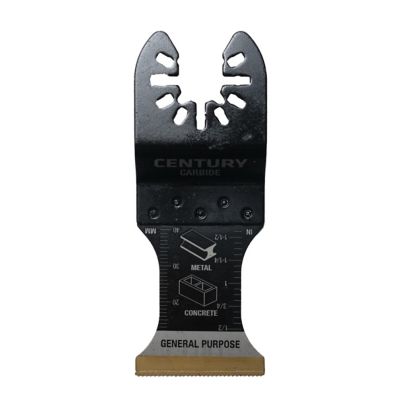
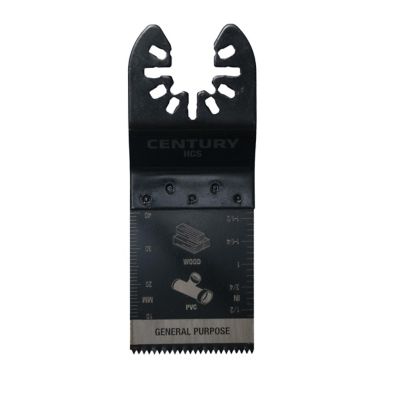
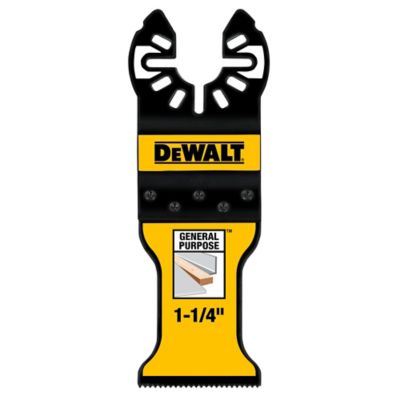
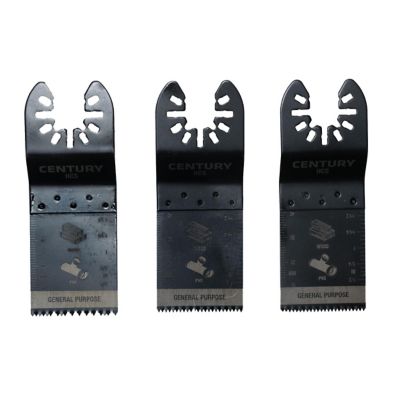
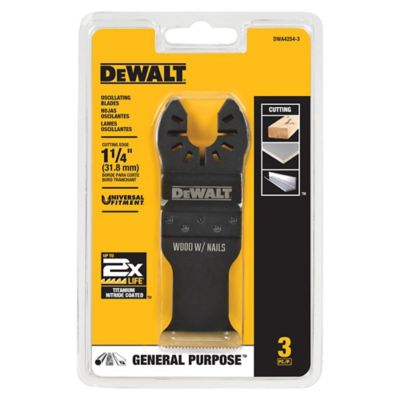
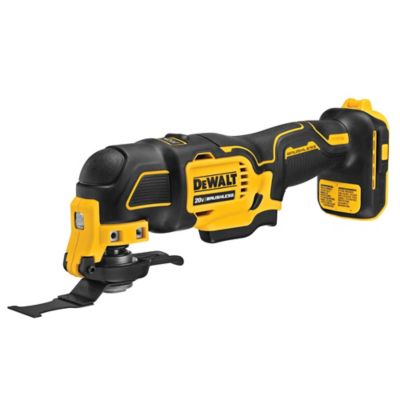
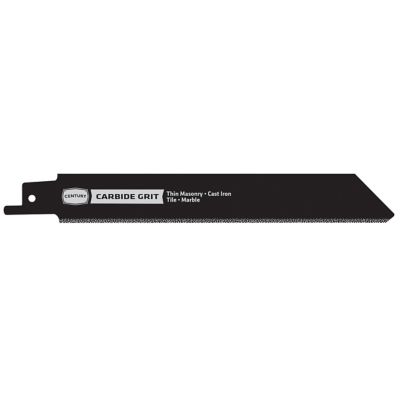
Oscillating saw blades for wood give you a handy way to handle the small, controlled cuts that can be awkward with a full-size saw. They fit oscillating multi-tools and move through a short side-to-side arc, making them useful for plunge cuts, flush cuts, notches, trim work, and openings around cabinets, flooring, door jambs, and wall framing. A blade can reach into tight corners where a circular saw will not fit, and the compact tool is easier to guide when you are working overhead or kneeling along the floor. Homeowners often keep a few wood-cutting blades in the tool box for repairs, remodeling, and maintenance around the house, while farmers, ranchers, carpenters, installers, and other working folks may reach for them when a quick cut is needed in the shop, barn, shed, or work truck. They can also make a practical gift for someone setting up a first tool kit or tackling a list of fall projects, from trimming a sticking door to fitting boards around pipes and posts. Before adding blades to your cart, check the connection style listed for your oscillating tool. Many blades are made for a broad range of tools, but the mounting pattern still needs to match the tool’s holder. Look at the blade width and length as well. A wider blade can help keep a long cut steady, while a narrow blade is easier to steer in a confined spot. Longer blades can reach through thicker stock, though a shorter blade often gives you better control for trim and shallow cuts. Keep the thickness of the wood in mind, too, and choose a blade that leaves enough cutting depth without forcing the teeth into the work.
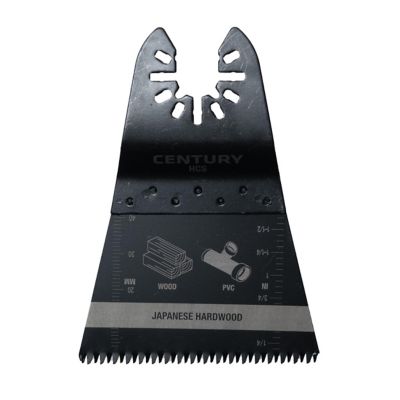
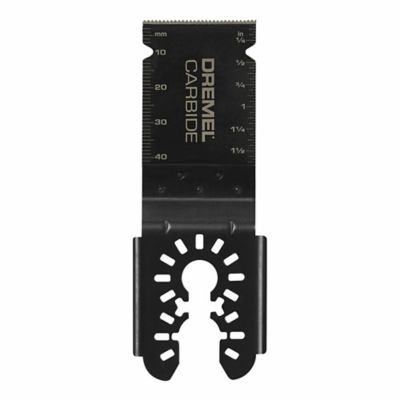
The type of wood and the kind of cut you plan to make should guide your blade selection. High-carbon steel, often labeled HCS, is a handy choice for fast cuts in clean softwood, drywall, and some plastic materials. Its tooth pattern is made to remove material quickly, which works well for rough openings, quick notches, and general repair work. Japanese-tooth blades have a fine, carefully formed tooth pattern that can move briskly through hardwood while leaving a cleaner edge. They are well suited to plunge cuts in flooring, cabinet panels, baseboards, and other finish pieces where you want the cut line to stay neat. For framing lumber, reclaimed boards, or scrap wood that may hide nails or staples, bi-metal blades are a better fit. Their mixed-metal construction helps the teeth handle occasional contact with embedded metal, though no blade should be sent through a nail on purpose unless its packaging says it is made for that task. Carbide-tipped blades are intended for more demanding work, including nail-embedded wood and tough composite materials. They can keep cutting where ordinary wood teeth may lose their edge, making them useful for removal work and stubborn repair jobs. Multi-packs are convenient when a project calls for several cuts or when you want different tooth patterns on hand, but a smaller set may make more sense for occasional household repairs. Read the package details for the intended material, cutting depth, tooth style, and mounting system rather than choosing by appearance alone. A blade with an aggressive tooth pattern can save time in rough lumber, while a finer pattern may be the better choice when the edge will remain visible.
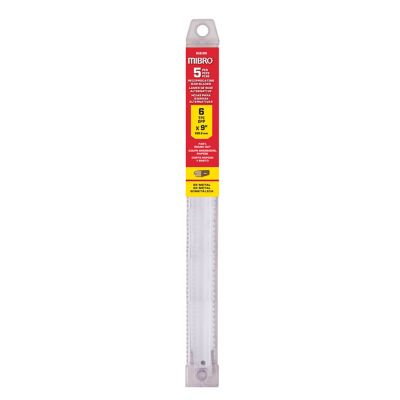
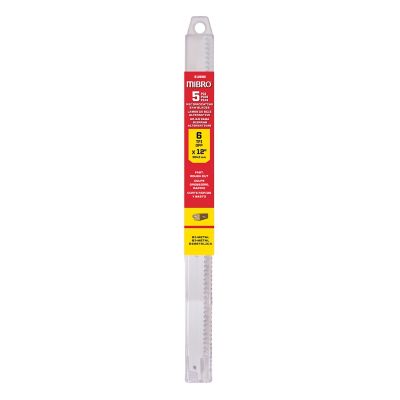
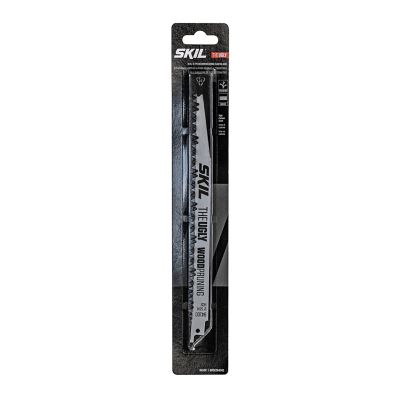
Good technique helps any oscillating saw blade cut cleaner and last longer. Mark the cut with a pencil or fine marker, then set the shoe or blade against the material before starting the tool. Begin at a moderate speed and let the teeth do the work instead of leaning hard into the board. Too much pressure can slow the motor, heat the blade, and make the cut wander. For a plunge cut, tip the blade gently into the surface and ease it forward a little at a time; this is especially helpful when opening a section of flooring or cutting into drywall near a stud. Clamp loose boards when possible, and support the piece on both sides of the cut to help prevent splintering as the blade exits. On finished wood, placing painter’s tape over the cut line can help reduce surface splintering, while a slower feed and a fine-tooth blade can help leave a cleaner edge. Keep your hands clear of the blade path, wear eye protection, and check for hidden wiring, plumbing, fasteners, and other obstacles before cutting into a wall, floor, or framed opening. Let the blade cool between long cuts, especially in dense hardwood or composite boards, and replace it when the teeth are rounded, the cut begins to drift, or the tool starts to work harder than usual. If your project calls for longer, deeper cuts through framing lumber, take a look at
Wood Cutting Reciprocating Saw Blades for another saw-blade option. With the right fit, tooth pattern, and cutting approach, oscillating saw blades for wood can help you make clean notches, reach tight spaces, and keep repair work moving through the cooler months.