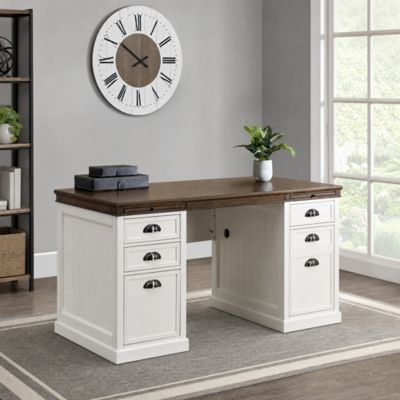
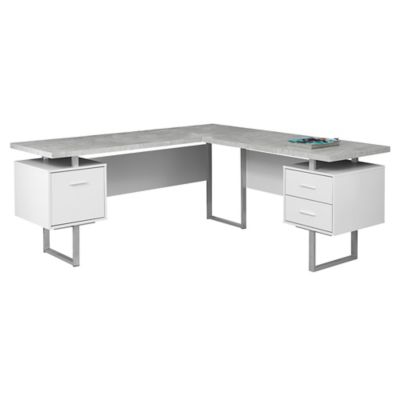
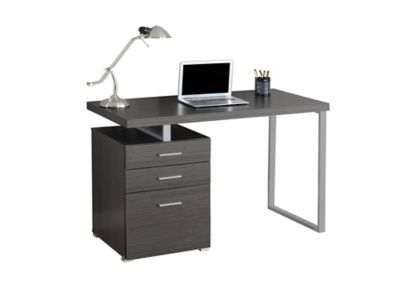
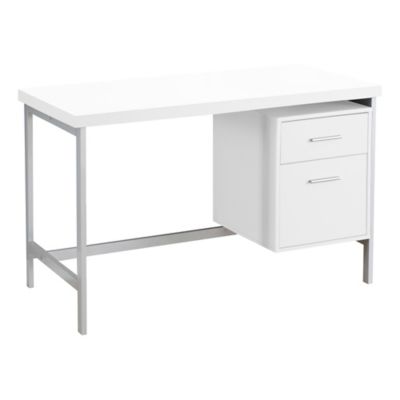
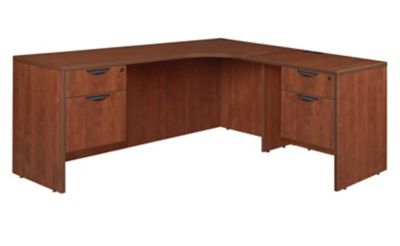
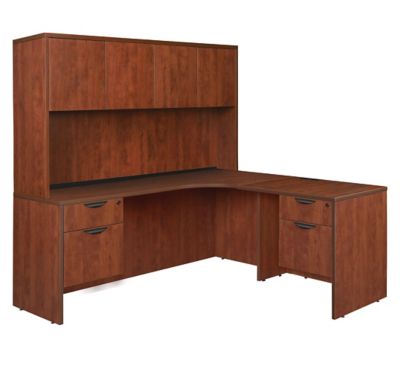
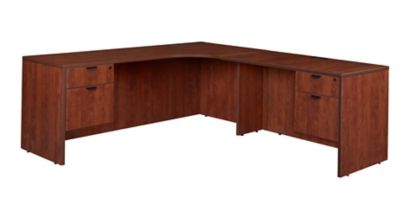
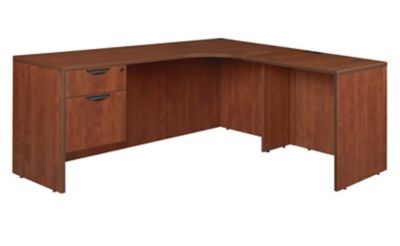
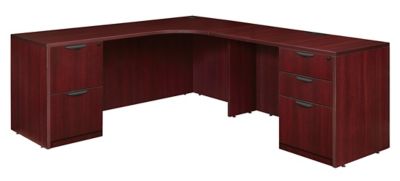
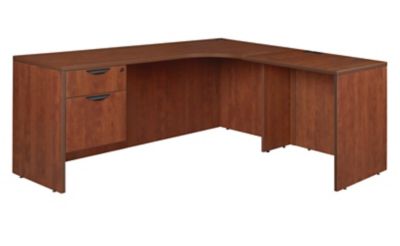
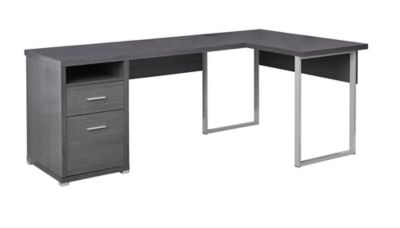
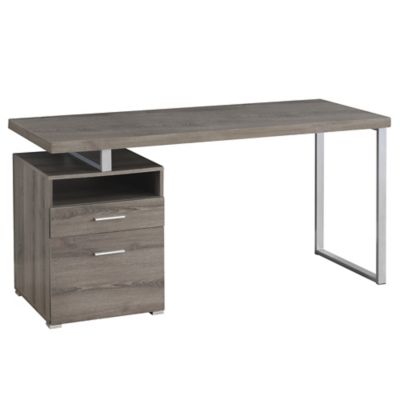
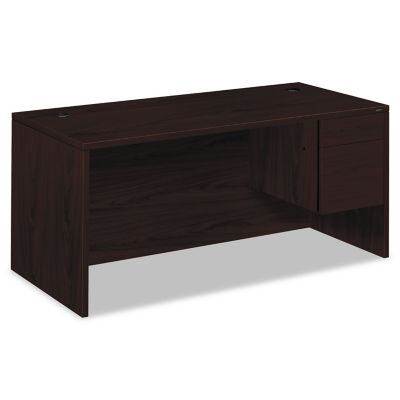
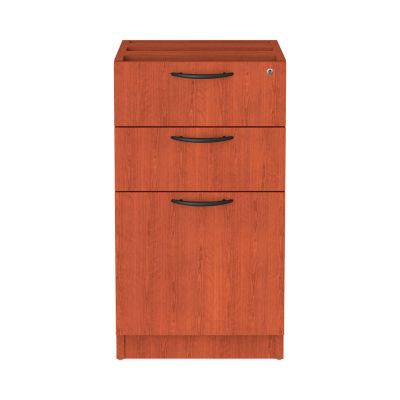
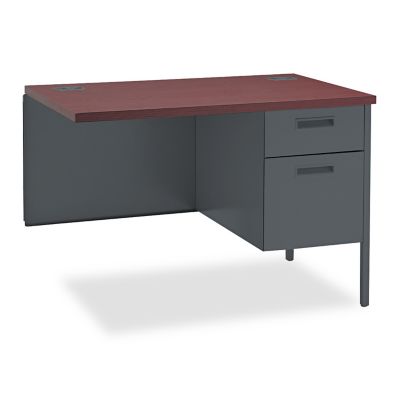
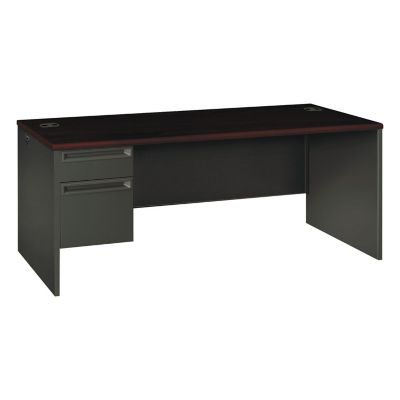
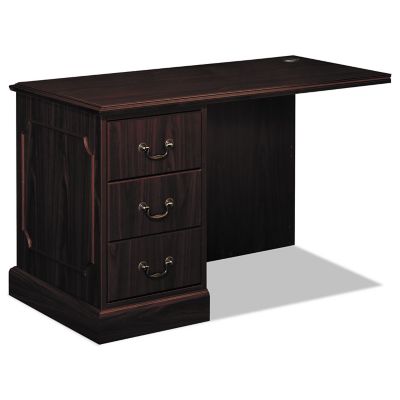
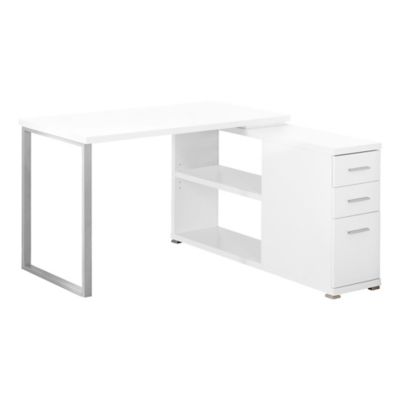
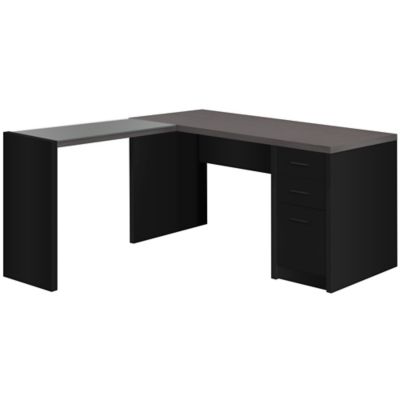
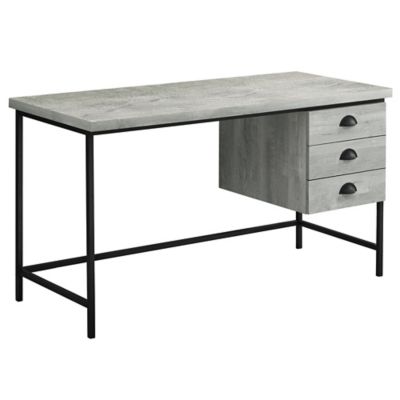
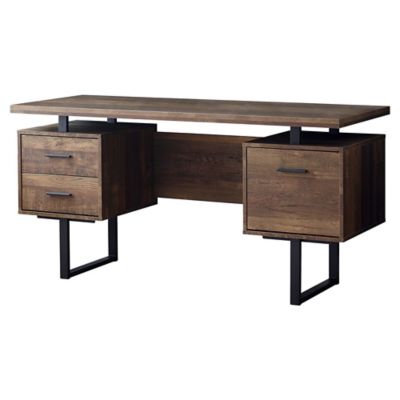
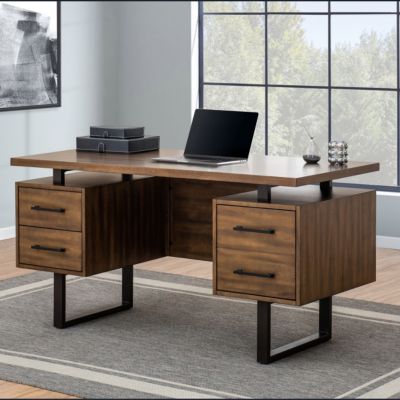
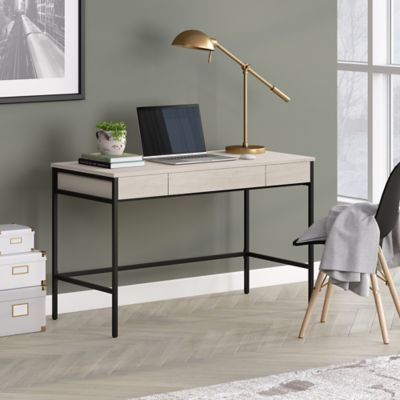
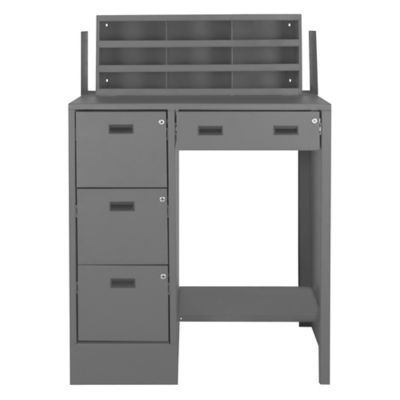
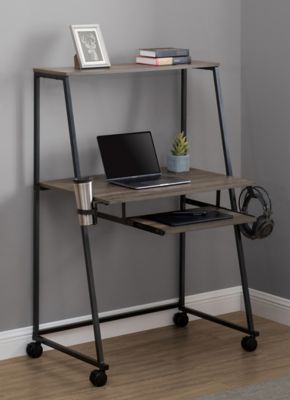
Office desks with file drawers bring a work surface and paper storage together, making it easier to keep everyday records close without letting folders take over the desktop. A file drawer is typically deeper than a supply drawer and may include rails for hanging folders, though the supported folder size and filing direction vary by design. Letter-size files hold standard 8.5-by-11-inch paperwork, while legal-size files accommodate longer 8.5-by-14-inch documents; the drawer specifications should identify which format fits. That distinction matters in a farm office handling equipment records and land agreements just as much as it does in a home office sorting household bills. Having a place for invoices, receipts, insurance papers and tax records leaves more room on top for a laptop, a ledger and the paperwork that needs attention today. Smaller drawers can keep pens, envelopes and a stapler from getting mixed in with the files. Different desk layouts suit different routines. A rectangular desk with drawers along one side can provide a straightforward setup against a wall or in a spare room. An L-shaped desk offers two connected work surfaces, giving a computer its own spot while leaving another section open for spreading out statements or checking delivery paperwork. Larger executive-style desks often have storage on both sides of the seating area, although the number and type of drawers depend on the design. A compact writing or computer desk with a file drawer can make sense where the same room also serves as a guest room or family workspace. For people who alternate between sitting and standing, any attached or nearby file storage needs to leave the desk’s lifting mechanism and full range of motion clear. Whether the job is running a small business, tracking livestock expenses or working through school assignments, the benefit is practical: frequently needed documents stay within reach, and the desktop has room for the task at hand.
The right fit involves more than finding a desktop that fits along an empty wall. Overall width and depth determine how much floor space the desk occupies, while the knee opening, drawer placement and chair clearance determine how comfortably that space works. A deep file drawer needs room to extend without hitting a doorway, another cabinet or the chair. In a narrow office, a drawer pedestal on the wrong side can interrupt the path through the room even when the desk itself fits. An L-shaped layout also needs the correct orientation; some designs have a reversible return, while others keep the shorter section on a fixed side. Desktop depth matters when a monitor, keyboard and open folder all need space at once. There should be enough room to position the screen at a comfortable viewing distance and keep the keyboard within easy reach, with feet supported and shoulders relaxed. Materials affect both the appearance and everyday upkeep of office desks with file drawers. Solid wood brings natural grain and can be substantial, though care requirements depend on its finish. Wood veneer provides a real-wood surface over a supporting core, while engineered wood with a laminate surface can offer a consistent finish that generally wipes clean easily. Metal frames and drawer components can add support, but the desk’s stated weight limits remain the best reference for loading the work surface and storage. A file drawer filled with paper gets heavy in a hurry. Drawer-slide ratings, frame construction and properly tightened connections all matter when folders are part of the daily routine. Full-extension slides can make files at the back easier to reach, while partial-extension drawers may leave some contents farther inside. Built-in cable openings or a separate route behind the desk help keep power cords away from moving drawers and feet. These details make a difference when a workday involves moving between computer work, phone calls and a stack of records that needs sorting.
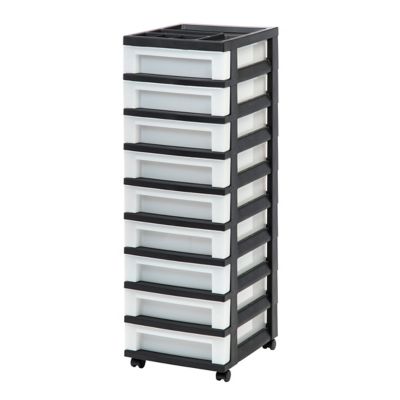
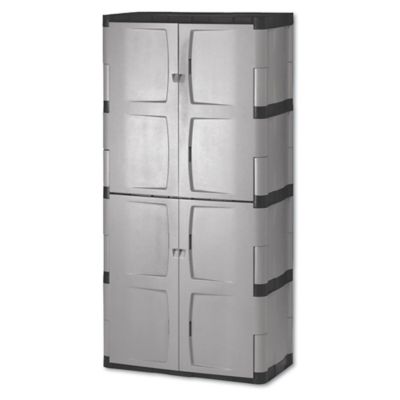
A useful filing setup reflects the way paperwork actually moves through the office. A small-business owner might keep open invoices in one section and completed jobs in another, while a household workspace might separate medical records, vehicle paperwork and school forms. On a farm, folders for machinery service, animal care and property records can keep a needed receipt from disappearing beneath a pile of mail. Hanging folders work best when the rails match their size and the drawer is not packed so tightly that files cannot move. Labels facing the seating position can make everyday retrieval simpler. Locking file drawers can help limit casual access to personal or business papers, but a standard desk lock does not make the drawer a fire-resistant safe or replace stronger protection for sensitive records. For documents that do not need to stay beside the chair,
Black Office Storage Cabinets can provide a separate place for longer-term filing and office supplies, leaving the desk drawers for active work. Keeping the whole setup manageable also means giving the furniture a little regular attention. A soft cloth removes dust from the desktop and drawer fronts, and spills should be wiped up promptly rather than left around seams or edges. Cleaning products should match the surface and finish, with moisture kept away from unfinished edges and hardware. Coasters or a desk mat can help protect the work area from drink rings, pen marks and repeated contact. Drawer slides should stay clear of loose paper scraps, and hardware may need occasional checking according to the furniture’s care instructions. Opening one heavily loaded drawer at a time and following any anchoring requirements can help reduce tipping risk. With a sensible layout and storage that suits the paperwork, a desk can support everything from a quick round of bill paying to a full day of office work, without turning the room into a maze of folders and furniture.