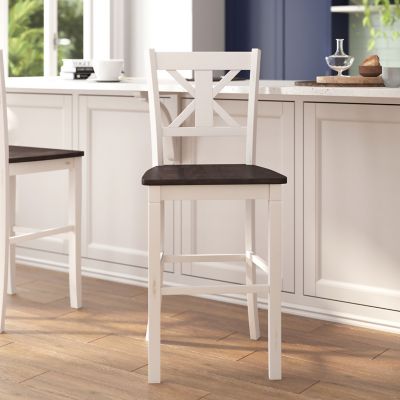
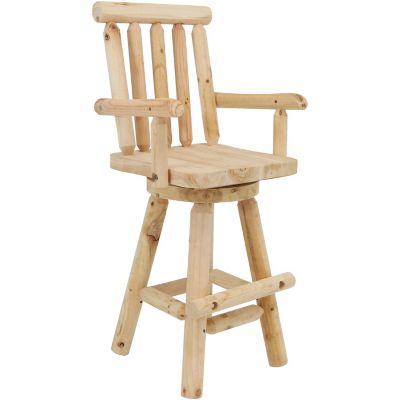
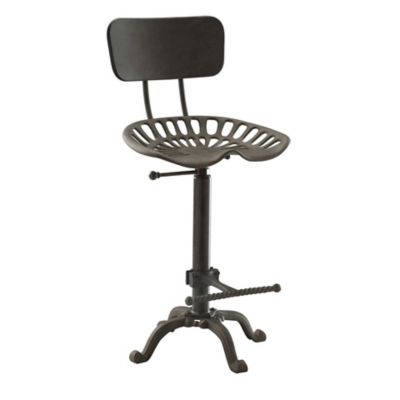
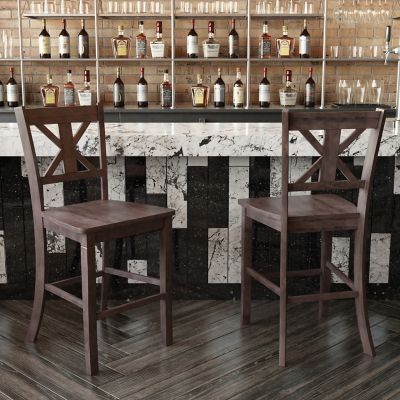
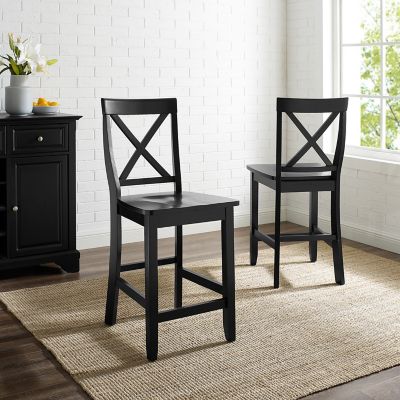
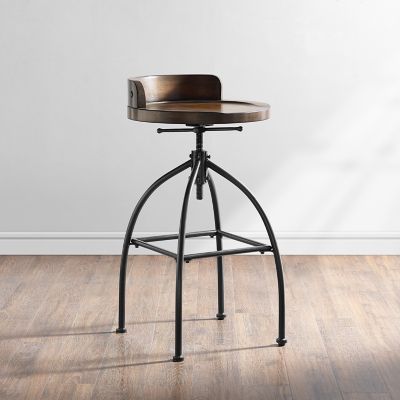
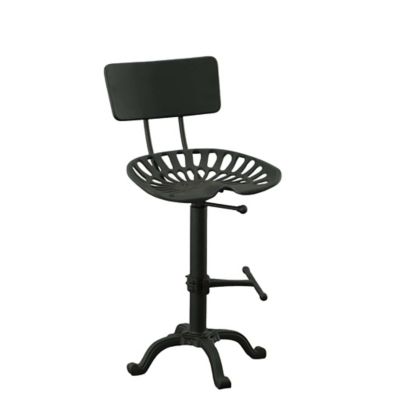
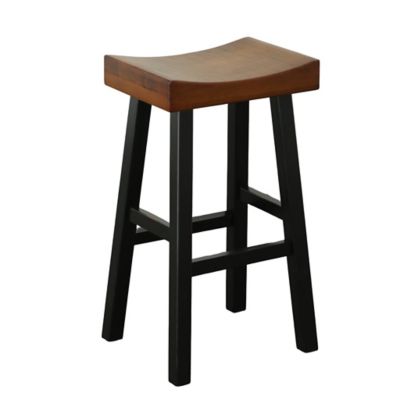
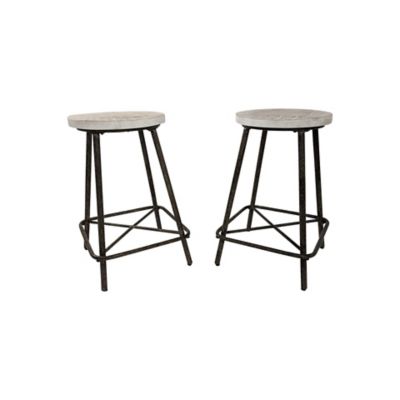
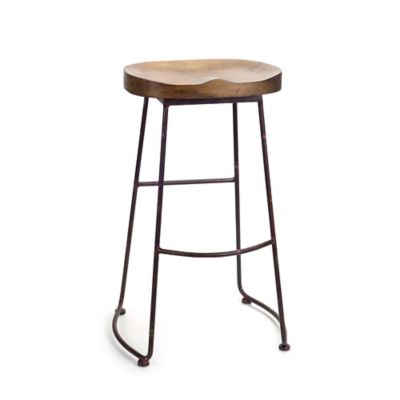
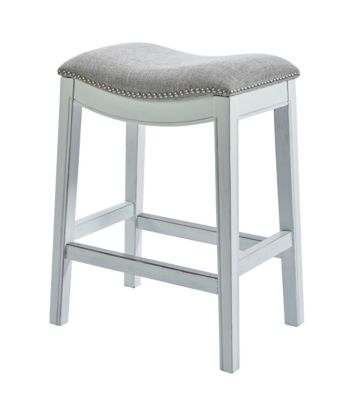
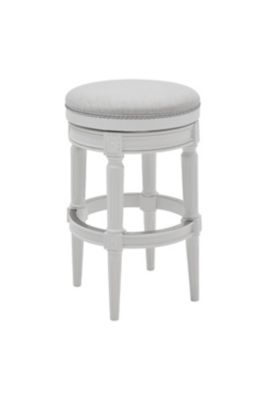
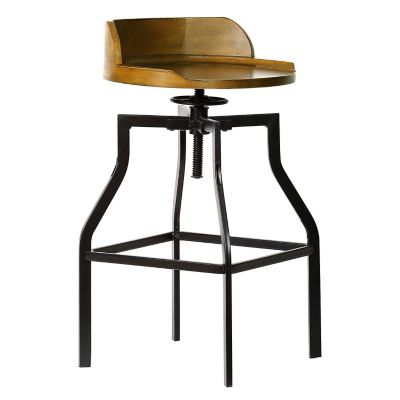
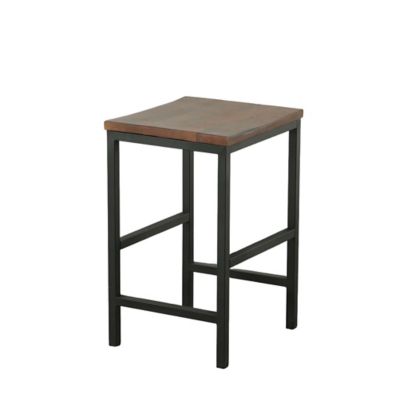
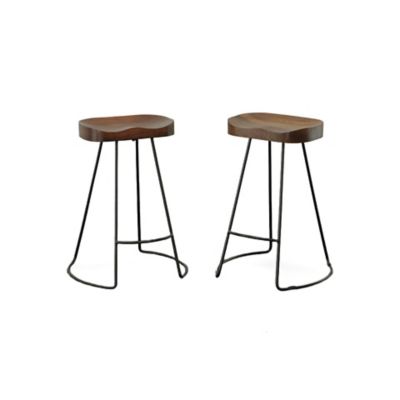
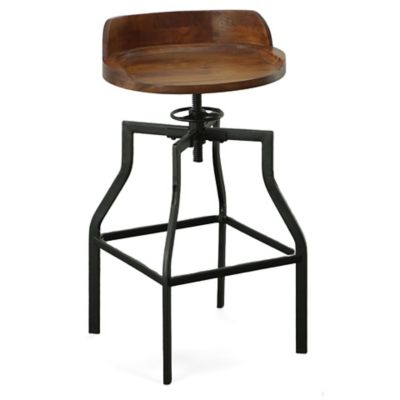
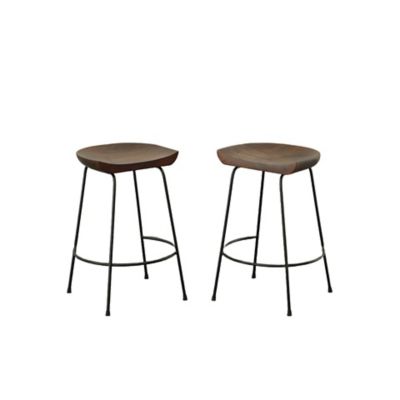
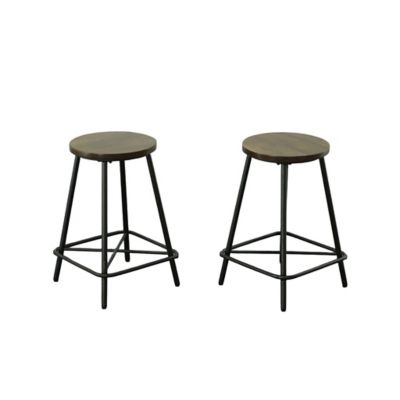
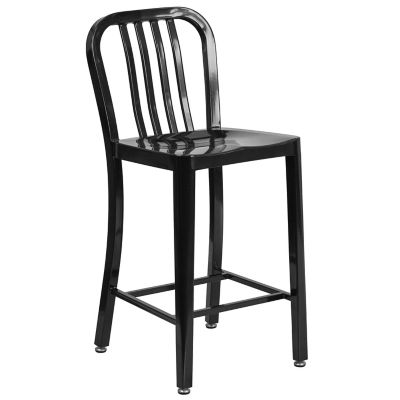
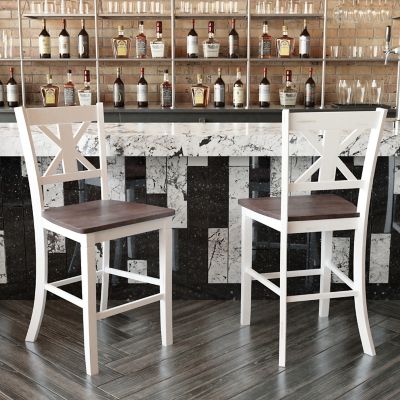
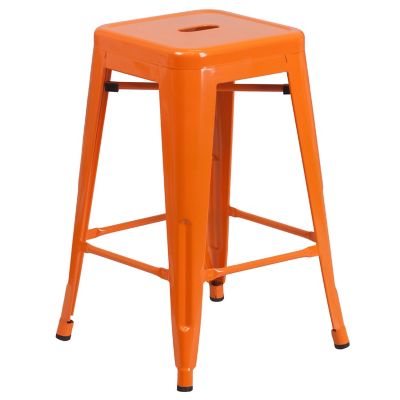
Modern rustic bar stools bring together the easygoing character of wood and the clean lines of metal, making them a natural fit for kitchens, breakfast bars, and gathering spots with a little country influence. Their appeal comes from that balance: enough texture to feel at home beside a plank table, with a simple shape that sits comfortably against smooth cabinetry or a stone countertop. A warm brown seat on a dark steel frame can tie cabinet hardware and wood flooring together without making every finish match. Lighter wood tones keep a smaller eating area feeling open, while deeper finishes give a long counter a more grounded look. Visible grain, knots, and brushed surfaces add character, though the amount of variation depends on the material and finish. Solid wood offers natural differences from seat to seat, while wood veneers bring a real-wood surface to an underlying panel. Metal frames contribute a leaner outline, and upholstered seats introduce a softer touch where folks tend to linger. The details matter as much as the overall shape. A gently scooped seat can feel different from a flat plank, a rounded front edge can ease contact behind the knees, and a well-placed footrest gives feet somewhere to settle. Open backs keep sightlines clear across the room, while fuller backrests create a more defined place to sit. These stools suit more than one kind of home, from a farmhouse kitchen with painted cabinets to a small apartment with wood shelves and iron accents. The look doesn’t call for a room full of matching furniture, either. Repeating one wood tone or metal finish is often enough to make the seating feel connected to its surroundings. At a counter where breakfast gets eaten, grocery lists get written, and neighbors pull up for a chat, modern rustic seating can feel right at home without making the space look overly formal.
A good fit starts with the relationship between the seat and the eating surface, not just how a stool looks standing alone. Counter-height seats generally measure about 24 to 27 inches from the floor and suit counters around 35 to 37 inches high. Bar-height seats generally run about 28 to 33 inches and pair with surfaces around 40 to 43 inches high. Leaving roughly 10 to 12 inches between the seat and the underside of the surface gives many adults comfortable legroom, but a thick apron, support bracket, or shallow overhang can change that fit. Seat width and spacing deserve the same attention. About 26 to 30 inches from the center of one stool to the center of the next is a helpful starting point, with more room often needed for wide seats, arms, or turning movement. A narrow island may feel more comfortable with fewer seats than with elbows crowded together. Backless shapes tuck neatly beneath an overhang when their dimensions allow, which can help keep a path open between the kitchen and dining area. Backrests offer support for longer visits, while arms give another place to rest but may prevent the stool from sliding fully under a counter. Fixed seats keep the setup straightforward; turning seats can make it easier to join a conversation or step away without dragging the whole frame across the floor. For that kind of movement,
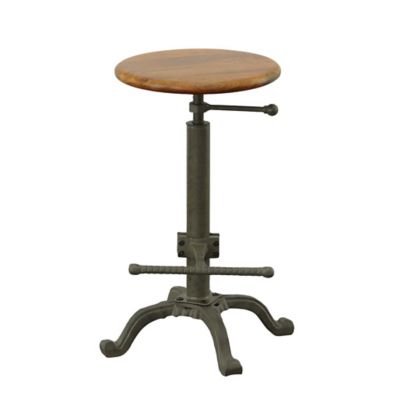
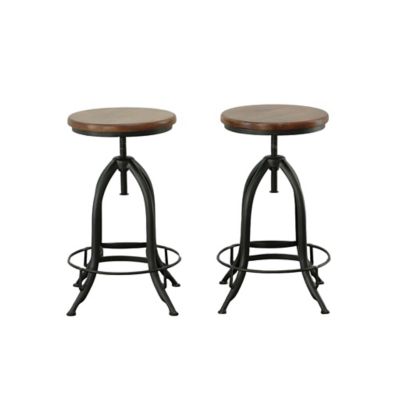
Swivel Rustic Bar Stools offer a related seating style to consider alongside the same height and clearance needs. Adjustable-height designs can accommodate different surfaces within their stated range, though base size, footrest position, and operating instructions still matter. In a busy household, the best arrangement leaves space for someone to carry a plate behind a seated person without squeezing through. Weight capacity, assembly requirements, and the footprint of the legs or base are worth checking before bringing seating home. Tall stools are meant for sitting rather than climbing, and children may need supervision around elevated or moving seats.
Materials and care play a big part in how modern rustic bar stools hold up to everyday life. At a kitchen island where toast crumbs and splashes are part of the routine, a smooth, sealed seat can be simpler to wipe down than a deeply textured surface. Wood still needs a little attention: spills should be cleared promptly, and standing moisture can affect both the finish and the material beneath it. A soft cloth and a cleaner approved for the surface are generally better choices than an abrasive pad or a strong household solution. Painted and powder-coated metal frames also benefit from gentle cleaning, especially around joints and footrests where dust and shoe marks collect. Scratches or chips deserve attention according to the manufacturer’s care directions rather than a one-size-fits-all repair. Fabric upholstery adds softness for a long breakfast or an evening spent talking at the counter, but seams and woven surfaces can catch crumbs. Leather and leather-look coverings have their own cleaning needs, so their care directions should stay close at hand. Where seating gets moved often, floor glides suited to the flooring can help limit scuffs; grit beneath a glide can still leave marks, making occasional checks worthwhile. Firm connections, a level stance, and properly tightened hardware help a stool stay steady through daily sitting and standing. Any wobble calls for a check of the floor, assembly, and fasteners before the seat returns to service. Intended placement matters, too: an indoor finish should not be expected to handle porch or patio exposure unless the stool is rated for that setting. For a first home, a refreshed kitchen, or a housewarming gift arranged with the recipient, dimensions and care preferences matter more than a surprise choice. The right seating works with the household’s habits, whether that means a quick cup of coffee before chores or a comfortable spot to sit while supper comes together. With proportion, materials, and upkeep considered together, modern rustic bar stools can become an easy part of the room’s daily rhythm.