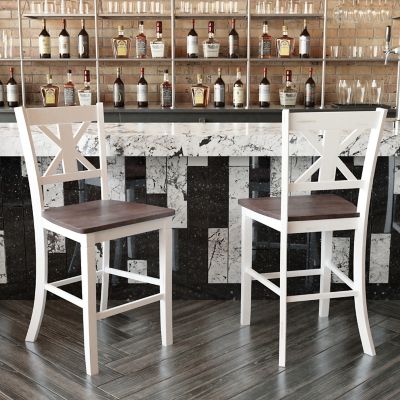
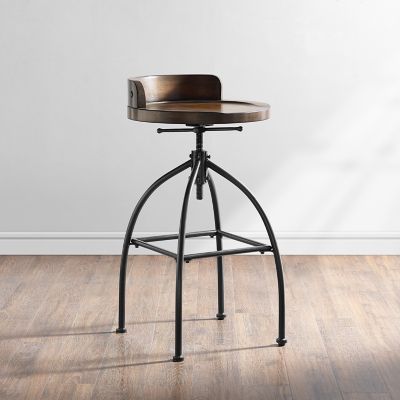
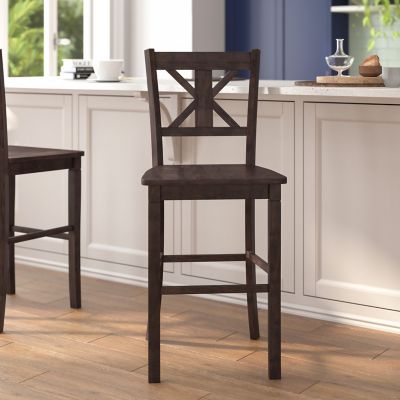
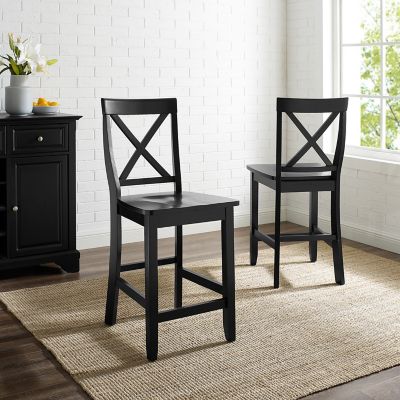
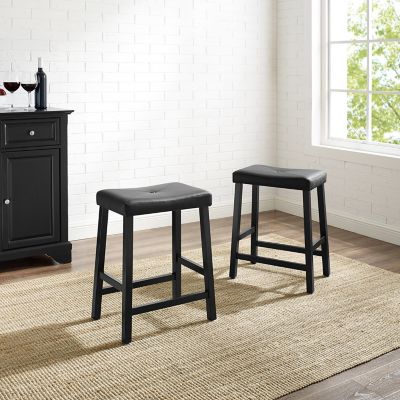
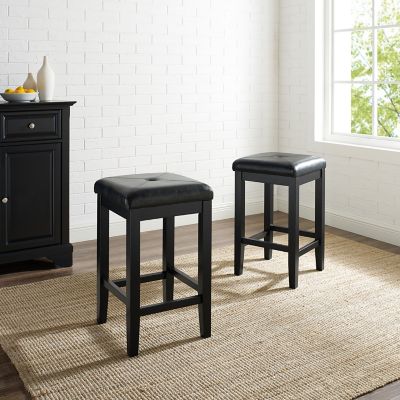
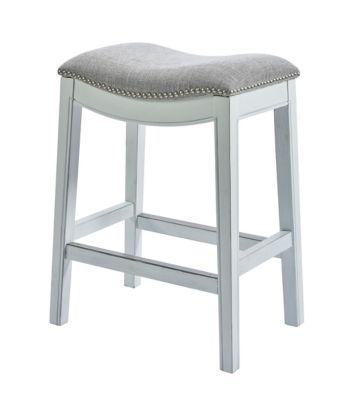
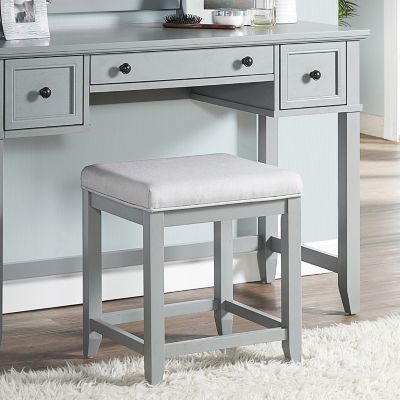
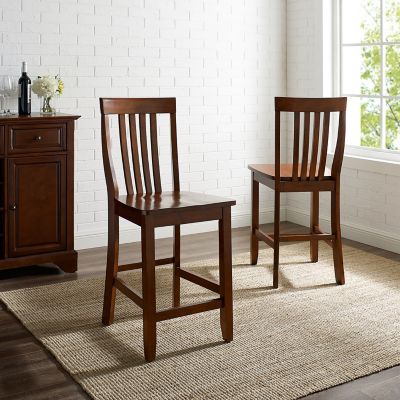
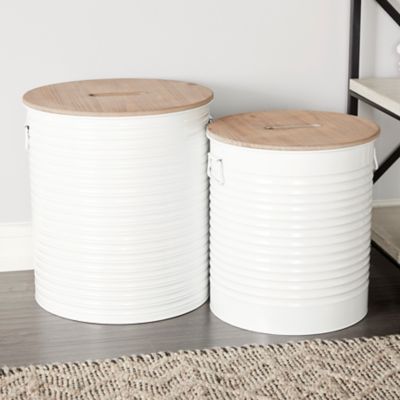
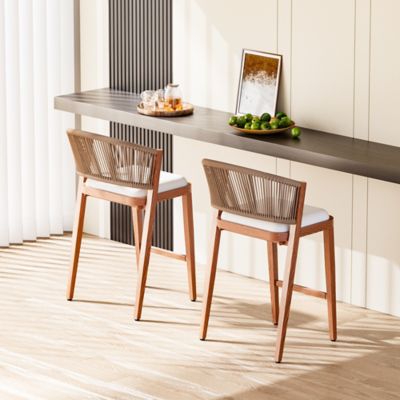
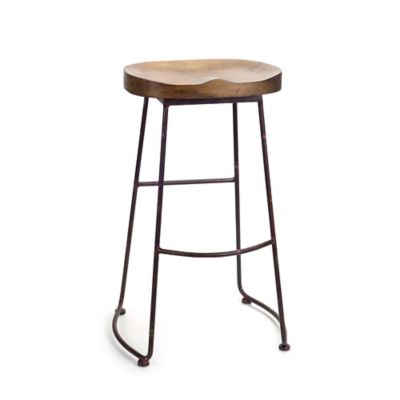
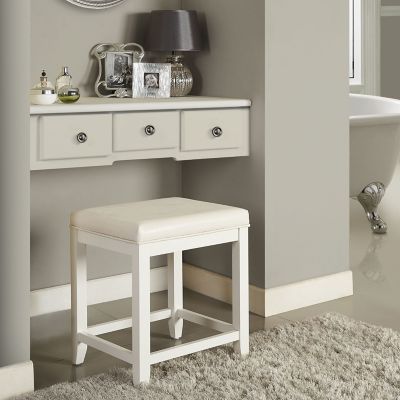
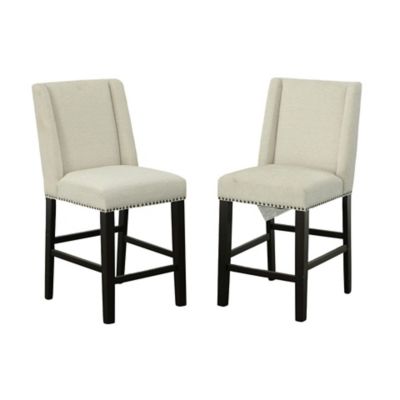
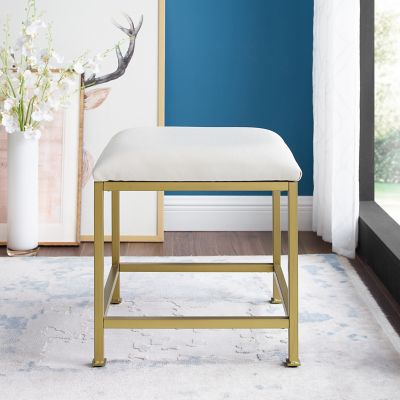
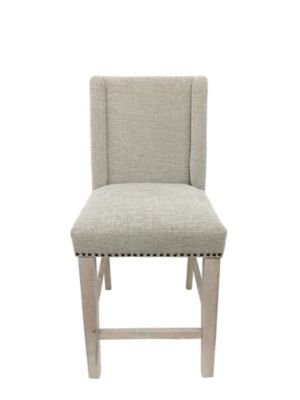
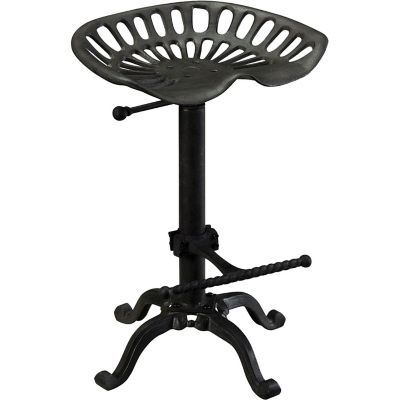
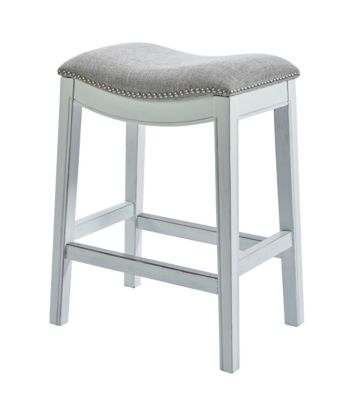
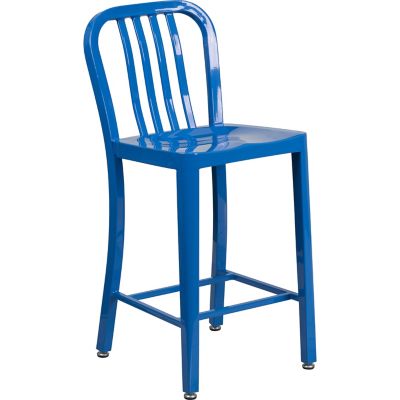
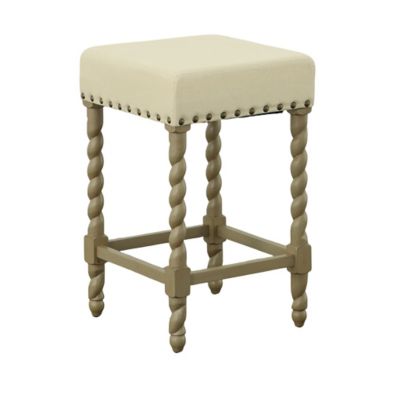
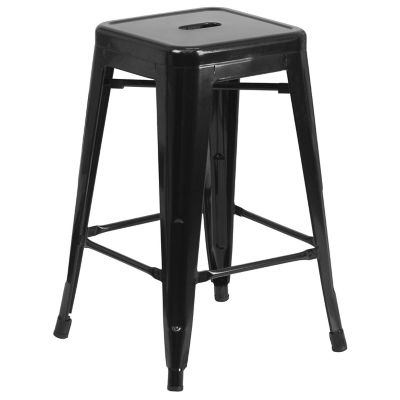
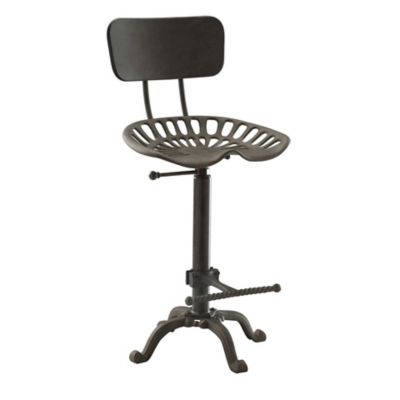
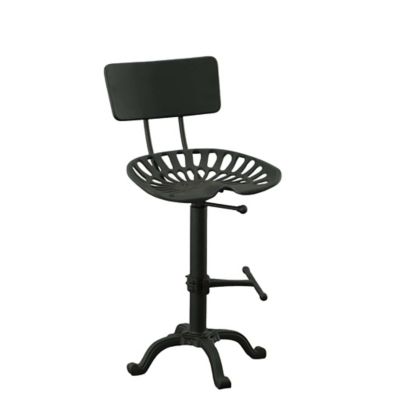
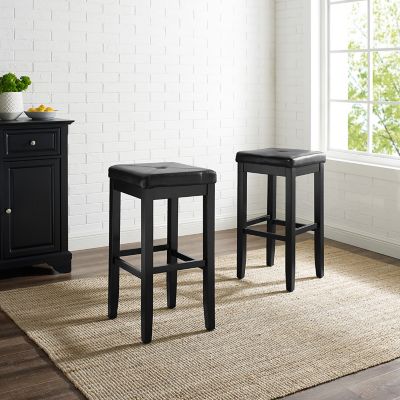
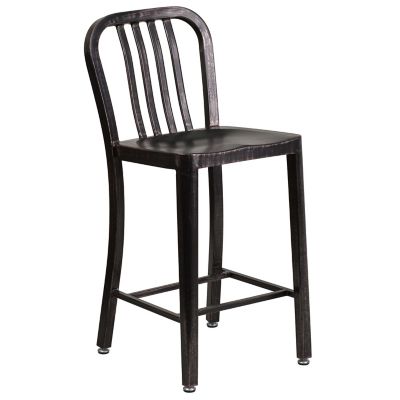
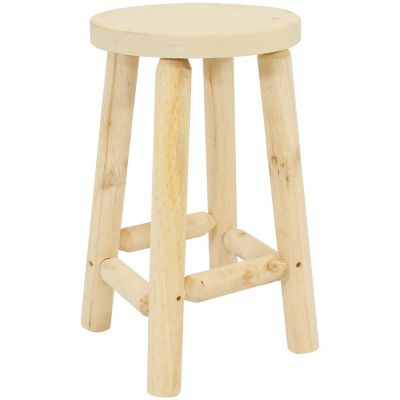
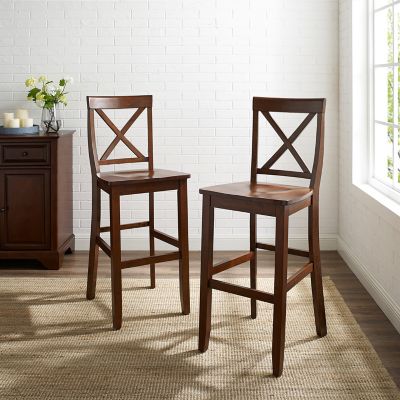
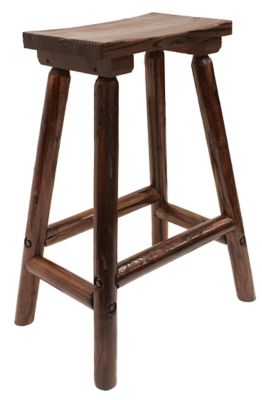
Modern farmhouse counter stools pair the warmth of wood and simple country styling with clean lines that fit an everyday kitchen. Common features include wood seats, metal frames, painted finishes, open backs, and cushions that make a quick breakfast or a longer conversation more comfortable. The look sits comfortably between a working farmhouse kitchen and a more streamlined space, so the seating doesn’t have to match every cabinet or table leg to feel at home. A natural wood seat can soften the look of dark cabinets, while a black metal frame can pick up the color of cabinet pulls, light fixtures, or a nearby range hood. White and cream finishes keep the seating area light, and brown wood tones bring out the grain without making the whole room feel busy. Straight legs and simple stretchers lean toward the modern side; turned details, cross backs, and gently shaped seats bring in more farmhouse character. Solid wood offers visible grain and a substantial feel, while wood-and-metal construction brings two textures together without a lot of extra detail. Upholstered seats add another layer of comfort, with woven fabric lending a softer look and smooth, wipeable coverings making small spills easier to handle when the material’s care directions allow it. A low-profile stool can tuck beneath an island and leave the countertop as the main feature, while a taller back gives the seating a stronger presence from across the room. Matching stools create a settled, orderly look along a long counter. A mix of finishes can work, too, especially when the seats share a similar shape or height. The result is seating that belongs beside a breakfast spread, a stack of school papers, or a neighbor who stops in for coffee, without making the kitchen feel too dressed up for daily life. That balance gives modern farmhouse counter stools their easygoing appeal in both open kitchens and smaller eat-in spaces.
Counter-height seating fits best when the seat, countertop, and surrounding walkways leave enough room for people to settle in and move around. Counter stool seats commonly measure about 24 to 26 inches from the floor, while a standard kitchen counter is often about 36 inches high. Roughly 10 to 12 inches between the seat and the underside of the counter generally leaves comfortable legroom, though thick countertop edges, support brackets, and aprons can reduce that space. Bar-height stools are taller and suit higher surfaces, so the two sizes aren’t interchangeable just because their styling looks alike. Seat height also matters more than overall stool height, which includes the backrest. Across the length of an island, allowing roughly 24 to 30 inches per person helps keep elbows from bumping during a meal; wider seats, arms, and swivel movement may call for more room. A generous countertop overhang gives knees somewhere to go, while a shallow overhang can leave someone sitting farther from a plate than expected. Backless stools tend to slide neatly out of the way and keep sightlines open between the kitchen and living area. Stools with backs offer support for a leisurely breakfast, homework, or an evening spent sorting paperwork at the counter. Arms provide another place to rest, but they need clearance beneath the countertop if the stool is meant to tuck in. Swivel seats make it easier to turn toward a conversation without dragging the legs across the floor, provided there’s room for the seat to rotate without hitting cabinets or neighboring stools. A well-placed footrest gives feet a comfortable landing spot rather than leaving them dangling. Seat depth, cushion firmness, and the shape of the front edge also affect how the stool feels over time. For families with children, a steady base, an appropriate weight rating, and clear space around each seat matter more than looks alone; footrests are for resting feet, not climbing. Those details help an island serve as a comfortable gathering spot without crowding the kitchen’s working space.
Everyday wear is part of kitchen life, and the materials and construction of farmhouse counter seating help determine how well it handles that routine. Tight joints, sound connections between the legs and frame, and hardware that can be checked according to the manufacturer’s directions all contribute to a stool that stays steady through repeated sitting and standing. Wood seats may pick up marks from belt buckles, rivets, or items set on top, while painted edges can show scuffs where shoes meet the lower rails. Metal frames have different care needs depending on their coating, and a finish that suits indoor kitchen use shouldn’t automatically be treated as suitable for a porch or patio. For ordinary cleanup, a soft cloth and a cleaner approved for the material are a sensible starting point. Spills are easier to manage before they settle into seams, exposed wood, or fabric, and soaking a seat or frame can cause trouble even when its surface looks well sealed. Upholstery care depends on the covering, so cleaning labels matter more than a fabric’s color or texture. Removable cushions can simplify care when their instructions allow removal and cleaning, while tightly fitted upholstery keeps the seat looking tidy without loose ties or shifting pads. Floor protectors can help limit scratches and scraping sounds, especially on wood or tile, but they need to fit the legs and stay free of trapped grit. In a busy household, seating that cleans up without much fuss makes sense beside the spot where lunches get packed and dinner gets served. For a broader look at the same easygoing character,
Farmhouse Style Counter Stools bring that country-kitchen feel into focus. With proportions that suit the counter and materials that suit the household, these stools can make a first home, a family kitchen, or a downsized space feel ready for everyday company.