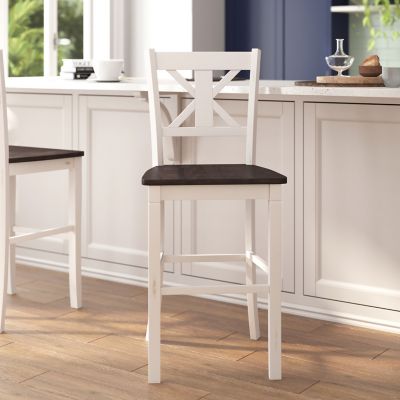
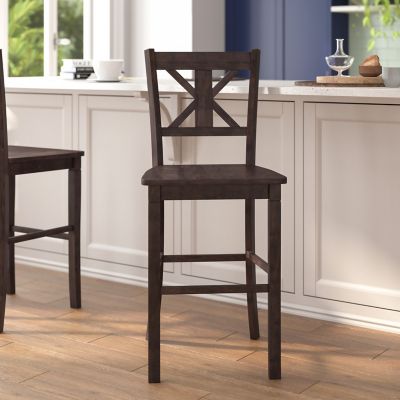
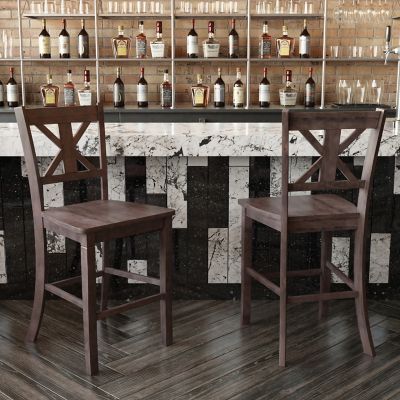
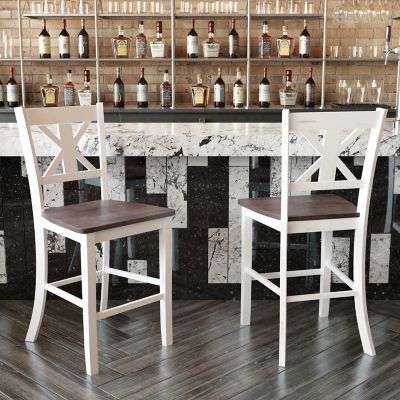
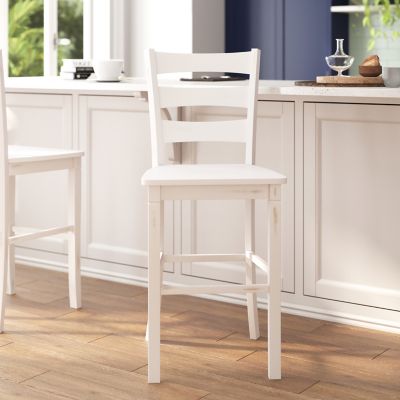
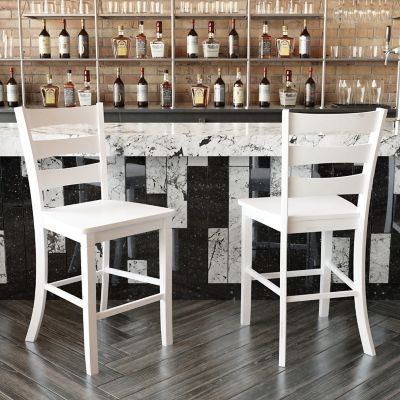
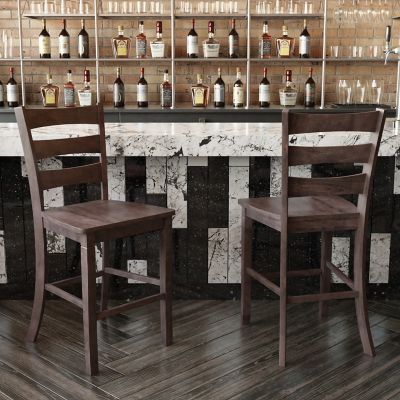
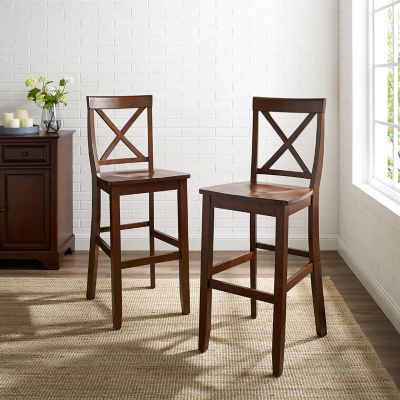
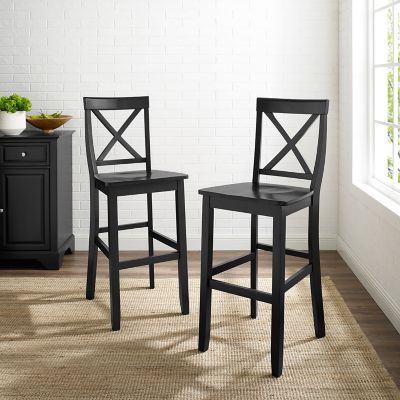
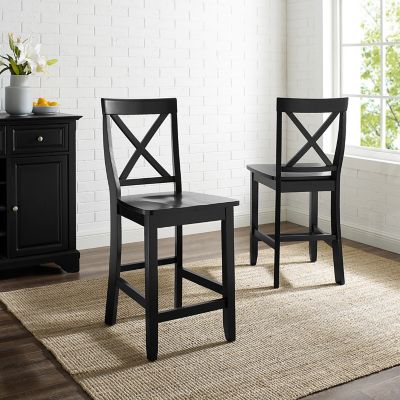
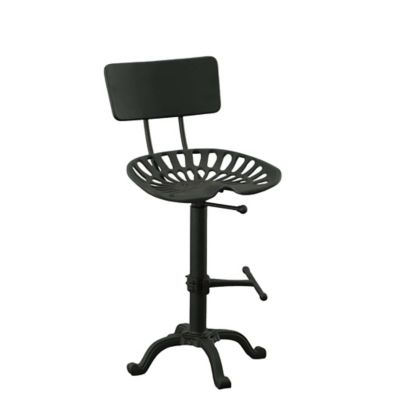
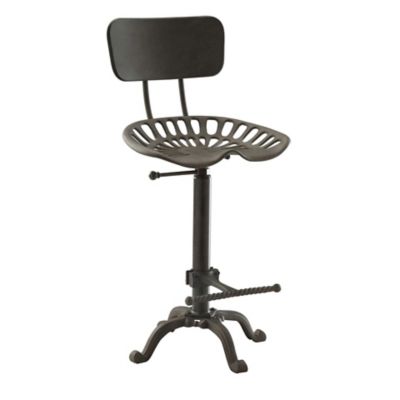
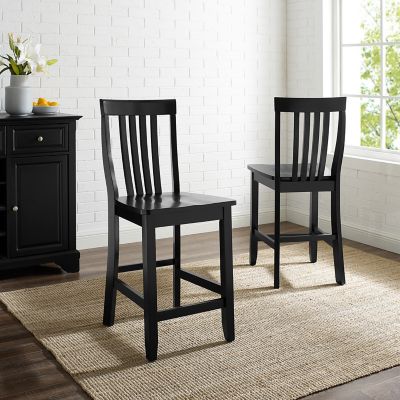
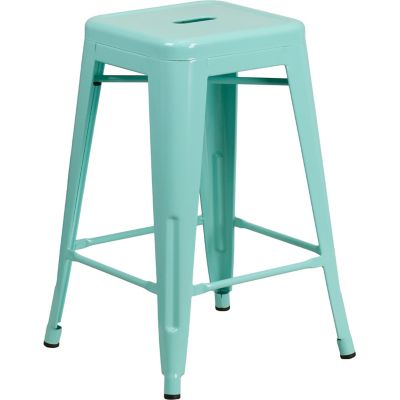
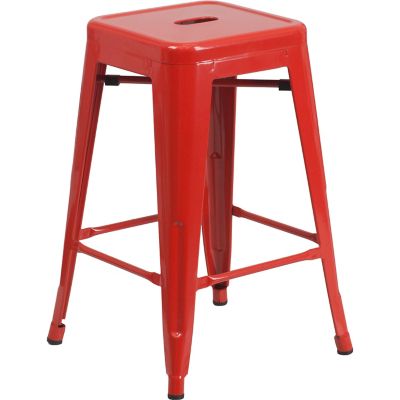
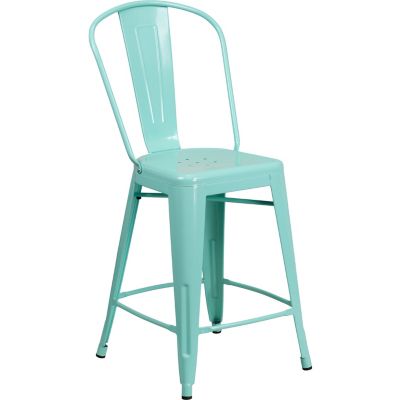
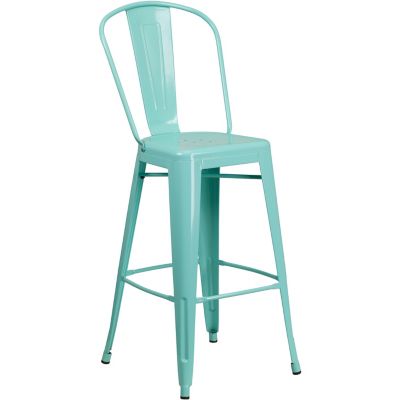
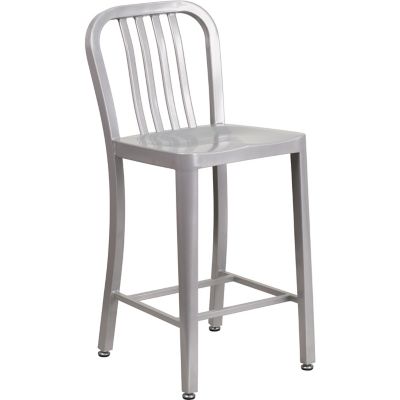
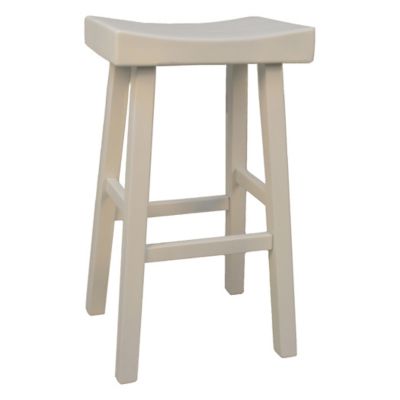
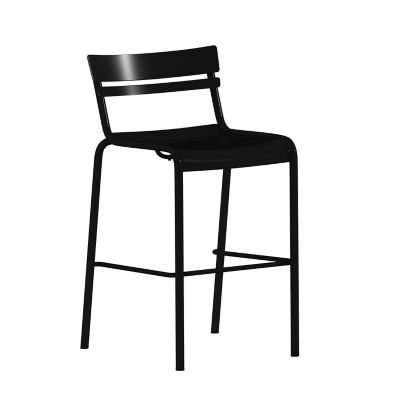
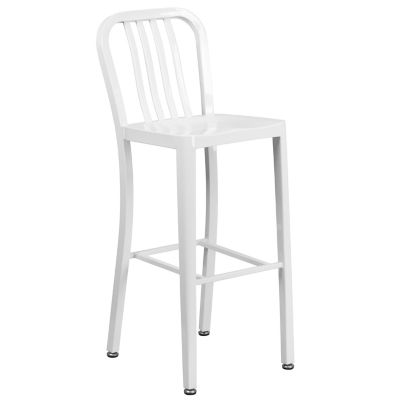
Farmhouse bar stools with backs bring a comfortable, down-to-earth feel to the places where folks naturally gather: a kitchen island, a raised breakfast bar, or a tall table just off the cooking area. They make room for a quick sandwich between chores, a cup of coffee before heading out, and a longer visit when company pulls up a seat. A backrest gives the seating a more settled feel than an open stool, while the taller profile suits counters and gathering spots where a regular dining chair sits too low. The farmhouse look can take several forms, from wood seats with visible grain to painted frames, simple metal supports, and woven seating details. Ladder backs lend a familiar country-kitchen character, spindle backs keep the outline light, and cross-back shapes bring a little pattern without making the room feel busy. A broad, gently curved back may feel more supportive during a full meal, while a lower back can leave sightlines more open across the kitchen. Solid panels have a substantial presence; open backs let more of the cabinetry and surrounding room show through. Wood tones can tie in with a plank table or butcher-block surface, and painted finishes can pick up the color of cabinets without needing to match every piece of furniture. Metal accents fit comfortably alongside wood beams, simple hardware, and hardworking kitchen surfaces. Upholstered seats soften the look and offer cushioning, though their care needs differ from those of bare wood or metal. The right balance depends on how the room works day to day. Seating for a busy family breakfast spot may call for easy-wipe surfaces and a straightforward shape, while stools at a gathering table might put more emphasis on a roomy seat and a back that feels comfortable through an unhurried conversation. A well-chosen set can also make a thoughtful housewarming gift when the recipient’s measurements and preferences are already known.
Fit matters just as much as appearance, especially with farmhouse bar stools with backs, because the seat, backrest, and footrest all need to work with the surface nearby. Counter-height seats are generally around 24 to 27 inches high, while bar-height seats commonly fall around 28 to 33 inches. Those ranges are a starting point rather than a substitute for measuring. Leaving roughly 10 to 12 inches between the seat and the underside of the counter usually provides useful legroom, but a thick apron, support brackets, or a shallow overhang can change how comfortably someone sits. Measure from the floor to the underside where knees will actually go, not just to the top of the countertop. Seat width matters, too: a narrow stool might tuck neatly into a small kitchen, but a broader seat can feel less cramped during supper or paperwork at the island. Allow space between stools for elbows and for getting on and off without bumping the next person. Around 26 to 30 inches from the center of one seat to the next can be a helpful starting point, with additional room for wide seats, arms, or swivel movement. Back height affects both comfort and clearance. A taller back remains visible above many counters and may catch an overhanging edge when the stool slides inward, so check the full dimensions rather than assuming it will tuck away. Arms add another measurement to consider beneath the counter. Swivel seating can make it easier to turn toward a conversation without dragging the legs across the floor, but it needs room to rotate without striking a cabinet or neighboring stool. A footrest gives feet somewhere to land instead of dangling, an important detail for longer stretches of sitting. For a household with children, stable placement and age-appropriate seating deserve attention; a stool back does not replace supervision, and crossbars are not meant to serve as climbing steps. Keep walkways clear behind occupied seats, particularly along the route between the sink, stove, and refrigerator.
Materials and construction help determine how farmhouse bar stools with backs handle everyday household traffic. Solid wood brings natural grain and variation, while metal frames can offer slimmer lines and a different visual weight. Some designs combine wood, metal, engineered wood, fabric, or woven components, so it pays to read the material descriptions for the whole stool rather than judging by the seat alone. Well-supported joints, secure back attachments, and a steady base matter whenever someone leans back or shifts position. Check the stated weight capacity, follow assembly directions, and keep fasteners snug according to the manufacturer’s recommendations. A stool that rocks on a level floor needs attention before it becomes part of the daily routine. Floor protection is another practical detail: suitable glides or felt pads can help limit scuffs, but they need occasional checks for trapped grit and wear. For care, wipe up spills promptly and follow the finish or upholstery instructions instead of reaching for a strong cleaner by habit. Wood surfaces generally benefit from a soft cloth and gentle cleaning, with excess moisture kept away from joints and edges. Painted and metal surfaces also need cleaners that suit their finish. Fabric seats may need regular vacuuming and spot treatment, while woven seats can collect crumbs in the weave and call for careful brushing. Seats with piping, deep seams, or tufting take more attention after snacks than a smooth, open surface. Indoor seating should stay indoors unless its specifications expressly permit another setting, even when a covered porch seems like a natural match for the style. For a cleaner-lined take on the same country feel,
Modern Farmhouse Bar Stools offer another direction to explore. Whether the setting is a farmhouse kitchen, a small-town home, or an apartment with a breakfast counter, the strongest match is seating that fits the space, supports everyday comfort, and has care needs that fit the household routine. Matching those practical details with a pleasing back shape and finish helps make the counter a place people are glad to settle in.