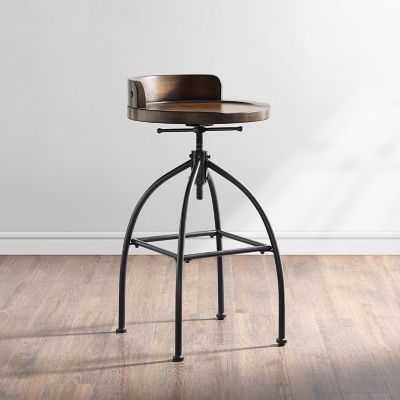
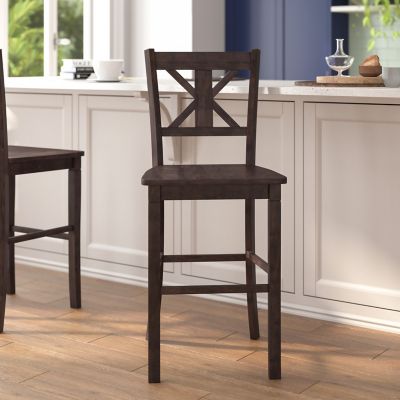
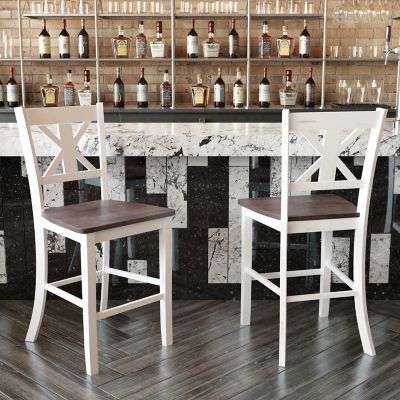
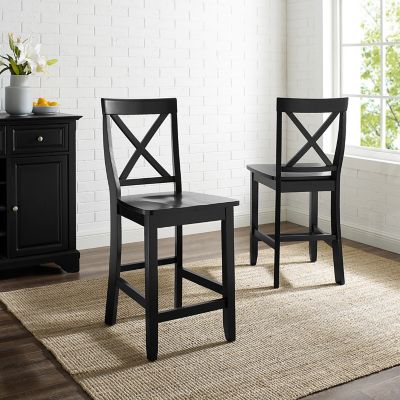
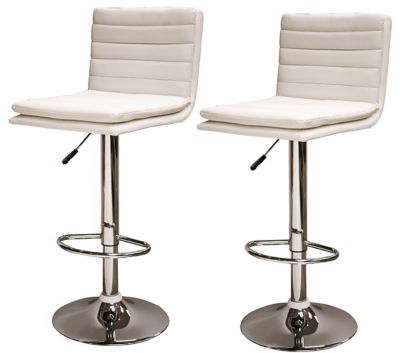
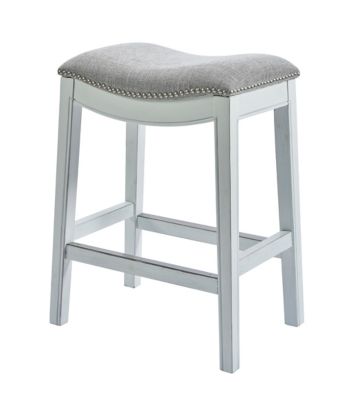
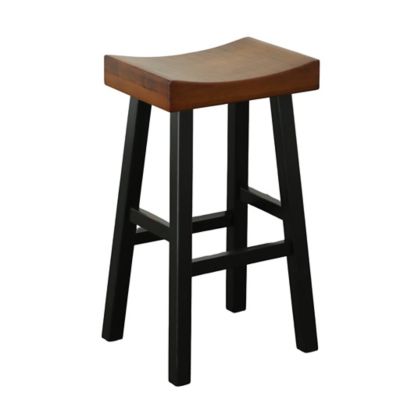
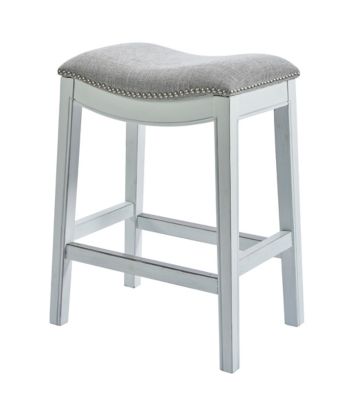
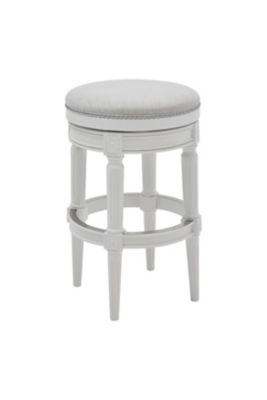
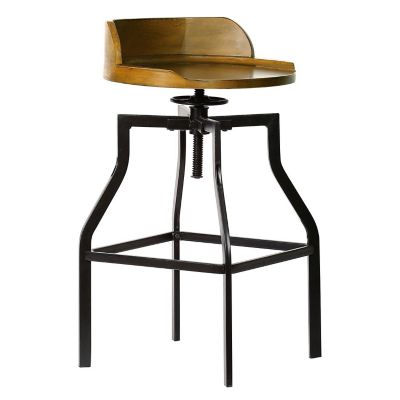
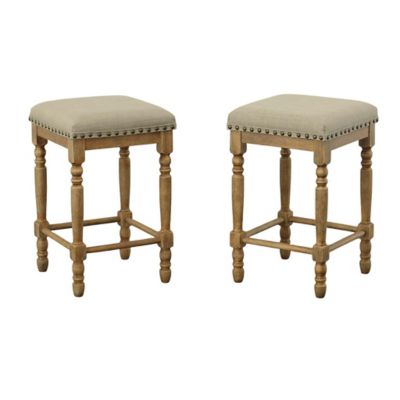
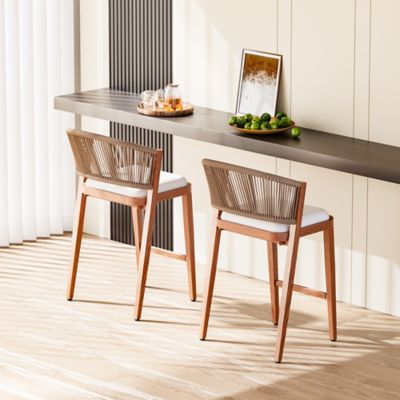
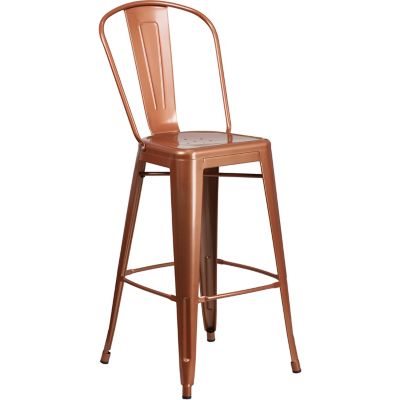
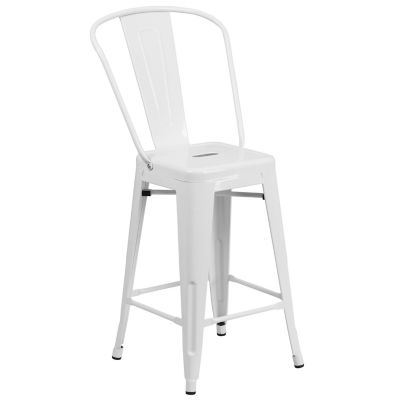
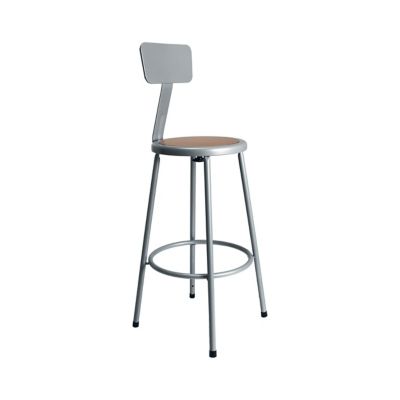
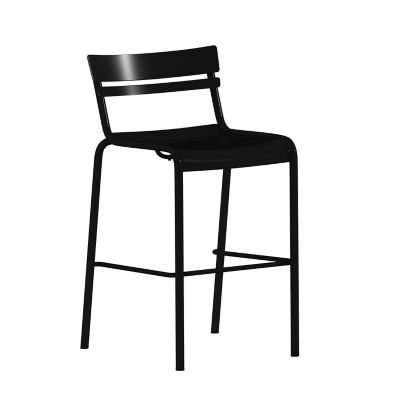
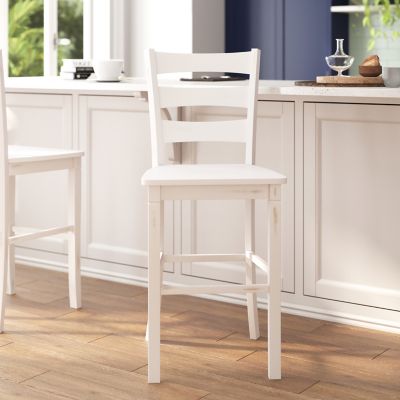
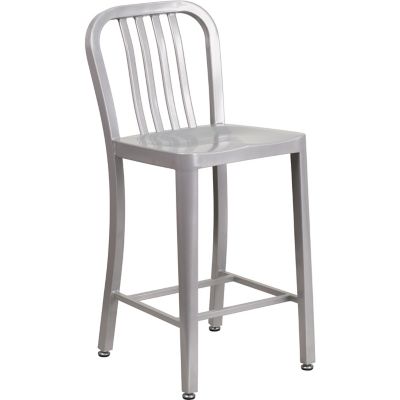
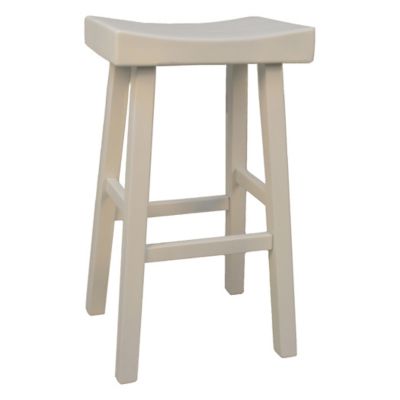
Modern farmhouse bar stools bring the warmth of country living to the clean, open feel of a modern kitchen. The look draws on familiar materials—wood grain, painted finishes, metal frames and textured fabric—without making the room feel crowded or fussy. A shaped wooden seat over slender black metal legs can sit comfortably alongside butcher-block counters, while a soft neutral cushion and a simple slatted back can balance the harder surfaces of stone countertops and stainless steel appliances. Oak often shows a pronounced grain pattern, and pine can bring visible knots and a more relaxed character; the appearance depends on the wood, finish and construction. Black metal adds contrast, while brushed metal finishes offer a quieter connection to cabinet pulls and light fixtures. Cross-back and vertical-slat designs give farmhouse seating its familiar character, but straight legs and restrained detailing keep the overall look fresh. These stools belong in the places where everyday life tends to gather: the kitchen island where someone sorts the mail, a breakfast counter with coffee cups lined up, or a raised bar that gives guests somewhere to settle while supper comes together. They work just as naturally in a farmhouse kitchen as they do in a smaller home with a country-inspired eating nook. The right finish does not have to match every cabinet and table leg. Repeating one element, such as a warm wood tone or a dark metal accent, helps the seating feel connected to the room without turning everything into a matching set. Light finishes can keep a narrow kitchen feeling open, while deeper wood tones add warmth against pale cabinetry. During the cooler months, when more visiting happens indoors, comfortable seating around the kitchen makes a practical difference. There is something inviting about a row of stools pulled up near a simmering pot, with enough room for everybody to lean in and catch up.
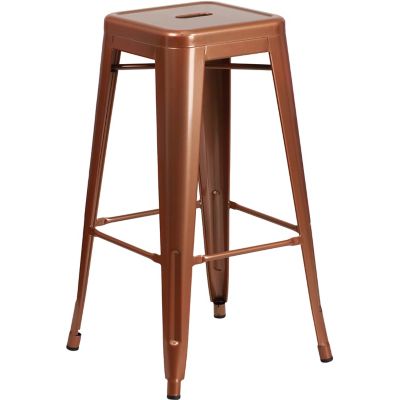
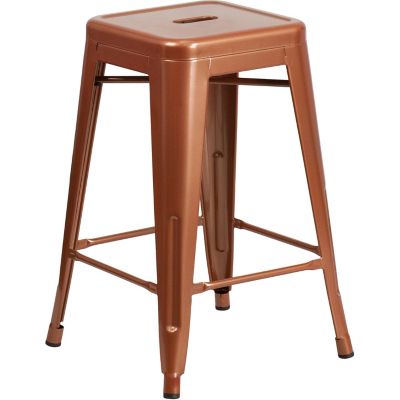
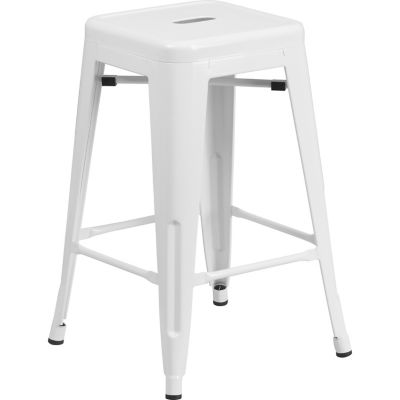
Getting the proportions right matters as much as choosing the look. Modern farmhouse bar stools and counter stools may share the same styling, but their seat heights serve different surfaces. Counter-height seats commonly measure about 24 to 26 inches from the floor and suit many kitchen counters around 36 inches tall. Bar-height seats generally fall around 28 to 32 inches and fit taller eating surfaces, often about 40 to 42 inches high. These ranges are a starting point rather than a guarantee of fit: the exact pairing should leave comfortable space for thighs and knees. Around 10 to 12 inches between the seat and the top of the counter is a common target, with extra attention to any apron, drawer or support underneath that reduces legroom. Measure the actual seating surface, not the top of the backrest, when comparing stool dimensions. For a standard kitchen island,
Farmhouse Style Counter Stools offer the same general look in a height better suited to many everyday counters. Width and spacing deserve a close look, too. Allowing roughly 24 to 30 inches from the center of one seat to the next gives a useful starting point for elbow room, though wide seats, arms and swivel movement may call for more space. A stool that fits beneath the counter can still crowd a nearby doorway once someone sits down. Consider the room with the dishwasher open, chairs occupied and somebody carrying a plate through the kitchen. Backless stools keep sightlines open and can tuck beneath an overhang when their full dimensions allow. Stools with backs provide more support for lingering over breakfast, helping with homework or visiting after a meal. Arms can add comfort, but their height needs to clear the counter if you want the stool to slide underneath. A swivel seat can make turning toward the room easier, while a stationary seat keeps the movement simpler. For either style, seat depth, backrest angle and a well-placed footrest help determine whether the stool feels comfortable beyond a quick cup of coffee.
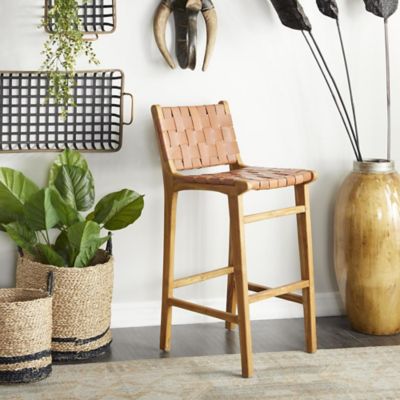
Materials and construction shape how farmhouse bar seating fits into the daily routine. A solid wood seat offers a firm feel and visible natural character, while a contoured seat can provide a more accommodating shape than a flat board. Upholstered seats add cushioning for longer stretches at the counter, but fabric content and care requirements matter in a kitchen where crumbs, splashes and sticky fingers are part of the picture. Linen and linen-blend upholstery can bring an airy texture; leather and leather-look surfaces offer a different feel, with cleaning needs that depend on the material and finish. Woven seats introduce texture as well, though their crevices may take more attention when clearing away crumbs. Follow the manufacturer's care directions rather than assuming every surface can handle the same cleaner. A cushion's thickness is only one part of comfort: its firmness, the seat's usable width and the support beneath it all play a role. For a busy household, look closely at listed weight capacity, frame connections, assembly requirements and footrest placement. Floor glides can help limit scuffs, provided they suit the flooring and stay clean, and leveling feet can help seating rest evenly where the floor is not perfectly flat. Tall stools need a stable, level spot; they are seating, not step ladders, and adult-height models are not a substitute for age-appropriate seating for little ones. Couples furnishing a first home, families replacing mismatched kitchen seating and empty nesters making an island their everyday dining spot may all appreciate the balance of comfort and straightforward style. A coordinated set can also make a thoughtful housewarming gift when the recipient's measurements and preferences are known. Whether the counter is a quick stop before morning chores or the place where company stays long after the plates are cleared, well-proportioned modern farmhouse stools help it feel like a place worth sitting down.