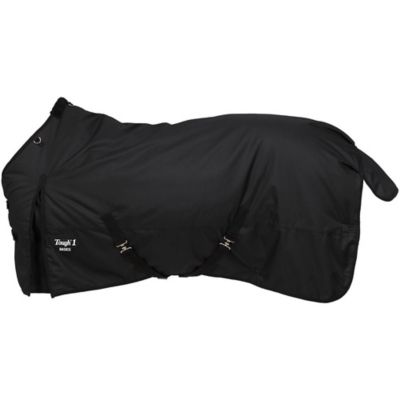
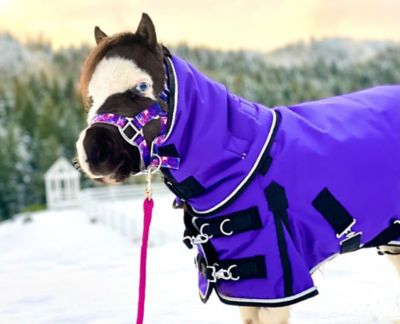
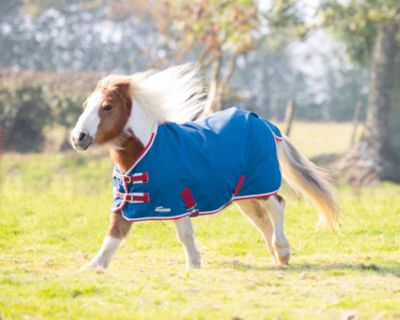
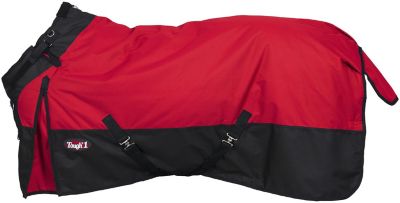
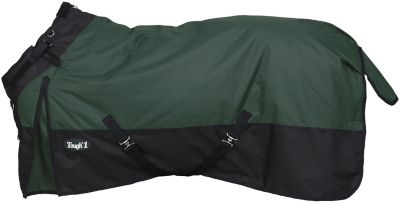
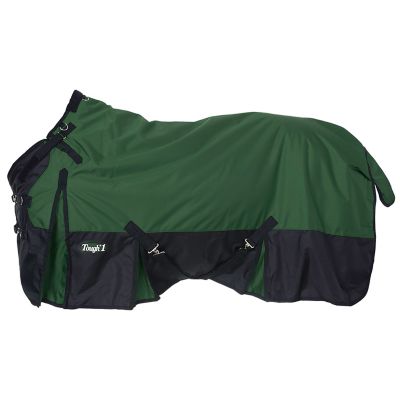
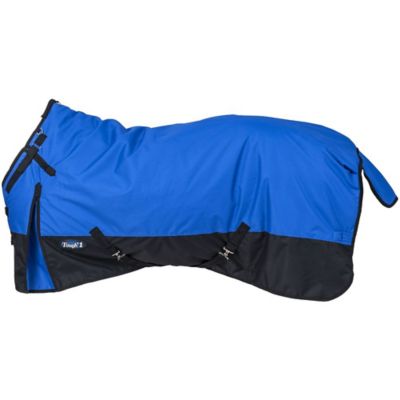
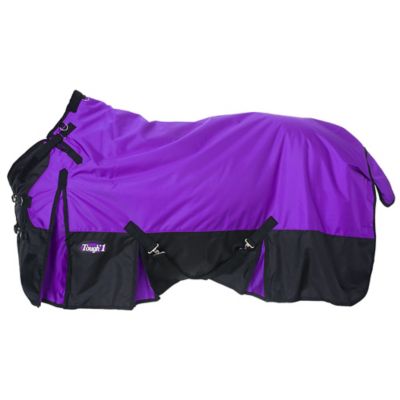
A mini black horse turnout blanket brings outdoor coverage down to the proportions of a miniature horse, with room for grazing, walking, rolling, and settling into a sheltered spot. Unlike a stable blanket, a turnout blanket is built for time outside, where the outer fabric needs to stand up to moisture, mud, and everyday pasture wear. A waterproof shell, protected seams, and breathable construction help keep outside moisture from reaching the coat while allowing body moisture to escape. Ripstop polyester is a common shell material, with reinforcing threads woven through the fabric to help limit the spread of small tears. Ratings such as 1200 denier describe the yarn’s thickness, not the blanket’s warmth or a promise that it cannot tear. Fabric construction, stitching, and hardware matter, too, especially for a mini that enjoys a good roll near the hay feeder. Inside, smooth polyester or nylon linings can slide over the coat with less friction, while insulation adds warmth. Fill ratings such as 250g and 300g refer to the insulation’s weight per square meter rather than the total weight of the finished blanket. More fill generally means more insulation within a comparable construction, but the right amount depends on the horse’s coat, body condition, clipping, shelter, and exposure to wind or wet conditions. An unclipped mini with a thick coat and good shelter may have very different needs from an older horse or one with a clipped coat. A turnout sheet offers outdoor coverage without insulating fill; a turnout blanket adds insulation beneath the shell. Black makes a straightforward match for other barn gear, but color alone does not determine warmth, waterproof protection, or comfort. For miniature horse owners, caretakers, and small equine facilities, the useful combination is an outdoor-ready shell, suitable insulation, and proportions that suit the horse beneath it. The goal is coverage that supports the animal’s needs without restricting movement or trapping more heat than the horse needs.
Fit matters just as much as fabric when choosing a miniature horse turnout blanket. A mini is not simply a full-size horse scaled down evenly, and a foal blanket does not necessarily provide the right chest, neck, or body shape. Two minis with similar heights can have different body lengths, shoulder widths, and belly depths. Blanket sizing generally follows a body measurement in inches rather than height at the withers. Many mini size ranges fall around 36 to 48 inches, though smaller and larger measurements exist, and each manufacturer’s chart should settle the choice. The usual measurement runs from the center of the chest, around the shoulder and along the side, to the rear point specified by that chart. Measuring only along the back can lead to the wrong size. Between-size recommendations also vary, so automatically choosing the larger blanket can leave too much fabric hanging below a small horse. A well-fitting blanket rests comfortably at the chest and withers, covers the barrel and hindquarters as intended, and stays balanced when the horse lowers its head to graze. Shoulder gussets give the front legs more room to reach, while an adjustable chest closure or neckline can help accommodate differences in build. Fleece or another soft material at the withers can cushion that contact point, although padding cannot make an ill-fitting blanket fit correctly. Crossed belly surcingles, leg straps, and tail cords help hold coverage in place, depending on the design. Their adjustment matters: straps hanging too low can catch a hoof, while overly tight straps can pull against the body. Secure buckles and covered fastenings are practical around mud and bedding. After the horse has walked, grazed, and rolled, a blanket that stays centered without pulling backward, twisting sideways, or pressing hard across the shoulders is doing its job. Rubbed hair, pressure marks, and repeated shifting call for a closer look at fit rather than simply tightening every strap.
Everyday care helps a black mini turnout blanket keep doing its job through wet paddocks, muddy gates, and regular barn chores. Dried mud can often be brushed from the shell before it works into folds and fastenings, and hair caught along the lining or chest should be cleared away regularly. Daily removal gives a caretaker a chance to check the horse’s skin, coat, body condition, and comfort beneath the coverage. A dry outer surface does not tell the whole story, and a damp coat underneath can come from sweat as well as water getting through. Feeling beneath the blanket at the shoulder and chest helps reveal excess heat or moisture; sweating, persistent shivering, rubbing, or changes in behavior deserve attention. Horses with ongoing trouble maintaining body condition or comfort may need a veterinarian’s input alongside changes in blanketing. For washing, the care label takes priority because hot water, harsh detergents, bleach, fabric softeners, and high dryer heat can harm certain coatings, fabrics, or hardware. A blanket-safe wash and thorough air-drying are common care needs, with any waterproofing treatment chosen to suit the original material. Small tears, loose stitching, bent buckles, and worn straps are easier to address before they become bigger problems out in the field. Breathability does not mean a blanket will dry properly while folded in a tack trunk, so complete drying before storage matters. A clean, dry storage spot away from rodents also helps protect fabric and straps between stretches of wear. The
Horse Blankets and Turnout Sheets Guide offers more background on blanket types, sizing, and coverage. For a mini’s daily routine, the best match is not simply the heaviest blanket or the toughest-looking shell. It is coverage that fits the individual horse, suits its turnout conditions, and can be kept clean and in good repair. Paired with shelter, suitable forage, and regular hands-on checks, a well-chosen turnout blanket can be a practical part of caring for a miniature horse.