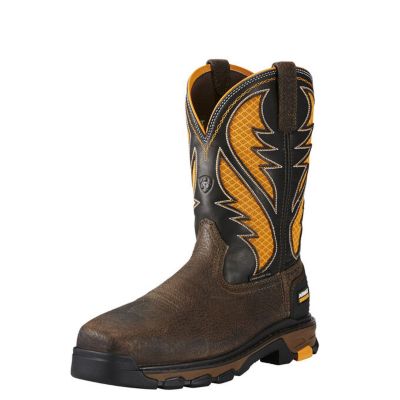
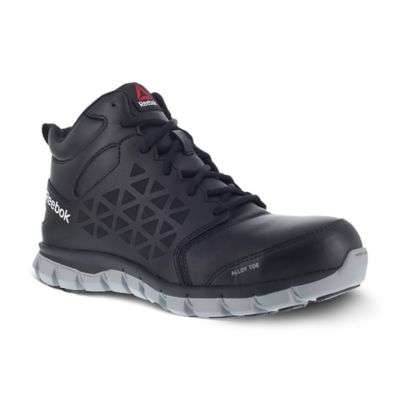
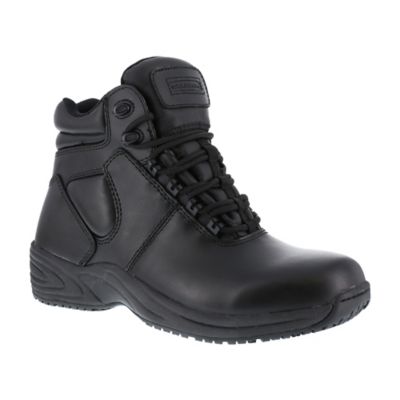
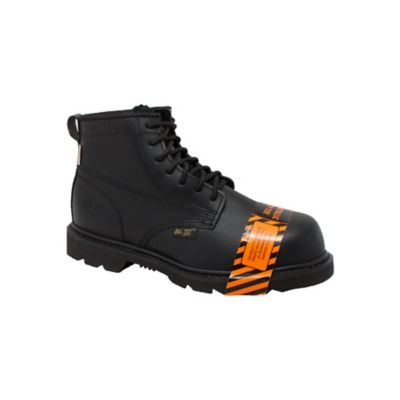
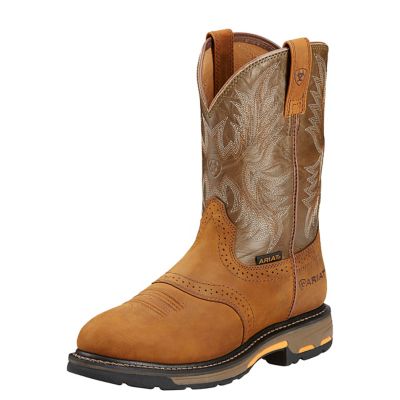
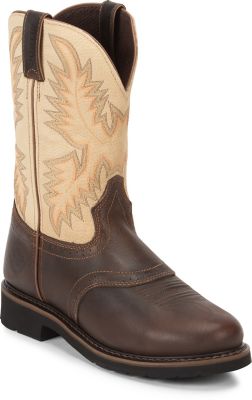
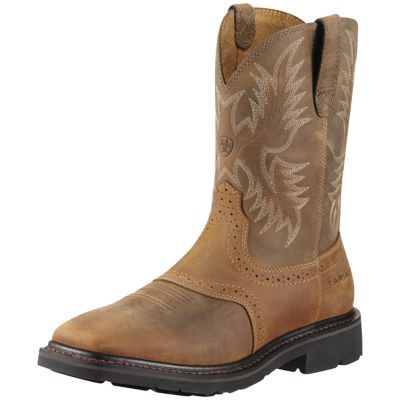
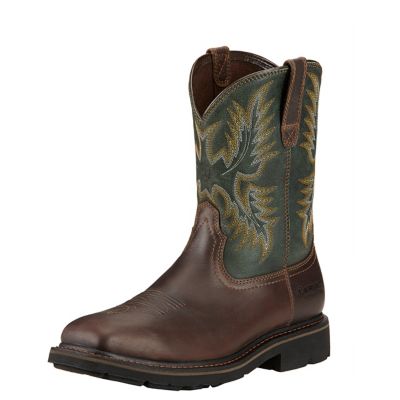
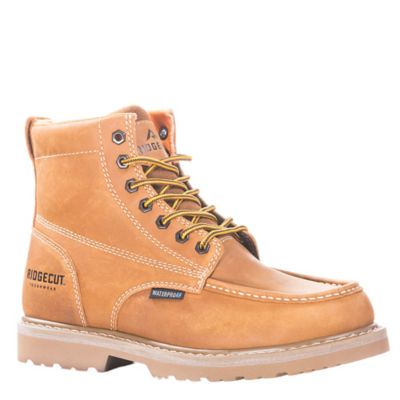
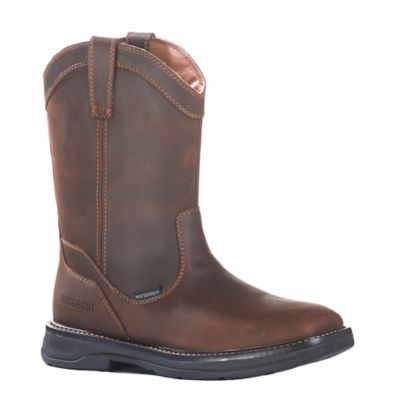
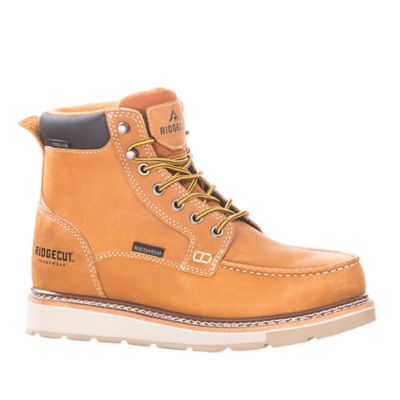
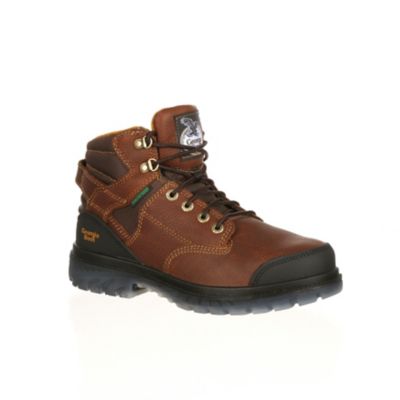
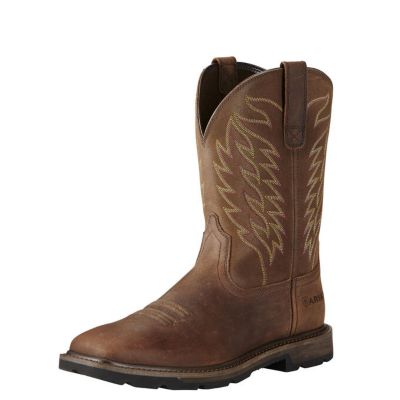
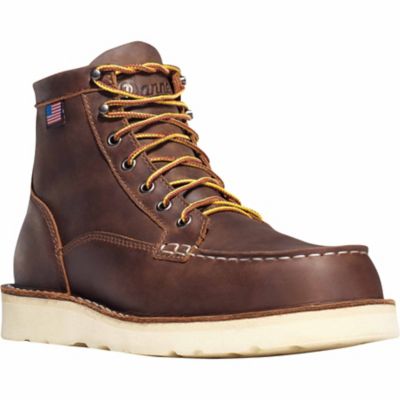
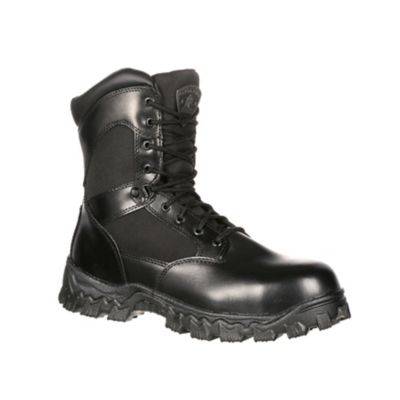
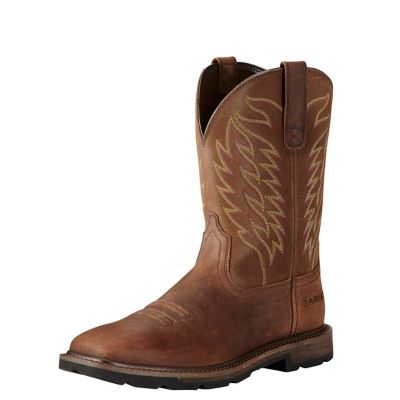
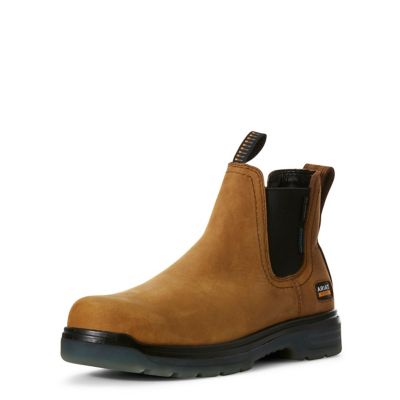
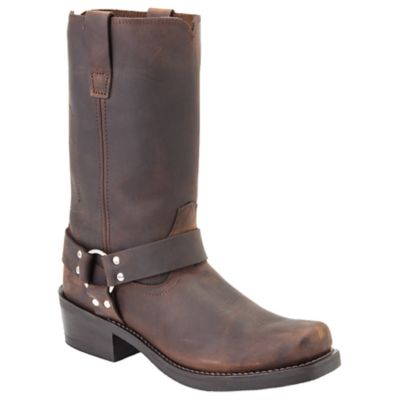
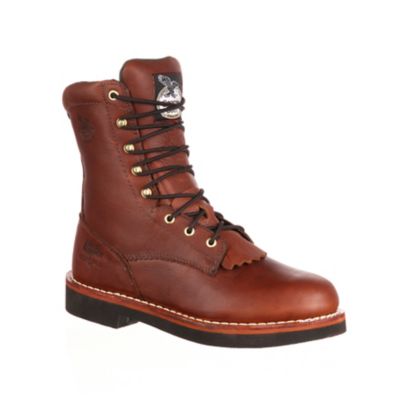
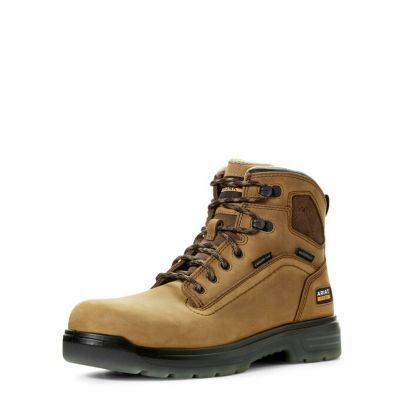
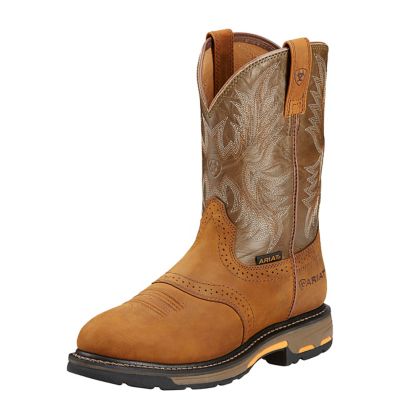
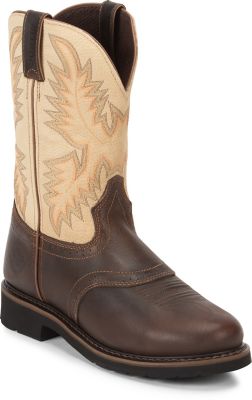
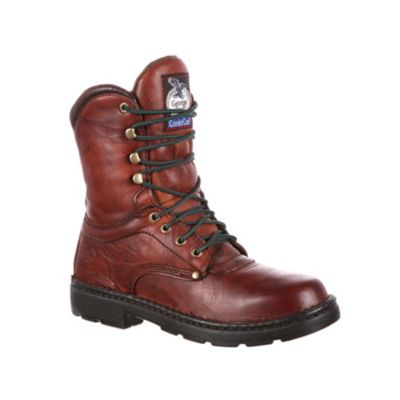
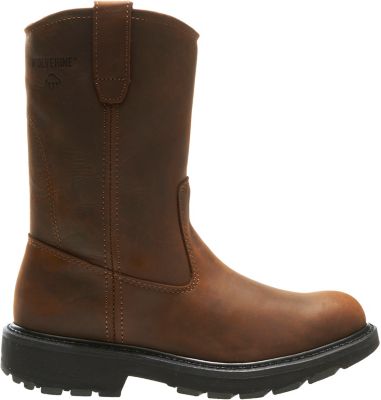
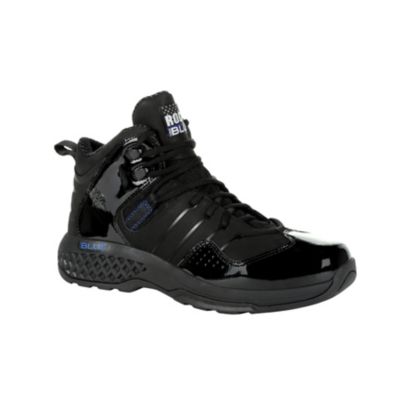
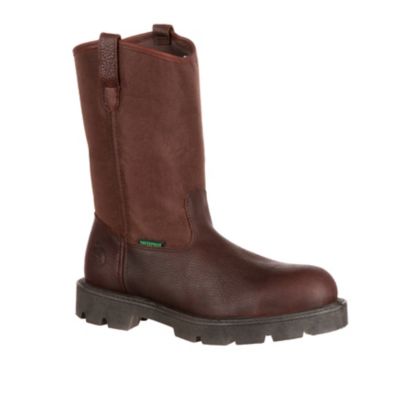
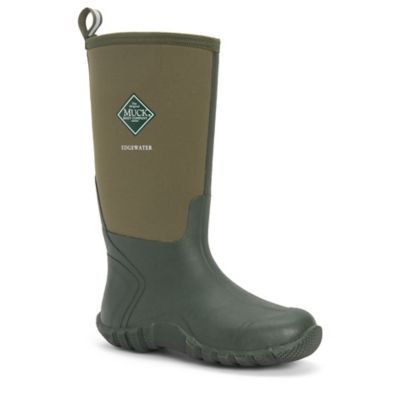
Men’s slip resistant work boots are built for long days on floors, gravel, packed soil, concrete, and other surfaces where steady footing matters. They can be a practical choice for farm work, ranch chores, warehouse shifts, restaurant kitchens, delivery routes, construction sites, landscaping, maintenance jobs, and many other hands-on occupations. A slip-resistant outsole is designed to help grip slick or oily ground, while a deep tread can add traction when the work area turns wet, muddy, or uneven. Look closely at the outsole material and tread pattern, since some pairs are made with conditions such as oil, grease, water, or loose soil in mind. A boot that feels right on a dry shop floor may not offer the same support on wet grass or a muddy barn walkway. Fit matters just as much as tread. Your heel should stay planted without lifting, your toes should have room to spread, and the boot should hold your foot securely without pinching across the instep. Try them on with the socks you normally wear for work, especially thicker wool or moisture-wicking socks during the cooler months. A little room can help when feet swell through a long shift, but too much space may let your foot slide inside the boot and make every step less steady. Look for cushioned footbeds, supportive midsoles, and padded collars when you spend hours standing or walking. Removable insoles can make it easier to add an insert that suits your arch or helps relieve pressure under the heel and ball of the foot. Wide-width options may be helpful for men who need extra room across the forefoot, while a roomy toe box lets toes move naturally without rubbing.
Safety features should match the job rather than simply adding to the list of specifications. Steel-toe boots are a familiar choice for work around heavy equipment, materials, tools, and livestock, while composite toes can offer protection without the feel of metal and may be useful in settings where temperature transfer is a concern. Soft-toe boots may fit lighter-duty tasks where a safety toe is not required. Always check workplace rules before choosing, and look for the safety markings that apply to the hazards in your work area. Electrical hazard protection may be important for certain trades, but it does not replace safe work practices or make a boot suitable for every electrical task. Waterproof construction, sealed seams, and a gusseted tongue can help keep rain, puddles, and wet grass from soaking through, while breathable linings may help manage heat when the day stretches on. Leather uppers can offer a structured feel and may soften with regular wear, while synthetic materials can be easier to wipe clean after a messy shift. Check the care instructions before applying any conditioner or treatment, as the wrong product may affect the finish or breathability. Pull-on boots can save time when heading out for an early chore, and lace-up styles allow more adjustment around the ankle and calf. A heel that locks in place, a shank that supports the middle of the foot, and a sole that flexes where your foot naturally bends can all make a difference when climbing steps, walking across a yard, or standing at a workbench. Break boots in gradually with shorter walks before taking them into a full shift. Keep an extra pair of socks handy, and let boots dry fully between wears if they get wet. Stuffing damp boots with plain paper can help draw out moisture, but place them away from direct heat, which may dry leather too quickly or weaken adhesives.
These boots also make a thoughtful gift for a father, husband, son, brother, ranch hand, mechanic, groundskeeper, or friend who spends more time working on his feet than sitting behind a desk. They can be especially handy for someone starting a new job, preparing for a season of outdoor chores, or replacing a pair that has lost its tread. If you are buying for someone else, pay close attention to size, width, toe protection, and the kind of ground he covers each day. A gift receipt or easy exchange option is helpful because boots need to match the wearer’s foot shape, sock choice, and work requirements. For lighter indoor duties, compare these boots with
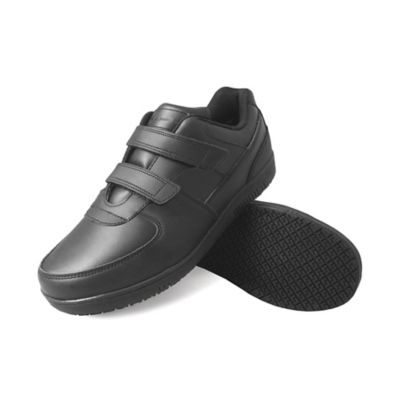
Men's Non Slip Work Shoes, which may feel more flexible for kitchens, service counters, packing areas, and other places where a lower shoe is preferred. For outdoor jobs, consider the height of the boot and whether ankle coverage will help with brush, mud, cold air, or loose debris. During the cooler months, insulated linings and room for thicker socks may be welcome, but make sure the fit does not become cramped. As the weather shifts between rain, frost, and clear days, a pair with practical traction and a comfortable interior can move easily from the truck to the barn, shop, jobsite, or back porch. Keep the tread clear of packed mud, rinse away salt or manure when needed, and allow the boots to air out after a long day. Paying attention to fit, traction, protection, weather needs, and care can help you narrow the selection to a pair that feels steady from the first morning chore through the final walk back home.