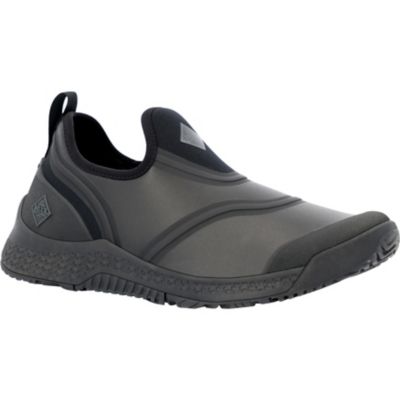
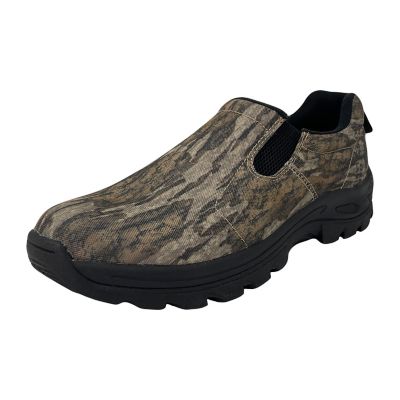
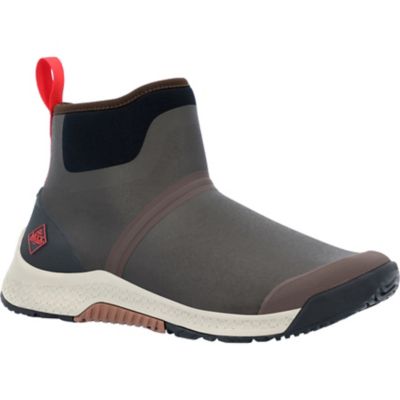
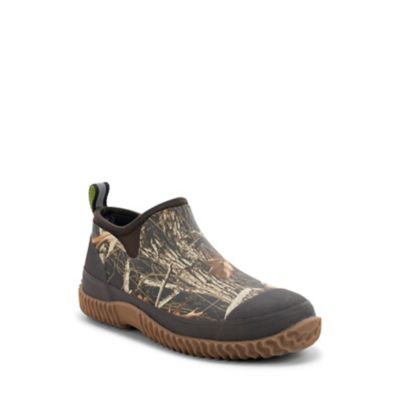
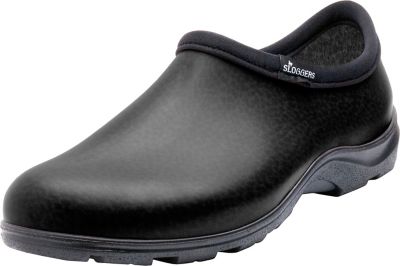
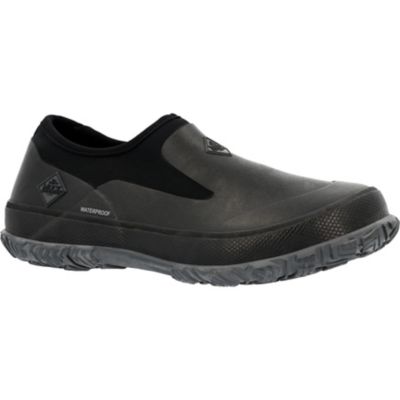
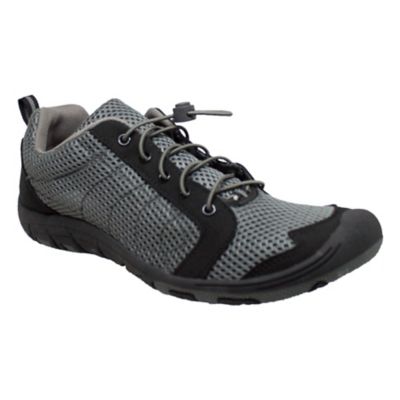
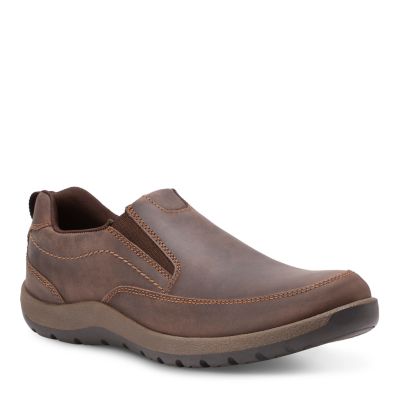
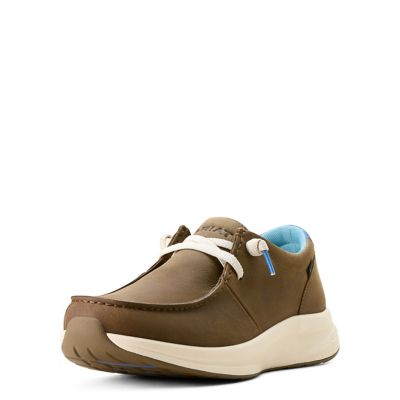
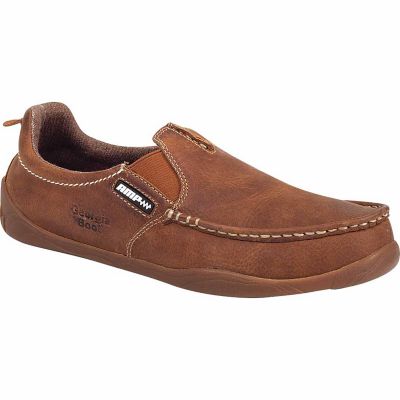
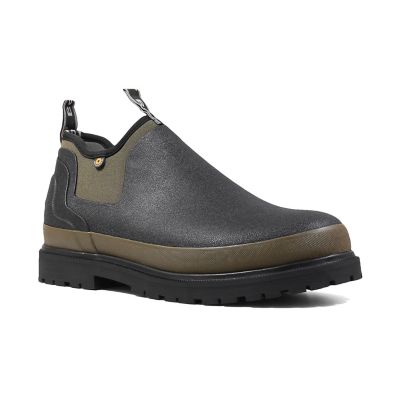
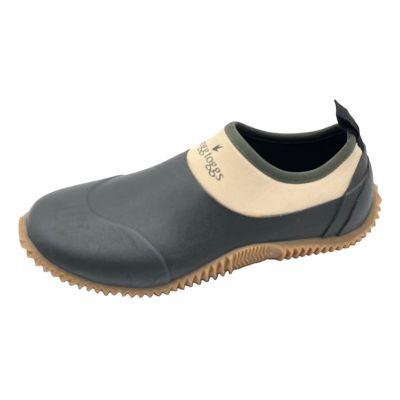
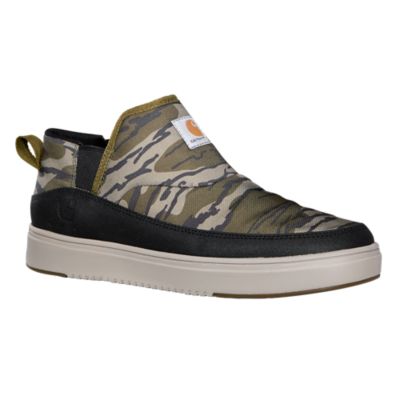
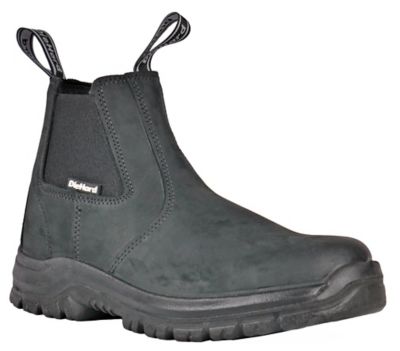
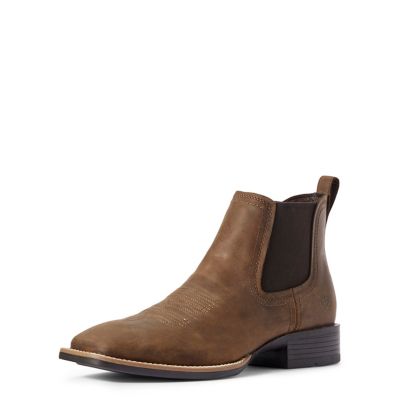
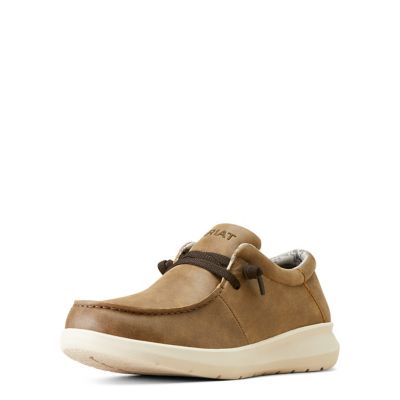
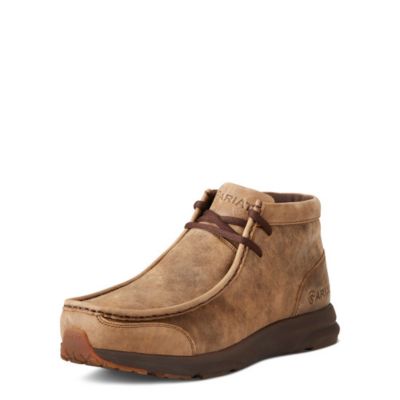
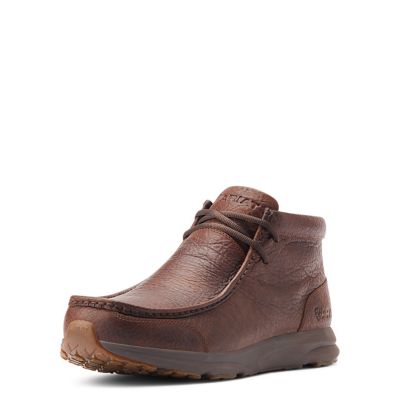
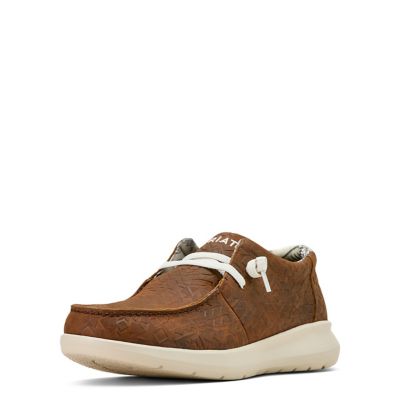
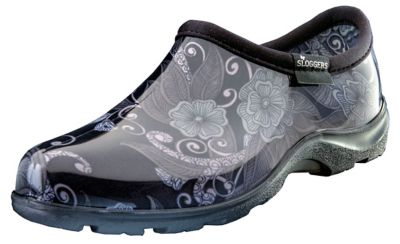
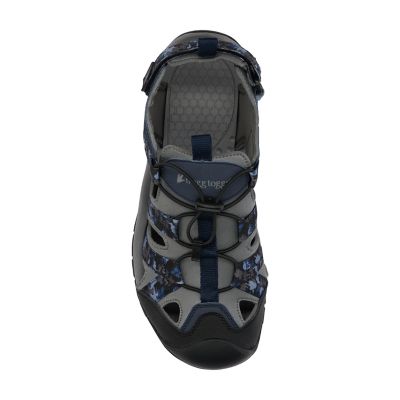
Men's outdoor slip-on shoes pair lace-free convenience with soles built for time beyond the front door, whether that means walking a gravel drive, checking the garden or heading to the feed store. The category covers several kinds of footwear, from leather casual shoes with elastic side panels to flexible chore shoes and cushioned camp styles. Their shared appeal is straightforward: easy entry without stopping to tie laces, along with enough structure for the activities each pair is designed to handle. Leather uppers offer a substantial feel and can soften with wear, while nubuck and suede have a brushed surface that calls for different cleaning methods than smooth leather. Fabric and mesh uppers generally offer a lighter feel and more airflow, although an open weave alone does not keep water out. Rubber and neoprene constructions can make sense around garden beds, muddy paths and wash areas, depending on how the shoe is built. Water-resistant and waterproof are not interchangeable descriptions. Water-resistant materials offer limited protection from moisture, while waterproof footwear relies on its materials and construction to block water from passing through. A low opening can still let water enter from above, so shoe height matters alongside the upper. Elastic gores, stretch collars and pull tabs also affect how a slip-on feels getting on and off. A broad opening may be handy by the back door, while a closer-fitting collar can help hold the foot in place during longer walks. For someone moving between a porch, a workshop and a truck throughout the day, that balance between easy entry and secure footing matters more than appearance alone. Smooth leather, textured uppers and simple moc-toe shapes also offer different looks without changing the basic convenience of the design. The right match depends on the ground underfoot, the length of the outing and whether the main job is light chores, casual walking or relaxing around camp.
Fit deserves particular attention in men's outdoor slip-on shoes because there are no laces to tighten when extra hold is needed. A well-fitting pair gives the toes room to spread without letting the foot slide forward or shift from side to side. The heel should feel held rather than clamped, and the upper should not press hard across the top of the foot. Small differences in instep height, width and collar shape can make two shoes in the same labeled size feel quite different. Socks matter, too: a pair that fits with thin everyday socks may feel cramped with thicker work socks. Elastic panels can ease entry, but they should not be expected to correct a poor overall fit. Underfoot, cushioning helps soften each step, while the shape and firmness of the footbed influence how supported the foot feels during a long stretch of standing. Removable insoles can be helpful for airing out footwear or accommodating a suitable replacement insert, provided enough room remains inside the shoe. The outsole deserves just as much attention as the footbed. Deeper, more widely spaced tread can help on loose dirt and gravel, while shallower patterns may carry less soil onto a porch or into a vehicle. Rubber compounds, tread design and the surface being crossed all affect traction; an outdoor-looking sole is not a promise of grip on every surface. Mud packed between the lugs can also change how a shoe handles the ground. A defined heel and a stable platform may feel more planted during light chores, while a flexible sole can feel easier for casual walking. Neither feature makes a low-cut slip-on a substitute for task-specific work footwear. Jobs involving heavy equipment, falling objects, ladders or other hazards may call for protective toes, particular traction ratings or additional coverage. For everyday wear, the goal is simpler: a shoe that stays with the foot, bends comfortably through a stride and suits the places it will go.
Construction and care play a big part in how outdoor slip-on shoes hold up to repeated wear. Reinforcement around the toe and heel can help protect areas that brush against steps, gravel and garden edging, while sound stitching and a firmly attached outsole support the shoe through regular flexing. A pull tab is useful for easing the heel into place without crushing the back of the shoe. Taking a moment to pull footwear on properly can spare the collar from being folded under day after day. Cleaning needs vary by material, so care directions are worth keeping with the shoes. Loose soil can usually be brushed from the outsole before it gets tracked indoors, and many smooth surfaces can be wiped with a damp cloth when the maker's directions allow it. Suede and nubuck need tools and treatments suited to their nap; soaking or scrubbing them like rubber can change their appearance. Leather conditioners and protective treatments also need to match the material rather than being applied across every pair. Footwear that gets damp during chores benefits from drying in a ventilated spot away from direct heat, which can affect leather, adhesives and other components. Removable footbeds can be taken out for drying when care directions permit, and storing shoes without heavy gear piled on top helps preserve their shape. For someone whose routine leans more toward porch sitting, short trips across the yard and lounging inside,
Men's Indoor Outdoor Slippers offer a related option with a softer, lounge-focused feel; sole construction still determines where a pair belongs. Outdoor slip-ons can also make a practical gift for a dad, husband, brother or friend who appreciates footwear that is easy to reach for. Knowing the recipient's usual size, width, sock preference and daily routine helps narrow the choice. From a pair kept beside the back door to everyday shoes for errands, comfort and usefulness come from matching the construction to the way they will be worn.