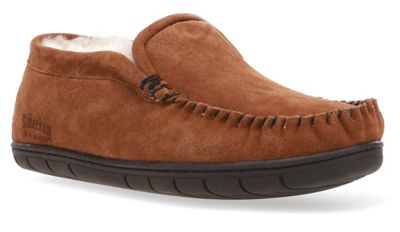
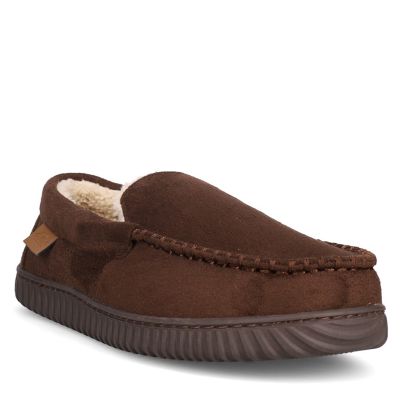
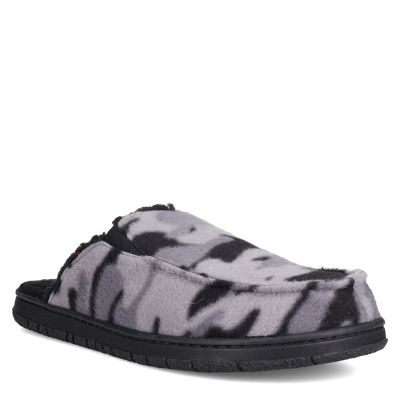
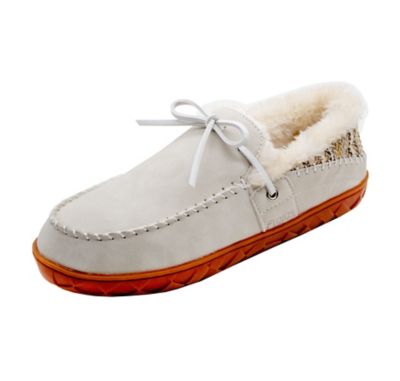
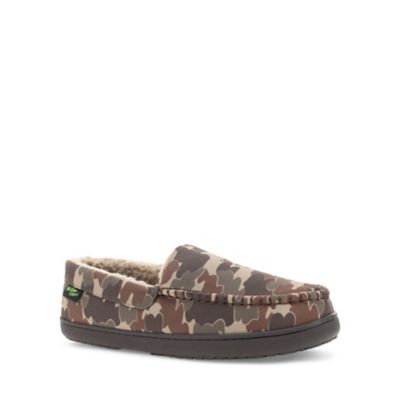
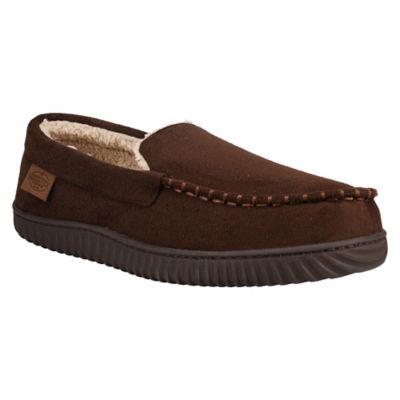
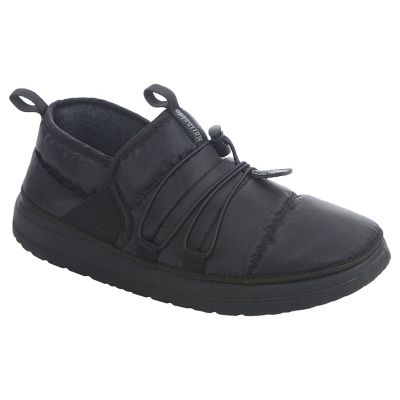
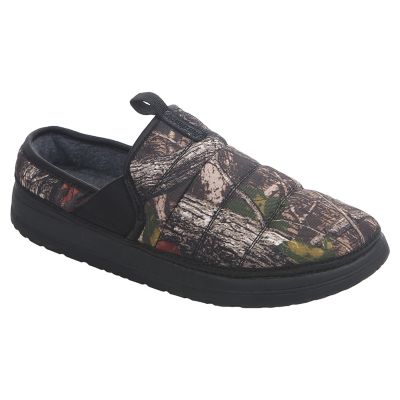
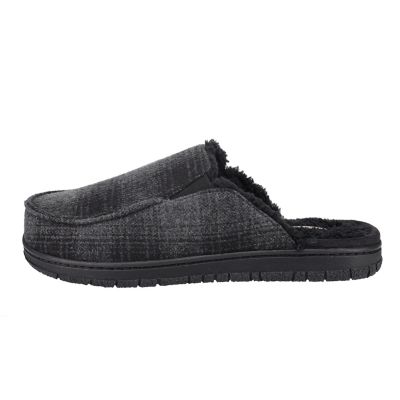
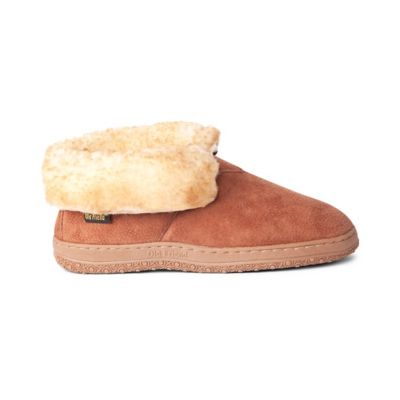
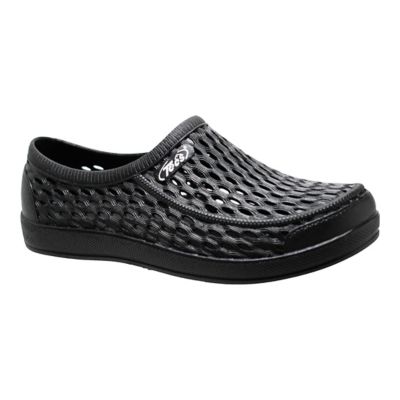
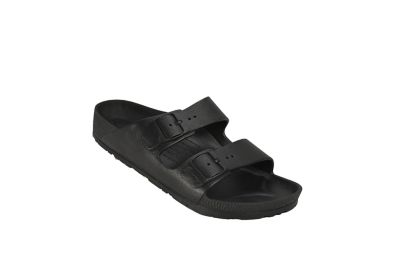
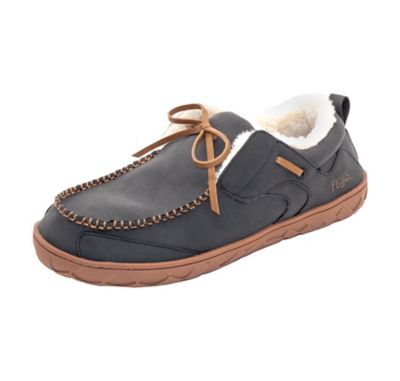
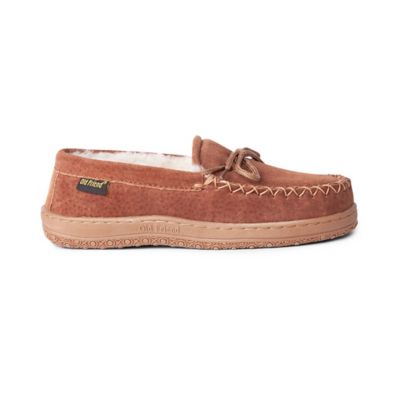
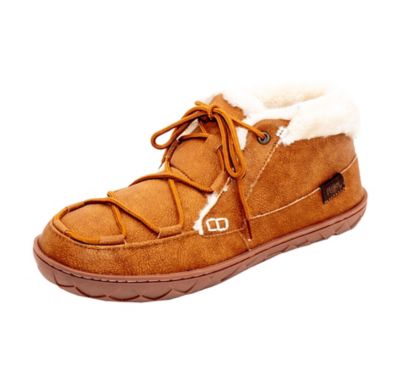
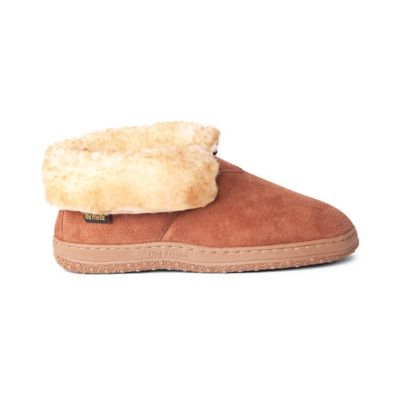
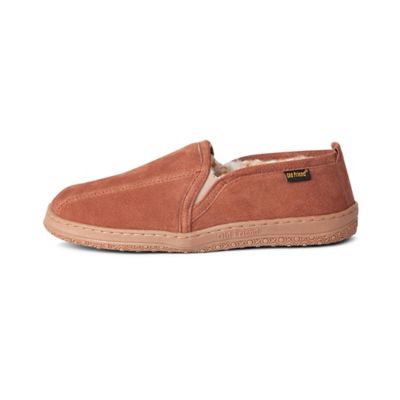
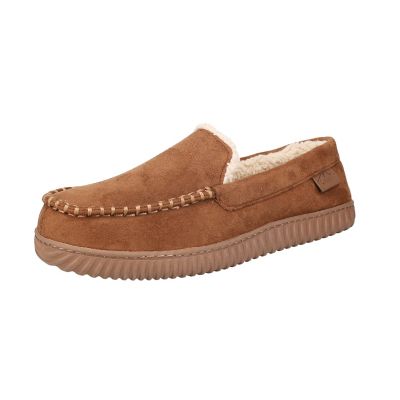
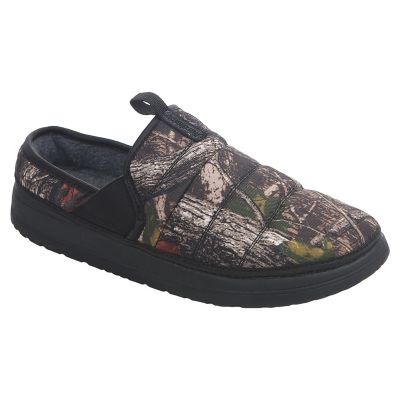
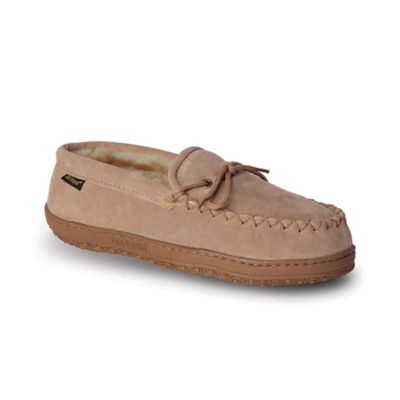
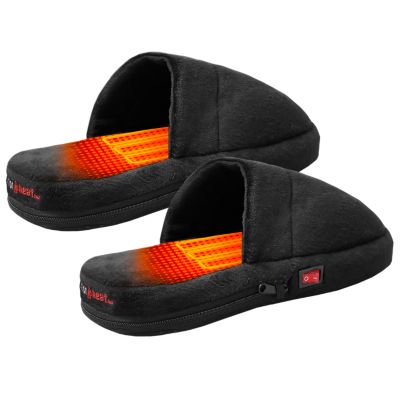
Men’s indoor-outdoor slippers combine the soft feel of a house shoe with an outsole built for short trips beyond the doorway. Rubber or composite soles help separate the foot from the ground, while cushioned interiors make the same pair comfortable for time spent inside. They’re a practical choice for taking a cup of coffee onto the porch, collecting a package from the front step or walking out to the mailbox along a paved drive. The key difference from a soft-bottom house slipper is the sole: an indoor-outdoor design generally has a firmer base and a textured tread rather than a fabric bottom meant strictly for indoor floors. That extra structure matters when moving between the kitchen, garage and back steps, though it doesn’t turn a slipper into a work shoe. Long walks, ladder work, livestock handling and jobs around heavy equipment call for footwear suited to those tasks. Within their everyday role, these slippers come in several familiar shapes, including moccasin-style designs, open-back clogs and pairs with enclosed heels. Upper materials influence both feel and upkeep. Knit and woven fabrics can offer flexibility, while leather and suede give the upper more body and may become more supple with wear. Fleece, wool-blend and other fabric linings provide different textures against the foot, so a smooth interior may appeal to one wearer while another prefers a plush feel. Cushioning also varies, from a thin padded layer to thicker foam that compresses beneath the heel and forefoot. A substantial sole can help keep small bits of gravel from pressing directly against the foot, but sole thickness alone doesn’t determine comfort. Flexibility at the forefoot, the shape of the footbed and the way the upper holds the foot all work together. For someone who moves between a recliner, the kitchen counter and a porch chair throughout the day, that balance can matter more than an extra-thick lining. The most useful pair feels like a slipper inside without feeling flimsy during a brief step outdoors.
Fit deserves just as much attention as softness, especially when a slipper will cross a doorstep several times a day. A comfortable fit leaves room for the toes to rest naturally without letting the foot slide forward with every step. Pressure across the instep, toes touching the front or a heel sitting on the back edge can make an otherwise inviting slipper awkward to wear. A loose fit has its own drawbacks: if the toes have to grip to keep the slipper in place, walking can feel less natural. Open-back shapes make quick changes easy, while an enclosed heel provides more coverage around the back of the foot. Easy-entry styles such as
men's slip-on house slippers can be especially handy beside the door for a quick trip to bring in the mail. The right shape depends on the wearer’s routine, not just appearance. Someone who spends much of the evening seated may like a flexible, lightweight feel; someone who stands at the counter preparing supper may prefer a more structured footbed with cushioning under the heel. A raised edge around the footbed or a defined heel cup can also change how securely the foot sits. Socks are another part of the fit. A pair that feels roomy on bare feet can fit differently with thick socks, and a plush lining takes up space inside the upper. Sizing information matters because slipper shapes and width options differ, and a familiar shoe size is a starting point rather than a promise of the same fit. Any adjustable closure should settle comfortably without pulling the upper tight across the foot. For a gift, knowing whether the recipient wears socks around the house, favors an open heel or prefers full coverage is often more helpful than guessing based on looks alone. An easygoing style that matches his daily habits is more likely to earn a regular spot by the door.
Care helps preserve the features that make indoor-outdoor slippers comfortable in the first place. The upper, lining, footbed and outsole may each need different treatment, so the care label should determine whether a pair can go through a washing machine or needs spot cleaning. Machine washing isn’t suitable for every fabric slipper, and leather or suede generally needs a material-specific approach. A soft brush can lift loose dirt from suede, while a cloth can remove surface dust from many smooth uppers before it settles into seams. Any cleaner should suit the material and finish rather than simply being whatever is sitting beside the sink. Removable footbeds, when the construction includes them, make it easier to reach crumbs and lint inside. Letting the interior air out between wears also helps keep the lining fresh. After cleaning, slippers need time to dry fully before going back on; direct heat can affect foam, adhesives and some upper materials. The outsole deserves attention, too. Grit caught in the tread can travel from the porch onto hardwood or tile, so brushing away loose debris at the threshold helps keep indoor floors cleaner. Traction depends on the tread, the surface and what’s on that surface, and no slipper sole makes every floor safe from slipping. Over time, flattened cushioning, worn tread, loose stitching or separation where the upper meets the sole can signal that a pair is no longer doing its job as well. Keeping indoor-outdoor slippers for light everyday wear, rather than stretching them into chore footwear, helps limit unnecessary strain on their construction. That straightforward purpose also makes them a thoughtful gift for dads, granddads, brothers or anyone who appreciates comfortable footwear around the house. Familiar details—a preferred lining texture, enough room through the forefoot and a heel shape that stays put—can make the gift feel well chosen. For everyday wear, the appeal is simple: something comfortable to pull on at home, with enough sole underneath for the small trips that happen between the couch and the front gate.