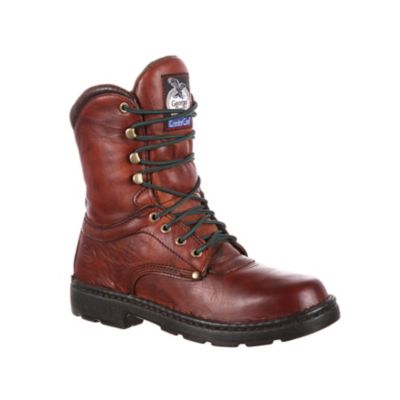
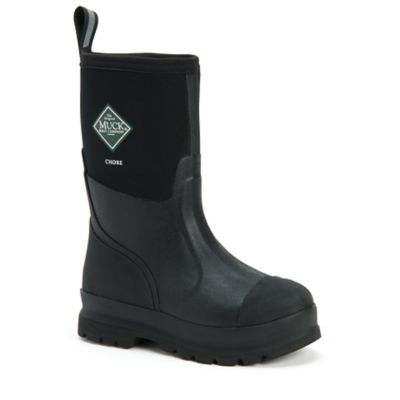
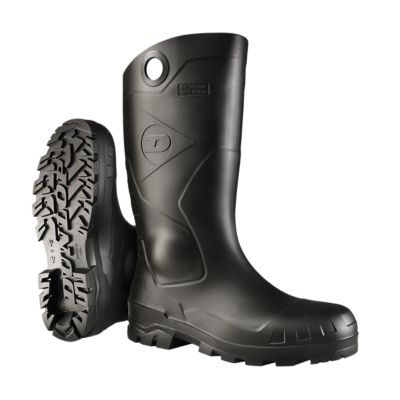
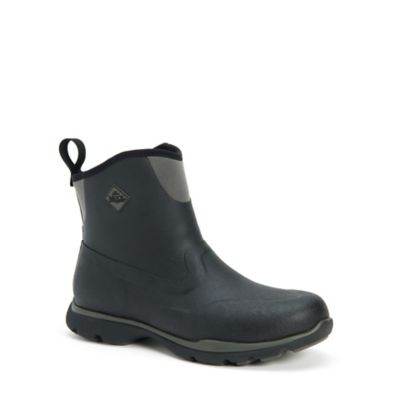
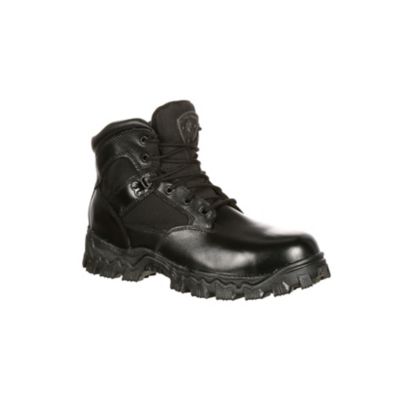
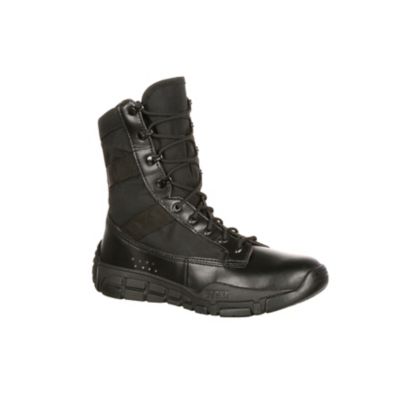
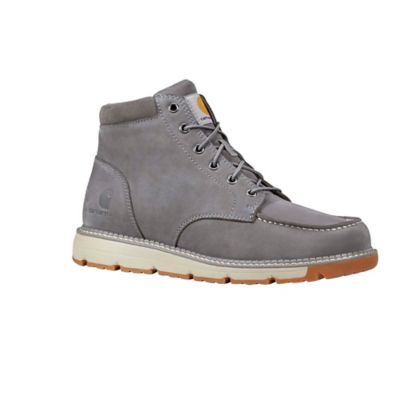
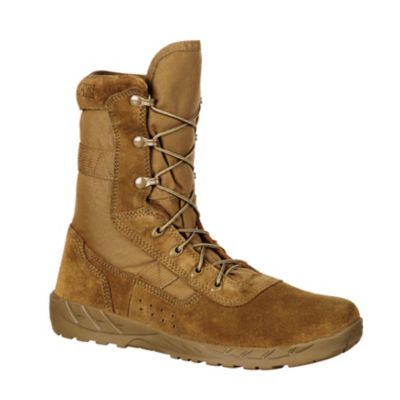
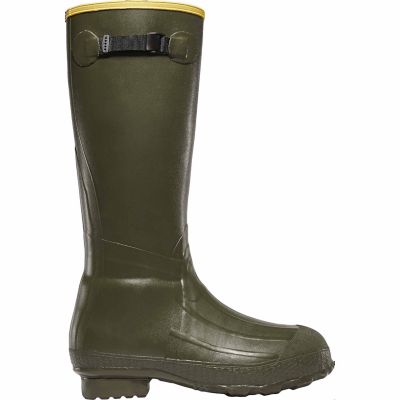
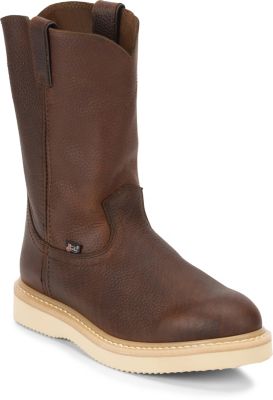
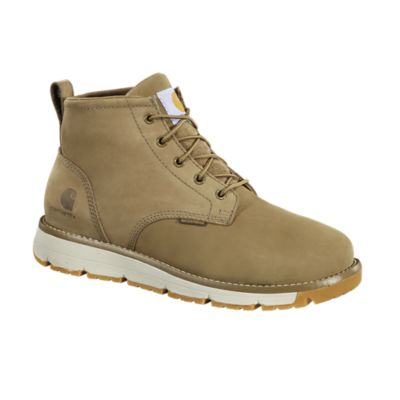
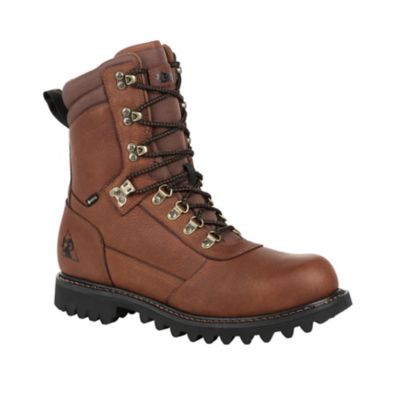
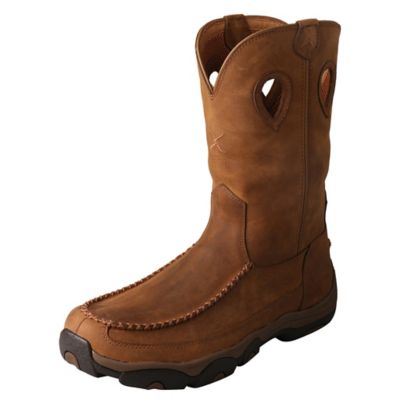
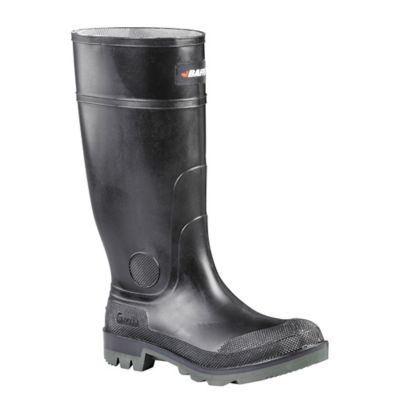
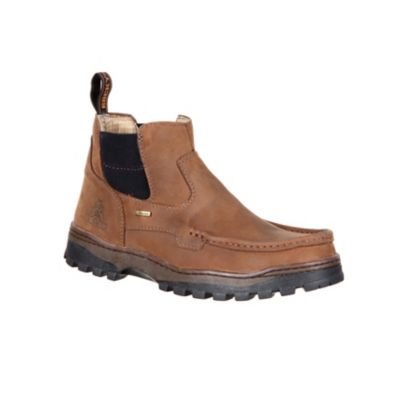
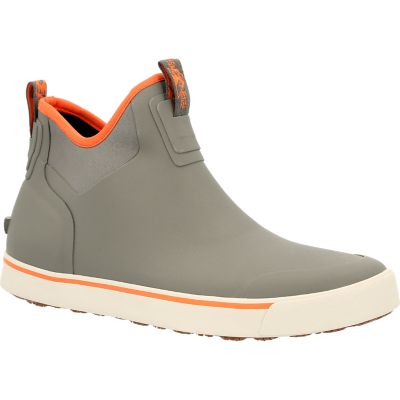
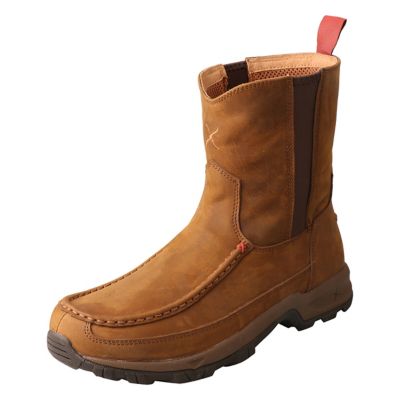
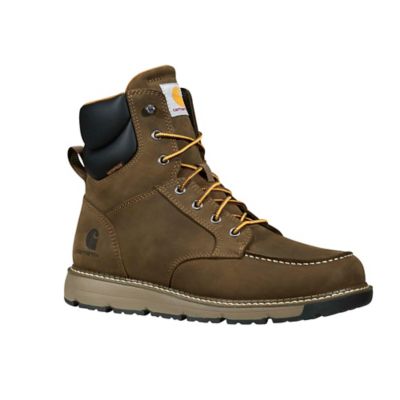
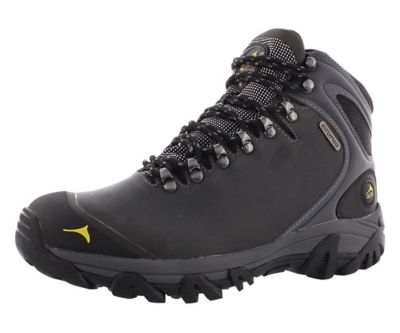
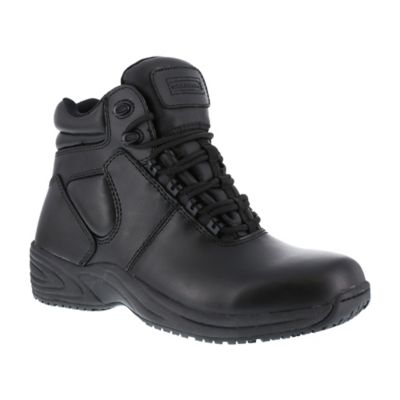
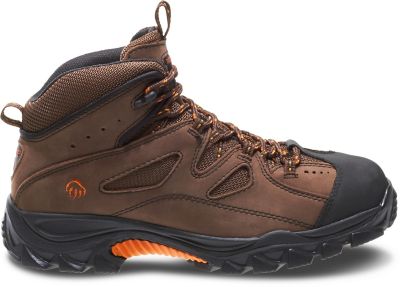
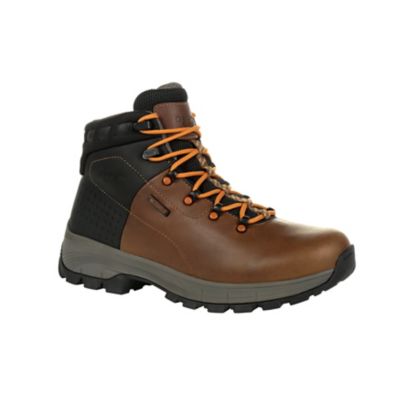
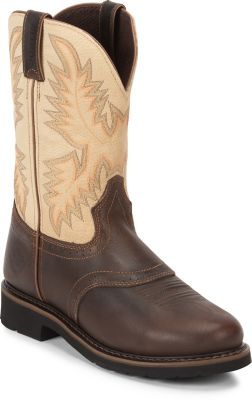
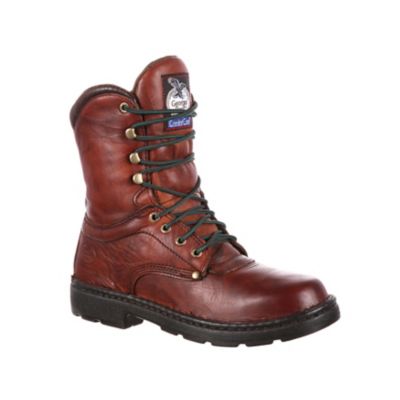
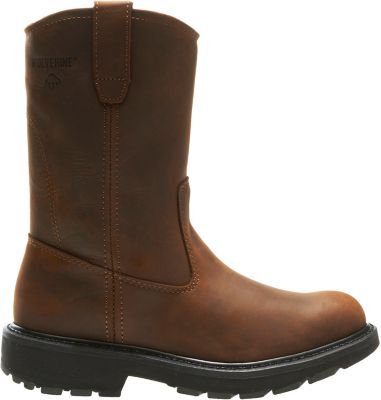
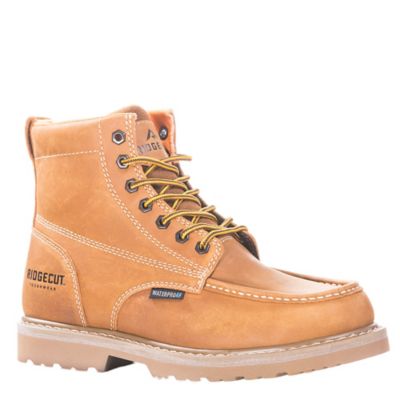
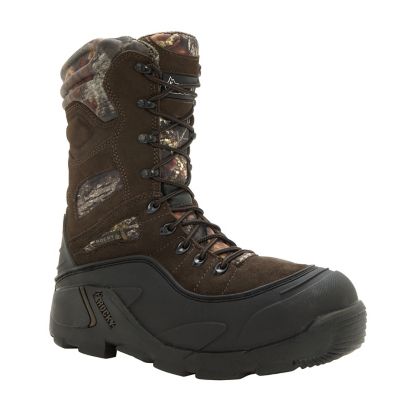
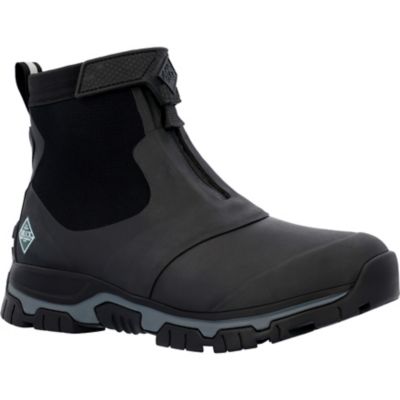
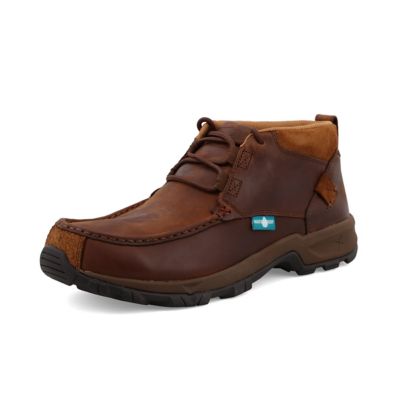
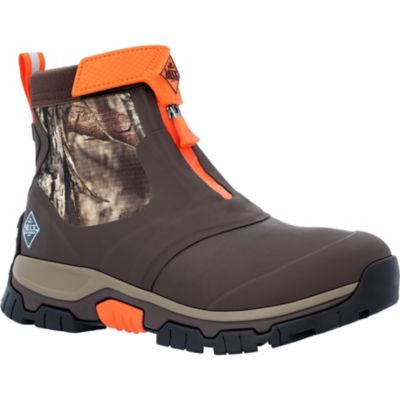
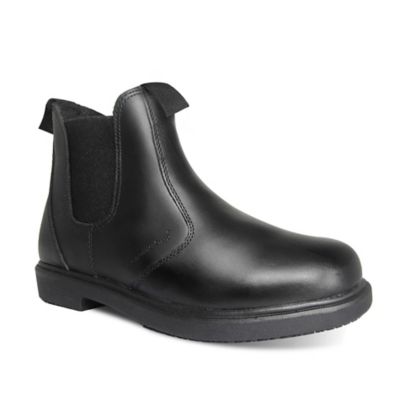
Men's lightweight walking boots combine the coverage of a boot with a less cumbersome feel for everyday walks, maintained trails, and miles along gravel lanes. They suit men who want more coverage than a low-cut walking shoe without stepping into a heavy backpacking or work boot. That balance comes from the whole build: the upper, cushioning, outsole, and hardware all contribute to how a pair feels underfoot. Mesh and woven synthetic uppers tend to flex readily and allow airflow, while leather panels add structure and help resist scuffs where a boot brushes against rocks or rough ground. Full-leather options generally feel more substantial, though thickness and construction matter as much as the material name. Reinforced toes and heel overlays put extra material in places that take regular knocks. Underfoot, foam midsoles cushion each step, and rubber outsoles provide a walking surface that can handle contact with gravel, roots, and pavement. Deeper, widely spaced tread can find purchase on loose ground and release packed dirt more readily, while a shallower pattern often feels smoother along sidewalks and firm paths. Traction still depends on the surface, tread condition, and rubber compound; an aggressive-looking sole is not a promise against slipping. A flexible forefoot lets the boot bend near the ball of the foot, while some structure through the middle can make uneven footing feel less tiring. For a walk from the house to the back gate, a campground loop, or a few miles beside the creek, that combination can be a practical middle ground. Lightweight does not describe one fixed weight across every size and style, either. Published weights may refer to a single boot or a pair, so comparisons make more sense when the measurement basis and boot size match. Walking boots also serve a different purpose from safety footwear: a reinforced-looking toe does not establish a protective-toe rating, and a light trail build may not suit heavy loads or demanding jobsite tasks.
Fit makes a bigger difference over a long walk than a soft first impression in the living room. Men's lightweight walking boots should hold the heel securely without squeezing the forefoot, with enough space for toes to spread and avoid bumping the front on a downhill stretch. A little movement through the upper is normal, but repeated heel lifting or sliding can create friction. Width matters just as much as length, especially for men whose feet feel crowded across the ball or pressed along the little toe. A wide size and a roomier toe shape are not always the same thing; the boot's overall shape determines where that extra space sits. The socks worn for walking belong in the fit equation, along with any orthotic or replacement footbed that will go inside. Thicker socks take up room, and a higher-volume insert can change heel placement and pressure across the top of the foot. Removable footbeds make that adjustment easier, although the boot still needs enough interior depth to accommodate the change. Cushioning also has different characters. A softer midsole may feel pleasant on pavement, while a firmer platform can feel steadier on a path scattered with roots and stones. Neither feel is automatically right for every walker. Padded collars, smooth linings, and tongues that stay centered can help keep seams and lace pressure from becoming distractions halfway down the lane. Lacing that allows separate adjustment over the forefoot and around the ankle offers more control over the fit. A mid-height collar adds coverage around the ankle, but height alone does not guarantee protection from a twist. Waterproof constructions add a barrier against outside moisture, while more open uppers generally favor ventilation. For men who split their walking between town sidewalks and property paths, the most practical balance often comes down to a secure heel, comfortable forefoot room, and an outsole that suits the ground they cover most.
Regular care helps lightweight walking boots keep their shape and stay comfortable through repeated outings. Dirt left around stitching, lace loops, and flex points can act like grit between moving surfaces, so a soft brush after a walk does more than tidy the appearance. Small stones lodged in the tread are worth removing, too, particularly before heading onto indoor floors. Cleaning methods depend on the upper: smooth leather, suede, and woven fabric do not all respond well to the same treatment. The care label is the best starting point for selecting a cleaner or leather treatment, and machine washing is not suitable unless the maker specifically permits it. When boots need drying, loosening the laces and taking out removable footbeds helps moisture escape from the inside. Gentle air drying away from direct heat protects adhesives and helps keep leather from stiffening. Storage matters as well; a dry space with some airflow is better than leaving a pair shut inside a bag between walks. Over time, flattened cushioning, worn-smooth tread, separated seams, or a heel that no longer sits evenly can signal that the boots are no longer doing their job as intended. Fresh laces and replacement footbeds may address smaller concerns, but they cannot restore an outsole that has lost its tread. For a man who walks the fence line, takes the long route around the campground, or enjoys a steady stretch of trail with the family, lightweight walking boots can make a thoughtful gift when his size, preferred fit, and usual terrain are known. A familiar boot size is a useful starting point, though sizing can vary between styles. For a partner or family member shopping for a different fit,
Women's Walking Boots provide another size and shape range to consider for those same shared miles.