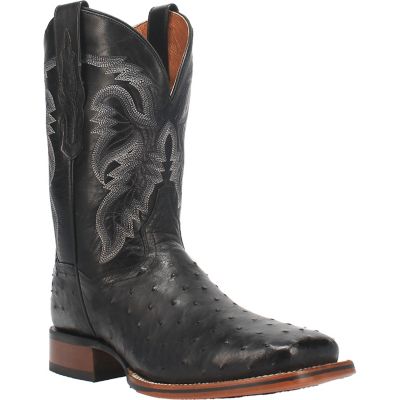
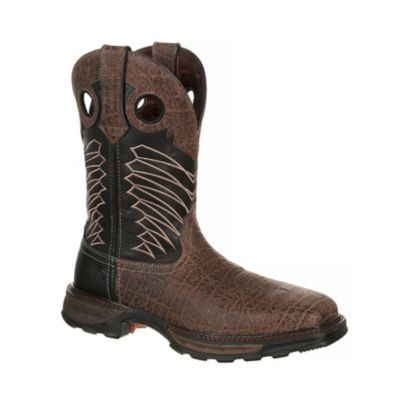
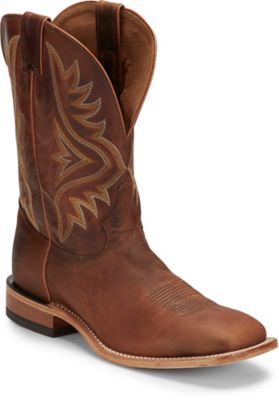
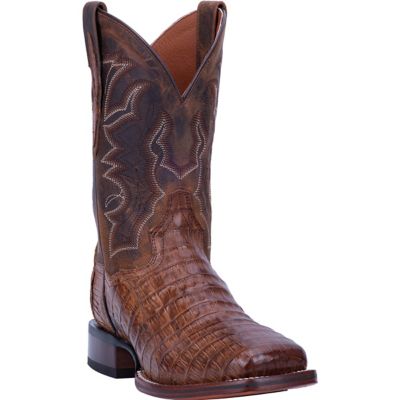
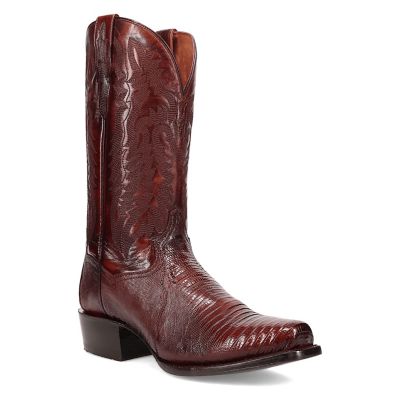
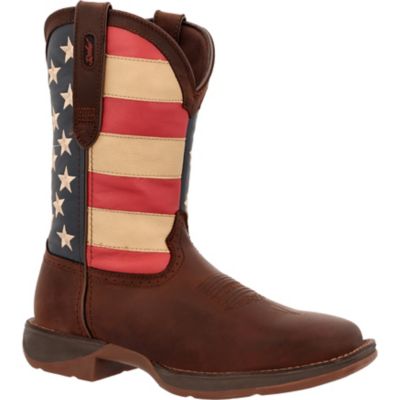
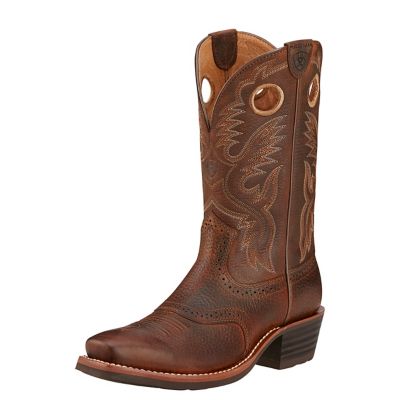
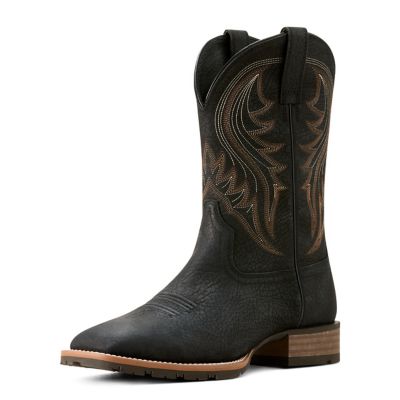
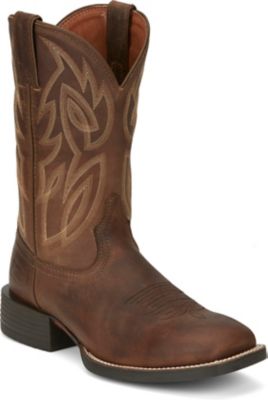
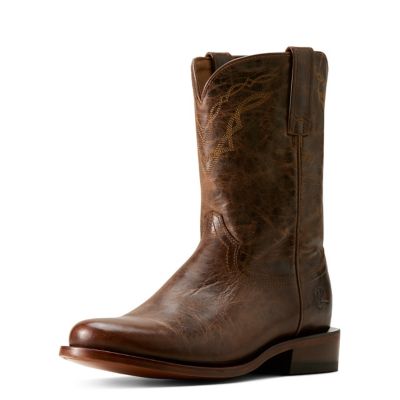
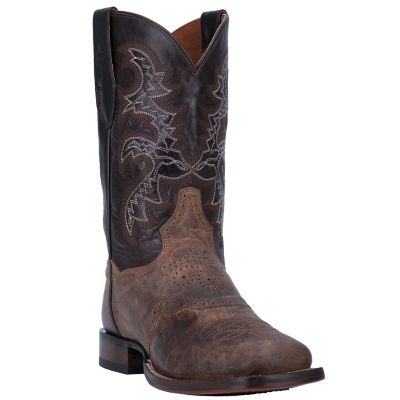
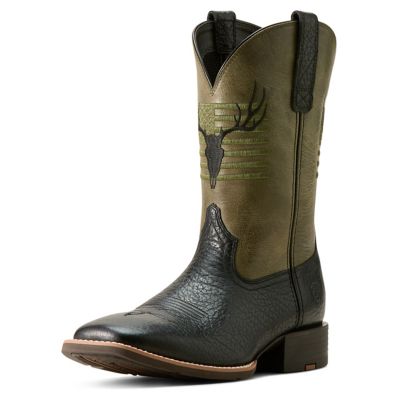
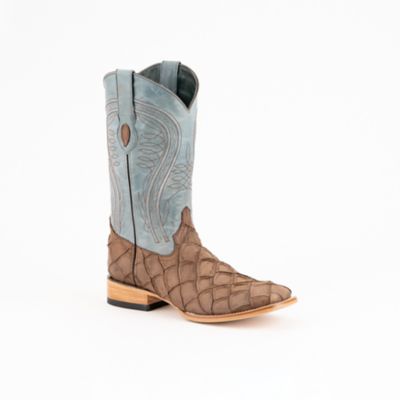
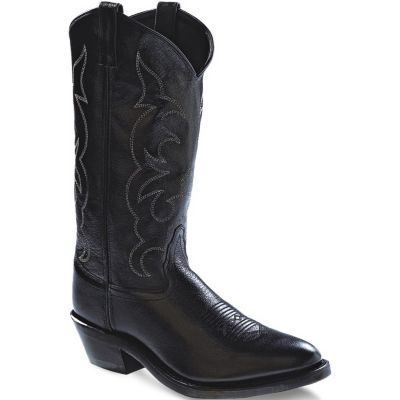
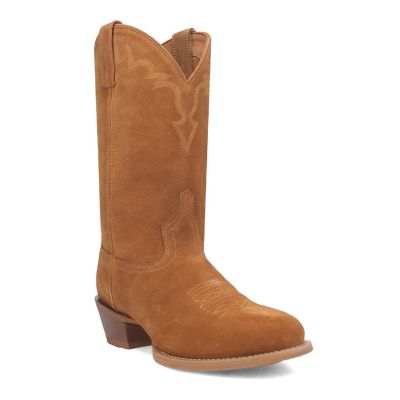
Men’s exotic boots bring the familiar shape of a Western boot together with leathers known for their distinct grain, scales, and texture. Ostrich, caiman, alligator, lizard, snake, and pirarucu are among the hides found in this category, and each gives a pair its own character. The exotic leather often covers the foot, also called the vamp, while the shaft may be cowhide with stitched patterns. Full-quill ostrich stands out for the rounded quill follicles across its surface and its generally soft, yielding feel. Smooth ostrich has a quieter appearance, with fewer visible quill markings, while ostrich leg leather has a more pronounced scale pattern. Caiman and alligator have defined scales that create a structured look, though they are different leathers and should not be treated as interchangeable. Flexibility depends on the species, the section of hide, tanning, and boot construction; caiman can feel firmer than alligator. Python and rattlesnake show natural scale patterns that vary across the foot, while lizard brings smaller, closely arranged scales for a finer-textured appearance. Pirarucu, a freshwater fish leather, has large scale pockets and a deeply textured surface that makes a strong statement without elaborate shaft stitching. Natural differences in grain and markings mean the left and right boot may complement each other without looking identical. Those differences are part of genuine leather’s character, rather than something a matching finish necessarily erases. Color and finish matter, too: a dark, understated finish lets the texture do the talking, while contrasting tones make scales and quill markings more noticeable. An embossed cowhide can resemble an exotic skin, so the material description matters more than appearance alone. For a broader look at this leather category,
Exotic Leather Boots brings the focus to these distinctive materials. Whether paired with straight-leg jeans for a night at the dance hall or pressed trousers for a wedding, exotic Western boots carry the look of cowboy footwear into occasions where the leather deserves a closer look.
Fit has just as much say in how men’s exotic cowboy boots feel as the hide on the outside. A well-fitting pull-on boot holds the instep snugly without squeezing, leaves room for the toes, and supports the foot at its widest point. A little heel movement can be normal in a new Western boot while the sole begins to flex, but excessive slipping or a foot sliding forward suggests the fit needs another look. Toes should not press against the end, and sharp pressure across the top of the foot is not something to count on break-in to fix. Leather may relax with wear, but a boot will not gain meaningful length. Trying boots with the socks intended for regular wear gives a better sense of the fit, especially for someone moving between thinner dress socks and thicker boot socks. Toe shape changes both the silhouette and the feel. Broad square toes often offer a roomier shape across the front, round toes keep a traditional profile, and snip toes create a narrower-looking point. The actual space inside still depends on the last—the form around which the boot is built—and the width, not the toe name alone. Heel height, arch support, cushioning, and shaft height also affect comfort over a long evening on your feet. A lower walking heel may feel more natural for strolling through town, while a taller Western heel changes posture and stride. Leather outsoles offer a classic look and can move smoothly on a dance floor, but they may have less grip on slick surfaces than an appropriate rubber tread. Rubber outsoles can suit more walking, though traction varies with the tread and surface. Welted construction may allow resoling, depending on the boot’s design and condition. Linings, seams, and reinforcement around pull straps deserve attention as well; the beauty of the vamp is only one part of a boot built for repeated wear.
Exotic leather boots fit naturally into a Western wardrobe, but their intended use should match their construction. A pair worn to church, a graduation, or a family wedding faces different demands than footwear worn around rough equipment, manure, or abrasive ground. Exotic leather alone does not make a boot appropriate for heavy chores, and a cowboy shape does not establish toe protection, electrical protection, or suitability for riding. Those uses call for the relevant construction and stated features. For someone who spends the workday in task-specific footwear, an exotic pair can be the boots that come out for supper in town, a concert, or a special gathering. Keeping them looking good starts with care suited to the exact leather and finish. Loose dirt can be lifted gently with a soft cloth or an appropriate soft brush before it settles into quill pockets, seams, and scale edges. Snake and other scaled leathers need a light touch; rubbing against raised scale edges can catch and damage them. A conditioner labeled for the particular exotic hide is a better choice than assuming every leather cream will work. Testing a small, inconspicuous area first helps reveal darkening or a change in sheen, and applying sparingly helps prevent residue from collecting in textured areas. Manufacturer care directions take priority, especially for unusual finishes. Soaking, harsh cleaners, and direct heat can harm leather, while excess moisture should be blotted away before boots air-dry away from a heat source. Boot trees and shaft supports can help maintain shape during storage, and giving a pair time to air out between wears helps manage moisture inside. Checking heel caps and soles before wear reaches the underlying structure can make repairs more straightforward. For a birthday, anniversary, or retirement gift, men’s exotic boots offer a personal connection to Western dress without needing extra ornament. Knowing the recipient’s boot size, width, preferred toe shape, and usual heel style makes that choice more thoughtful. The best match feels at home with the way he dresses and gives him a pair he’ll reach for when the occasion calls for something beyond his everyday work boots.