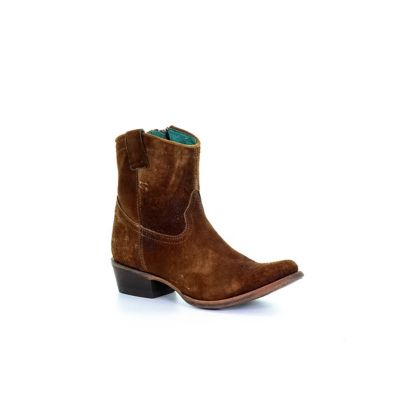
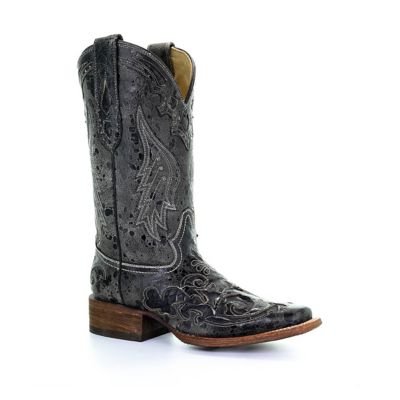
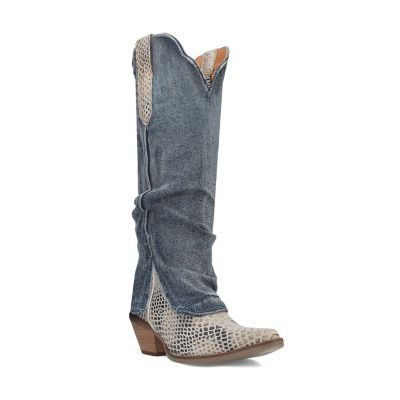
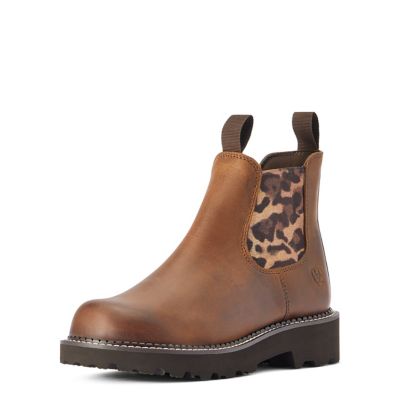
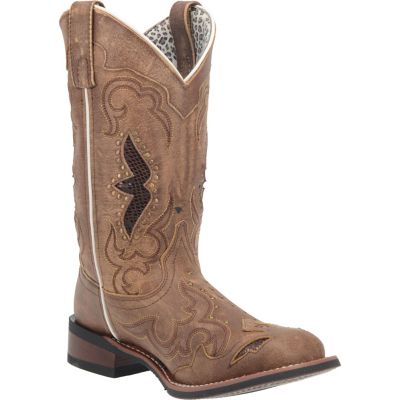
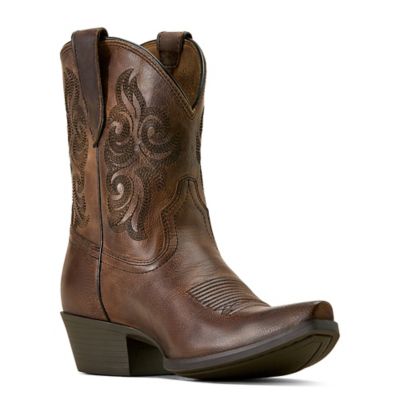
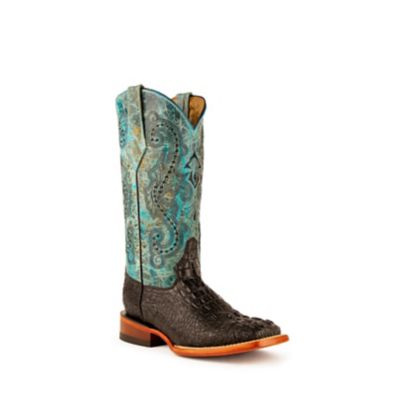
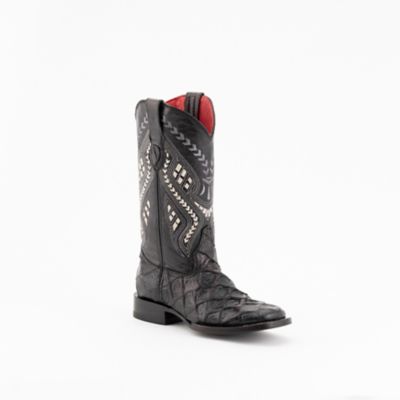
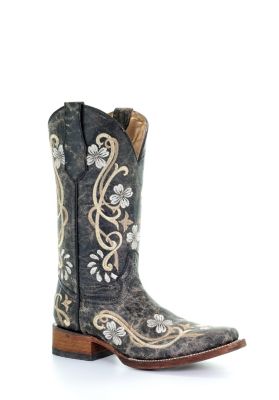
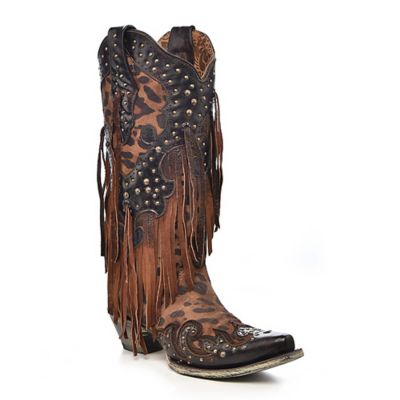
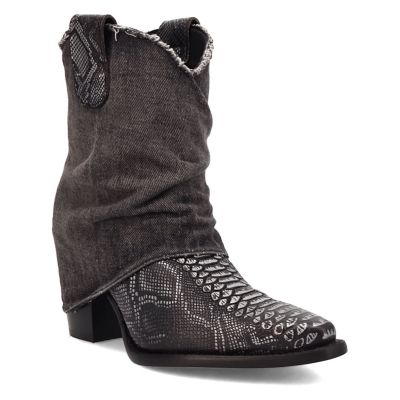
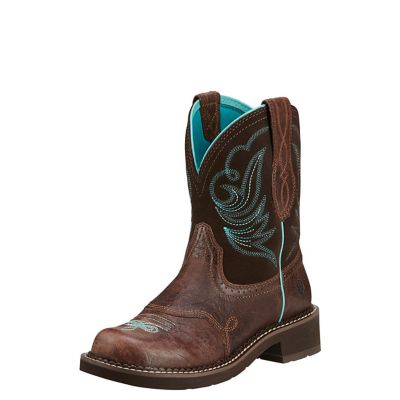
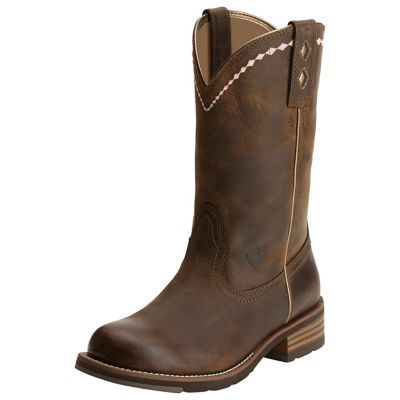
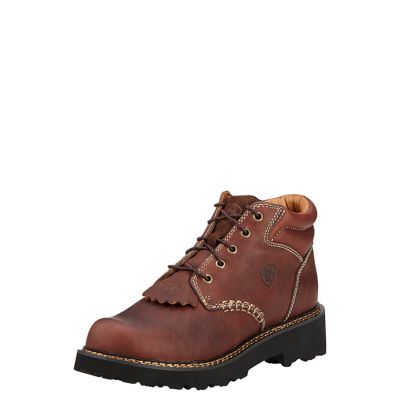
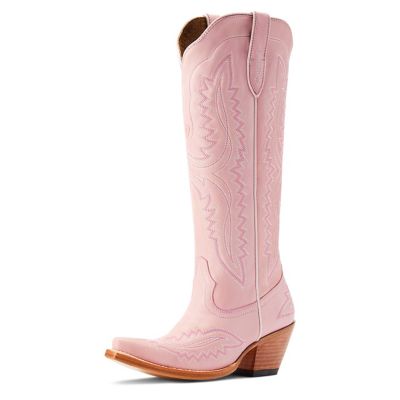
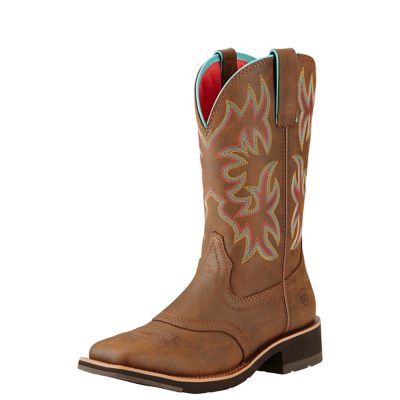
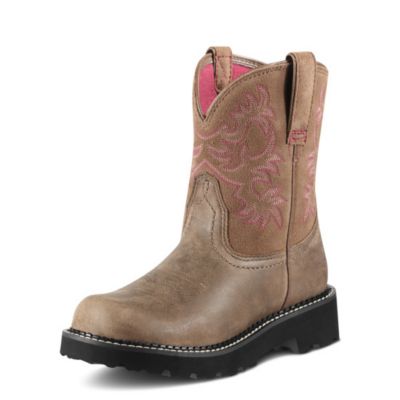
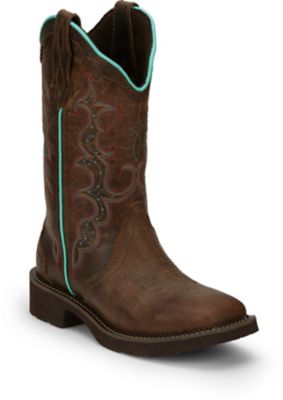
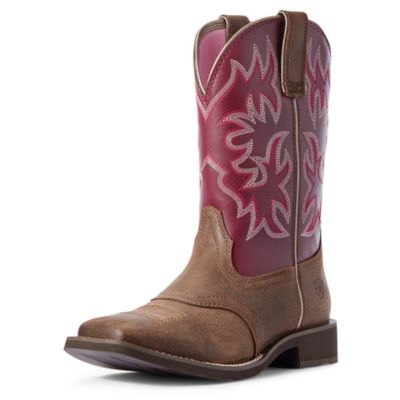
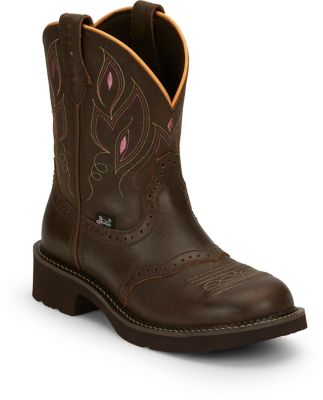
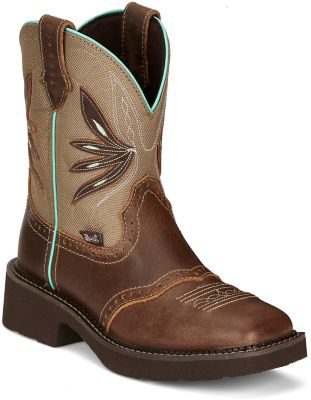
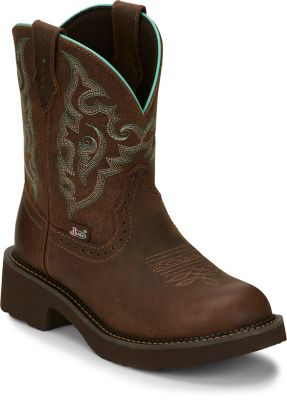
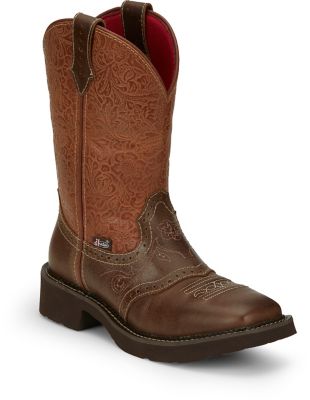
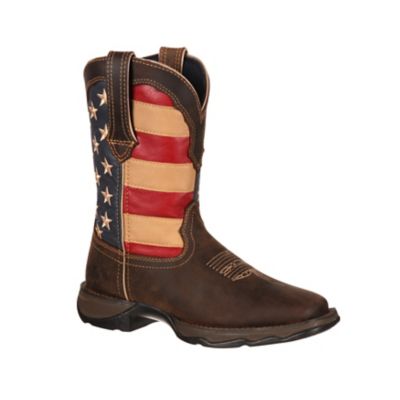
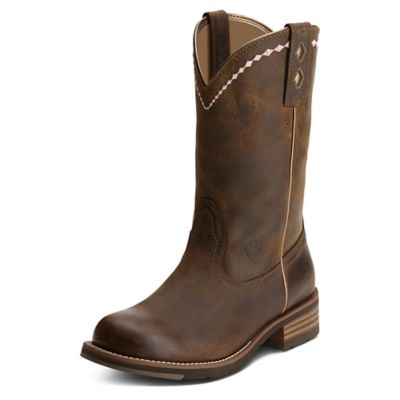
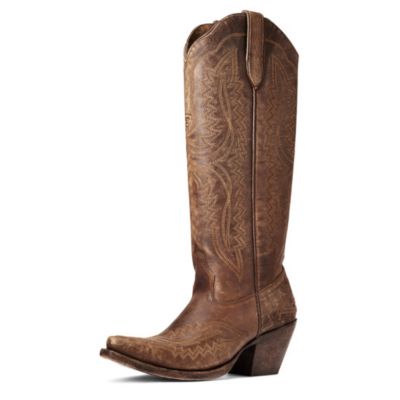
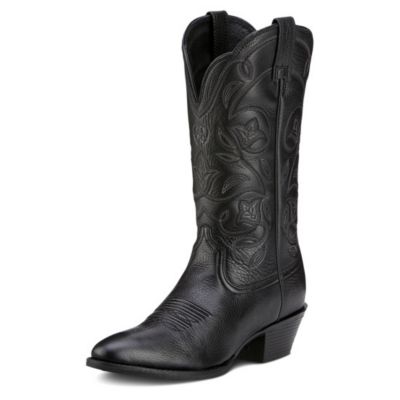
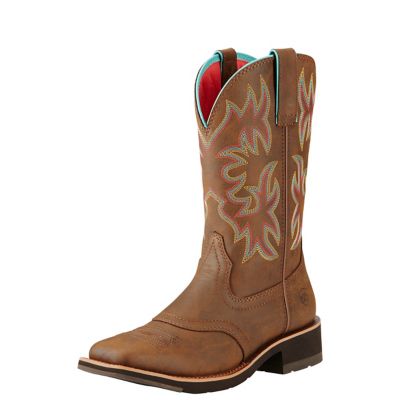
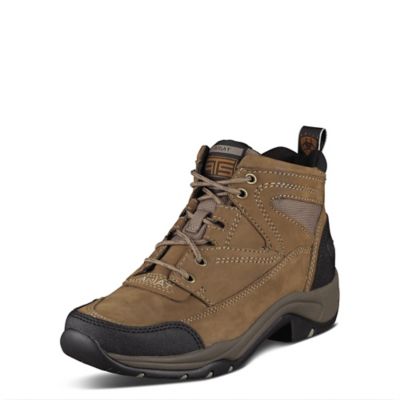
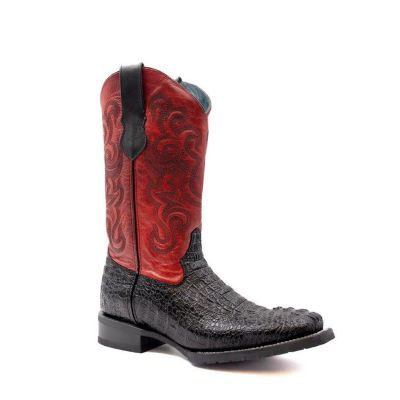
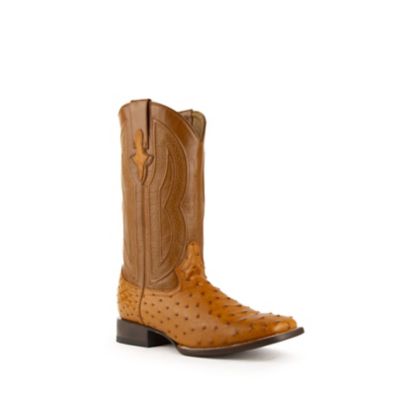
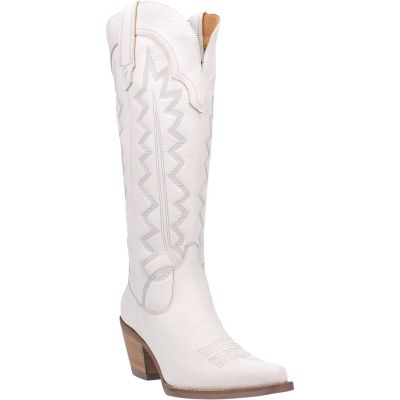
Ladies’ exotic boots are women’s boots featuring animal leathers such as ostrich, python, caiman, or alligator, most often in familiar Western shapes. Their appeal starts with the hide itself: raised quill marks, layered scales, and patterned plates give each material a character that plain leather doesn’t have. Full-quill ostrich has a dotted appearance from its feather follicles and often feels supple, while smooth ostrich has a quieter look without those prominent bumps. Python brings visible scales and flowing patterns that can range from understated to bold. Caiman generally has a firmer feel and pronounced plate patterns, while alligator can offer a more flexible feel depending on the cut, tanning, and construction. Those differences matter beyond looks because each leather bends, breaks in, and responds to care a little differently. Genuine exotic leather also differs from cowhide embossed or printed to resemble an exotic skin; material descriptions help tell those constructions apart. Many Western boots pair an exotic-leather foot with a cowhide shaft, so the entire boot isn’t necessarily the same material. Color and finishing add another layer of choice, from brown and black that sit easily alongside everyday denim to lighter shades and contrasting patterns that draw attention to the hide. Stitching, piping, shaft height, and pull tabs help shape the overall look without taking away from the leather’s natural markings. A lower shaft may fit neatly under certain pants, while a taller shaft gives more room for visible stitching when paired with a skirt or dress. Square, round, and pointed toes each bring a different silhouette, and heel shape can move the look from easygoing to dressier. From subtle grain to pronounced scales,
Exotic Leather Boots bring fresh character to familiar Western footwear. For women who enjoy a little polish with their ranch roots, that combination works just as well with a button-down and jeans as it does with an outfit for a country wedding or an evening at the dance hall.
Fit deserves as much attention as the hide, especially when boots will spend more time on your feet than in the closet. Women’s exotic Western boots should feel comfortably snug across the instep, with enough space for toes to rest naturally rather than curl or press against the front. A small amount of heel movement can be normal in a new pull-on boot, but excessive slipping, pinching, or pressure along the sides points to a fit that needs another look. Size labels alone don’t tell the whole story because the shape of the boot, its width, the toe profile, and the lining all affect how it feels. A pointed toe may extend beyond the toes without requiring a longer size, while a broad-looking square toe doesn’t automatically mean the boot has a wide fit through the ball of the foot. The socks intended for regular wear belong in the fit equation, too. Trying both boots and walking on a clean indoor surface helps reveal whether the heel stays steady and the foot bends comfortably. Leather can soften with wear, but break-in won’t fix a boot that is too short, and firmer scaled hides may give less than softer leathers. Cushioned footbeds, supportive insoles, and lining materials also influence comfort during a long gathering or an evening spent standing. Outsole choice matters for the same reason. Leather soles have a traditional feel and can suit dancing, while rubber soles may offer more grip depending on their tread and the walking surface. Neither material guarantees traction everywhere. For horseback riding, heel shape, sole profile, and stirrup compatibility matter, and not every fashion Western boot is intended for the saddle. Likewise, an exotic boot isn’t automatically a work boot or protective footwear. Chores involving heavy equipment, livestock, or slick surfaces call for the features that task requires. Exotic leather often makes the most sense for everyday outings, celebrations, and occasions where its texture can stand out without taking unnecessary abuse.
Keeping ladies’ exotic boots looking good comes down to care that suits the actual hide rather than a one-bottle approach to every pair. Dust and grit can settle around quill marks, scales, stitching, and welt seams, so gentle cleaning after wear helps keep those areas from becoming packed with dirt. A soft cloth or an appropriate soft brush is often the starting point, with extra care around raised scales. On python, wiping in the direction the scales lie helps avoid catching their edges. Cleaners and conditioners should be labeled for the specific leather and finish, and any treatment belongs on a small, hidden area first to check for darkening or another unwanted change. Heavy oils, household cleaners, and products meant for a different type of leather can alter color, soften areas unevenly, or affect the surface. The maker’s care directions take priority, especially for dyed finishes and reptile skins. If a pair gets damp, gentle blotting and air-drying away from direct heat help protect its shape; a heater or hair dryer can dry leather too quickly. Boot trees or suitable shaft supports can help boots hold their form between wears, while storage away from direct sunlight helps limit fading. Letting the lining dry fully between outings also makes a difference, particularly after several hours on your feet. Construction plays its part in long wear, too: secure stitching, a well-attached heel, and sound sole edges deserve attention alongside the eye-catching hide. Depending on how the boot is built, a boot repair shop may be able to replace worn heel caps or soles before damage reaches other parts. For a birthday, anniversary, or graduation gift, exotic boots can be a thoughtful choice for someone who already enjoys Western footwear. Knowing the recipient’s usual boot size, width, preferred toe shape, and favorite leather colors makes the choice more personal. Whether the look is quiet brown ostrich under straight-leg jeans or a bold scale pattern paired with a simple dress, the best match balances the leather’s character with a fit and construction that suit the wearer’s day.