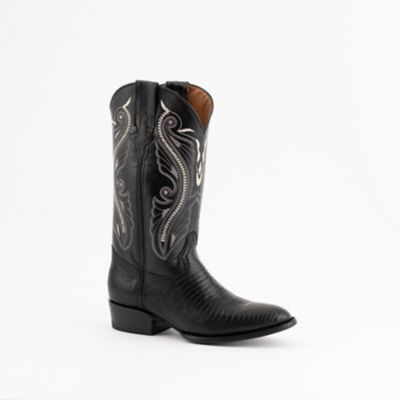
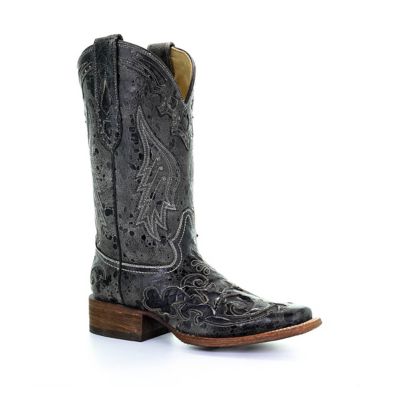
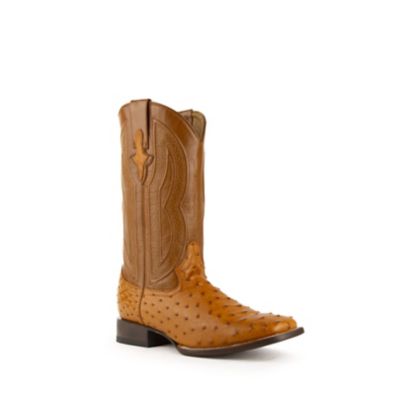
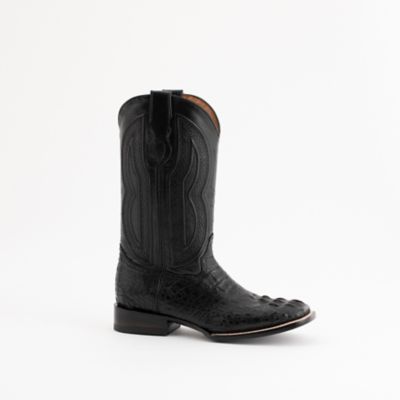
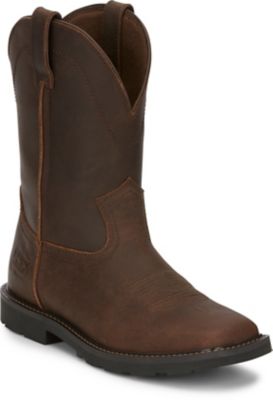
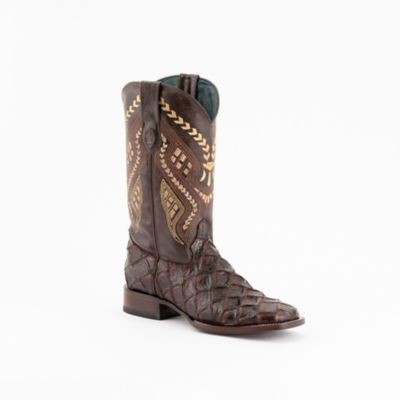
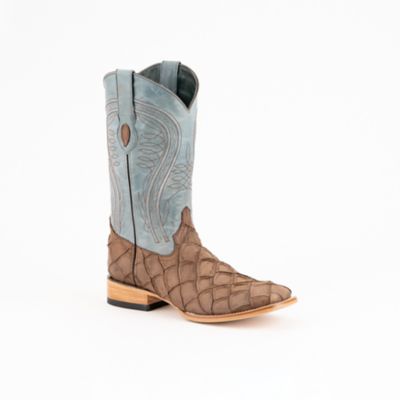
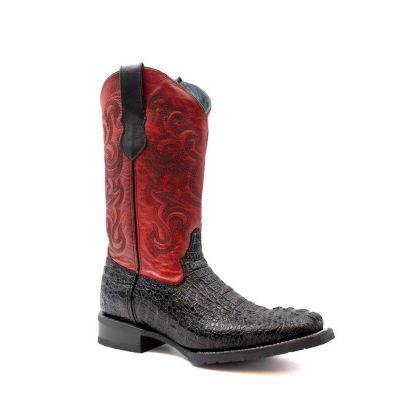
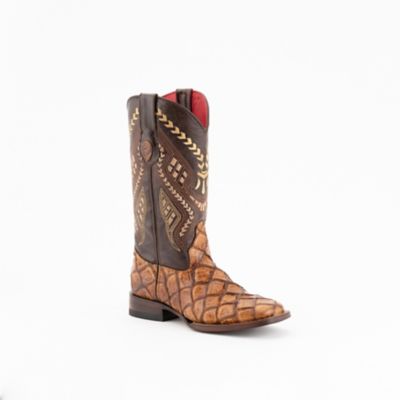
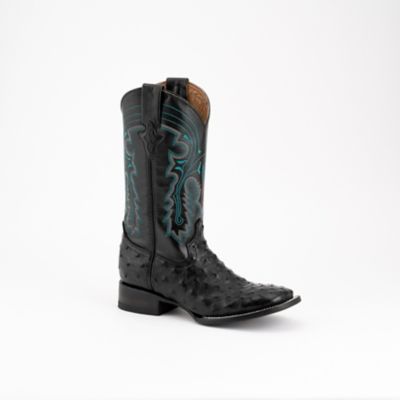
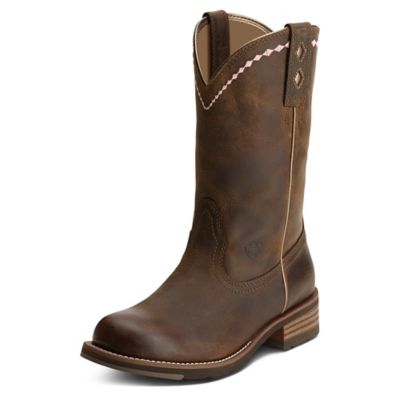
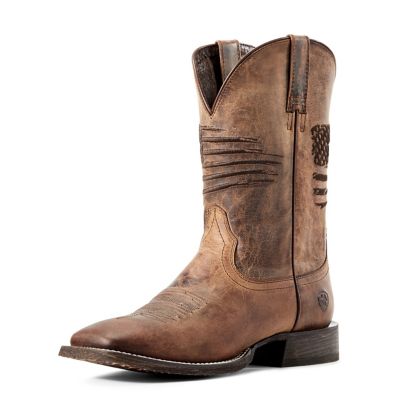
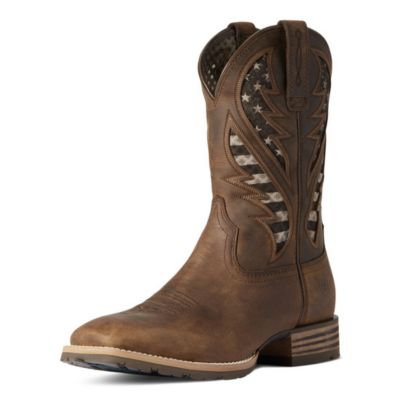
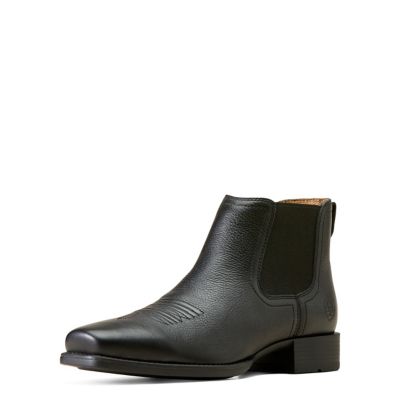
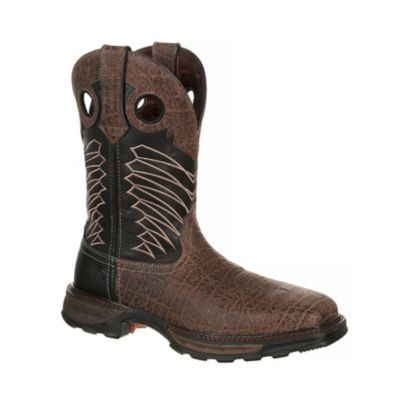
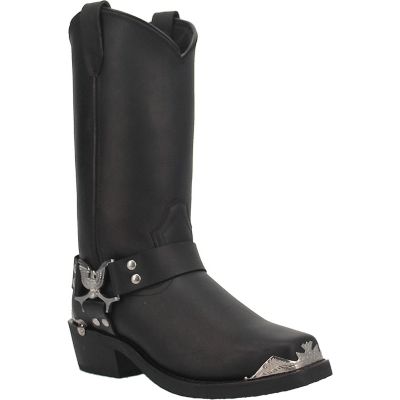
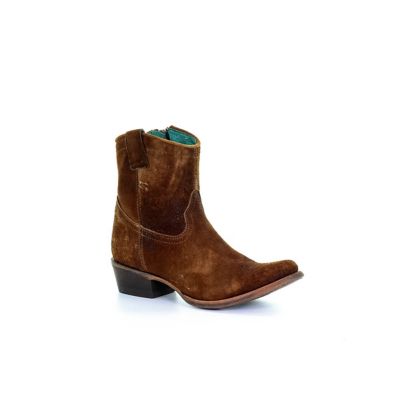
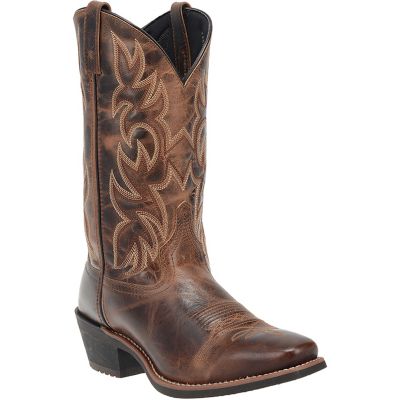
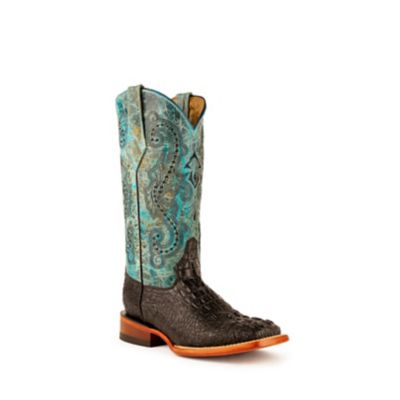
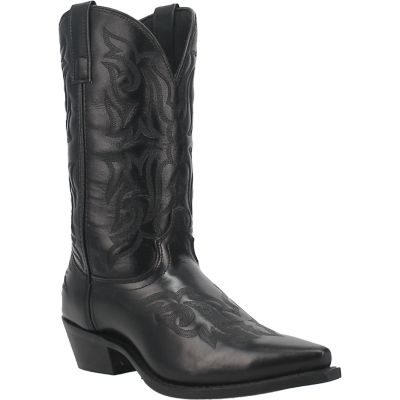
Exotic leather boots bring a distinctive look to Western footwear, combining the familiar shape of a cowboy boot with the natural grain, texture, and character of unusual hides. Instead of a plain cowhide vamp, these boots may feature full quill ostrich with its soft, raised quill marks, alligator or caiman with bold tile-like scales, or pirarucu fish leather with wide, dramatic scales and a texture unlike anything found on ordinary leather boots. Every hide has its own pattern, so no two pairs look exactly alike. That natural variation is part of the appeal: one pair may have closely spaced scales and deep color shifts, while another may show a lighter grain or more pronounced texture across the foot. Exotic leather boots can suit a ranch hand who wants a sharp pair for town, a country wedding, a concert, a stock show, or a special night out, though the best choice depends on the hide and how the boots will be worn. Full quill ostrich is known for a supple feel and flexible wear, making it a popular choice for someone who wants comfort along with a standout appearance. Alligator and caiman offer a more structured, polished look, with scale patterns that pair naturally with denim, a pressed shirt, or a well-worn leather belt. Pirarucu has an especially eye-catching surface and can make a simple outfit feel more put together without needing much else. When comparing options, start with fit rather than color. A boot should hold the heel securely without pinching the toes, and the instep should feel comfortably snug because leather will relax as it breaks in. Pay attention to toe shape, too: round, broad square, and snip toes each create a different profile and feel different while walking. Shaft height, heel style, outsole material, and welt construction also matter. A leather sole can lend a dressier, traditional feel, while a rubber or lugged outsole may offer steadier footing on gravel, packed dirt, or slick ground during the cooler months. For more polished Western footwear in a similar premium spirit, shoppers can also browse
Luxury Men's Boots. Before ordering, check the sizing information and consider the socks you normally wear, especially if the boots will be used with thicker work or wool socks. Exotic hides often cost more than standard leather because of their limited patterns, specialized handling, and careful finishing, so think about where the boots fit into your wardrobe. A neutral brown, black, or deep burgundy shade can work with jeans and dress trousers alike, while a highly contrasted scale pattern or lighter finish may be better saved for occasions when you want the boots to be the center of attention. They also make a memorable gift for someone who appreciates Western tradition, fine leather goods, rodeo style, or well-made footwear. They can be a thoughtful choice for a birthday, anniversary, retirement, wedding, or milestone celebration, provided the recipient’s size and preferred toe shape are known.
Taking care of exotic leather boots is a little different from caring for everyday work boots, but the routine is simple once it becomes a habit. After wearing them, brush away loose dust with a soft horsehair brush or wipe the surface gently with a clean, slightly damp cloth. Pay close attention to the seams, around the heel, and between raised scales, where road dust and dry soil can collect. Let the boots air-dry at room temperature if they become damp, and keep them away from woodstoves, heaters, fireplaces, and direct sunlight. Quick heat can pull moisture from the hide and lead to stiff leather, curling, or cracking. Do not soak exotic leather boots or scrub them aggressively; a little patience protects the natural texture better than a hard cleaning. Conditioning is important, but the product should match the type of leather. Use a conditioner made for reptile skins on alligator and caiman, applying a small amount first in an out-of-the-way spot to check how it affects the color and finish. Ostrich generally benefits from a suitable exotic-leather conditioner that keeps the hide soft without flattening its natural quill texture. Pirarucu and other fish leathers may need their own recommended cream or conditioner, since products made for smooth cowhide can be too heavy or may leave an unwanted shine. Apply conditioner sparingly with a soft cloth, work with the grain or scale pattern, and allow the boots to rest before buffing lightly. A pair of cedar boot trees can help maintain the shape, reduce moisture and odor, and keep the vamp from developing deep creases between wears. Store the boots upright in a cool, dry place, away from damp tack rooms, unheated sheds, or crowded closets where the shafts can bend. Exotic leather boots are often chosen for their character as much as their usefulness, and regular care helps preserve the color, supple feel, and distinctive surface that caught your eye in the first place. With a good fit and the right upkeep, they can move easily from dusty back roads and Saturday gatherings to dressier events, adding a touch of hard-earned style whenever the season calls for boots.