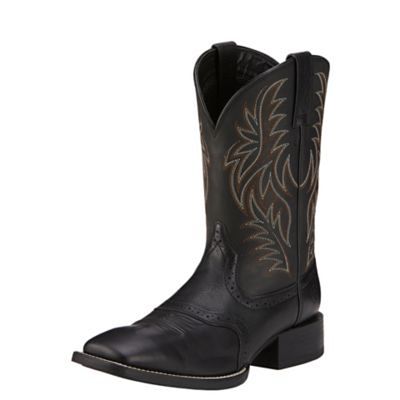
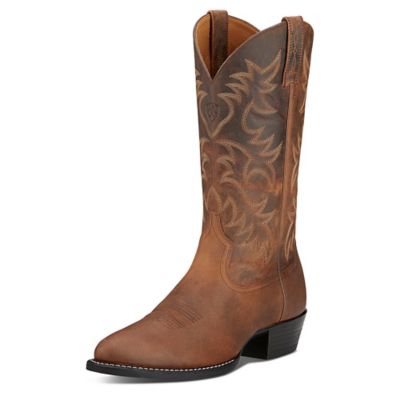
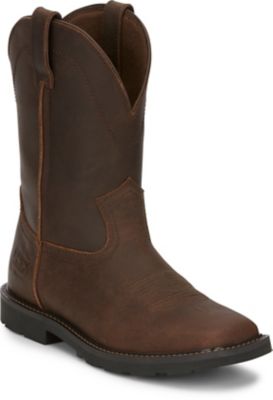
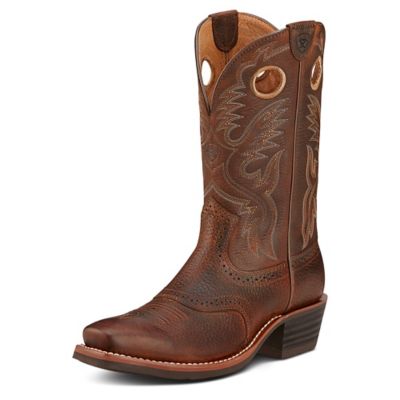
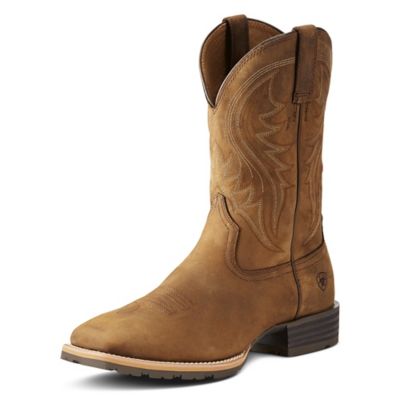
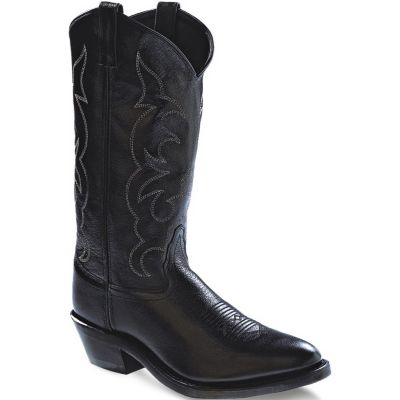
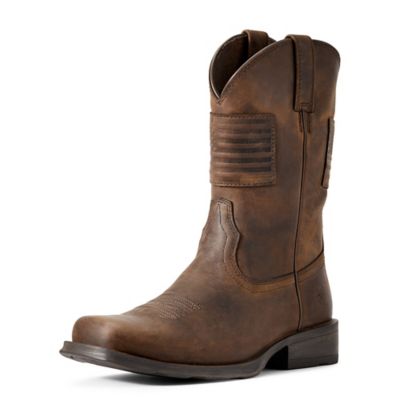
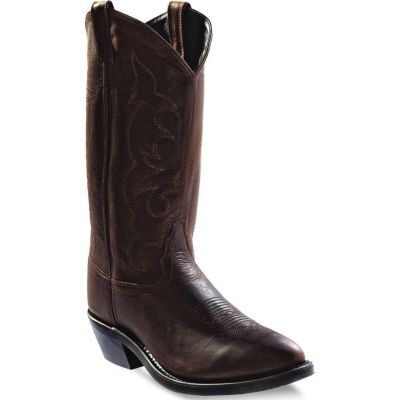
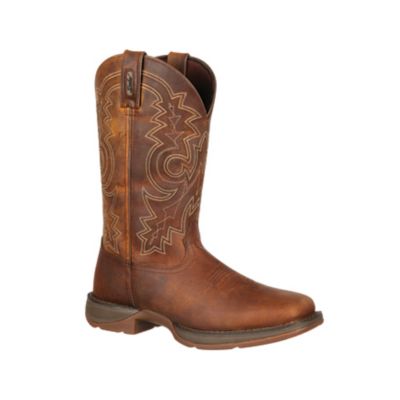
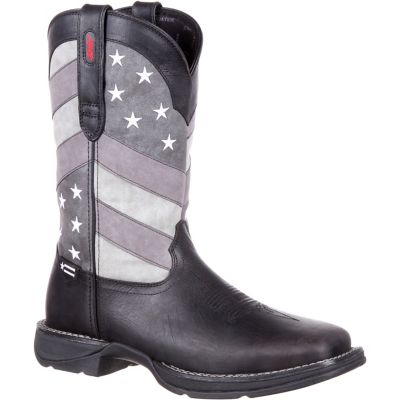
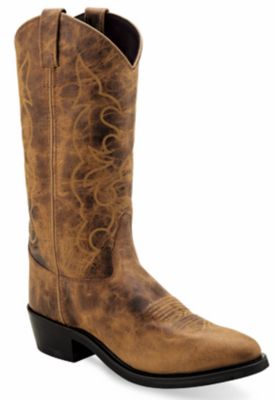
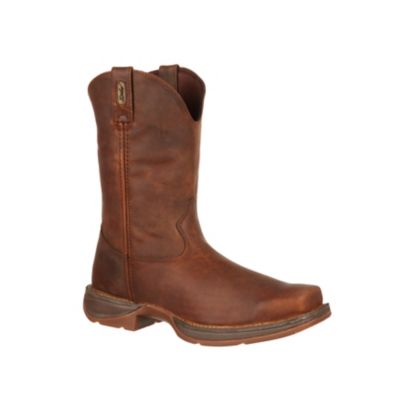
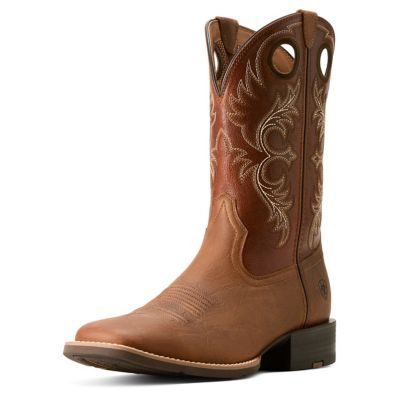
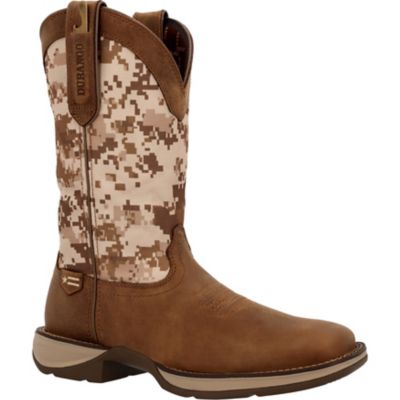
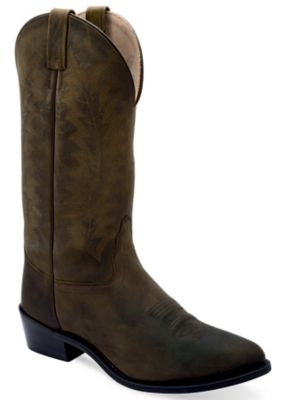
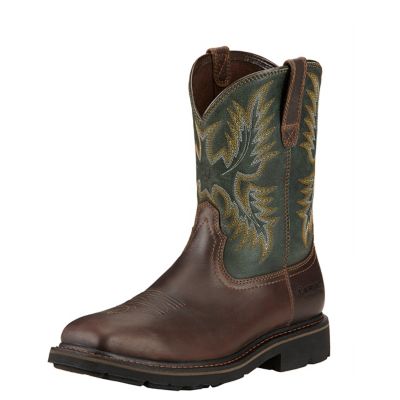
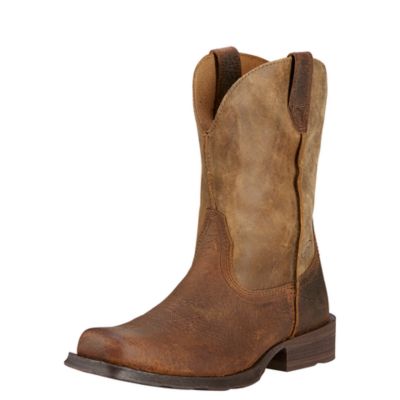
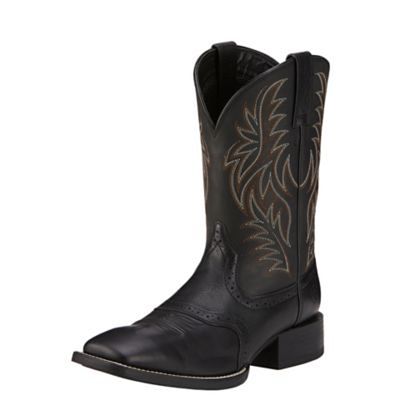
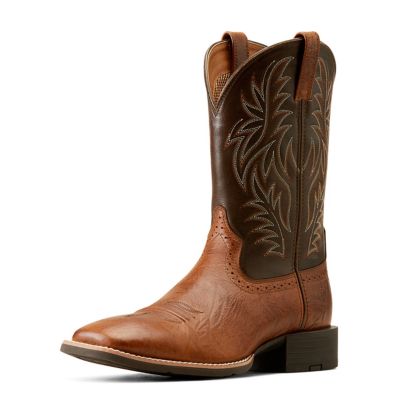
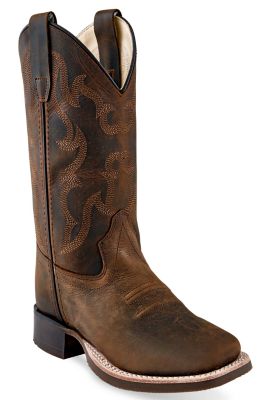
Men’s cowboy boots earn their place by feeling just as at home beside a saddle rack as they do under a pair of jeans at a Saturday-night dance. The pull-on shape, raised heel and tall shaft come from a long history of riding and ranch work, but the details make a difference in how a pair feels throughout the day. A broad square toe gives boots a substantial look, while round and narrower toe shapes lean toward a more traditional Western profile. Toe shape alone doesn’t tell the whole story about room inside, though; the shape of the footbed and the width through the ball of the foot matter just as much. Shaft height changes the look, too. A taller shaft has a strong Western presence, while a shorter roper-style shaft and lower heel can feel less imposing for everyday wear. Materials bring another layer of character. Cowhide leather is a familiar choice for its balance of strength, flexibility and ability to develop a broken-in feel. Other leathers differ in grain, texture and suppleness, and man-made materials have their own care requirements. Smooth finishes put the emphasis on the leather itself, while roughout surfaces have a more textured appearance. Stitching across the shaft, contrasting panels and simple piping let a pair lean bold or understated without changing its basic purpose. For someone who heads from chores to town without much fuss, a restrained design can pair easily with work jeans and a button-down shirt. More pronounced stitching can bring a little arena spirit to a night out. Underneath those visible details, construction helps shape the experience: the way the sole joins the upper, the support through the arch and the flexibility at the forefoot all affect how boots move. Some stitched constructions also allow sole replacement, depending on the design and condition of the leather, giving a well-cared-for pair a longer working life.
The best fit for men’s Western boots starts with a secure instep, enough space for the toes and a heel that stays controlled while walking. A small amount of heel movement can be normal in new pull-on leather boots before the sole begins to flex, but a foot that slides forward or lifts excessively needs a closer look at sizing and shape. Snug shouldn’t mean pinched, and breaking in leather won’t correct a boot that is too short. The socks worn with the boots affect that feel, especially through the instep and around the toes. A thicker work sock takes up more space than a thin dress sock, so the intended outfit belongs in the fit decision. Men with wider feet or a high instep may find that width and entry room matter as much as the number on the box. Once the fit is settled, the job ahead helps narrow the field. Long stretches on concrete call attention to cushioning and underfoot support, while frequent kneeling or climbing puts flexibility and ankle movement in the spotlight. Outsoles deserve attention beyond appearance. Leather soles have a traditional feel and can suit dancing or certain riding settings; rubber outsoles vary in tread, flexibility and grip. Traction depends on both the sole and the surface, so deep tread isn’t automatically the right answer for every task. Riding adds its own considerations, including a defined heel and a boot shape that works properly with the stirrup. For jobs around heavy equipment or falling objects, a Western silhouette is no substitute for the safety features required by the workplace. A square toe isn’t necessarily a safety toe, and protective ratings need to match the hazard. The same goes for electrical hazard protection and slip resistance. These details separate a pair meant mainly for everyday wear from one suited to particular work demands, even when both carry the same familiar cowboy-boot look.
Good care helps men’s cowboy boots keep their shape, feel comfortable and hold onto the character that makes leather appealing in the first place. Dust from the barn aisle and grit along the welt can work into creases and seams, so regular brushing and wiping make a difference. Smooth leather generally benefits from a compatible cleaner and occasional conditioner, while suede, roughout and specialty leathers need products intended for those surfaces. Too much conditioner can leave some leather overly soft or darken its finish, making the maker’s care directions worth keeping handy. If boots get damp during chores, letting them air-dry away from direct heat helps protect the leather from shrinking or cracking. A boot tree or suitable shaft support can help maintain the shape between wears, and giving a pair time to air out helps manage moisture inside. Pull straps make entry easier, while a boot jack can make removal less of a wrestling match at the end of a long day. There’s a practical side to keeping an eye on wear, too: a leaning heel, separating sole or worn-through tread can change the way a boot feels underfoot. Repairs made before damage spreads may help preserve a favorite pair, depending on its construction. For gifting, cowboy boots make the most sense when the recipient’s size, width and everyday routine are already familiar. A man who spends hours in a saddle may want something different from someone who mostly wears boots to supper, dances or family gatherings. His usual jeans, preferred heel height and taste for plain leather or bold stitching all help point toward a pair he’ll reach for often. Families sharing a love of Western style can also explore
Kids Cowboy Boots for younger boot wearers. A matching spirit doesn’t require matching every stitch; comfortable fit and a style that feels natural matter more than having everyone look exactly alike.