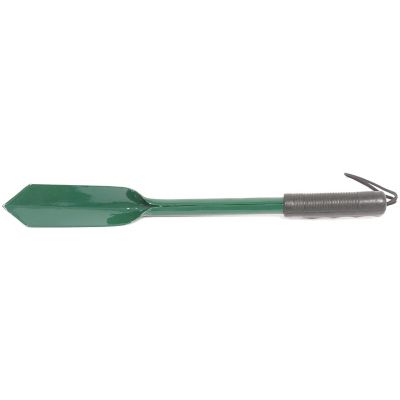
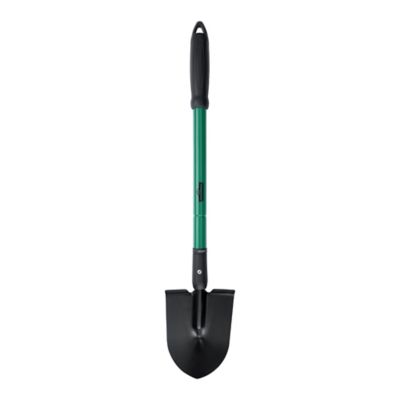
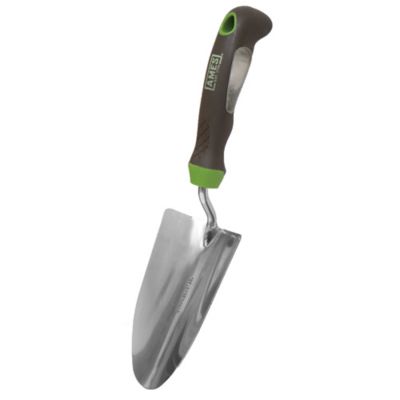
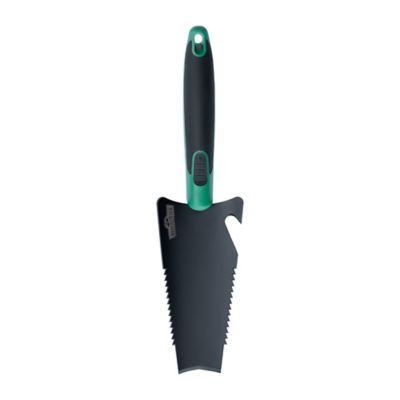
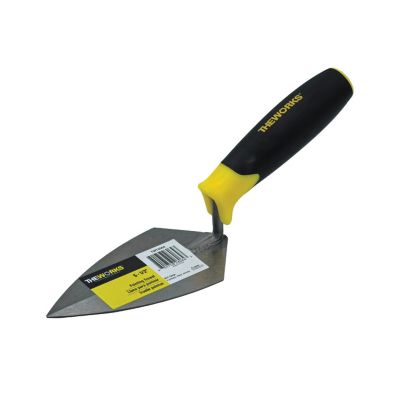
Long-handled trowels are planting tools with a small, scoop-shaped blade and an extended shaft that brings everyday garden work within easier reach. They handle jobs such as opening planting holes, moving small amounts of loose soil, lifting shallow-rooted weeds, and working around established plants. Compared with a short hand trowel, the longer handle can reduce how far a gardener needs to bend or reach, depending on the tool’s length and the height of the bed. That extra reach comes in handy along a vegetable row, across a raised bed, or behind flowers growing beside a fence. It also lets a gardener reach farther into a bed from the path, helping limit foot traffic around plant roots. A trowel’s compact blade fits into spaces where a full-size shovel would move more earth than the job calls for. Think of filling a gap between young pepper plants, making room for a small transplant, or pulling soil back around a newly planted root ball. Blade shape makes a difference in those close quarters. A narrower profile slips between nearby plants and opens a more confined hole, while a broader, deeper scoop carries more loose soil with each pass. A pointed tip can help enter settled soil, though a trowel is still meant for lighter digging rather than breaking through heavily compacted ground. Handle length matters just as much as blade size. A longer shaft adds reach across a wide bed, but it also needs room to move without catching neighboring stems or fencing. A somewhat shorter extended handle may feel easier to manage beside a porch planter or in a tightly planted garden. The right fit comes down to the gardener’s height, working position, reach, and available space. A comfortable tool allows a steady grip and controlled blade movement without forcing the shoulders up or requiring an awkward stretch. For someone tending several small beds around the place, that balance can matter more than simply choosing the longest handle.
Materials and construction influence how a long-handled trowel feels in the hand and holds up to repeated digging. Stainless steel blades resist rust and generally shed soil readily, although they still benefit from cleaning and dry storage. Carbon steel can provide strength for working through firmer soil, with a little more attention needed to protect exposed metal from corrosion. Aluminum blades keep weight down and suit lighter work in loose soil or potting mix, while blade thickness and shape affect how much resistance they can handle. A smooth blade surface makes cleanup simpler, and a deeper scoop helps hold soil during a short lift from a bag or nearby pile. The connection between the blade and handle deserves a close look, too. Digging puts pressure on that joint, especially when the handle extends well beyond the blade. A firm connection supports controlled movement; looseness there can make even a small planting job feel awkward. Wooden handles offer a familiar feel and can be comfortable for gardeners who prefer a traditional grip. Fiberglass and metal shafts have different weights and handling characteristics, so the complete tool matters more than any single material. Extra weight near the blade may help it settle into soil, but it can also take more effort to lift repeatedly. Grip shape, surface texture, and room for gloved hands all affect comfort. A cushioned grip may soften pressure against the palm, while a shaped end can help keep the hand from sliding during a pull. No grip makes up for a tool that is too long or too heavy for the person handling it. Care is straightforward: soil and plant debris can hold moisture against metal, so cleaning the blade and drying it before storage help protect the surface. Wooden handles benefit from attention to rough spots and the finish recommended by the tool maker. Hanging the trowel with its blade clear of the walkway keeps the edge out from underfoot and makes the tool easier to find when another planting job comes along.
Long-handled trowels fit best into garden work that calls for reach and precision rather than a large scoop of earth. In a raised vegetable bed, the blade can open individual planting pockets without disturbing a whole row. Along a flower border, it can move loose soil around a small root ball while leaving nearby plants in place. In a roomy container, an extended handle may help reach past the rim, provided there is enough clearance to work without striking the sides. Soil conditions set the limits. Loose, prepared soil is a better match than hard-packed clay, ground threaded with woody roots, or a patch full of large stones. A trowel is not a pry bar, and forcing the handle sideways against a buried obstruction can put stress on both the blade and its connection. Larger holes and stubborn ground call for digging tools built for that work. There is also a useful distinction between a trowel and
Long Handled Cultivators: a trowel has a solid blade for opening holes and moving soil, while a cultivator’s tines loosen and stir the surface between plants. Both can earn a place near the garden gate, but they serve different parts of the job. Gardeners looking after raised beds, small vegetable patches, nursery starts, or planted borders may appreciate an extended-handle trowel, especially where reaching from a path keeps the bed undisturbed. It can also make a practical gift for someone who enjoys planting around the house, though handle length and tool weight are worth matching to that person’s habits. Someone who gardens from a seated position may need a different reach and grip angle than someone working while standing. For any gardener, the most useful combination is a blade suited to the soil, a handle that fits the working space, and a comfortable balance through repeated scooping and lifting. Those details help make a long-handled trowel a practical tool for the small, steady jobs that keep a garden tended.