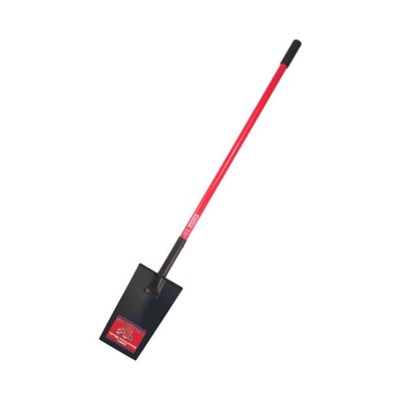
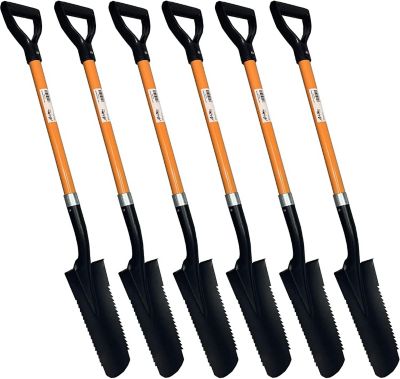
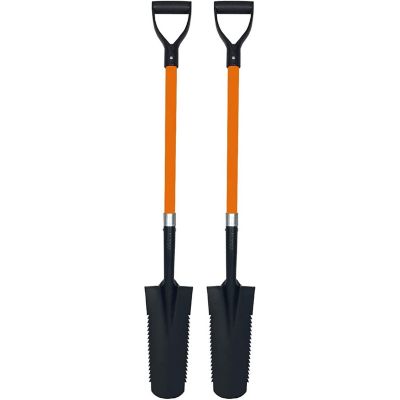
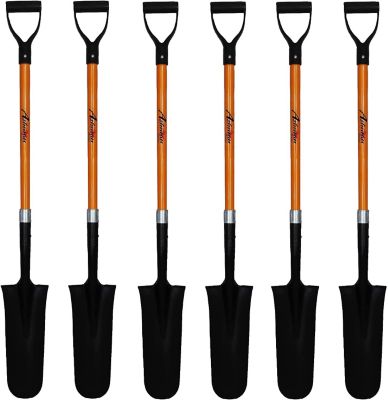
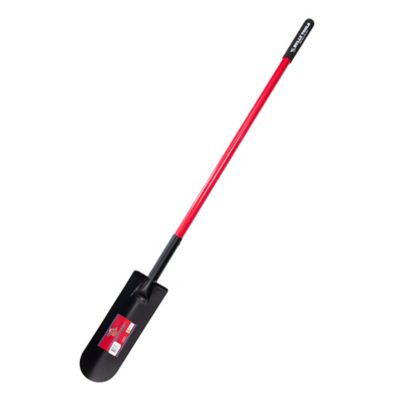
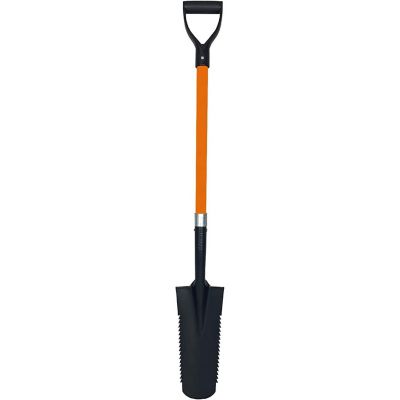
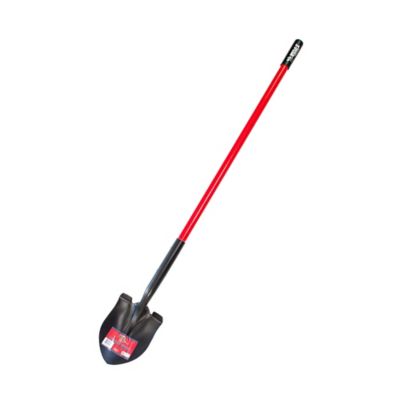
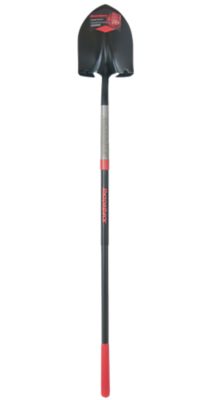
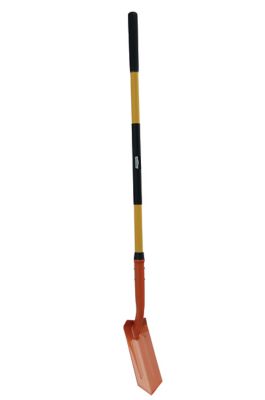
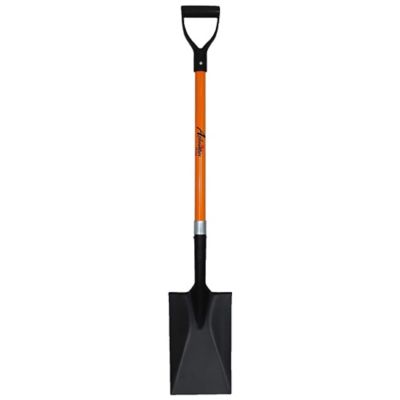
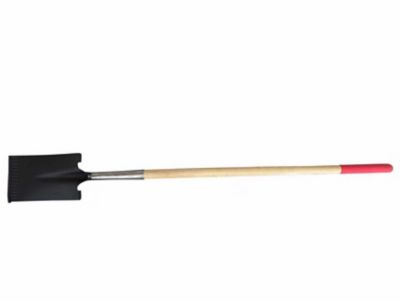
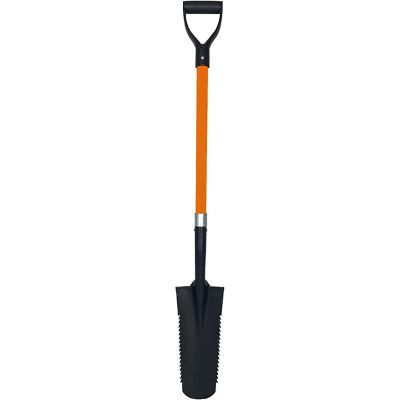
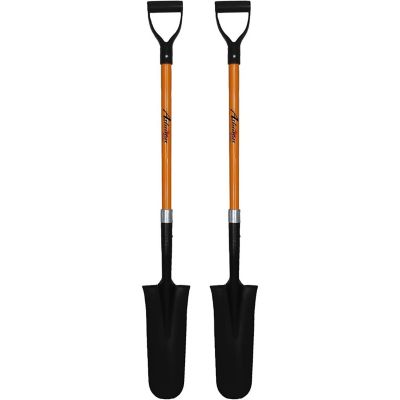
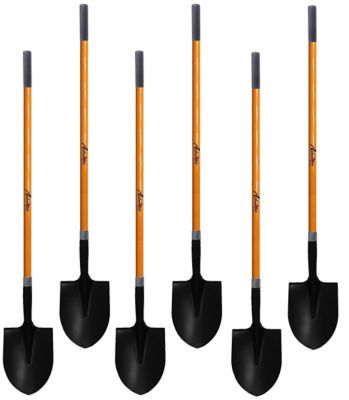
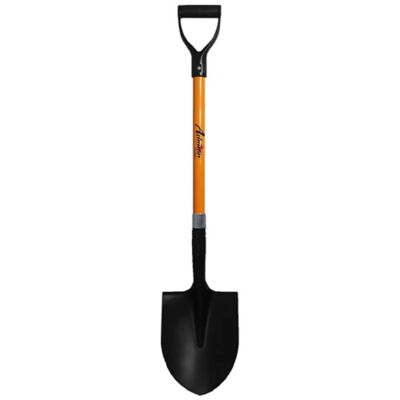
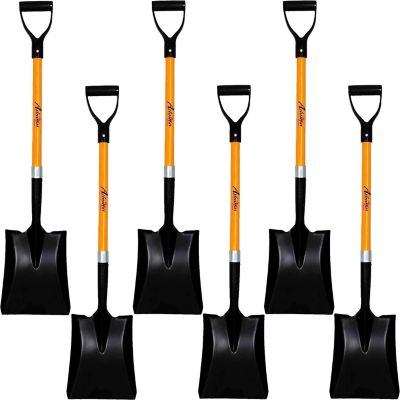
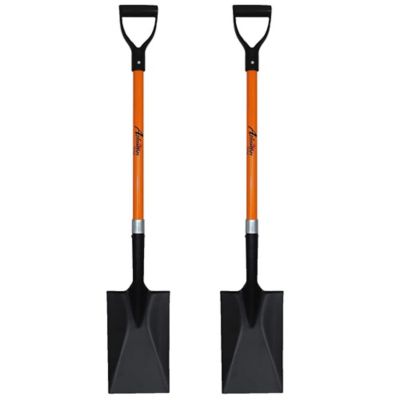
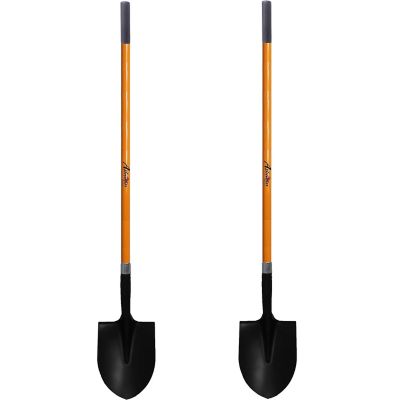
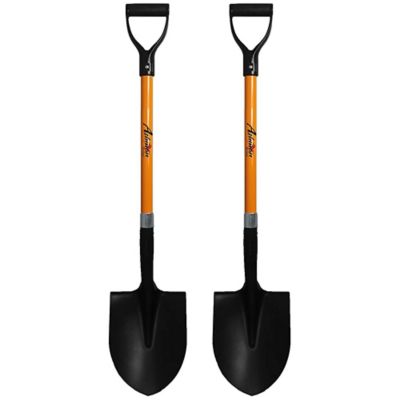
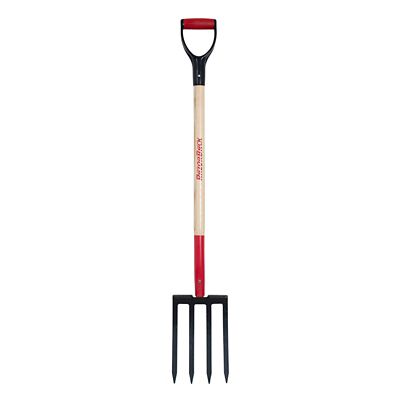
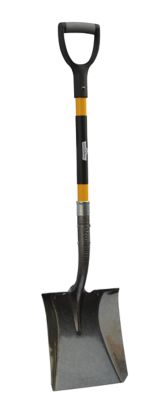
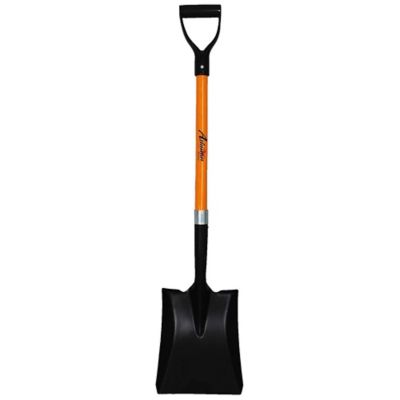
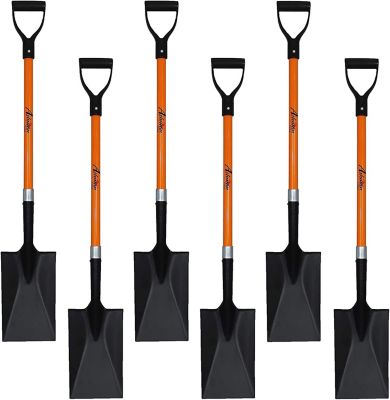
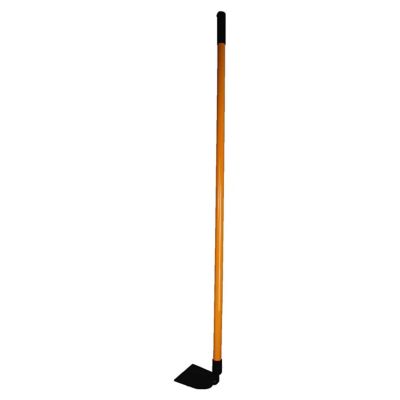
A long handle digging spade is a garden and landscaping tool that pairs an extended handle with a relatively flat blade for cutting into soil, lifting manageable sections of earth, and making straight edges. The extra reach can let you work from a more upright position than a short-handled tool, though comfort depends on your height, stance, and the weight of each load. A square or straight cutting edge suits jobs such as opening a planting bed beside the barn, trimming turf along a walkway, or separating soil around a shrub before moving it. Compared with a round-point shovel, which generally has a more scooped blade for digging and carrying loose material, a digging spade puts more emphasis on controlled cuts and tidy sides. Blade shapes vary within this tool family: broader blades cover more ground when turning a bed, while narrower blades fit tighter spaces and remove smaller bites of packed soil. A straight edge can cut through sod and fine roots, but thick woody roots call for a pruning tool rather than repeated blows with a spade. When the cooler months bring bed cleanup and planting work, a long-handled spade can earn its place beside the rake and garden fork. It suits vegetable growers, homeowners tending foundation beds, and folks keeping up the grounds around a small farm. For anyone comparing long handle digging spades, the most useful details are blade dimensions, handle length, overall tool length, weight, and grip style. Measurements deserve a close look because a listed length may describe the entire tool rather than the shaft alone. Tools in the 40- to 48-inch range may refer to overall length, and longer straight-handled designs can extend beyond that range. Matching those measurements to the job matters more than choosing the longest handle. A tool that feels comfortable cutting a shallow border may feel quite different when lifting damp clay from the bottom of a planting hole.
Blade material and construction help determine how a digging spade handles everyday ground work. Carbon steel takes a keen edge and stands up well to demanding digging when properly maintained, but exposed surfaces need attention to limit rust. Stainless steel offers greater resistance to corrosion and can be easier to clean, though performance still depends on the blade’s thickness, shape, and construction. A coating on a steel blade provides a barrier against moisture until wear or scratches expose the metal beneath it. Look beyond the finish to the connection between the blade and handle, where much of the stress collects during digging. A firmly fitted socket, sound fasteners, and a handle without cracks or movement are important for steady control. Hardwood handles offer a familiar feel and some flex; fiberglass handles resist moisture-related swelling and do not develop wood splinters, though damaged fiberglass can expose irritating fibers. Steel shafts provide a rigid feel but may add weight, depending on the design. None of these materials makes a spade suitable for levering out large rocks or stumps. For fit, consider where your hands naturally land and whether you can keep the blade close to your body without hunching over. A straight handle gives room to shift hand positions, while a D-shaped grip offers a defined handhold for steering the blade and controlling a lift. Glove clearance matters with an enclosed grip, especially during chilly weather. A broad foot tread along the top of the blade gives a boot a steadier place to press than a thin blade shoulder. Tread size and placement vary, so consider the footwear you normally wear for yard work. Tool weight also deserves attention: a heavier head may help a cutting edge enter firm ground, but that same weight adds up over a stretch of planting or edging. Balance, grip comfort, and a manageable blade load make a bigger difference over an afternoon than handle length alone.
Intended use is often the clearest way to narrow down a long-handled digging spade. For a vegetable patch, a medium-width blade can open planting spaces and turn small sections without moving more soil than necessary. Along a lawn edge, a straight blade helps leave a crisp line between grass and a bed. Around established plants, a narrower blade gives more room to work, although care is still needed to avoid roots you want to keep. For smaller planting pockets and lighter digging within an existing bed,
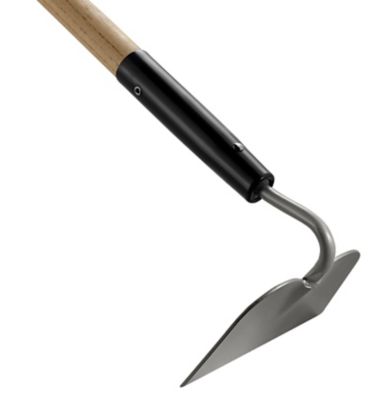
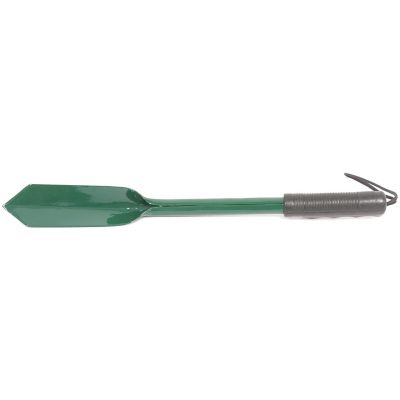
Long Handled Trowels offer another tool shape worth considering alongside a full-size spade. Ground conditions affect the work just as much as tool selection. Clay that is slightly moist is usually easier to cut than baked-hard clay, while saturated ground clings to the blade and can become compacted underfoot. Gravelly soil calls for patience and smaller cuts rather than twisting the handle against buried stones. Frozen ground is better left until it softens instead of forcing a garden spade through it. Before opening a new bed or trench, arrange to have underground utilities marked through 811 and account for irrigation lines or other private buried features that may need separate locating. Between jobs, brush or rinse soil from the blade, dry the metal, and store the tool under cover rather than leaving it standing in a damp bed. Follow the maker’s directions for protecting exposed steel, treating a wood handle, and maintaining the cutting edge. Check the grip, shaft, and blade connection regularly, and take a tool with cracks, looseness, or a bent blade out of service. These simple habits help a spade stay ready for the next stretch of fence-line planting or garden work. As a practical gift for a gardener or someone settling into a place with more land, a digging spade makes sense when its length, weight, and grip suit the person who will carry it out to the beds.