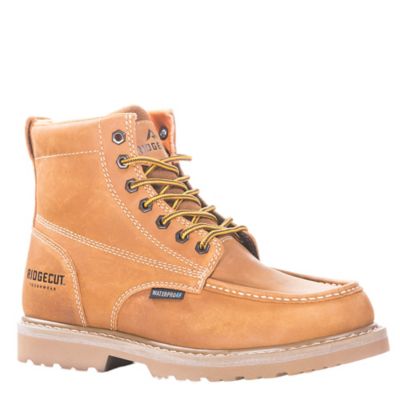
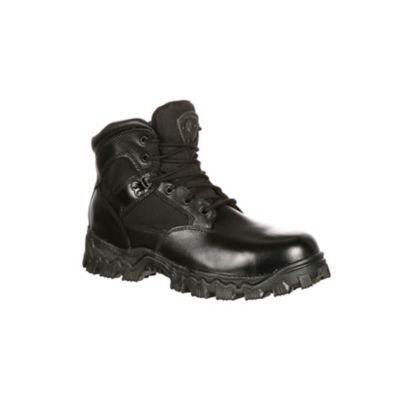
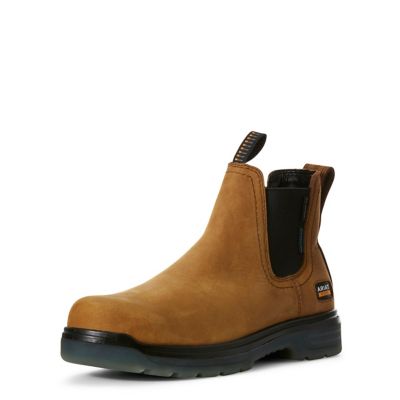
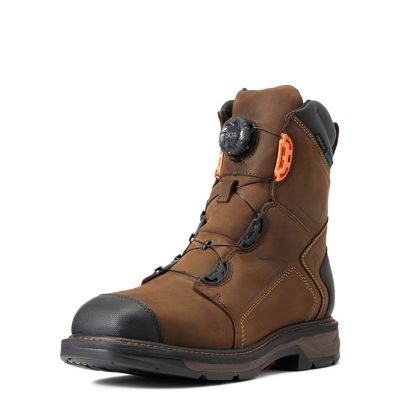
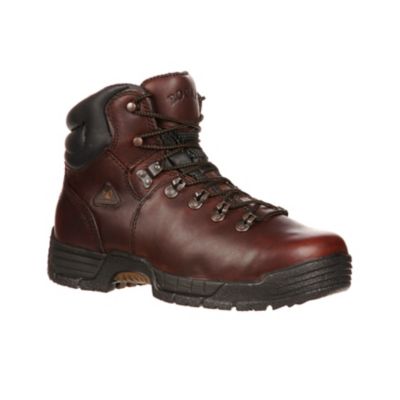
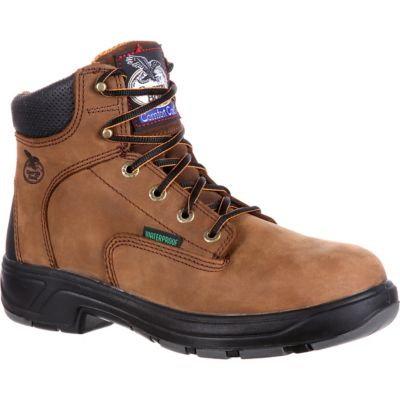
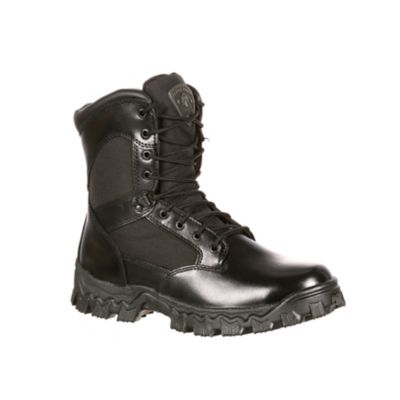
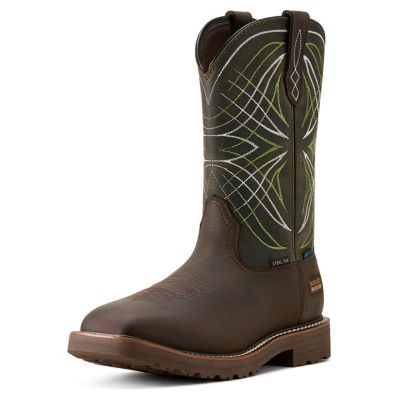
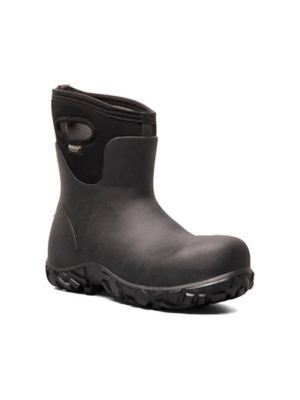
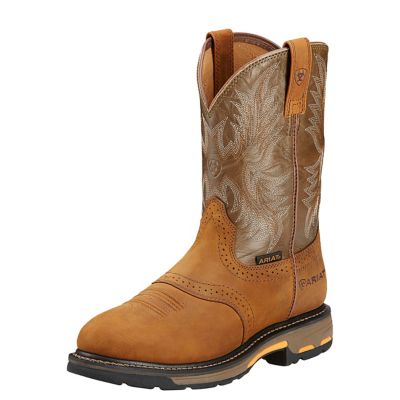
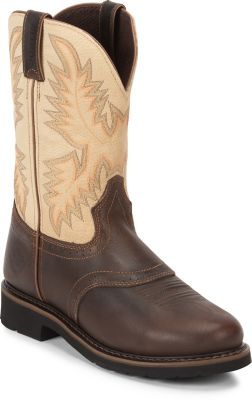
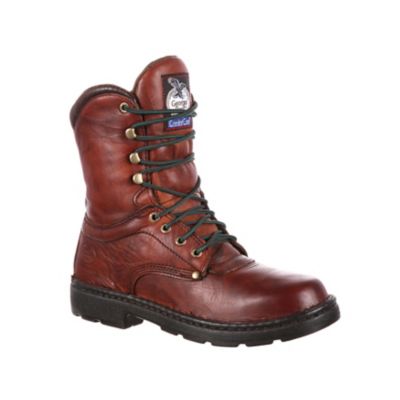
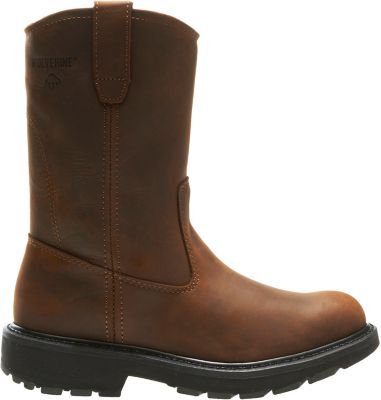
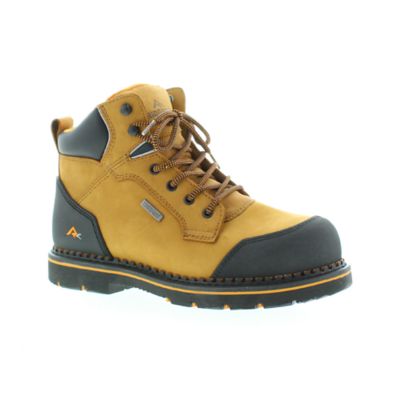
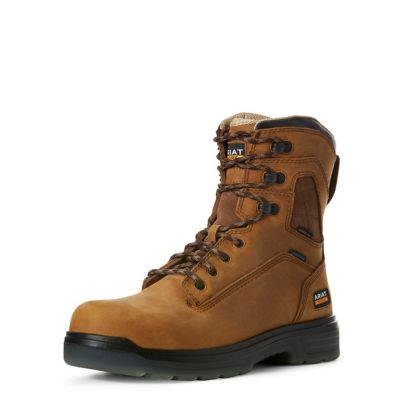
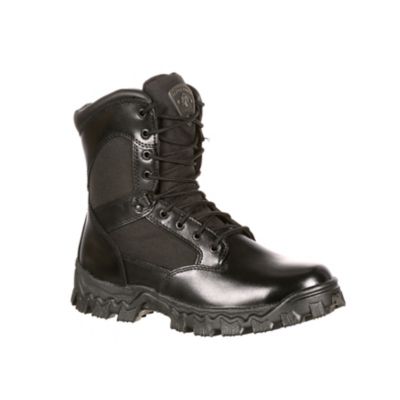
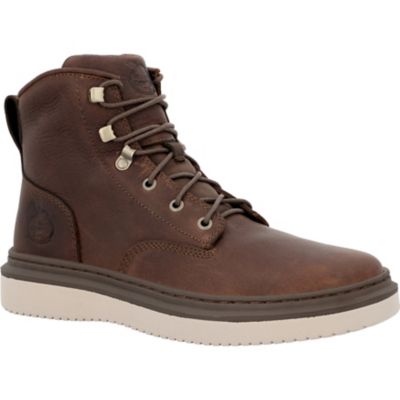
Lightweight waterproof work boots combine lower-weight construction, water-blocking features and underfoot support for jobs that keep feet moving through wet conditions. That combination makes sense for farm chores, property maintenance, landscaping and other work where a day can include damp grass, muddy lanes and a splash around the wash rack. Less weight underfoot can make repeated trips between the barn, truck and tool shed feel less cumbersome, especially when the work involves plenty of walking. The balance comes from the whole boot, not just its weight: upper materials, cushioning, outsole construction and the type of toe protection all affect how it feels through a full day. Leather uppers provide structure and abrasion resistance, while textile panels can help trim weight and give the boot a more flexible feel. Some designs combine both materials to put reinforcement around high-contact areas without making the entire upper heavy or stiff. Waterproof membranes and sealed construction help block water from reaching the foot, while a gusseted tongue helps close the gaps beside the laces. A water-resistant surface treatment alone is not the same as waterproof construction, and even a waterproof boot has limits. Water can enter over the collar, and standing in water deeper than the boot’s waterproof coverage calls for a different type of footwear. Breathability matters, too, because moisture can come from inside the boot as well as outside it. A lining that allows moisture vapor to escape can help manage that buildup, although activity level, socks and individual perspiration still affect comfort. For someone carrying feed to a pen, checking fence along a wet field edge or working around a frequently rinsed floor, lightweight waterproof work boots offer a practical middle ground between a heavy work boot and footwear that lacks the support or protection the task requires. A taller shaft adds coverage around the ankle and lower leg, while a lower profile can allow easier movement; the right balance depends on where the work takes place and how much coverage it calls for.
Fit has a lot to do with whether that lighter build pays off through a long stretch on foot. A work boot needs enough room for toes to spread without leaving the foot sliding around inside. The heel should feel held in place, the widest part of the foot should line up with the widest part of the boot, and the toes should not hit the front when walking down a slope. Safety-toe footwear needs particular attention here because the protective toe cap will not stretch to make extra room. Sock thickness and any footbeds or prescribed orthotics also affect fit, so the size that works in casual shoes may not feel the same in work footwear. Men comparing these features can also explore
Mens Lightweight Waterproof Boots, keeping the same focus on toe room, heel hold and support for the job. Lace-up construction allows adjustment across the instep and ankle, while pull-on styles skip the laces and depend more on the shape of the shaft and heel area to hold the foot. Neither style should require cramped toes to keep the heel from moving. Underfoot, foam midsoles can cushion repeated steps, and supportive footbeds can help spread pressure across the sole. A shank or other stabilizing structure may add support when the work includes uneven ground or time on ladder rungs, though the boot still needs to suit the equipment and task. Protection requirements deserve their own attention rather than being judged by weight alone. Composite safety toes can help limit weight in some constructions, while steel and other safety-toe materials have their own design tradeoffs. A soft toe does not provide the impact and compression protection of a rated safety toe. Applicable safety markings and workplace requirements matter more than appearance, and waterproof construction by itself does not establish electrical-hazard protection or any other safety rating. For a gift recipient whose work calls for protective footwear, knowing the required ratings and usual boot fit is more helpful than guessing from shoe size alone.
Outsoles make a noticeable difference when the ground changes between the gravel drive, concrete shop floor and muddy path beside the barn. Deeper, more open lugs can help shed loose soil, while tread patterns with more contact area may suit firmer surfaces. Slip-resistant footwear is designed for particular conditions and testing methods; no tread can guarantee footing on every wet, oily or uneven surface. Mud packed into the sole can also reduce the tread’s ability to grip, which makes easy-to-clean channels a useful detail for work around livestock or freshly watered ground. Abrasion-resistant toe overlays, reinforced heel areas and sound stitching can help boots stand up to scuffs from tools, gates and rough surfaces. Lightweight construction still needs enough substance in the places that take a beating, especially for someone who kneels often or brushes the toe against concrete while working close to the ground. Flexibility should come where the foot naturally bends, without making the boot feel loose or unstable. Care helps preserve both the upper and the waterproof system over time. Brushing away dried dirt and rinsing off mud as the manufacturer directs keeps grit from lingering around seams and flex points. Leather may need a compatible conditioner, while textile panels and waterproof membranes require cleaning products suited to their construction. Treatments should follow the boot maker’s directions rather than relying on heavy coatings that can affect breathability or materials. Removable insoles can be taken out for drying, and boots need airflow away from heaters, open flames and other direct heat that can damage leather, adhesives or internal layers. Wear around seams, cracked soles and separated joints can compromise water protection even when the upper still looks serviceable. For daily chores and walking-heavy jobs, the lasting value of lightweight waterproof work boots comes from this combination of manageable weight, a steady fit, task-appropriate protection and regular care—not from weight alone.