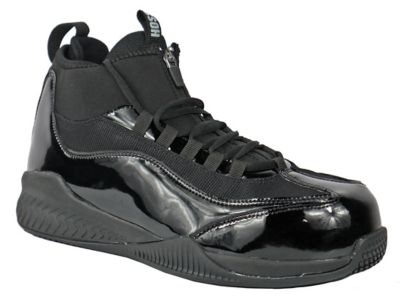
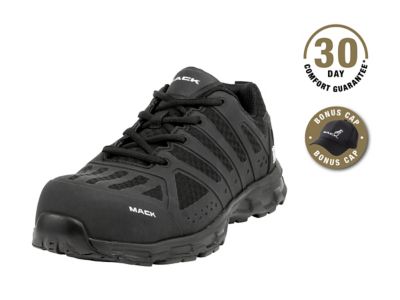
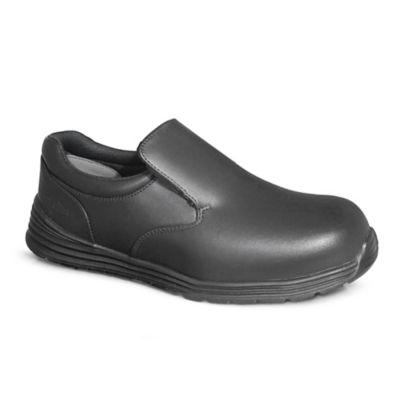
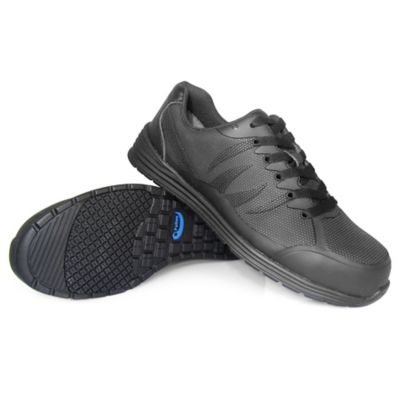
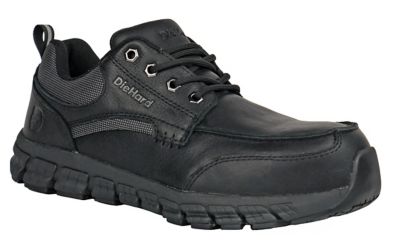
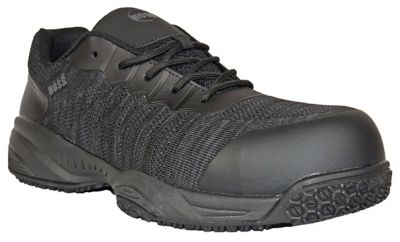
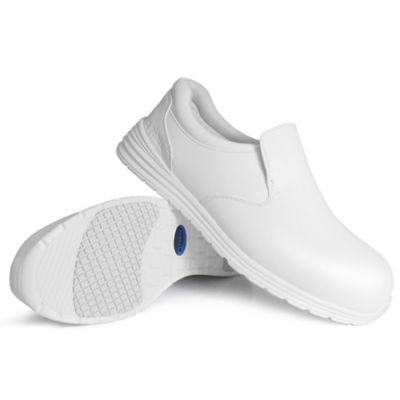
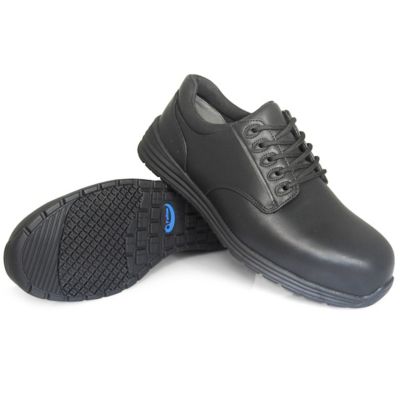
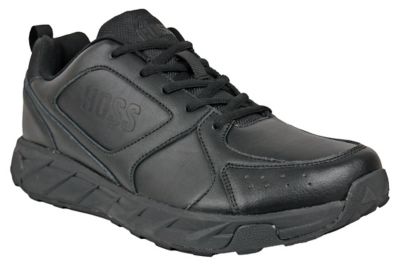
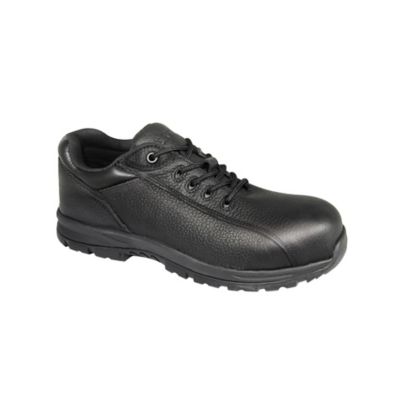
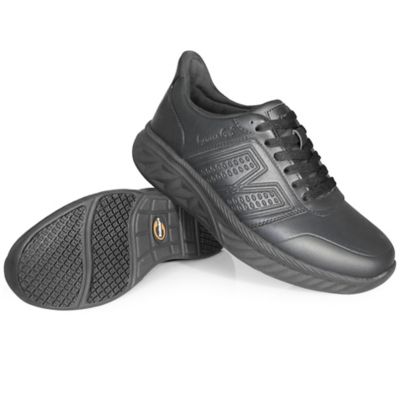
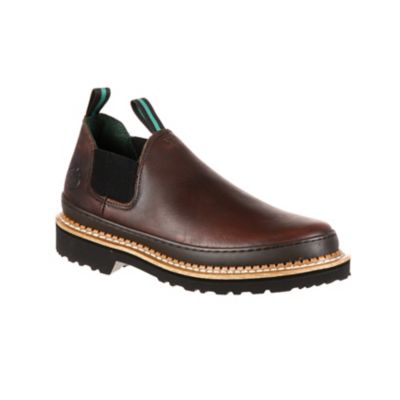
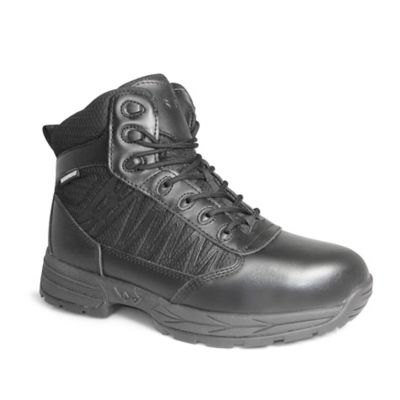
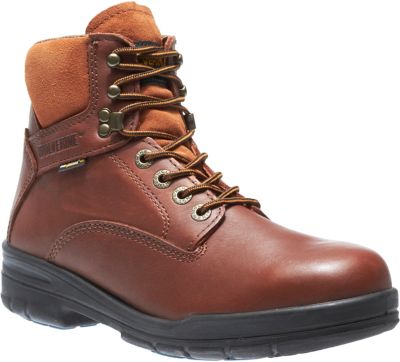
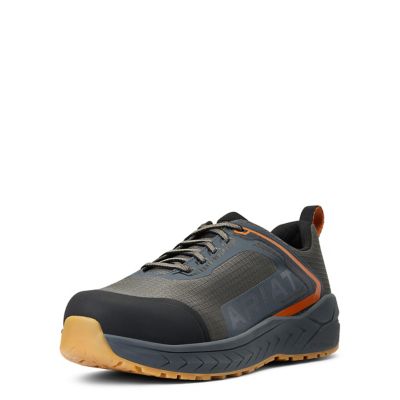
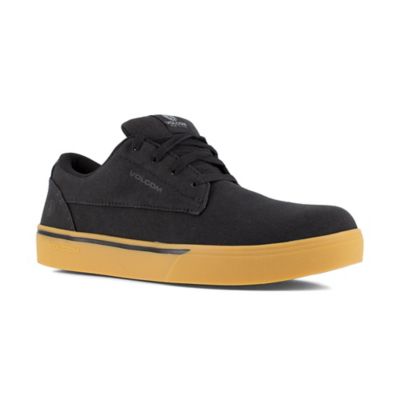
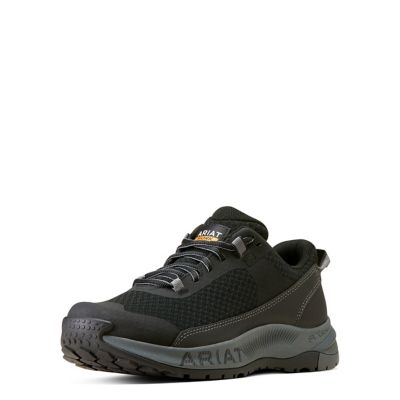
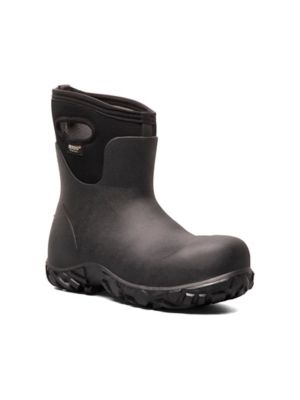
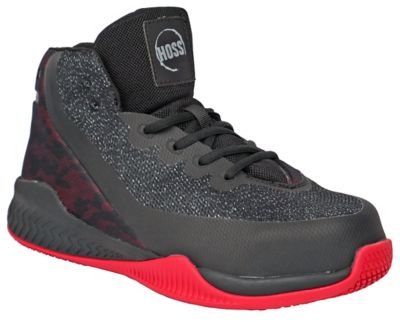
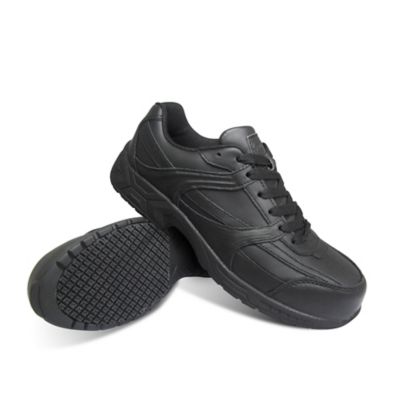
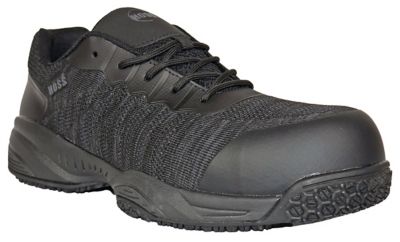
Lightweight safety shoes for men bring a lower-profile feel to jobs that keep feet moving, from walking warehouse aisles to handling feed bags or spending hours at a shop bench. Less weight underfoot can make a difference when the day includes repeated trips between a loading area, storage room and work station. These shoes often pair the familiar shape of an athletic shoe with a protective toe and work-focused outsole, though their protection depends on the construction and ratings of each pair. Steel, alloy and composite safety toes all have a place in this category. Steel can provide protection in a relatively slim toe cap, while aluminum alloy and composite options may help reduce weight. A composite toe does not automatically mean the entire shoe is metal-free, and the toe material alone does not determine how light a shoe feels. The upper, outsole and cushioning all contribute to the finished weight. ASTM F2413 markings identify safety-toe footwear tested for impact and compression, with additional markings indicating other tested protective features. Workplace requirements matter more than appearance, especially around falling objects, rolling equipment or electrical hazards. Electrical-hazard protection and static-dissipative properties serve different purposes and are not interchangeable. Slip resistance is another consideration for work around smooth concrete or occasional spills, but no outsole makes every surface slip-proof. Tread condition, floor contaminants and the way a person moves all affect traction. For men who move between a parts counter and a stockroom, or between a farm shop and equipment storage, a lightweight safety shoe can offer a practical middle ground between an everyday sneaker and a taller work boot. Tasks involving deep mud, substantial ankle exposure, hot metal or other specialized hazards may call for different footwear altogether. The right match starts with what happens on the job, not just how the shoe looks or how little it weighs.
Fit has just as much influence on long-day comfort as the number on the scale. A safety toe creates a firm boundary at the front of the shoe, so toes need room to lie naturally without rubbing the cap, pressing against the end or feeling pinched across the widest part of the foot. That protective area will not stretch like a soft upper might. A secure heel and close, comfortable fit through the midfoot help keep the foot from sliding forward when stopping, turning or walking down a ramp. Extra length is not a substitute for enough width, and a shoe that feels roomy in front can still grip too tightly over a high instep. Trying footwear with the socks normally worn on the job gives a better sense of working fit; thicker socks, cushioned footbeds and prescribed orthotics all take up interior space. Feet may also spread or swell over a long shift, making a late-day fit check useful. Inside the shoe, lightweight foam midsoles can soften repeated steps on concrete, while firmer support structures may help the shoe feel steadier underfoot. More cushioning is not always more comfortable: a very soft platform can feel less settled during tasks that involve carrying weight or standing in one place. A broad base, a heel that stays seated and cushioning suited to the task often matter more than a plush first impression. Removable insoles can make cleaning and replacement simpler, but replacement footbeds need to preserve toe clearance and follow the footwear maker’s guidance, particularly with electrically rated styles. Lacing also matters. Even tension through the eyelets can hold the foot without bearing down on one spot across the top. For someone walking a large facility, climbing approved access steps or shifting between standing and short carries, a shoe that bends comfortably at the forefoot while keeping the heel secure can feel easier to move in than a stiff or poorly fitting pair.
Materials and construction help determine how lightweight men’s safety shoes handle the demands of a particular workplace. Leather uppers can stand up well to repeated rubbing against benches, pallets and equipment, while textile and mesh panels can reduce weight and allow more airflow. Synthetic overlays can add reinforcement around high-contact areas without wrapping the whole foot in a heavier material. Open mesh has tradeoffs, though: fine dust and small debris may find their way through, and a breathable upper is not necessarily a barrier against liquids. A more enclosed construction may make better sense in a dusty feed room or around frequent splashes, depending on the substances involved and the shoe’s stated protection. At ground level, outsole shape and compound affect grip, flexibility and wear. Shallower tread can be easier to clear of small bits of debris, while deeper channels may offer more bite on certain surfaces; neither pattern works equally well everywhere. Oil resistance describes how an outsole material responds to oil exposure, not a guarantee of traction on an oily floor. Regular care helps preserve the features that make a pair comfortable and serviceable. Brushing away grit, wiping off surface dirt and following the maker’s cleaning directions can keep buildup from working into seams and flex points. Leather may need a compatible care product, while mesh often calls for gentle cleaning rather than heavy coatings. Letting shoes air-dry away from direct heat helps protect adhesives and materials. A quick look at worn tread, loose stitching, separating soles or a damaged lining can reveal when a pair needs attention. A safety toe that takes a substantial impact may need replacement even when the outside looks intact, so manufacturer guidance matters after an incident. The
Mens Lightweight Work Shoes page provides a broader look at related footwear, with fit, construction and the job’s required protection remaining the main considerations.