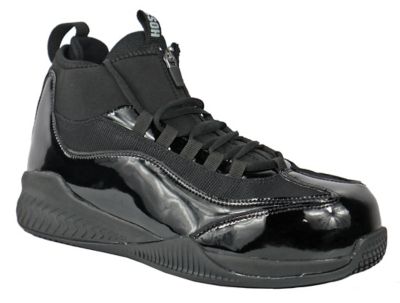
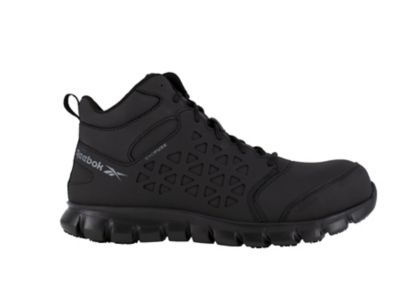
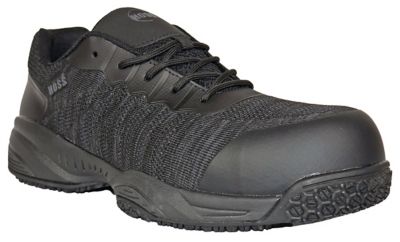
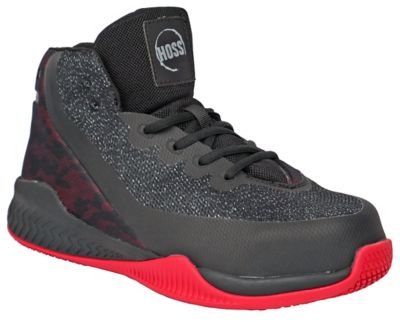
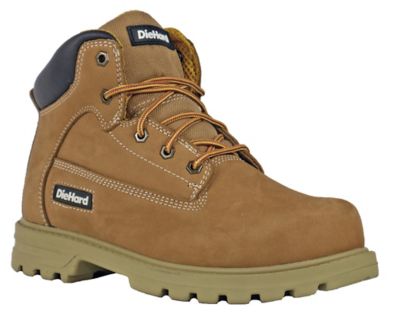
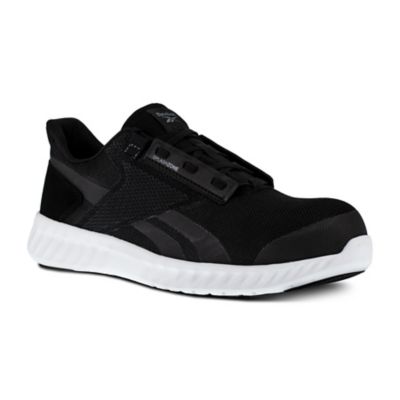
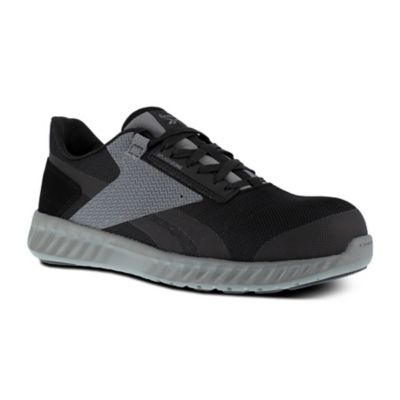
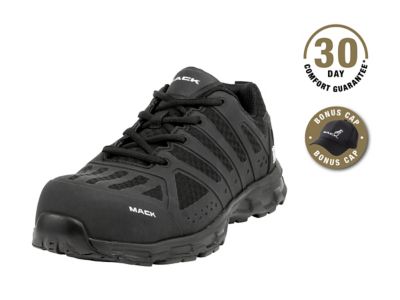
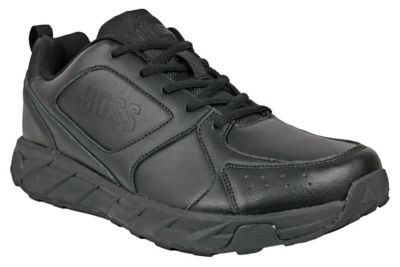
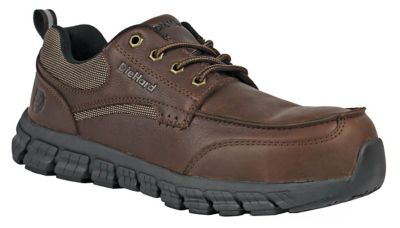
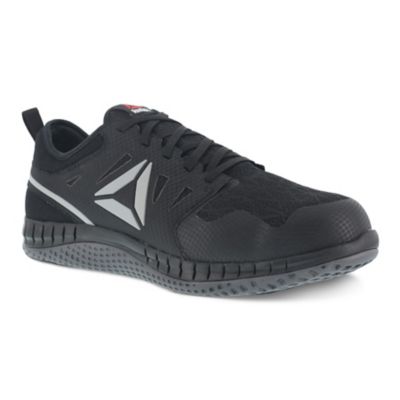
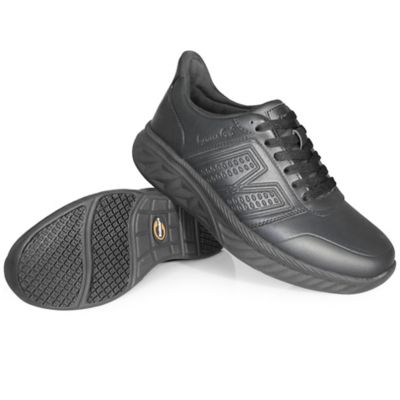
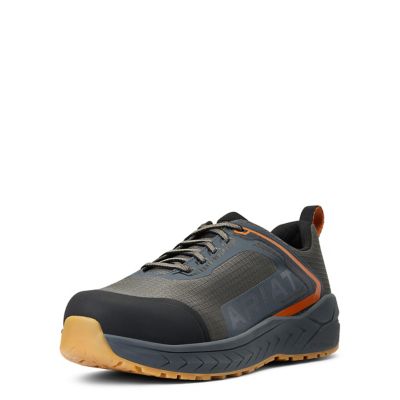
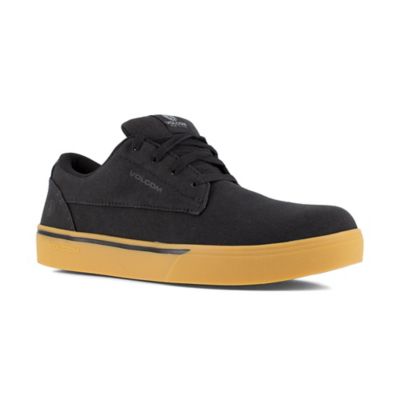
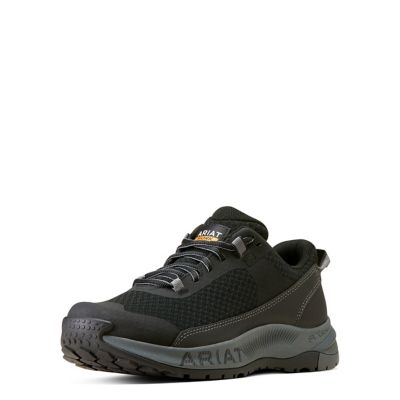
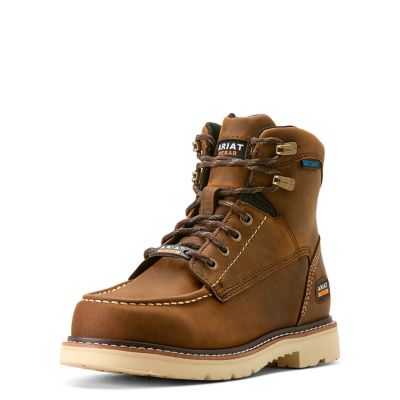
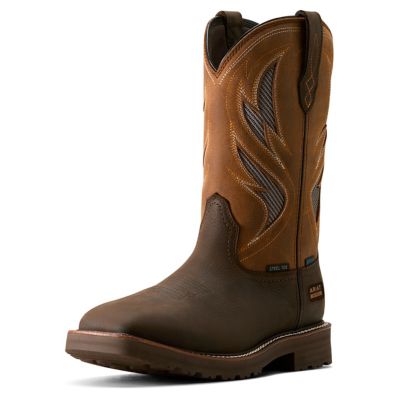
Men’s lightweight work shoes are low-cut shoes built for jobs that keep you on your feet and on the move. Many have the flexible feel of an athletic shoe, with work features such as a slip-resistant outsole, a reinforced upper or a protective toe, depending on the design. A lighter pair can make sense when the day means walking the length of a warehouse, climbing in and out of a delivery van or bouncing between the parts counter and the shop floor. Start with what the job calls for, then think about where most of those steps land. On smooth concrete, tile or sealed floors where spills are common, look for a slip-resistant outsole tested to a standard such as ASTM F3445. A deep tread that grips packed dirt isn’t necessarily the best match for a slick kitchen floor, and no sole can prevent every slip. For duties without a protective-toe requirement, a soft-toe work shoe may offer more flex across the front of the foot. Where falling or rolling objects are a concern and the job calls for a safety toe, look for footwear marked to meet the applicable ASTM F2413 impact and compression requirements. Composite toe caps made with materials such as fiberglass or carbon fiber can weigh less than steel, though the sole and upper also contribute to the weight of the shoe.
Lightweight Safety Shoes for Men are worth a look when toe protection is on the job list but a heavy boot isn’t needed. Check separately for any required electrical hazard or puncture protection, since a safety toe doesn’t cover either by itself. If the work takes you through deep ruts, around loose rubble or into a site that requires more ankle coverage, a higher work boot may be a better fit for the job.
The upper, midsole and fit all matter as much as the number on the scale. Mesh lets air move through the upper and bends easily at the forefoot, which can feel good on a long walk down a row of storage racks. Leather and smooth synthetic uppers tend to wipe clean more easily after a day around grease, feed dust or shop grime. Some styles put mesh where the foot needs room to bend and add tougher panels where the shoe is more apt to scrape, such as around the toe and along the sides. Underfoot, the midsole provides most of the cushioning. Soft foam can take some of the sting out of repeated steps on concrete, while a broader, firmer base may feel steadier when standing at a workbench or pivoting with a loaded tote. A removable footbed can make room for an insert, but the insert shouldn’t crowd the toes or lift the heel out of place. Try on both shoes with the socks you normally wear to work, preferably after spending some time on your feet. Aim for roughly a thumb’s width of room beyond the longest toe, enough space to wiggle your toes and a heel that stays put without rubbing. Walk a few turns and bend at the forefoot instead of judging the fit while standing still. If the edge of a protective cap pinches when you crouch to reach a low shelf, it’s not likely to give the way a soft upper might. A wider size or a different toe shape is often a better choice than going longer and winding up with a heel that slides. Laces can help snug the shoe over the instep without squeezing the forefoot, while a pull-on style needs a close enough fit to stay put on stairs and ramps.
Lightweight construction doesn’t have to mean a short working life, but the way a shoe is built should match the wear it’ll see. Toe overlays can help take the scuffs that come from kneeling at a bench or brushing against a pallet, and a rubber outsole that covers the heel and forefoot can take repeated contact with rough concrete better than exposed cushioning foam in those spots. It’s worth paying attention to how the shoes wear after they’ve been on the job a while. A sole may still look fine around the edges while the tread under the ball of the foot has worn smooth. Along with worn tread, look for a heel that leans to one side, a sole pulling away from the upper or cushioning that feels flat in one spot. Follow workplace rules for replacing protective footwear after a significant impact, even if the toe looks fine from the outside. Basic care goes a long way. Brush grit out of the tread so it doesn’t pack into the grooves, wipe smooth uppers with a damp cloth and follow the maker’s care directions for mesh or leather. Let damp shoes air-dry away from direct heat, taking out removable footbeds so air can reach underneath. If a pair is meant as a gift for someone who works on a loading dock, makes deliveries or spends long stretches at a service counter, check their usual work shoe size and width along with any required safety features before picking a pair. The last thing someone needs halfway through a shift is a heel that rubs or a toe cap that presses every time they bend down. A good match comes down to a shoe that meets the job’s requirements, grips the surfaces underfoot and fits just as well at the end of the shift as it does when the laces first get tied.