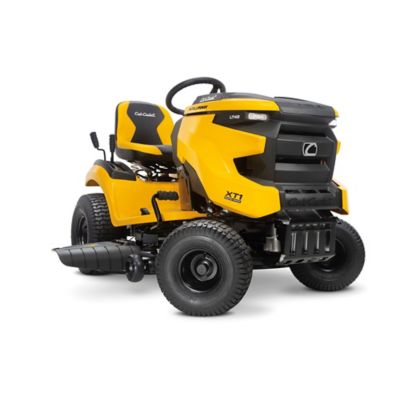
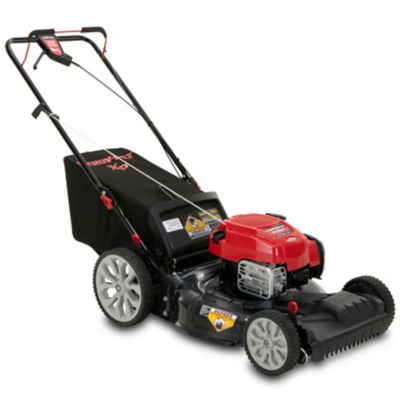
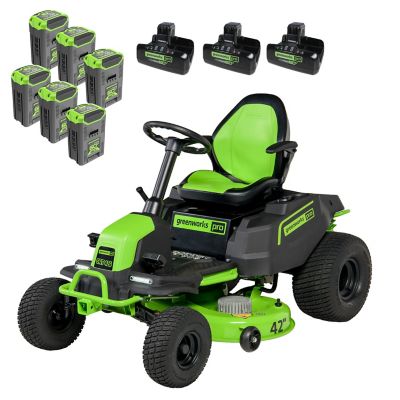
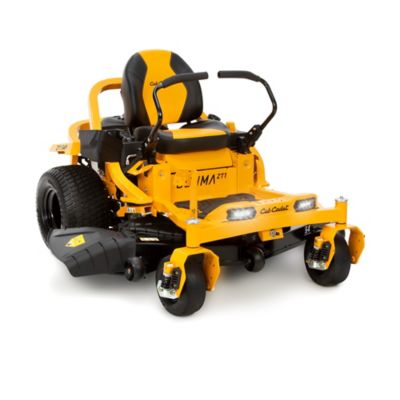
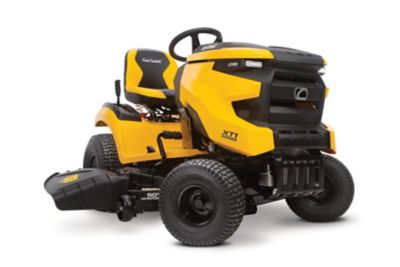
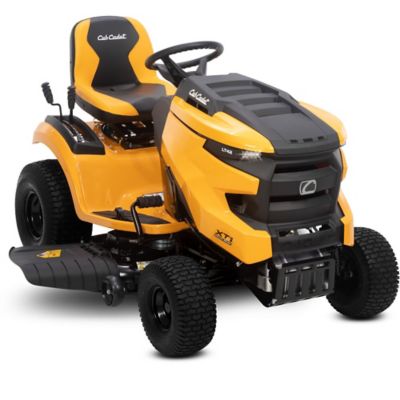
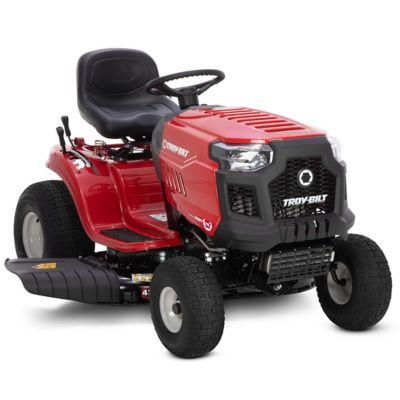
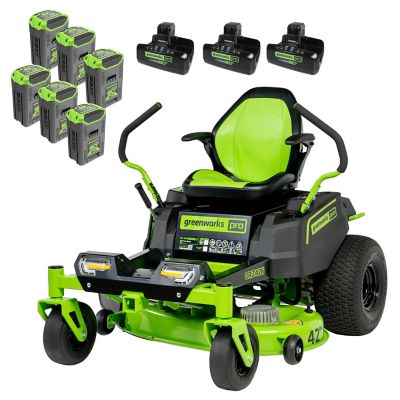
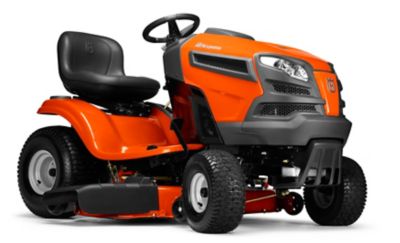
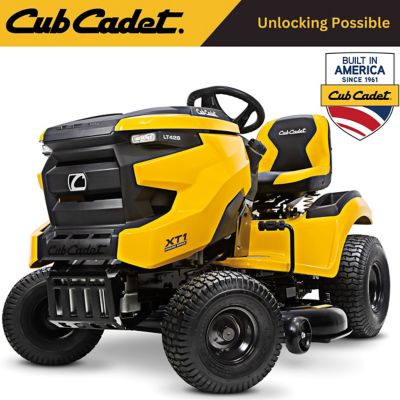
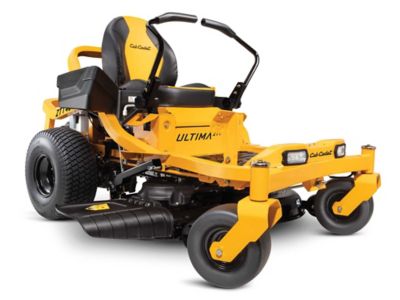
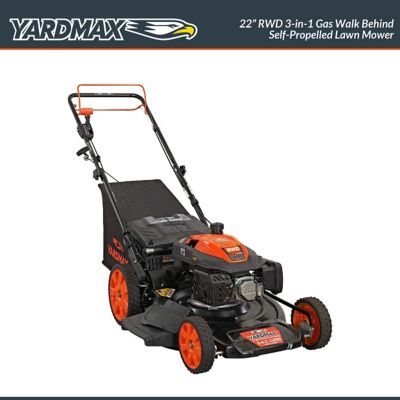
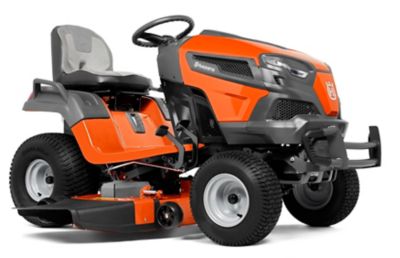
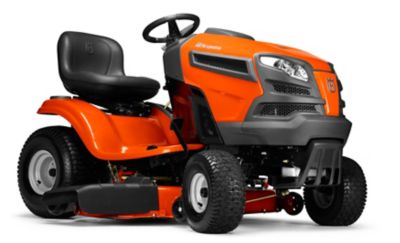
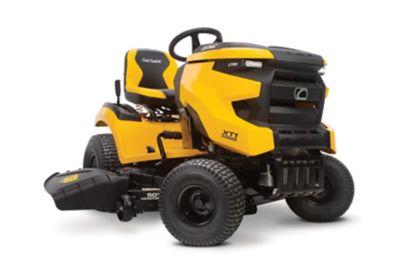
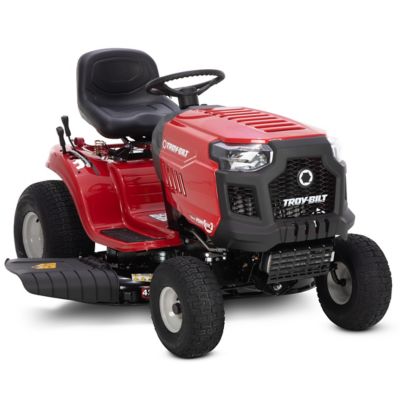
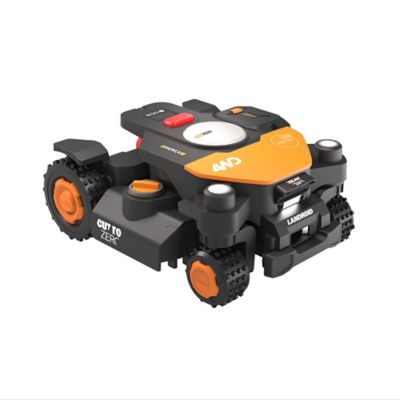
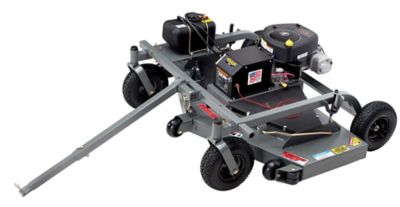
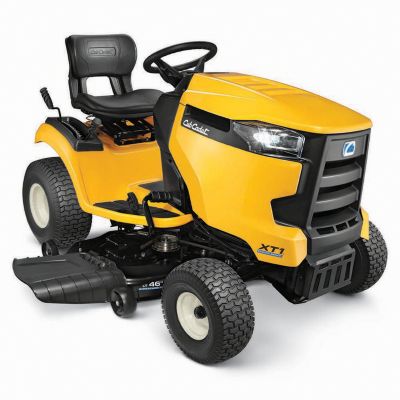
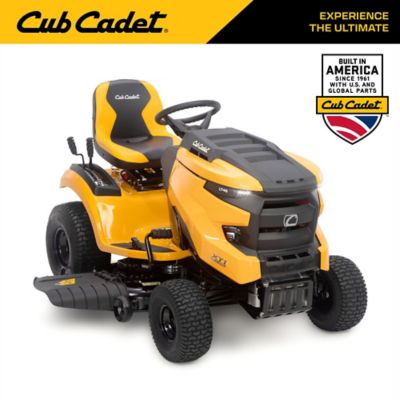
Lawn mowers with differential lock help keep power working at both rear wheels when traction gets uneven. In a conventional open differential, the rear wheels can rotate at different speeds, which makes turning easier. But when one tire loses its grip, that wheel can spin while the other does little to move the mower forward. A locking differential connects the rear wheels so they turn at the same speed while the lock is engaged. That gives the tire with better footing a chance to help move the machine instead of leaving one wheel spinning in place. For a homeowner cutting a large yard, a landowner maintaining grass around outbuildings, or someone tending long stretches beside a fence, that added traction can make a difference on suitable ground. Picture a shallow dip where one rear tire carries less weight, or a loose patch along the edge of a gravel lane. Differential lock can help the mower maintain forward movement in those situations, though results still depend on tire contact, ground conditions, and the machine’s design. This feature is most often associated with certain riding lawn tractors and garden tractors, and it is not the same as four-wheel drive. Locking the rear differential does not send power to the front wheels. It also does not improve braking, prevent a rollover, or make a steep slope safe to mow. The manufacturer’s slope limits and operating directions still set the boundaries, regardless of how much pulling grip the rear tires have. That distinction matters on rolling acreage: traction helps a mower move, while stability determines whether the terrain is suitable in the first place. A differential lock belongs alongside deck size, steering response, transmission design, and operator comfort when considering how a mower fits the property—not in place of them.
The way a differential lock engages affects how the mower feels during an ordinary mowing job. Some systems have a foot pedal or another manual control, while others engage automatically according to their design. A manual system gives the operator direct control over engagement; an automatic system handles that function without a separate action each time its operating conditions are met. Neither description tells the whole story, so the equipment specifications and operator’s manual matter more than a broad traction label. A limited-slip differential can help manage differences in wheel traction, but it should not be treated as interchangeable with a full differential lock. Engagement speed, release behavior, and turning restrictions can vary between machines. With many manual locks, engagement calls for slow travel or a stop before wheelspin develops, following the manufacturer’s procedure. Locking wheels that need to travel different distances through a tight turn can scuff the lawn and put extra load on drivetrain parts. Around a shade tree, beside a garden bed, or at the end of a narrow mowing strip, easy release and predictable steering are worth attention. The rest of the mower needs to fit those same spaces. A wider cutting deck covers more ground per pass on open acreage, while a narrower deck may pass through gates and work between established plantings more easily. Overall machine width, including the discharge chute in its operating position, matters just as much as the deck’s cutting measurement. Cutting-height range, deck adjustment, and enough clearance for the property’s contours help support an even finish without scraping high spots. Tire tread and proper inflation affect grip and turf marking, but aggressive tread is not a substitute for sensible operation. For properties with rough stretches, a
Lawn Mower With Suspension adds a separate comfort consideration: suspension can soften the ride, while differential lock addresses rear-wheel traction. Seat support, pedal reach, and a clear view of the mowing path also count when the job takes more than a quick lap around the house.
Construction and routine care help determine how well a riding mower stands up to repeated work. Steel frames and steel cutting decks are common, but material alone does not tell the full story. Deck thickness, reinforcement around high-load areas, spindle construction, and protection for belts and pulleys all deserve attention. Stamped and fabricated decks describe different construction methods; neither label by itself establishes how a complete mower will perform on a particular property. A sound match balances the mowing workload with the frame, deck, engine, and transmission rather than leaning on horsepower alone. A garden tractor with differential lock may also suit light property chores when its hitch, transmission, brakes, and manufacturer ratings permit the attachment. Pulling a compatible yard cart between the shed and garden is a different demand from cutting grass, and extra traction does not raise the mower’s towing capacity. Attachment weight, cart load, terrain, and stopping distance remain important even when the tires keep pulling. For someone spending long hours in the seat, practical details can matter as much as those larger specifications: reachable controls, room for work boots, a seat that adjusts to the operator, and service points that do not turn a routine check into a wrestling match. Ongoing care includes checking tire pressure to the manual’s specifications, keeping blades sharp and balanced, clearing grass buildup from the deck, and inspecting belts and guards. Differential-lock linkages or controls, transmission fluid, filters, and lubrication points need attention at the intervals specified for that machine; some transmissions have different service requirements than others. Before cleaning underneath or servicing the mower, shut it down, remove the key, wait for moving parts to stop, and follow the prescribed procedures to prevent accidental starting. Protected storage and prompt attention to leaks, unusual noises, or a lock that will not release help keep small issues from becoming bigger repairs. For the right property and operator, lawn mowers with differential lock bring useful traction support to a machine that still needs to cut cleanly, turn comfortably, and fit the everyday work around the place.