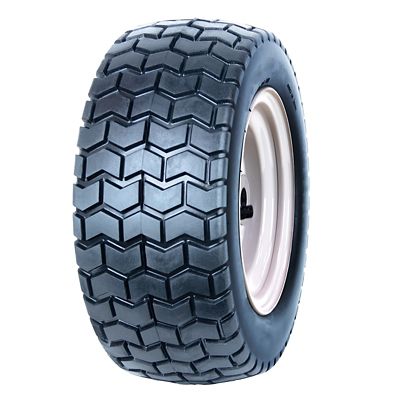
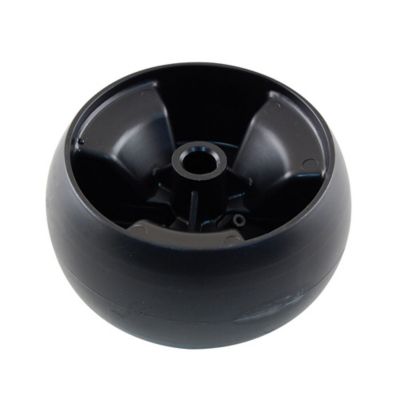
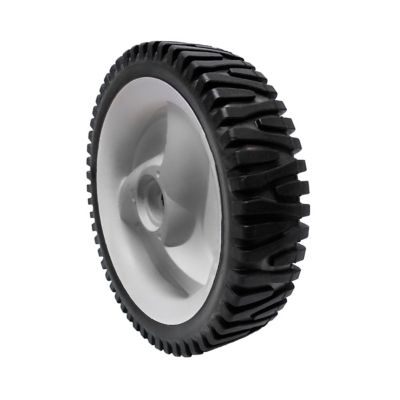
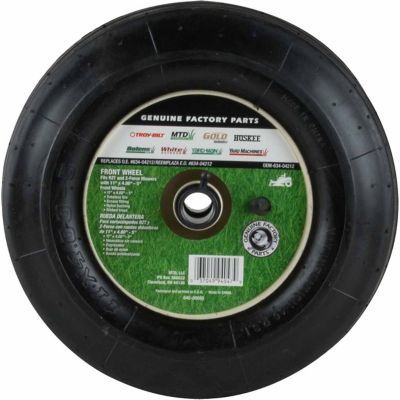
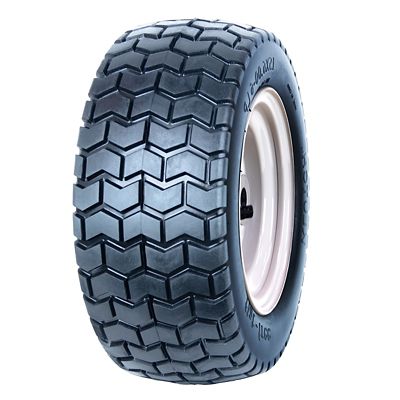
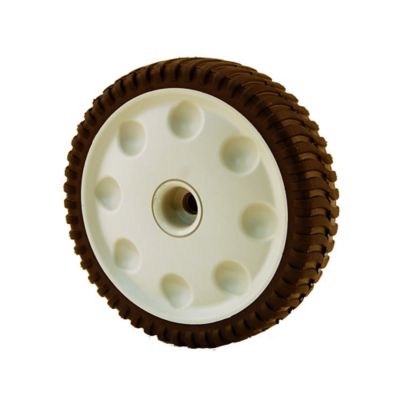
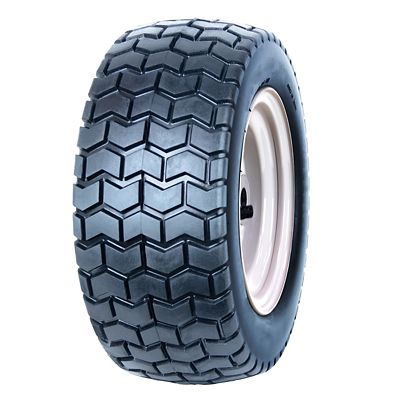
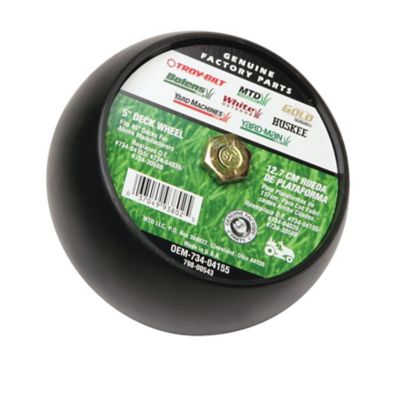
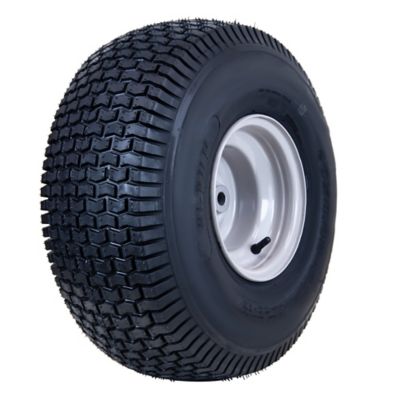
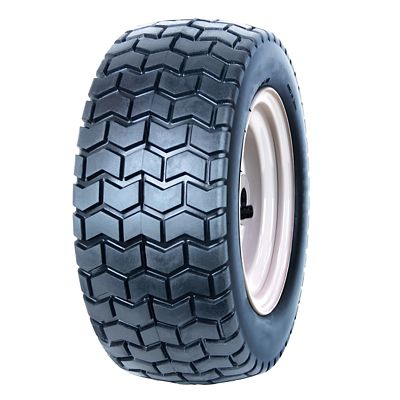
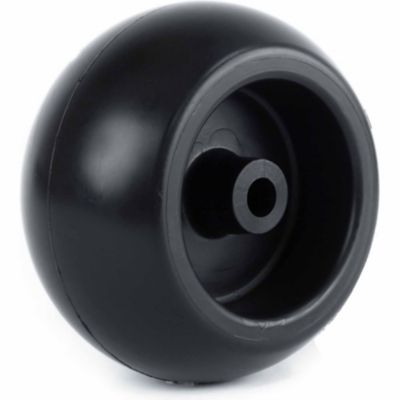
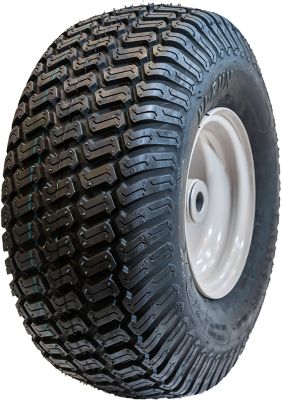
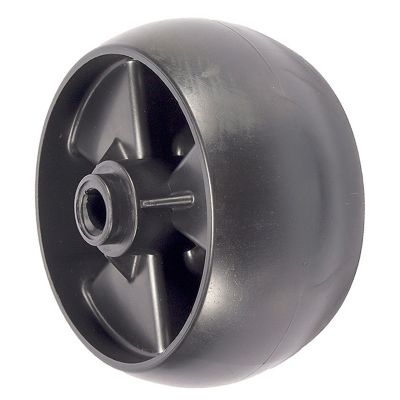
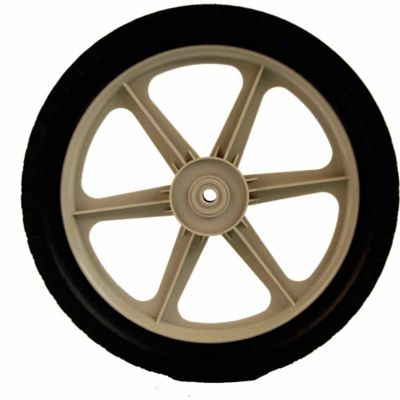
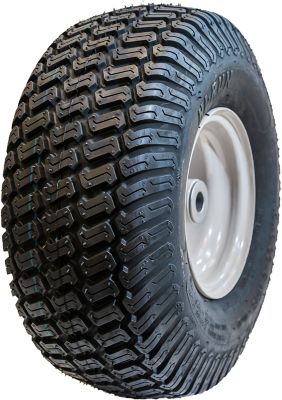
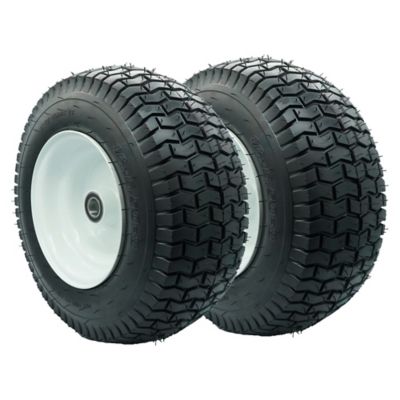
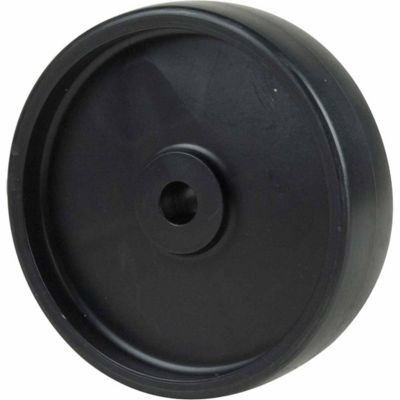
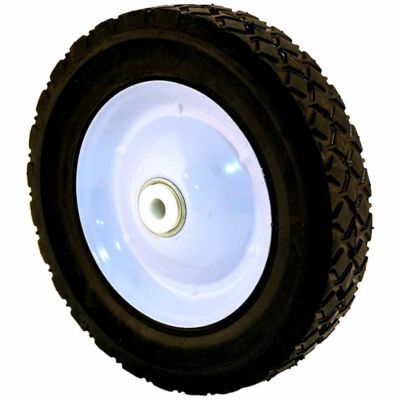
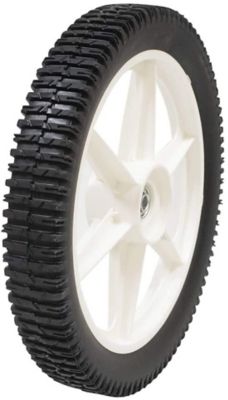
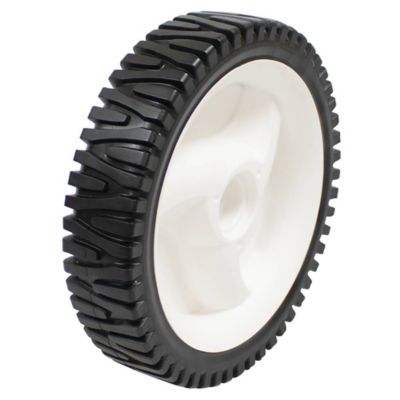
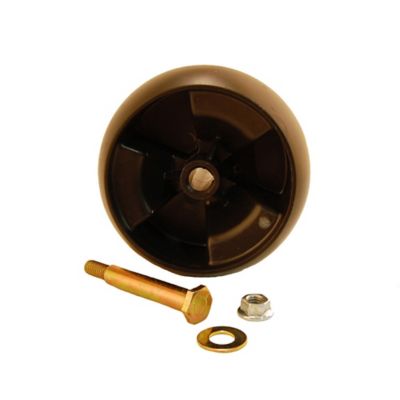
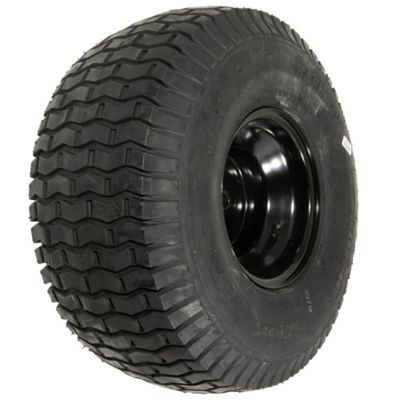
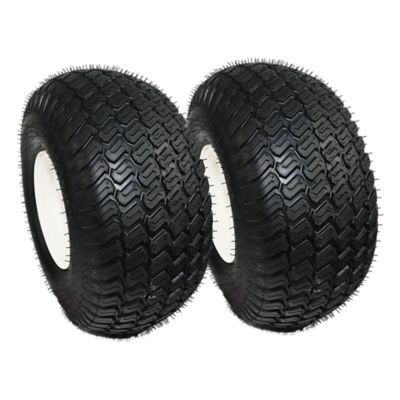
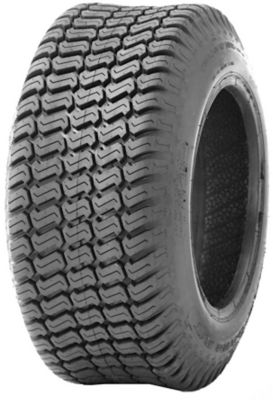
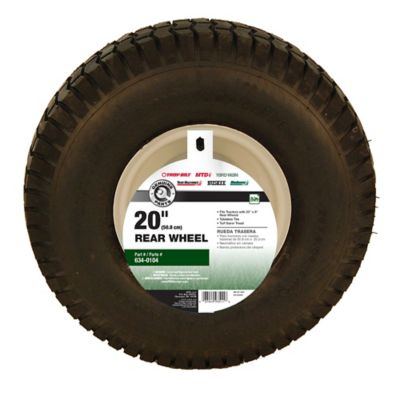
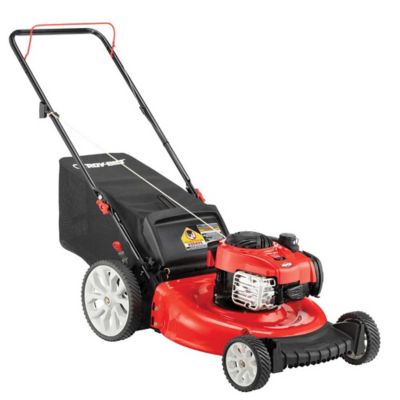
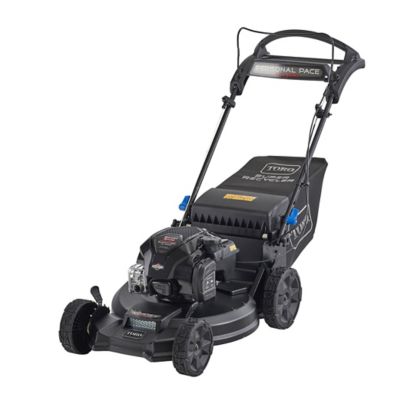
Lawn mower wheels carry the machine’s weight, help it roll across the yard and keep the cutting deck supported at its intended height. Replacement wheels come in several forms, from solid-tread wheels for push mowers to geared drive wheels for self-propelled machines and tire-and-rim assemblies for riding mowers. The right type depends on the mower’s design, not just how a wheel looks. Many walk-behind mowers have wheels roughly 7 to 12 inches in diameter, though smaller wheels and larger rear-wheel designs are also common. Riding mowers generally have larger assemblies with separate tire, rim and mounting requirements. A wheel assembly may include the tire, hub, bearings or bushings, but those components vary, so the assembly description matters. Solid rubber and other molded treads eliminate tire-pressure checks, while pneumatic tires contain air that helps cushion the ride over uneven ground. Flat-free constructions offer another option where the mower manufacturer permits them, but they are not interchangeable with every air-filled tire. Wheel centers may be molded plastic or steel, with each design built around particular weight, mounting and operating requirements. Steel can bend or develop rust after its finish is damaged; plastic can crack around a stressed hub or mounting point. Neither material alone tells the whole story about how a wheel will hold up. For a homeowner mowing around fence posts or a caretaker covering several yards, smooth rotation and sound mounting points matter as much as the tread. A worn wheel can wobble, drag or let one corner of the deck sit differently from the others. On a self-propelled mower, worn wheel gears can also interrupt the transfer of power from the drive system. Matching the replacement to the mower helps restore the rolling action the machine was designed to have.
Fit comes down to several measurements working together: overall wheel diameter, tread width, axle bore, hub length and hub position. The axle bore is the opening through the center of the wheel, and it needs to match the axle or mounting hardware specified for the mower. Hub length determines how the wheel sits between its mounting surfaces, while a centered or offset hub affects clearance beside the deck, height-adjustment arm and other nearby parts. Two wheels can share the same outside diameter yet mount differently because one has a longer hub or a different bearing arrangement. A wheel that sits too far inward may rub; one that sits too far outward may not leave enough room for the proper retaining hardware. The mower’s model information and parts diagram provide a stronger starting point than appearance alone, especially when an old wheel has worn down or lost pieces around the center. For push and self-propelled machines,
Walk Behind Mower Wheels covers the wheel category associated with those mower styles. Within that category, a free-rolling wheel and a drive wheel serve different jobs. Drive wheels need the correct gear arrangement and attachment design, and some assemblies are specific to the left or right side. Matching diameter without matching the drive connection will not give the mower the intended operation. Riding mower wheels bring additional details into the picture, including tire size, rim diameter, axle connection, load capacity and any keyway or bolt pattern. A tire size marking describes the tire rather than every feature of the complete assembly, so it does not establish wheel compatibility by itself. Front caster wheels on some zero-turn mowers also have their own bearing, spacer and mounting requirements. Keeping the specified wheel dimensions helps preserve deck geometry, clearance and handling. Taller wheels are not an automatic upgrade, and changing sizes can affect more than the distance between the mower and the ground.
Tread and wheel construction make a difference in everyday mowing, whether the route follows a long fence line, circles a few shade trees or passes through a narrow backyard gate. A tread pattern intended for turf balances grip with the need to turn without tearing up grass. More aggressive tread is not always better, particularly where a riding mower makes tight turns. Pneumatic tires need the pressure specified by the mower manufacturer; uneven pressure from side to side can affect how the machine sits and cuts. Solid and flat-free wheels skip that pressure check, but they still need sound bearings, intact tread and the correct fit for the mower’s load and operating speed. No wheel or tire change makes a mower suitable for slopes beyond the limits in its manual. For long service life, attention to the hub and axle is just as important as attention to the outside surface. Grass packed around the axle, string caught behind the wheel or grit working into a bearing can make an otherwise sound wheel hard to turn. Cleaning away buildup and checking for looseness can help catch trouble before a wheel begins leaning against the deck. Lubrication depends on the design: some hubs have service points, while sealed bearings may require no added grease. The owner’s manual sets the maintenance routine, along with the steps for shutting down and securing the mower before any wheel work. Cracks, missing tread, damaged gears, persistent wobble and a hub that no longer holds its bearing are all reasons to assess replacement rather than simply tighten the mounting bolt again. When one wheel is worn, checking its counterpart can reveal uneven wear or a separate axle problem. For folks maintaining a home lawn, a farmyard or several properties, a correctly matched mower wheel supports steady travel without turning routine upkeep into a bigger repair. The goal is a wheel that fits the machine, suits the work and rolls freely from the shed to the far end of the yard.