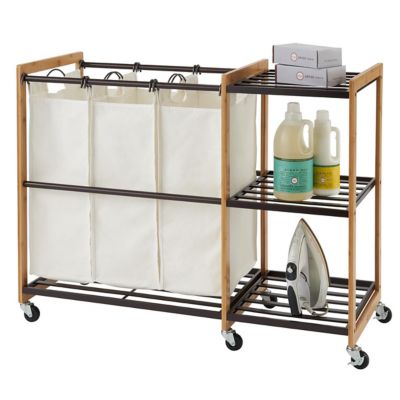
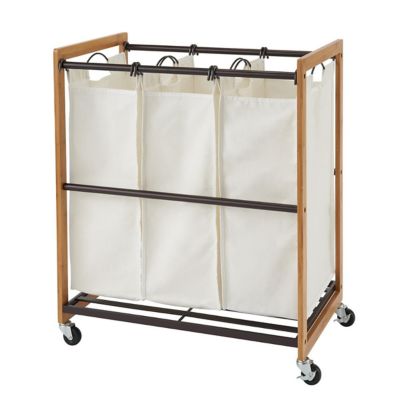
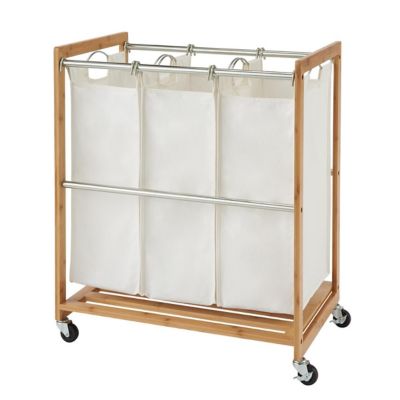
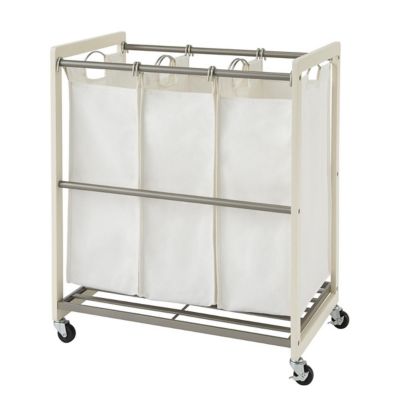
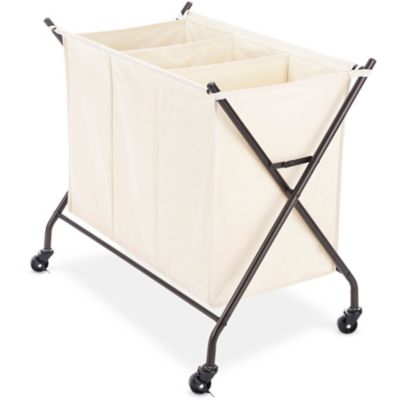
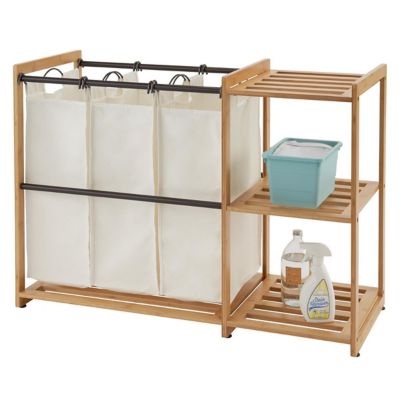
Laundry sorter carts bring divided laundry storage and rolling convenience together, giving clothes, towels, and bedding a place to land before wash day. Instead of one hamper filled with everything from dusty chore shirts to bath towels, a sorter has separate bags or compartments that help keep loads organized. Two-compartment layouts work well for a simple split, while three- and four-compartment designs provide more room to separate lights, darks, towels, or garments with different care needs. The right arrangement depends on what comes through the laundry room: a household with several kids may need generous bag capacity, while a couple working around a small laundry nook may prefer a narrower frame. Bag count alone does not tell the whole story, since several small compartments can hold less than two roomy ones. Overall dimensions, individual bag size, and the cart’s load limit give a better picture of how it will fit into the routine. A slim laundry sorter cart can make good use of a narrow opening, but it still needs enough clearance to pull out, lift a bag, and open nearby appliance doors. Handles, wheel assemblies, and any projecting shelf edges matter when considering the full footprint. Side-by-side bags make each section easy to reach, while taller arrangements may save floor space but require more overhead clearance. In a laundry room that also serves as a mudroom, keeping the cart clear of the main walkway leaves room for boots, feed buckets, and people coming through the door. Slim multi-tier laundry carts serve a different purpose: their shelves organize detergent, stain treatment, and other supplies rather than separating clothes. Laundry sorter carts with bags focus on gathering and dividing loads, and designs that combine bags with a shelf can bring both jobs into one footprint. That distinction helps match the cart to the space without ending up with storage that solves the wrong problem. Even a roomy sorter works best when its compartments reflect the household’s washing routine, rather than encouraging clothes with conflicting care requirements to share a load.
The frame, bags, and wheels all play a part in how a rolling laundry sorter handles everyday chores. Metal frames are common, with steel offering solid support and aluminum providing a lighter structure in some designs. Frame joints, crossbars, bag supports, and the stated weight capacity matter more than appearance when the cart will regularly carry jeans, sweatshirts, or a stack of towels. A coated finish can help protect a metal frame from incidental moisture, though standing water and lingering dampness still deserve attention. Fabric bags may be made from canvas, polyester, mesh, or other textiles, and each construction has practical trade-offs. More open fabrics allow airflow, while tightly woven bags help contain smaller articles and keep the contents less visible. Reinforced seams and well-supported attachment points are worth considering where bags carry a full load. Removable bags make it possible to take one sorted load to the washer without moving the whole cart, and separate carrying handles can make that trip easier. Some bags lift from support rails; others attach with hooks, straps, or fasteners. The attachment style affects how quickly a bag comes off and how securely it stays in place when the cart rolls. Casters should suit the route between the storage spot and the washer. Smooth flooring, thick rugs, doorway thresholds, and uneven transitions put different demands on the wheels, and a full cart generally takes more effort to move than an empty one. Swiveling casters help with turns, while locking casters can hold the cart in place during loading when that feature is included. Bag and frame care also varies by construction. A removable fabric bag is not necessarily machine washable; its care label determines the cleaning method. Frames generally benefit from cleaning according to their care directions and drying afterward, especially around joints and fasteners. Wet washcloths and soaked towels are better allowed to dry before sitting in a fabric compartment for long stretches, helping keep laundry storage fresher between loads.
A laundry sorter cart earns its place when it makes an ordinary task less scattered. In a busy family laundry room, separate compartments can keep school clothes apart from work pants and household linens, with the final wash grouping still based on fabric care labels. Near a bedroom closet, a compact sorter gives everyday clothing a landing spot without requiring a large laundry room. For someone whose washer is down the hall, removable bags may matter more than extra shelves; for a household moving loads across one level, a rolling frame can cut down on carrying. Stairs call for a different approach, since a loaded cart should not be rolled up or down them. Carrying a manageable bag separately is a better fit for that route. Top shelves, hanging bars, and covers add other possibilities when they are part of the design. A shelf can provide room for supplies or folded laundry within its weight limit, while a hanging bar offers space for garments waiting to be put away. Shelf clearance matters if tall detergent bottles need to stand upright, and a lower shelf may be easier to reach without interfering with the bags. Cleaning products belong secured away from children and pets, not simply placed wherever a cart has an open spot. Covers can keep laundry out of sight, but they do not replace airflow or regular emptying. The cart should also fit the person handling it: a comfortable handle height, accessible bag openings, and a manageable loaded weight can make a noticeable difference. For chores beyond sorting clothes,
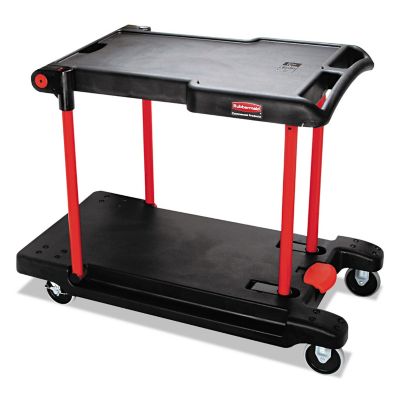
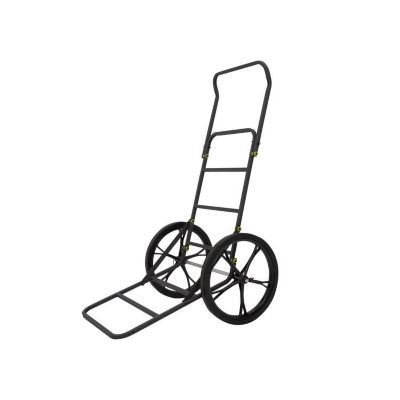
Folding Utility Carts offer a separate way to move household supplies, with folding designs that can take up less space between tasks. Within the laundry area, the most practical sorter is one that matches the available floor space, keeps loads separated in a useful way, and leaves enough room to work around the washer and dryer without a daily shuffle.